Image: Vicki Jauron, Babylon and Beyond Photography
Coastal physics: The mechanics of ocean waves
At the beach, waves are the whole point for many people—for surfing, jumping, and floating. But for Arnold Mathijssen, a physicist whose lab studies fluid dynamics and the ways creatures move through liquids, the motion of the ocean offers a window into the world of applied physics.
For mechanical engineer Igor Bargatin, space exploration is all about light-shaping ultrathin materials that fly, orient, and even accelerate on nothing but sunlight and lasers. Bargatin explains how his lab is testing featherweight fliers in the near-empty mesosphere, designing self-orienting satellite chains to power AI from orbit, and building the sails meant to carry a probe toward Alpha Centauri (illustrated).
(Image: NASA, ESA, CSA, STScI, Robert Hurt (Caltech/IPAC))
Reaching for the stars: Using light to sail into space
Multiple projects trace mechanical engineer Igor Bargatin’s decade-long commitment to space exploration as they climb from the edge of the atmosphere to the stars—powered, almost every time, by light itself.
Humpback whales, like the one pictured here off the coast of Provincetown, Massachusetts, are routinely located by analyzing when their calls reach underwater microphones. In a recent paper, oceanographer John Spiesberger and a colleague identified a theoretical wave-interference effect that can make energy from sound waves outrun fundamental speed limits without violating the laws of physics. Their findings could improve whale tracking.
(Image: Courtesy of Bryce Flynn / Getty)
Supersonic whale calls and special relativity
Researchers noticed a wave-interference effect that makes sound energy appear to outrun fundamental limits without breaking physics. Their findings could improve whale tracking.
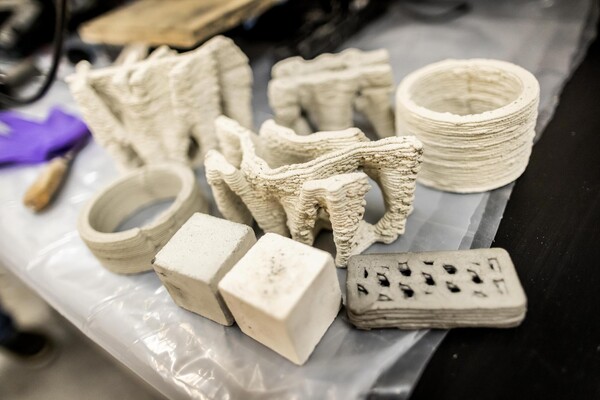
Penn Engineering materials scientist Shu Yang and Weitzman School of Design architect Masoud Akbarzadeh teamed up to develop a 3D concrete printing system that captures carbon dioxide and boosts the structural performance of the building materials. The solution is based on diatomaceous earth and offers enhanced carbon capture and structural fortitude while using relatively fewer materials.
nocred
Getting into the nitty gritty of sand
Materials scientist Shu Yang explains the hidden physics of a day at the beach, like why some sands scorch your feet, what makes the perfect sandcastle, and how the same humble grains end up in windows and smartphones.
Inspired by the cracked, water-trapping skin of elephants, Penn researchers have developed a low-cost cement tile that cools buildings by capturing and slowly evaporating water—turning a structural flaw into a climate solution.
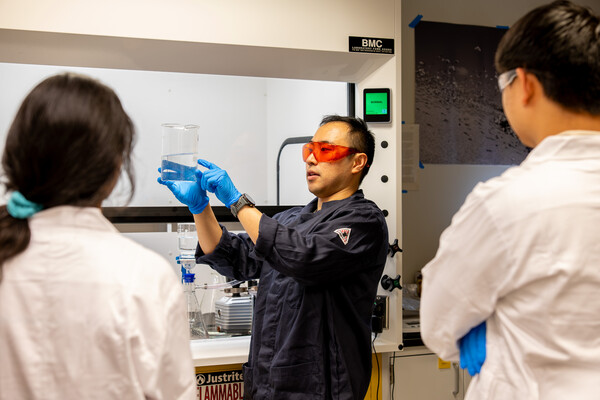
To better visualize microplastics, researchers in the McBride Lab at Penn Engineering use fluorescent dyes like Nile Red, which attach to plastics and make them glow under specific light. Environmental researcher Derek Ho developed a system used in their lab called the Fluorescent Imaging Microplastic Analysis Platform, or FIMAP. It uses machine learning to detect and identify plastic particles larger than about 20 microns in complex water samples.
(Image: Sylvia Zhang)
The impact of microplastics—and how to limit exposure
Microplastics researchers Samantha McBride and Derek Ho of Penn Engineering and Vijay Bhatia of the Philadelphia Water Department discuss how microplastics get into ecosystems and human bodies, offering practical ways to minimize exposure.
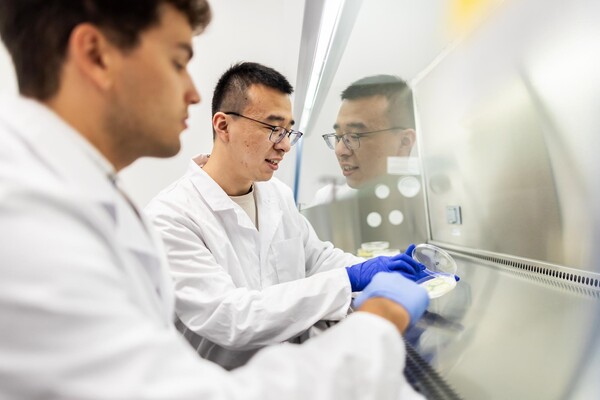
Penn Engineers led by Xue “Sherry” Gao have developed a gene-editing tool built specifically for fungi, unlocking a hidden library of molecules—including some with early anti-cancer promise—from one of biology’s most overlooked kingdoms.
Transforming healthcare logistics with low-cost AI
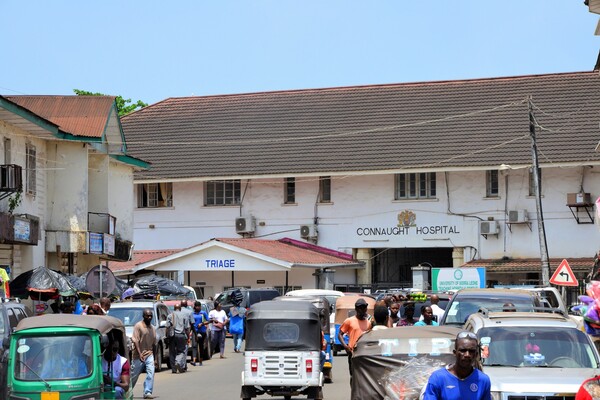
Researchers from the Wharton School and Penn Engineering partnered with Sierra Leone’s government to build a low-cost AI tool that optimizes the allocation of essential medical supplies across the country. By accounting for missing data and navigating unexpected supply chain disruptions, the system ensures life-saving products reach the clinics that need them most.
With diesel prices on the climb, truckers across the United States are adopting fuel-saving measures like driving more slowly to reduce operating expenses.
(Image: Scott Olson / Staff via Getty Images)
Q&A: How big, loud trucks quietly shape people’s lives
Sociologist Steve Viscelli discusses the pain points many American truckers face as they contend with rising fuel costs and the shifting transportation landscape.