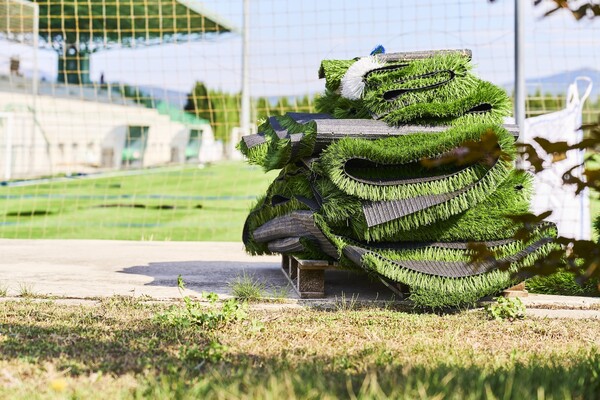
In conversation with Penn Today, mechanical engineer, tennis player, and soccer fan Paulo Arratia discusses the material differences between natural grass and synthetic turf.
Over the last decade, there’s been an explosion in phone-based gambling platforms owing to the 2018 Supreme Court ruling that struck down a federal sports betting ban. Neuroscientist Michael L. Platt says the gambling boom has as much to do with human biology as it does business.
(Image: Hispanolist)
Why is everything gambling now?
Neuroscientist Michael Platt discusses the biological basis of gambling as it relates to the over proliferation of gambling-based platforms.
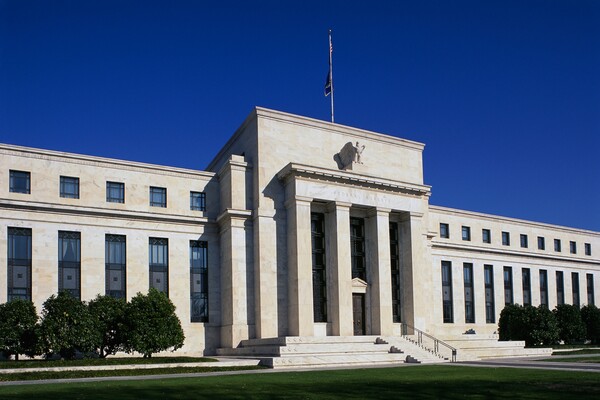
The Fed explained: What it does and why it matters
Former Philadelphia Fed President Patrick Harker and financial historian Peter Conti-Brown, both Wharton professors, unpack the central bank’s origins, its unusual structure, and the quiet ways it shapes the economy
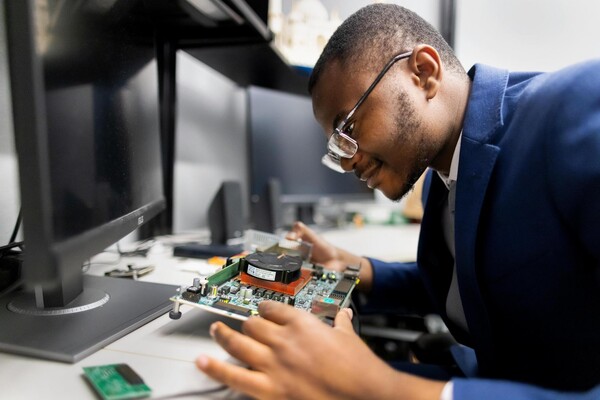
Nhlanhla Mavuso of Fluid Silicon at work in the Moore Building.
nocred
Nhlanhla Mavuso: Innovating computer chips to run more efficiently
Fluid Silicon, a platform from President’s Sustainability Prize winner Nhlanhla Mavuso, allows computer chips to continuously monitor their health and self-tune as their characteristics change. The technology has the potential to reduce energy usage in data centers and improve reliability in mission-critical applications.
Image: Jessica Kourkounis / Stringer via Getty Images
When the Schuylkill swallowed the city
New Penn research shows that Hurricane Ida wasn’t a once-in-a-century anomaly but a preview of how climate change, urbanization, and aging infrastructure are rewriting flood risk.
A Penn Engineering and Penn Medicine team built CAMEL, an artificial intelligence model that forecasts dangerous cardiac rhythms before they strike. Their findings pave the way for a new era of real-time, predictive heart care.
Penn physicists led by Bo Zhen have created hybrid light-matter particles that interact strongly enough to compute, pointing toward ultrafast, low-energy optical AI hardware.
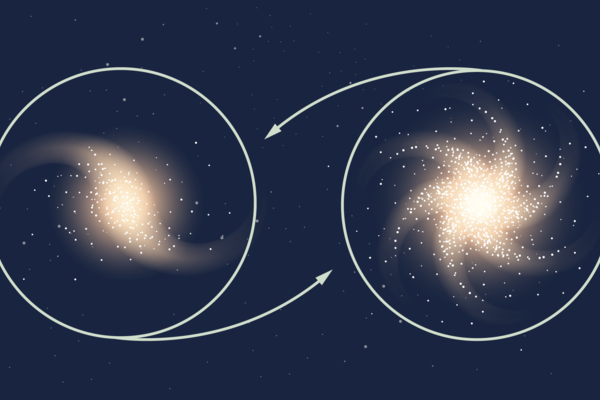
The cosmic microwave background, the faint afterglow of the Big Bang that fills all of space, passes through massive galaxy clusters whose motion slightly alters the light, allowing scientists to measure how fast the clusters are moving toward one another and test how strongly gravity pulls across the largest distances in the universe.
(Image: Courtesy of Lucy Reading/Simons Foundation)
Gravity follows Newton and Einstein’s rules, even at cosmic scales
By tracking galaxy clusters hundreds of millions of light-years apart, Penn physicist Patricio Gallardo and collaborators find that the laws of gravity written by Newton and Einstein still hold, leaving little doubt that invisible dark matter exists.
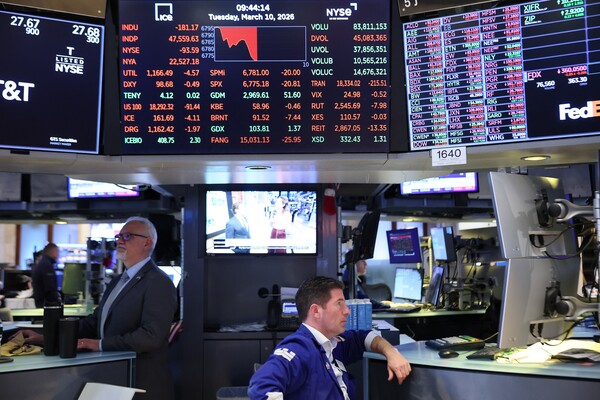
As investor withdrawals and liquidity concerns rattle a $1.8 trillion market, Wharton’s Itay Goldstein explains how private credit works, why experts are uneasy, and what it could mean for your finances.
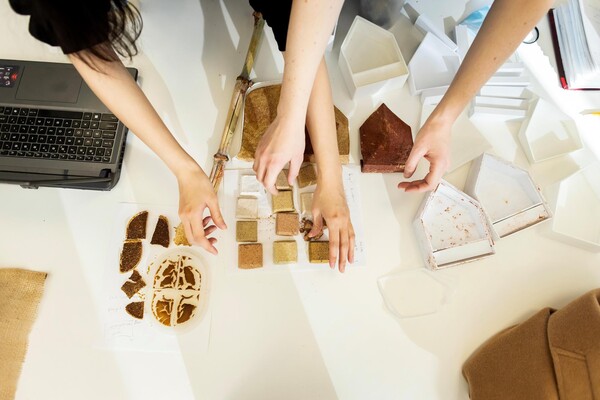
At the DumoLab, research associate Yasaman Amirzehni is working to develop a biocomposite suitable for indoor and outdoor cladding applications, which could eventually serve as true structural components like load-bearing columns.
nocred
Turning peels into pavers: How Penn designers turn food scraps into biodegradable building materials
The Weitzman School’s Laia Mogas-Soldevila and Yasaman Amirzehni transform unavoidable food waste—like fruit peels and eggshells, which account for 14.8% of post-consumer restaurant food waste—into durable, biodegradable building materials in collaboration with Penn Dining.