Artificial versus real grass: How the difference changes the game
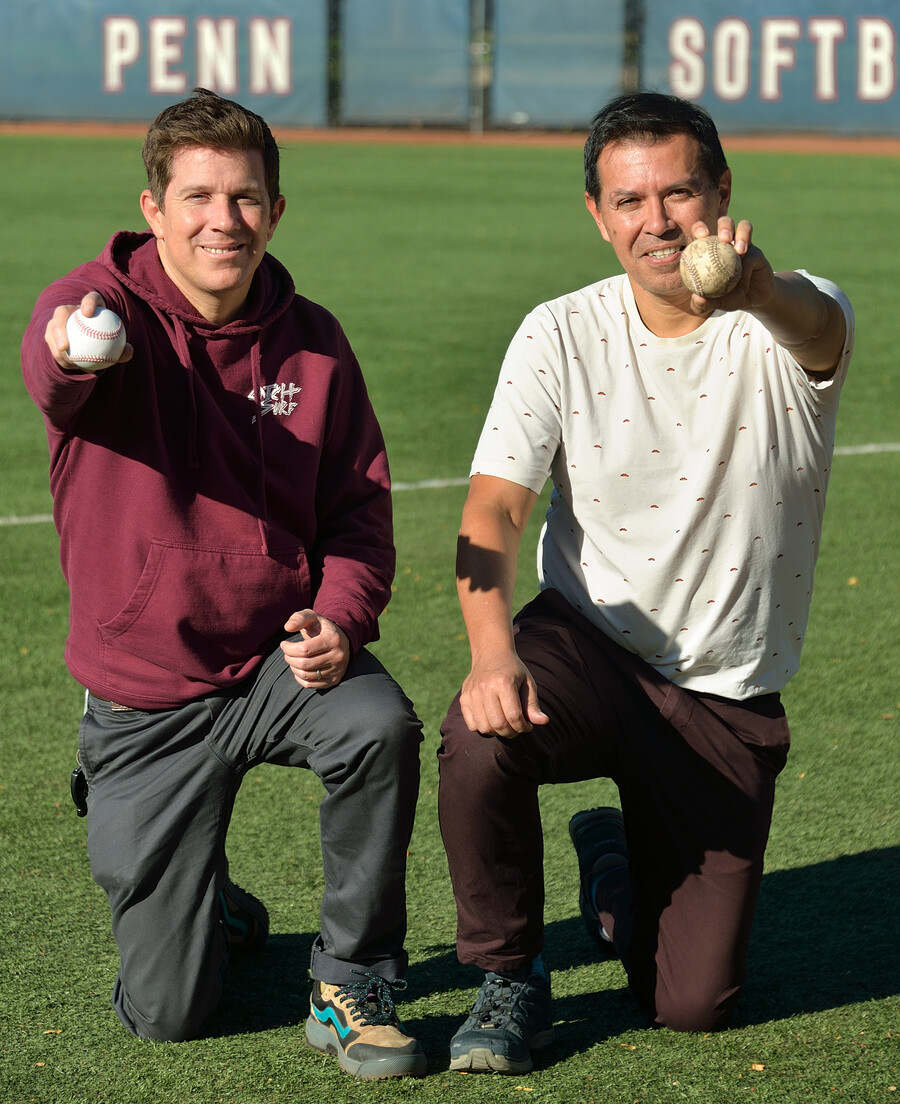
In conversation with Penn Today, mechanical engineer, tennis player, and soccer fan Paulo Arratia discusses the material differences between natural grass and synthetic turf.
3 min. read
Aerial view of Palmeiras’ Academia de Futebol 2 Training Camp. The 45,000 square-meter site features five pitches, including an official FIFA-standard grass field, a synthetic turf pitch, and the famous "terrón" (dirt field) where the U13 categories play to develop creativity and improvisational ball skills on the challenging terrain.
(Image: Alexandre Schneider / Stringer)
As the summer sports season comes into full swing this month, millions of fans worldwide will spend time seeing green. From stadium seats to living room couches, fans will watch their favorite players run, cut, slide, and land on blades of grass.
“But not all grass is created equal,” says mechanical engineering professor, tennis player, and lifelong soccer fan Paulo Arratia. “Beneath the cleats or tennis shoes, there’s a world of applied physics and mechanical processes at play.”
Arratia studies how materials behave in complex, dynamic environments. Those same principles, he explains, govern how a ball bounces, a foot grips, and force travels through an athlete’s body during play—all of which alter the outcome of a game.
In conversation with Penn Today, he discusses what separates natural grass from synthetic turf, and, ultimately, why that difference matters to players and fans.
What makes synthetic turf so appealing to soccer teams and leagues?
It honestly comes down to economics and consistency.
Modern top-tier pitches, like those used in the English Premier League or Spain’s La Liga, use advanced drainage and require constant, costly treatments immediately after games to remain smooth and playable.
Turf is much simpler. For leagues or clubs that cannot afford rigorous upkeep, such as many teams in my home country Brazil or Major League Soccer in the U.S., synthetic turf offers an attractive alternative. It provides a uniformly flat surface with significantly lower maintenance costs, and it allows stadiums to double as concert venues without the fear of fans trampling delicate grass. From an operational standpoint, it’s very efficient.
From a mechanical perspective, how does turf behave differently than natural grass, and how does that affect players?
The biggest difference is in how the surface responds to an applied force. Natural grass is a living system; it has soil, roots, and a good amount of moisture. It is built on highly permeable layers with proper drainage, which makes the ground soft and forgiving. When you step on it, it deforms, absorbing energy.
Turf, by contrast, is much, much more rigid. It’s typically made of synthetic fibers with a rubber or plastic pellet infill. The deformation is smaller, so more of the force is returned to the body.
That changes everything: how you run, how you stop, how you turn.
Biomechanically, it’s an entirely different ball game—pardon the pun.
The loads on the body change. On harder, less forgiving surfaces, you tend to see more stress on joints like the knees, ankles, or lower back. There’s also the issue of rotational traction. If your foot sticks while your body turns, that increases injury risk.
Natural grass’s softer landing gives players a profound sense of freedom and confidence. They can attempt spectacular, acrobatic plays, like volleys or bicycle kicks, because they know the grass will safely absorb their impact.
What about the way a ball moves? Do players notice that as well?
Absolutely! The interaction between the ball and the surface depends on friction and compliance, as in, how much the surface ‘gives.’
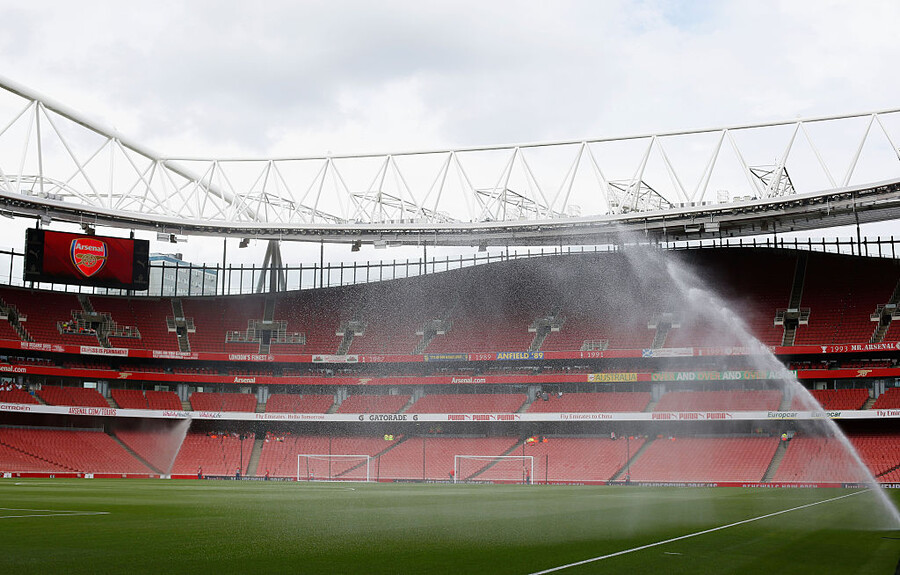
Maintaining a Premier League-quality grass pitch like Arsenal’s at Emirates Stadium requires year-round dedicated staff, irrigation systems, grow lights, and fertilizers, plus pitch renovation during the summer months when the surface is rebuilt.
(Image: Steve Bardens via Getty Images)
On turf, the behavior is more uniform. The ball tends to bounce in a more predictable way.
On grass, especially natural grass, there is a bit more variability. The height of the grass, the moisture, the condition of the soil—all of that affects the bounce and speed. Mechanically speaking, the timing is completely altered because the ball moves faster and bounces less on turf than it does on natural grass.
For us watching, these mechanical changes are practically invisible, but for a professional player, a millisecond is a massive deal. It dictates how players must position themselves just to maintain their own stability during a play.
If turf is more consistent, why do so many players prefer grass?
Consistency is not the only thing players care about. They also care about comfort, safety, and feel. A well-maintained grass field offers a combination of cushioning and responsiveness that is difficult to replicate. It allows players to take risks—to slide, to change direction, to play more freely—without the same level of impact on the body.
We’ve seen other sports, like tennis, move toward more uniform playing surfaces over time. Could soccer do the same?
In principle, yes. You could design synthetic systems that better mimic the mechanical properties of grass to make them softer and more compliant with better energy absorption.
But that comes at a cost. The more you try to replicate natural grass, the more complex and expensive the system becomes.
So, you end up back at the same trade-off: performance versus economics.
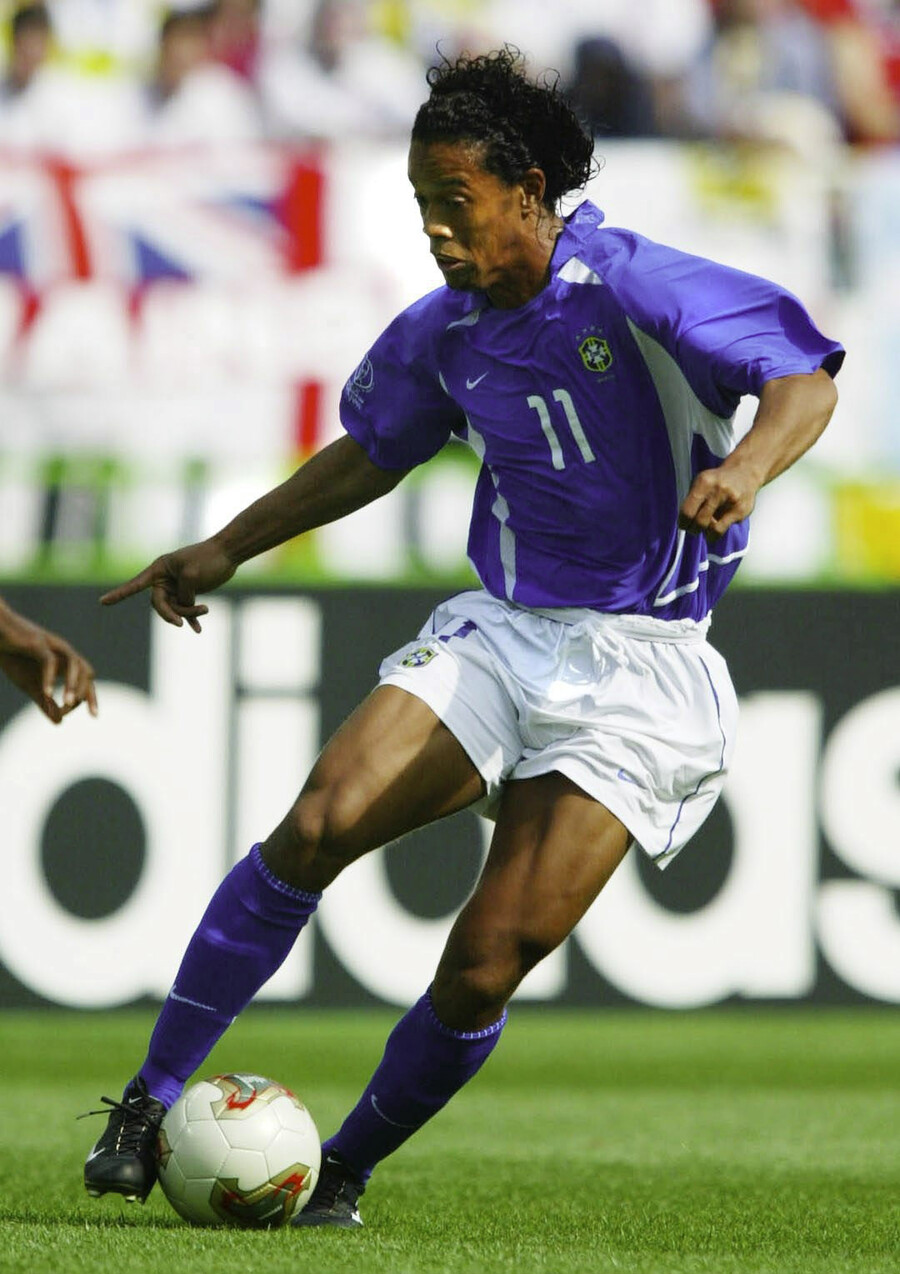
Ronaldinho was known for exceptional ball control in tight spaces.
(Image: Gunnar Berning/Bongarts via Getty Images)
There is a lot of romanticism and tradition tied to natural, unpredictable surfaces. Historically, the legendary ball control of Brazilian players was developed by kids playing barefoot in the streets or in the mud. We used to make makeshift balls out of crumpled newspaper wrapped in a sock. When you grow up playing in those unpredictable, tight spaces, you organically learn how to control a wildly bouncing ball and maneuver through swarms of defenders. That specific environment is exactly what created highly creative stars like Ronaldinho.
Taking players who emerged from those organic, traditional roots and putting them on a perfectly uniform, plastic field can feel awkward. Players are used to grass, they want grass, and ultimately, for the health and beauty of the game, my conclusion is simple: Grass is good, man.
On the move: Water quality and antimicrobial resistance testing goes mobile
Penn researchers have developed a mobile field laboratory allowing them to test water quality and track antimicrobial resistance in and around San Cristóbal in the Galápagos.
Penn researchers Vanessa and Alexis North are studying one of the largest collections of Egyptian blue objects ever found in the ancient Near East, shedding new light on how the world’s first synthetic pigment may have traveled far beyond Egypt.
A new role for dental providers? Rethinking where vaccines are given
Vaccinations have traditionally been administered in primary care settings or pharmacies. However, for about a decade, some states have authorized dentists to administer vaccines, and many others did so during the COVID-19 pandemic. The effectiveness of this approach has led some countries and states to expand or consider expanding the role of dental providers in delivering routine vaccines, including those against COVID-19 and the human papillomavirus (HPV), and in providing vaccine education.
Penn student develops a way for computer chips to run more efficiently
Fluid Silicon, a platform from President’s Sustainability Prize winner Nhlanhla Mavuso, allows computer chips to continuously monitor their health and self-tune as their characteristics change. The technology has the potential to reduce energy usage in data centers and improve reliability in mission-critical applications.