Reaching for the stars: Using light to sail through space
Multiple projects trace mechanical engineer Igor Bargatin’s decade-long commitment to space exploration as they climb from the edge of the atmosphere to the stars—powered, almost every time, by light itself.
2 min. read
For mechanical engineer Igor Bargatin, space exploration is all about light-shaping ultrathin materials that fly, orient, and even accelerate on nothing but sunlight and lasers. Bargatin explains how his lab is testing featherweight fliers in the near-empty mesosphere, designing self-orienting satellite chains to power AI from orbit, and building the sails meant to carry a probe toward Alpha Centauri.
The word “liftoff” will come up a lot between now and the end of September. NASA’s Nancy Grace Roman Space Telescope is slated to launch Aug. 30, followed by a Roscosmos Progress resupply mission to the International Space Station (ISS), targeted for Sept. 9. Then, NASA’s SpaceX Crew-13 mission, which rotate the ISS crew, is scheduled to launch no earlier than Sept. 12.
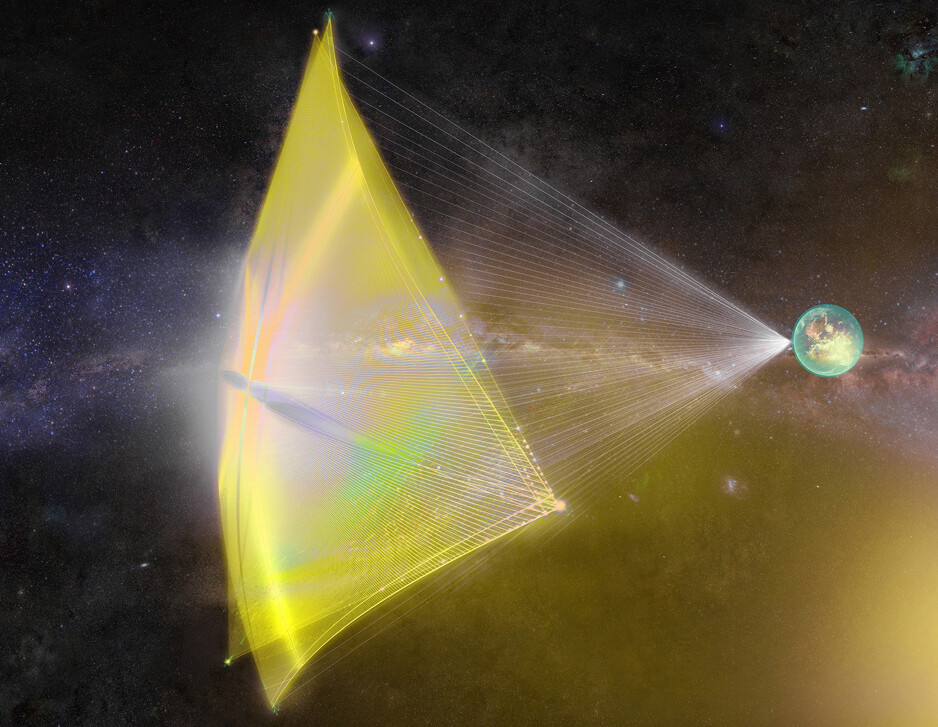
Artist rendering of Breakthrough Starshot’s proof of concept for ultra-fast, light-driven nanocrafts, which lays the foundations for a first launch to Alpha Centauri within the next generation. Along the way, the project could generate important supplementary benefits to astronomy, including solar system exploration and detection of Earth-crossing asteroids.
(Image: Breakthrough Starshot)
It’s the latest and most concrete step in an idea he’s chased for years: using light alone to hurl objects through space, at scales from a few square inches to interstellar distances.
No fuel needed
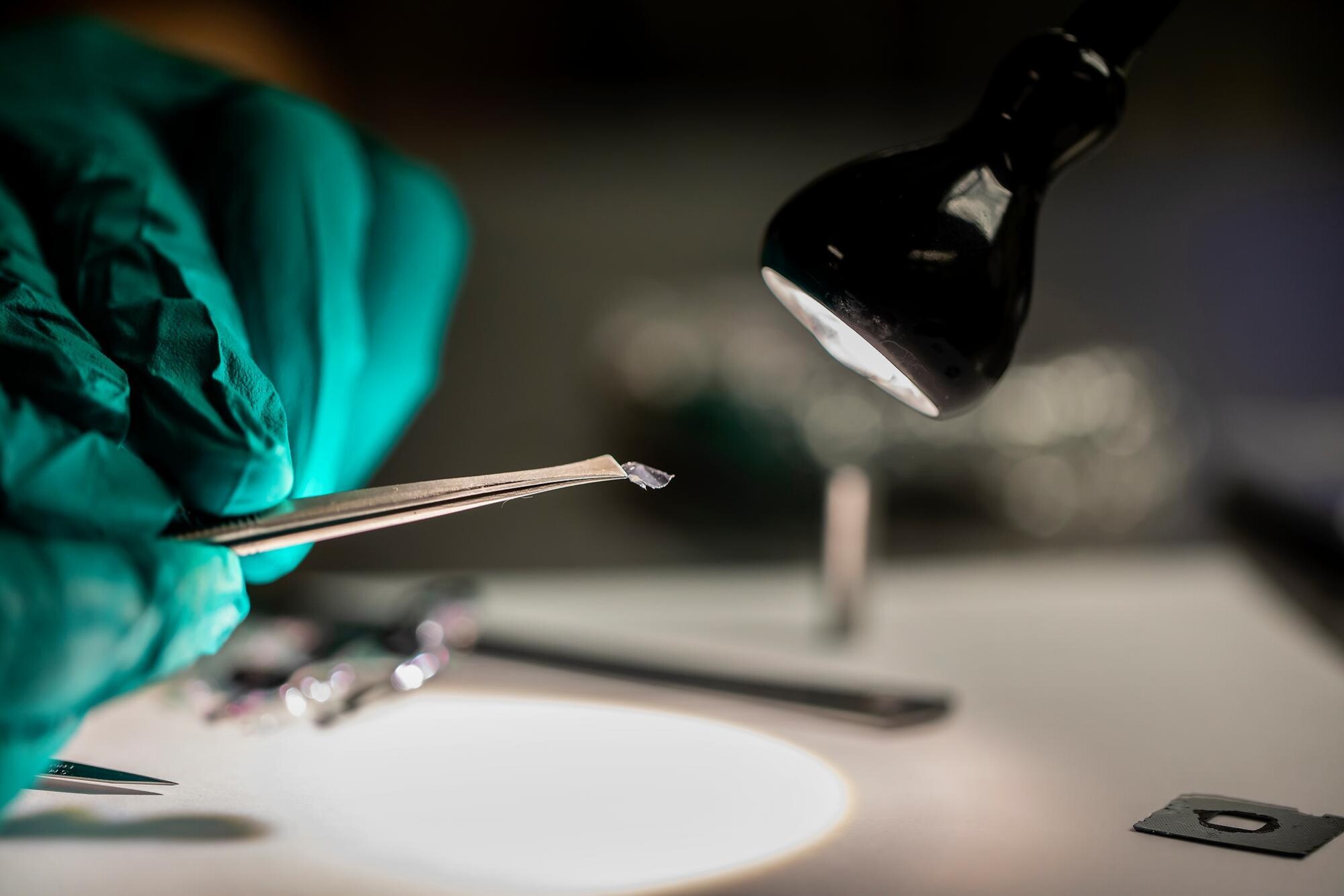
It started with nanocardboard, a corrugated, nanometer-thin material that Bargatin’s group showed could levitate on the heat of a light beam. Those results were published in Nature Communications in 2018. Years later, in a study published in Science Advances, they pushed the trick further, edging toward real payloads with a more stable version of their prototype— sturdier discs with carbon nanotubes on their underside.
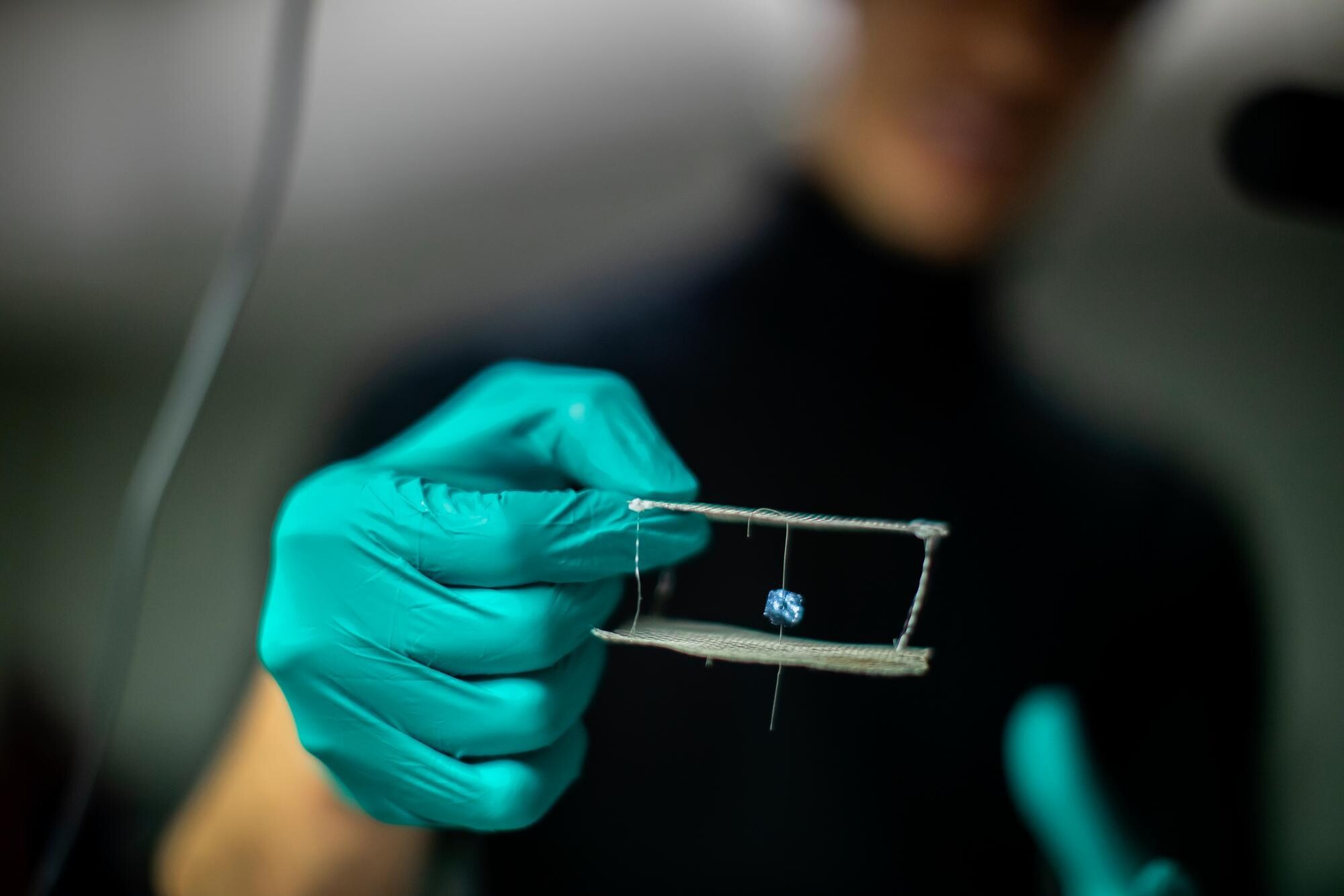
Researcher in the Bargatin Group wields preparing a photophoretic levitation experiment. Unlike the microscopic particles that have been previously levitated with this techniques, the researchers’ flyers are big enough to manipulated by hand.
Both studies targeted the mesosphere, the band of atmosphere between about 30 and 50 miles up, too thin for planes and too low for satellites. “It’s a region of the atmosphere that is almost empty,” Bargatin says—and, until recently, entirely unused.
Bargatin calls it the only regime where people can fly on sunlight alone, with no propellant and no moving parts.
A data center in orbit
Jump to low Earth orbit, and the same penchant for lightweight, self-orienting structures reappears—this time aimed at putting data centers into orbit.
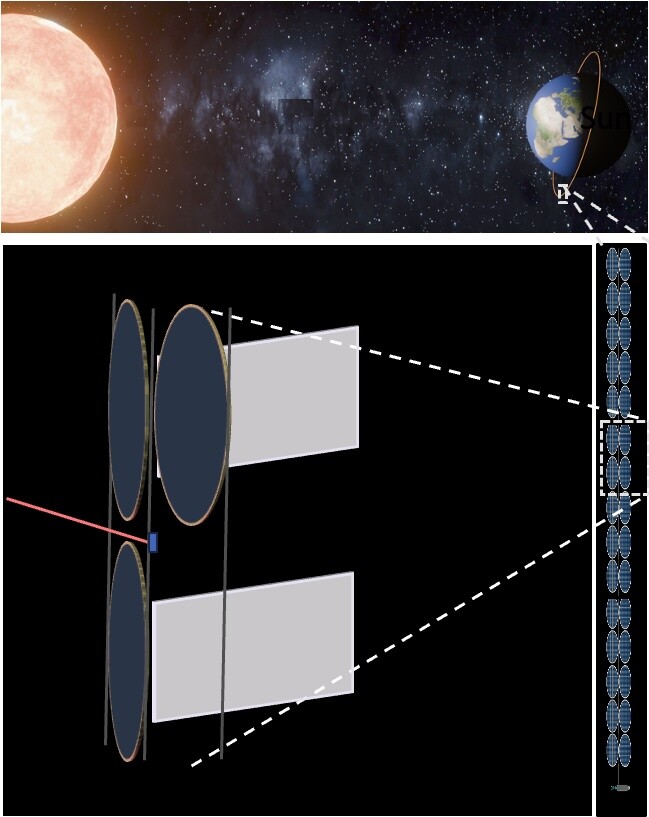
In February, Bargatin’s group presented at a conference a proposal for stringing computing nodes along a tether—solar panels, chips, and radiators threaded like beads—holding its orientation toward the sun using gravity and solar pressure alone, no thrusters required. “This is the first design that prioritizes passive orientation at this scale,” Bargatin says. Individual satellites, he argues, will never beat Earth-based data centers once launch costs are counted—so the game is shaving weight, node by node.
The proposed orbital data center would be composed of nodes that form a long tether orbiting the earth that uses solar panels to collect energy and lasers to convey data.
(Image: Igor Bargatin, Dengge Jin, Zaini Alansari, Jordan R. Raney)
The farthest reach of the lab’s work is Project Starshot, the Breakthrough Initiatives-backed plan to send a chip-sized probe to Alpha Centauri—a star system containing the closest star to our sun, about 4.2 light-years away—at a fifth of light speed. In 2022, Bargatin and colleagues laid out the theoretical requirements for a sail that could survive a laser blast without melting or tearing. “Reaching another star within our lifetimes is going to require relativistic speed,” he says.
That theory becomes real this summer. Bargatin is candid about the mission’s scientific payoff being modest: Telescopes will likely see more than the probe’s centimeter camera ever could by the time it arrives. The real value, he believes, is that the same sails, tuned to a more modest 1% of light speed, could intercept interstellar visitors like Oumuamua—the first confirmed object to visit our solar system from another—within hours of a sighting. That’s something no chemical rocket could do.
“Thinking in space,” Bargatin says, “means starting from first principles instead of optimizing what already exists. I enjoy thinking about something that would be a first of its kind.”
Igor Bargatin is an associate professor in the Department of Mechanical Engineering and Applied Mechanics at Penn's School of Engineering and Applied Science.
On the move: Water quality and antimicrobial resistance testing goes mobile
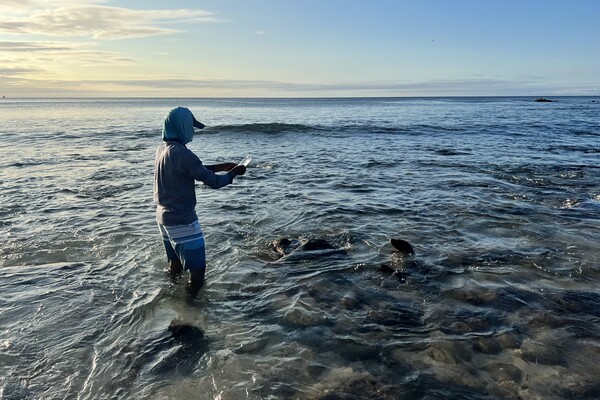
Penn researchers have developed a mobile field laboratory allowing them to test water quality and track antimicrobial resistance in and around San Cristóbal in the Galápagos.
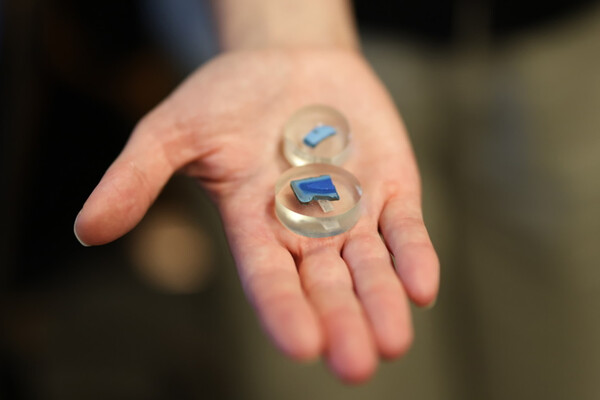
Penn researchers Vanessa and Alexis North are studying one of the largest collections of Egyptian blue objects ever found in the ancient Near East, shedding new light on how the world’s first synthetic pigment may have traveled far beyond Egypt.
A new role for dental providers? Rethinking where vaccines are given
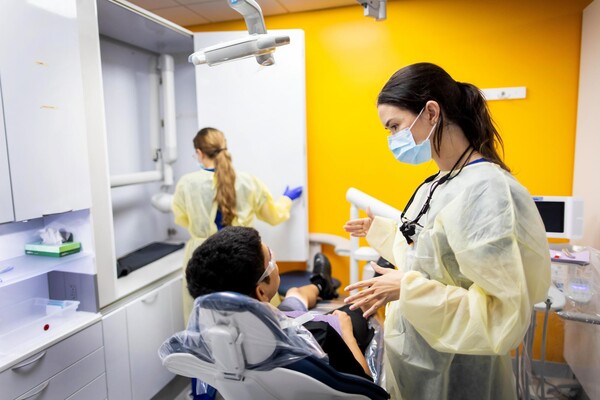
Vaccinations have traditionally been administered in primary care settings or pharmacies. However, for about a decade, some states have authorized dentists to administer vaccines, and many others did so during the COVID-19 pandemic. The effectiveness of this approach has led some countries and states to expand or consider expanding the role of dental providers in delivering routine vaccines, including those against COVID-19 and the human papillomavirus (HPV), and in providing vaccine education.
Penn student develops a way for computer chips to run more efficiently
Fluid Silicon, a platform from President’s Sustainability Prize winner Nhlanhla Mavuso, allows computer chips to continuously monitor their health and self-tune as their characteristics change. The technology has the potential to reduce energy usage in data centers and improve reliability in mission-critical applications.