With the rising popularity of e-scooters, the Division of Public Safety is spreading the message of safe use and operation of these devices that are prohibited from campus buildings.
(Image: iStock / panom73)
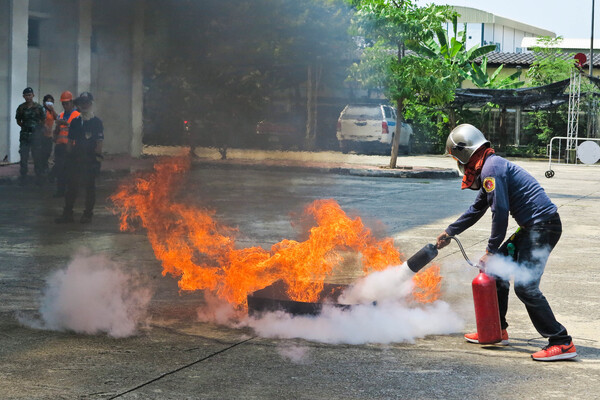
Things to know: E-scooters and safety
Penn’s Gene Janda and Joe Romm and Andrew Baldwin of the Philadelphia Fire Department discuss lithium-ion battery fire risks.
As large language models become increasingly adept at synthesizing information and producing human-like responses, many are concerned that malicious actors may use this technology in dangerous ways. Alex Robey, a Ph.D. candidate in the School of Engineering and Applied Science, is developing a first-of-its-kind defense, SmoothLLM.
(Image: iStock / Moor Studio)
AI security
As AI gets more adept at synthesizing information and producing humanlike responses, many are concerned that malicious actors may use this technology in dangerous ways. Ph.D. candidate Alex Robey safeguards AI systems against malicious tampering.
The Singh Center with its marigold glass facade and distinctive cantilevered structure exemplifies cutting-edge scientific research by virtue of its sleek geometry and meticulous attention to detail by all those involved in its development. (Image: Weiss/Manfredi)
nocred
The Singh Center for Nanotechnology turns 10
Since its founding, the Center’s multidisciplinary approach has been a strength, where researchers from Penn Engineering, Arts & Sciences, and more come together in one space.
Alyssa Hwang, a Ph.D. candidate in the School of Engineering and Applied Science, developed a new framework for evaluating the performance of large language models’ ability to analyze images. Hwang utilized the tool to run a battery of tests on the new ChatGPT-Vision to assess its ability at describing scientific images ahead of its release.
(Image: iStock/Robert Way)
A peek into the future of visual data interpretation
Researchers from Penn have developed a framework for assessing generative AI’s efficacy at deciphering images.
A collaborative team of researchers led by Bo Zhen of the School of Arts & Sciences have created new materials by artificially twisting and stacking two-dimensional atomic “sheets.” New materials control light-matter interaction differently from constituent 2D atomic sheets, paving the way for next-generation laser, imaging, and quantum technologies.
(Image: istock / Sensvector)
A twist on atomic sheets to create new materials
A collaborative team of physicists in the School of Arts & Sciences have found that putting a twist on tungsten disulfide stacks illuminates new approaches to manipulate light.
Joe Romm, a senior research fellow in the School of Arts & Sciences’ Penn Center for Science, Sustainability, and the Media, has recently published two papers on carbon dioxide removal and bioenergy carbon capture and will be keynoting American University’s Third Annual Conference on Carbon Dioxide Removal Law & Policy: Carbon Removal Deployment: Law and Policy from Planning to Project.
(Image: iStock/Teamjackson)
Carbon capture and common misconceptions: A Q&A with Joe Romm
In a conversation with Penn Today, Joe Romm casts a sobering light on “solutions” to curb
climate change.
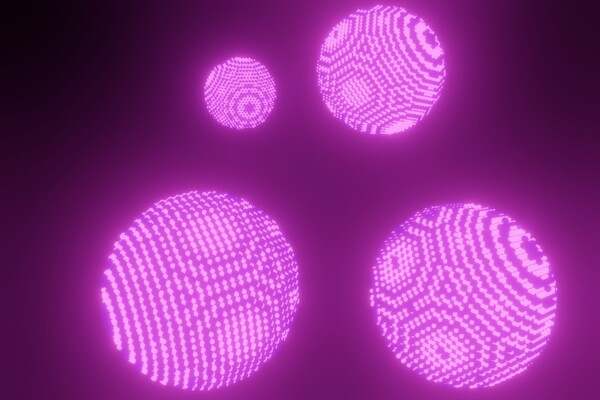
A collaborative team of researchers led by PIK Professor Christopher B. Murray has observed for the first time composite superstructure growth from nanocrystals in real time. The discovery could enable engineers to more reliably manufacture next-generation materials by combining different nanocrystals. Shown here is an artist's impression of spherical binary nanocrystal superlattices featuring semiconductor (emissive) and magnetic/plasmonic (non-emissive) nanocrystals.
(Image: Courtesy of Emanuele Marino)
Scientists observe composite superstructure growth from nanocrystals in real time
The findings could enable engineers to more reliably manufacture next-generation materials by combining different nanocrystals.
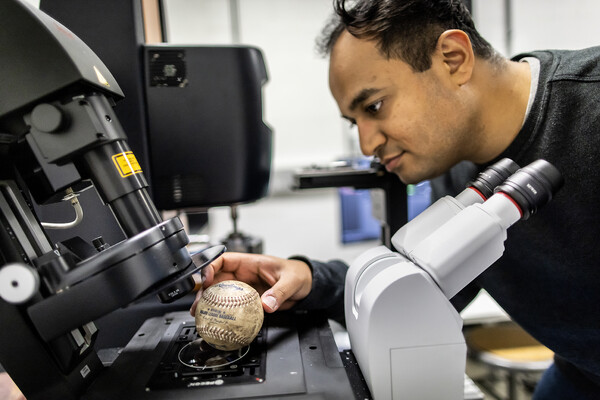
Postdoctoral researcher Shravan Pradeep of Penn Engineering is conducting experiments to understand the flow and grip properties of the Major League Baseball’s “magic mud” in order to reverse engineer the mud and offer a mechanistic understanding of its inner workings.
nocred
The alchemy behind the diamond: Unearthing baseball’s beloved mud
Researchers at Penn are working on cracking the code behind Major League Baseball’s “Magic Mud.”
A research team led by Jina Ko of the School of Engineering and Applied Science and Perelman School of Medicine has developed a new way to characterize the contents of a cargo-carrying particle excreted by many cells, extracellular vesicles.
(image: iStock / Love Employee)
Leveraging the body’s postal system to understand and treat disease
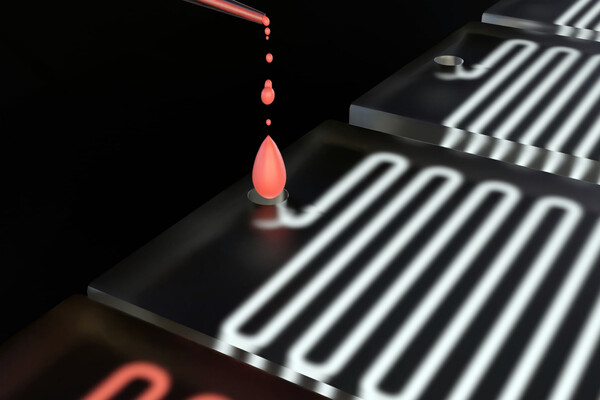
An interdisciplinary team of researchers in the School of Engineering and Applied Science, Perelman School of Medicine, and School of Arts & Sciences has developed a technique that allows for characterization of both individual carrier and cargo for clinically important molecules.
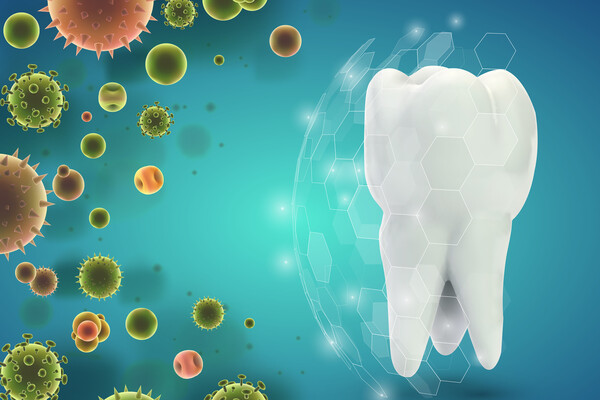
Michel Koo of the School of Dental Medicine and David Cormode of the Perelman School of Medicine and the School of Engineering and Applied Science led a team of researchers that uncovered a way to combine two FDA-approved treatments to treat tooth decay that taps into the blend’s bacteria-killing capabilities without disrupting the mouth’s microbiome.
(Image: iStock / Alex Sholom)
Combined treatment takes a bite out of tooth decay
A collaborative interdisciplinary team of researchers from Penn Dental, Medicine and Penn Engineering have discovered a game-changing synergy between ferumoxytol and stannous fluoride in treating dental caries.