The long view on COVID-19 vaccine safety and efficacy
Penn researchers weigh in on the regulatory and scientific efforts to track COVID-19 vaccines.
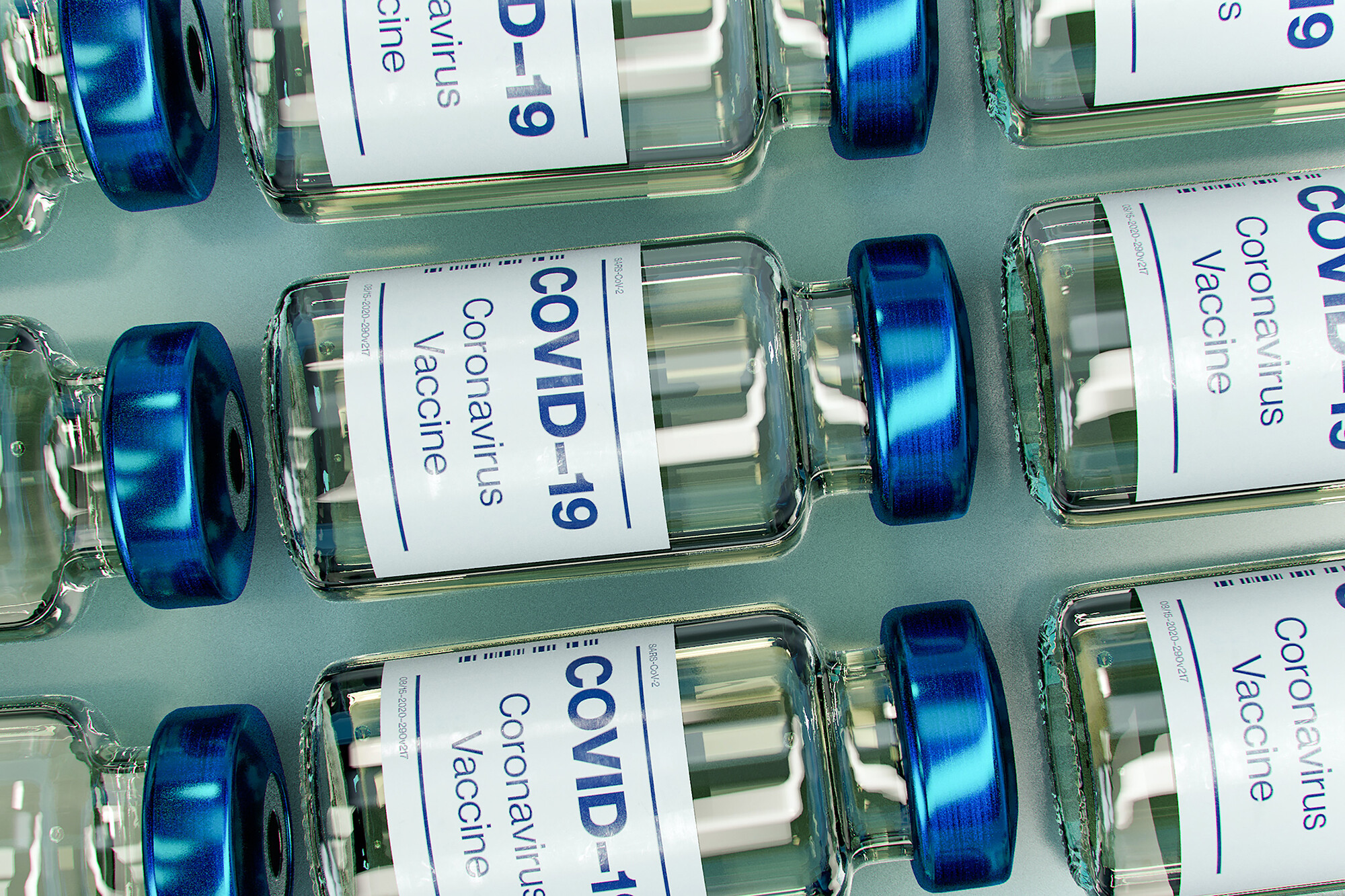
Between December 2020 and February 2021, three drugmakers received Emergency Use Authorizations to distribute COVID-19 vaccines. The next step is a biologics license application—the technical name for full approval—a process Pfizer and Moderna have already begun. Experts from Penn are keeping a close eye on these regulatory steps, as well as the reporting mechanisms involved in assessing vaccine safety. The outlook thus far seems promising. (Image: Daniel Schlud)
The mRNA vaccines for COVID-19, made by Pfizer/BioNTech and Moderna, are among the most powerful vaccines the world has ever seen. According to clinical trial data, they are more than 94% effective at preventing symptomatic disease, with real-world data bearing out that success. The other vaccine currently available in the U.S., Johnson & Johnson’s Janssen vaccine, uses a viral vector and is also proving its strength. Its efficacy, which is better than seasonal flu shots, is 70% generally and even stronger against hospitalizations and death.
While these are “new” vaccines, the mRNA technology—the brainchild of the Perelman School of Medicine’s Drew Weissman and Katalin Karikó—has been tested in animals for years with excellent results. And the Pfizer/BioNTech and Moderna products have been used in broad circulation for half a year, with companies actively pursuing FDA approval.
Experts from Penn are keeping a close eye on the regulatory steps and reporting mechanisms involved in assessing vaccine safety. Others are conducting their own studies to evaluate the immune responses the vaccines inspire.
The outlook thus far seems promising, and rigorous research will continue to provide evidence that can safeguard public health and ensure trust in vaccines in the months and years to come.
After the Emergency Use Authorization
Part of the safety watch on these new biologics will happen through the regulatory process, which began with clinical trials. For COVID-19 vaccines, these trials happened much faster than is typical. But that doesn’t mean any corners were cut, says Susan Ellenberg, a biostatistician at the Perelman School of Medicine.
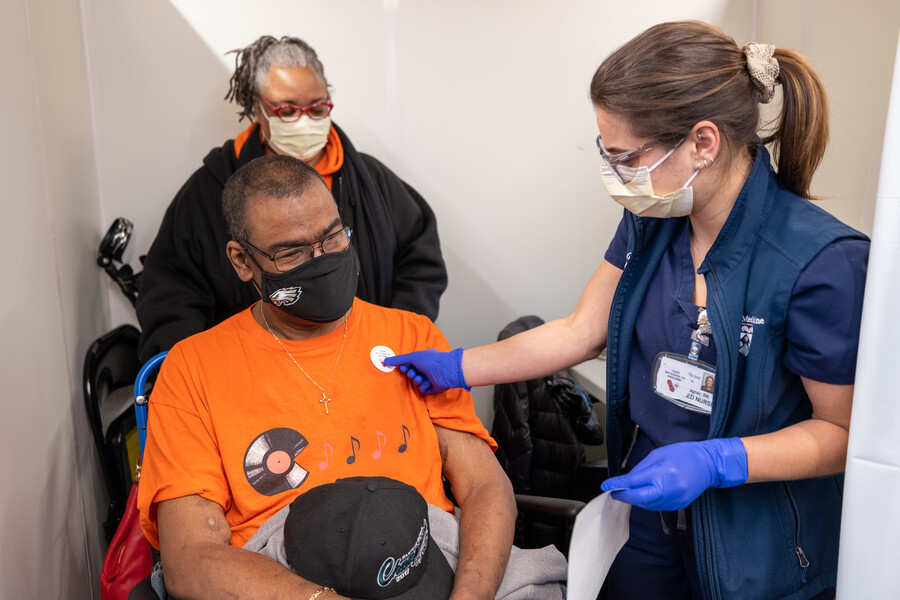
In collaboration with community groups, Penn Medicine has administered thousands of COVID-19 vaccines through community clinics in West and Southwest Philadelphia. (Image: Dan Burke)
Drug companies could enroll participants and collect the data they needed so quickly because the virus was everywhere. “This isn’t just a childhood disease or something rare,” she says. “It was a global problem with a huge amount of transmission and a huge number of people getting sick.” In addition, the number of trial participants for these vaccines exceeded what’s typical for vaccine trials.
Beyond that, to support Emergency Use Authorization (EUA) for these vaccines, the FDA asked for a median of two months of follow-up safety data after participants completed the full vaccination regimen, a figure based on the fact that adverse events tend to appear in the first two months after vaccine administration.
Ordinarily, the FDA would require safety data from a longer follow-up period, but an EUA is not the same as full FDA approval. “The two have a lot in common, but the emergency use authorization standard is different—and lower,” says Penn Medicine bioethicist Holly Fernandez Lynch. “You only have to demonstrate that the known and potential benefits outweigh the known and potential risks, and that the product ‘may be effective.’” However, because vaccines are given to healthy people rather than those already sick with COVID-19, the FDA applied an “EUA plus” standard, demanding more safety and efficacy data than it required for EUAs granted to COVID-19 therapeutics.
Needing just two months of safety data put the vaccines in front of the FDA sooner, which allowed for quick authorization aimed at addressing the public health emergency. The first COVID-19 vaccine EUAs were granted in December 2020. The most recent, for the Janssen vaccine, came in February 2021. But safety follow-up didn’t stop there; researchers continued to watch trial participants and track side effects reported by those in the community who had been vaccinated.
What’s clear is that these vaccines are amazing. In terms of the immunological response they induce, they’re among the best vaccines we’ve studied.
Penn Medicine immunologist John Wherry
The next step is applying for a biologics license application (BLA), the technical name for full approval for such drugs. Some Americans have said they want to wait for full approval before getting vaccinated and some employers are waiting to mandate vaccines until full approval is granted. While not there quite yet, things are moving in that direction: In May, the FDA issued guidance stating that any drugmakers that had not yet started discussions with the agency about pursuing an EUA should instead move directly to a BLA.
Pfizer and Moderna have each begun the BLA process, though it’s possible it could still take months to complete. “The big difference here is that the FDA is going to be looking at that longer-term safety data and doing deeper checks into manufacturing processes, for example. Not a lot is going to change,” says Fernandez Lynch. “The studies were really good. The efficacy data was clearly there. That’s all going to stand.”
Longer-term safety
With some looking for more assurance of vaccine safety, blips—pausing the Janssen vaccine rollout when several rare blood clotting cases came to light, for instance—can heighten concern. At the same time, identifying and thoroughly investigating safety concerns can also bolster public confidence that regulators are paying attention.
That’s what happened in the case of the rare blood clots: During the clinical trial last fall, one person was reported to have developed the clots, prompting Janssen to hit pause and investigate. It resumed after investigations failed to definitively link the clotting to the vaccine.
Once the vaccine recipient pool grew from tens of thousands of people in the trial to millions in the general population, however, more cases of unusual clotting emerged. From their careful study during the trial, regulators were prepared to quickly investigate. More often, however, rare adverse events aren’t seen at all—not even in one person, as with the Janssen vaccine—until a vaccine has massive distribution.
That proved true with another rare side effect recently linked to the Janssen vaccine: a slightly increased risk of the neurological condition Guillain-Barré syndrome. According to The New York Times, the FDA is expected to add another warning to that particular drug after approximately 100 cases of Guillain-Barré were reported from 12.8 million shots.
“Even with the big trials, something that happens to 1 in 100,000 or 1 in 500,000, you’re probably not going to see that in these trials,” Ellenberg says.
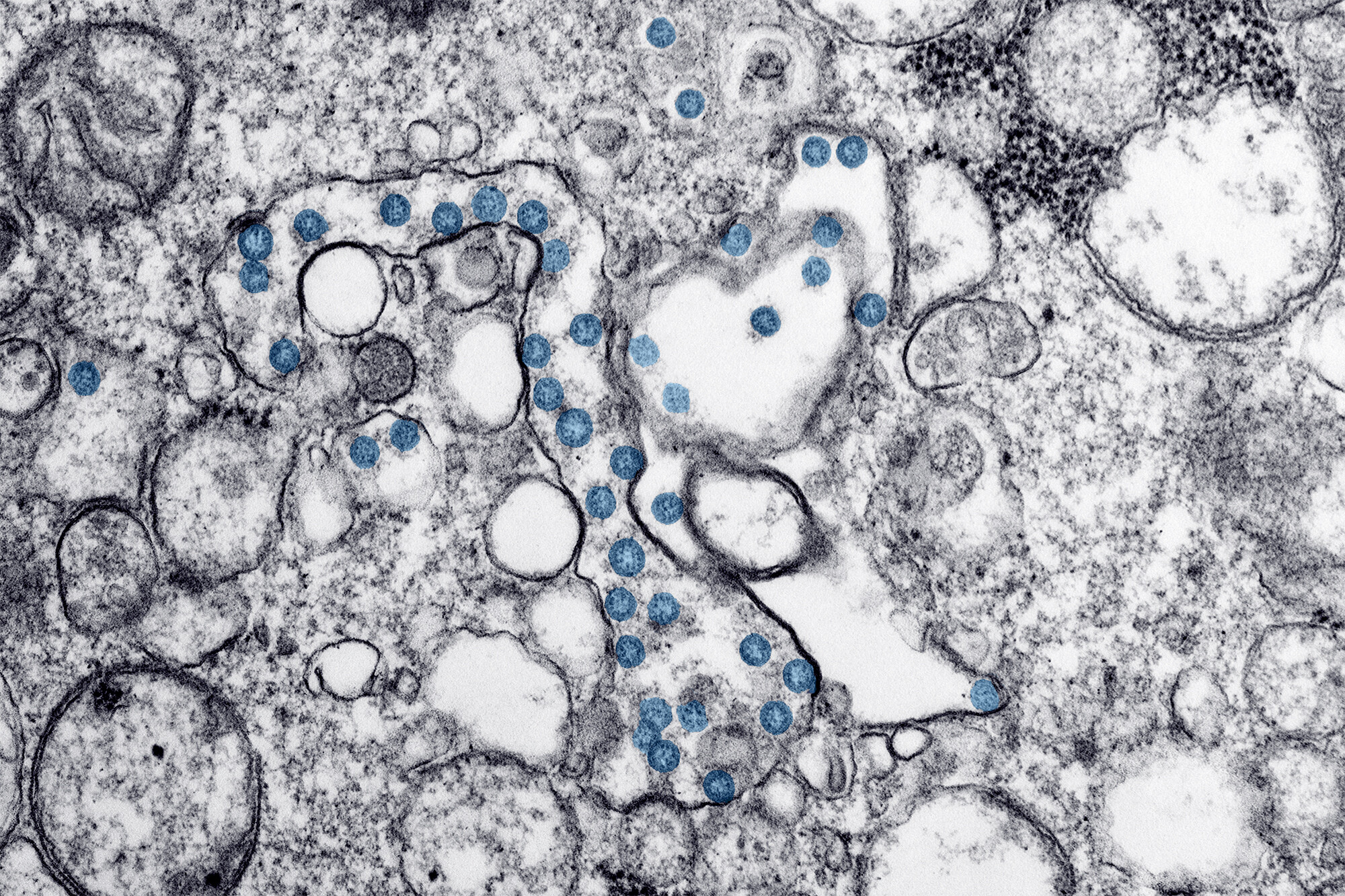
A transmission electron microscope reveals SARS-CoV-2 (in blue) from the first confirmed U.S. case of the virus. The mRNA vaccines against SARS-CoV-2 appear to evoke a strong, persistent response to the virus, according to studies at Penn and elsewhere. (Image: CDC/Hannah A. Bullock and Azaibi Tamin)
Though the clotting events and Guillain-Barré cases may well be linked to vaccination, other conditions that some vaccine recipients attribute to their shots may not be grounded in fact.
“When you vaccinate everyone, all the bad things that happen to people will happen after they get a vaccine,” Ellenberg says. “Some of those events are going to happen in reasonably close time to the vaccine, and those people are going to suspect that the vaccine caused it, even if you can show mathematically that the number of people who had this event in this period of time after getting vaccinated is no more than expected.”
The most challenging fear to quell relates to long-term effects of the vaccines, years or even decades down the line. Based on what we know about mechanisms of vaccine action and the fact that, for other vaccines, such delayed side effects have not materialized, there’s little expectation of long-term effects—even for the newer mRNA vaccines.
As these vaccines come up for regular FDA approval and beyond, it’s something all parties involved will continue to study, alongside the crucial question of how long their protection lasts.
Enduring immunity
“What’s clear is that these vaccines are amazing,” says immunologist John Wherry of Penn Medicine. “In terms of the immunological response they induce, they’re among the best vaccines we’ve studied. Adverse events are quite rare, and while side effects are very common, they are likely telling us that the vaccine is working.”
Wherry and immunologist Scott Hensley are among scientists working to more definitively answer the protection duration question, using data from a patient cohort immunized with either the Pfizer/BioNTech or Moderna vaccines at Penn. By evaluating antibody responses alongside additional components of the immune system, the researchers are “looking under the hood,” Hensley says, at how the body responds to the vaccines. They hope to find out not only how long people may be protected, but also about the quality and mechanics of that protection.
Even with the big trials, something that happens to 1 in 100,000 or 1 in 500,000, you’re probably not going to see that in these trials.
Penn Medicine biostatistician Susan Ellenberg
Following vaccination, the immune system’s B cells produce antibodies against SARS-CoV-2, a response that, for the new mRNA-based drugs, appears unusually strong compared to other types of vaccines. “It does seem there’s something unique about mRNA vaccines and their ability to induce long-lasting responses,” Hensley says.
Antibody levels inevitably wane over time and theoretically, so should the conferred protection. Yet the mRNA vaccines appear to set the body up for extended protection by engaging memory B cells, which can live for years. “If you get a later infection or receive a booster shot, these are the cells you’re calling back into action,” Wherry says.
And while B cells can make antibodies that prevent infection, B cells don’t work alone; T cells also help address infections by killing off other cells infected by the invading virus. According to Wherry, immunological studies of vaccinated individuals have shown that the first vaccine dose “does a really good job of priming T cells, and an average job of priming B cells.” The second dose kicks the B cells quickly into action, working in concert with T cells.
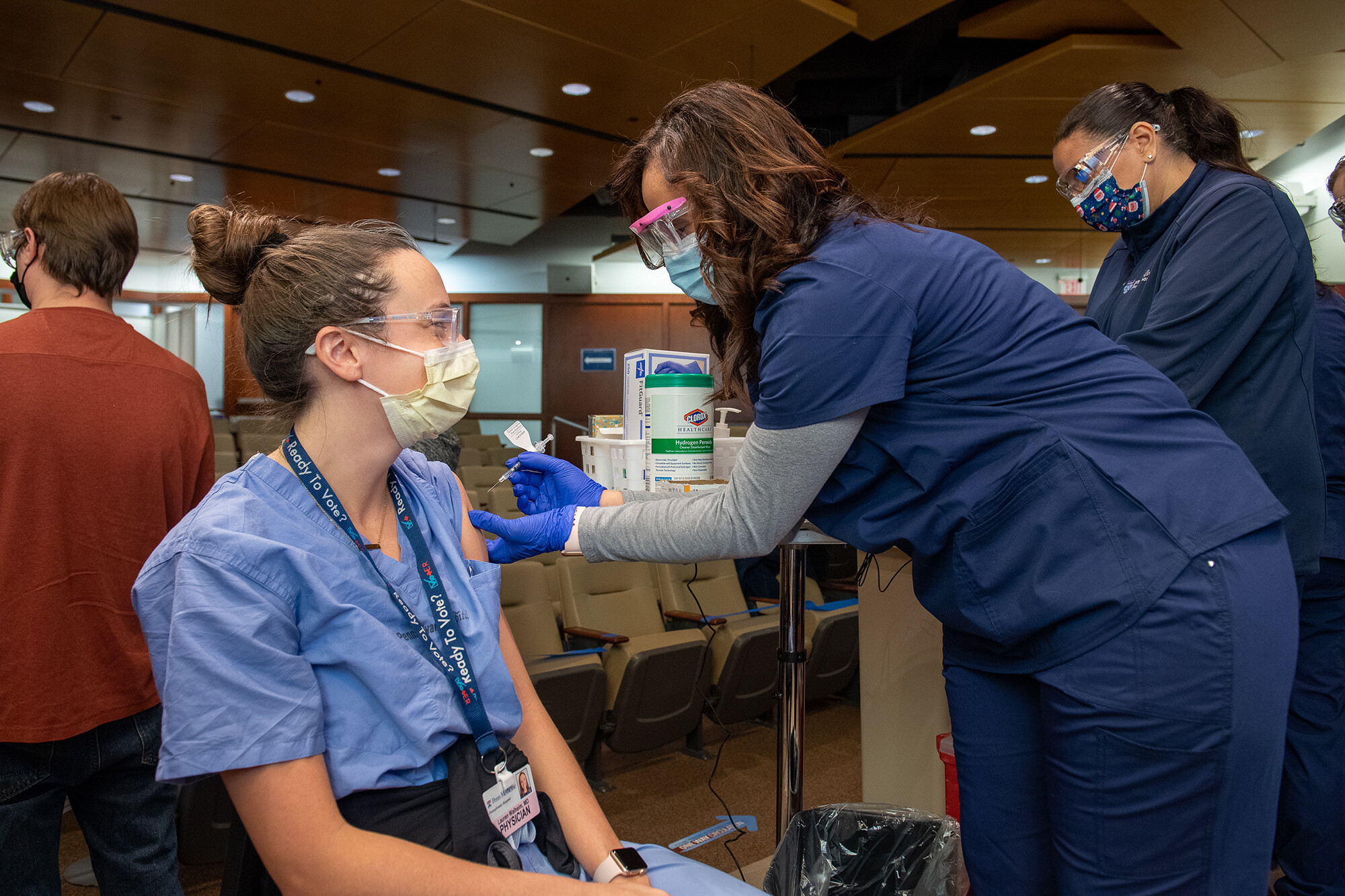
Soon after vaccines were authorized in December 2020, health care workers, including many at Penn, were among the first to get vaccinated. Researchers John Wherry and Scott Hensley are tracking a cohort of vaccinated individuals to obtain a detailed picture of the immune system’s response to the vaccine, as well as how long immunity may last. (Image: Dan Burke)
“The immune response after the second dose is much more coordinated,” he says, “almost a synergy of things that get you very rapidly to a high level of protection.” Individuals who had recovered from a COVID-19 infection showed a similar response after just one dose, according to a study Wherry led.
In Drew Weissman’s lab, research in animal models has show protection can last more than a year, “half of a mouse’s life,” though he notes that those studies used higher doses than what people are receiving in the currently authorized vaccines. “My guess is that durability is partially dose-dependent,” he says.
The companies conducting the phase 3 clinical trials, which evaluate vaccine safety and efficacy, will follow participants for two years. But so-called “phase 4 trials,” using real-world data from non-trial participants, including research at Penn, will further augment our vaccine understanding.
Broadening protection
The “big monkey wrench” to vaccines, says Hensley, are emerging variants. “It’s clear that vaccine-induced antibody responses are very high to the Wuhan isolate of SARS-CoV-2,” he says. “But it’s also clear that those antibodies react less well to the variants that are in circulation today.”
RELATED
Hensley notes that responses are still good, but as the pandemic continues to surge across the world, the virus has more opportunities to mutate in ways that could dodge vaccine-generated immunity. That’s one reason it’s so crucial to ensure access to vaccines around the globe.
Fortunately, Wherry notes that viruses aren’t the only entities that change. Antibodies themselves acquire mutations to become more focused and effective at targeting pathogens. “It’s really fascinating,” he says. “A booster gives the immune system the opportunity to continue to push and reshape the antibody response,” which might give immunized individuals a leg up, even when faced with new variants.
Pharmaceutical companies and academic research institutions are testing different boosters currently, using both new sequences of the spike protein mRNA and combinations of existing vaccines to augment immunity.
One strength of the mRNA vaccine platform is its production speed: Boosters that target a different form of the virus could be brought to market quickly. “It’s plug and play,” Weissman says. He also notes that the FDA may determine that phase 3 efficacy studies are not required for boosters, similar to how the annual flu vaccines are regulated, further smoothing the pathway.
Looking forward
In addition to the three currently available in the U.S., many more vaccines are in one stage of development or another. How might they ethically and effectively receive the gold standard placebo-controlled testing as more and more people get vaccinated? As vaccination rates tick up, trial participants without at least some level of protection against COVID will be harder to come by.
Having contributed seminal discoveries that advanced the mRNA vaccines, Drew Weissman and colleagues are now looking toward the next challenge. They’ve recently published studies describing a new vaccine that could protect against a variety of coronaviruses, not just one. (Image: Dan Burke)
In January, Ellenberg and colleagues published a paper in theNew England Journal of Medicine suggesting such trials could still occur in countries without sufficient access to currently authorized vaccines. “It’s terrible that many countries are not getting enough,” she says. “But if the vaccines are not there yet, then I think it’s ethical to do a placebo-controlled trial in those places” assuming, she adds, that once the vaccines prove safe and effective, people who received the placebo are offered the shot instead.
There’s another alternative, too: head-to-head assessment of a new vaccine against one already proven to work. But “it’s really hard to compare a new vaccine with something that has 90% efficacy,” says Fernandez Lynch. “You have to enroll loads of people to see any infections.”
Each of these individual vaccines focuses purely on SARS-CoV-2. But there have been three total coronavirus epidemics in the past 20 years, says Weissman. “There’s just no way we’re not going to have more.”
What if one vaccine could protect against them all? That’s what Weissman and colleagues have in mind with their pan-coronavirus vaccine, which they recently described in the journal Nature. “Our thinking was, let’s make a vaccine now that will prevent infection with future beta-coronaviruses,” he says.
Their experimental vaccine blocks SARS-CoV-2, including variants, as well as the SARS virus that caused the 2003 outbreak and other coronaviruses found in bats. “We think that’s a great start,” Weissman says.
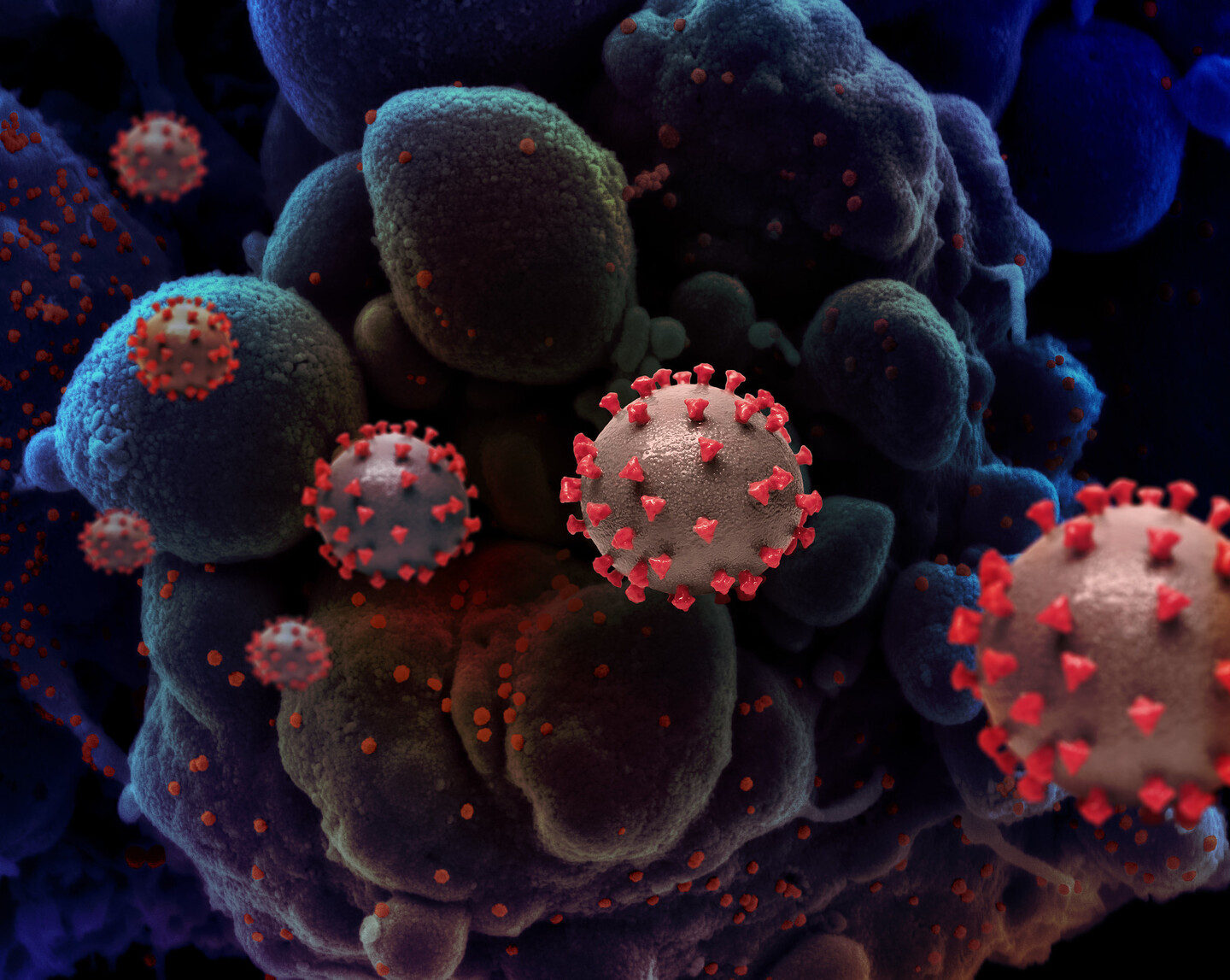
A creative rendition of SARS-CoV-2 virus particles, not to scale. As of mid-July, the virus has sickened more than 186 million people worldwide and more than 4 million people have died from it, according to the World Health Organization. Globally, more than 3.3 billion vaccine doses have been administered. (Homepage image: NIAID)
Susan Ellenberg is emeritus professor of biostatistics and epidemiology at the University of Pennsylvania Perelman School of Medicine.
Holly Fernandez Lynch is the John Russell Dickson, MD Presidential Assistant Professor of Medical Ethics, the assistant faculty director of online education in the Department of Medicine Ethics and Health Policy at the Perelman School of Medicine, and an assistant professor at the Carey Law School.
Scott Hensley is a professor of microbiology at the Perelman School of Medicine.
Drew Weissman is the Roberts Family Professor in Vaccine Research at the Perelman School of Medicine.
E. John Wherry is the chair of the Department of Systems Pharmacology and Translational Therapeutics and theRichard and Barbara Schiffrin President’s Distinguished Professor in the Perelman School of Medicine and director of the Institute for Immunology.
On the move: Water quality and antimicrobial resistance testing goes mobile
Penn researchers have developed a mobile field laboratory allowing them to test water quality and track antimicrobial resistance in and around San Cristóbal in the Galápagos.
Penn researchers Vanessa and Alexis North are studying one of the largest collections of Egyptian blue objects ever found in the ancient Near East, shedding new light on how the world’s first synthetic pigment may have traveled far beyond Egypt.
A new role for dental providers? Rethinking where vaccines are given
Vaccinations have traditionally been administered in primary care settings or pharmacies. However, for about a decade, some states have authorized dentists to administer vaccines, and many others did so during the COVID-19 pandemic. The effectiveness of this approach has led some countries and states to expand or consider expanding the role of dental providers in delivering routine vaccines, including those against COVID-19 and the human papillomavirus (HPV), and in providing vaccine education.
Penn student develops a way for computer chips to run more efficiently
Fluid Silicon, a platform from President’s Sustainability Prize winner Nhlanhla Mavuso, allows computer chips to continuously monitor their health and self-tune as their characteristics change. The technology has the potential to reduce energy usage in data centers and improve reliability in mission-critical applications.