How can the world allocate COVID-19 vaccines fairly?
It’s an ethical question many Penn experts are contemplating. One fact is certain, they say: Distribution must not exacerbate disparities and inequities in health care.
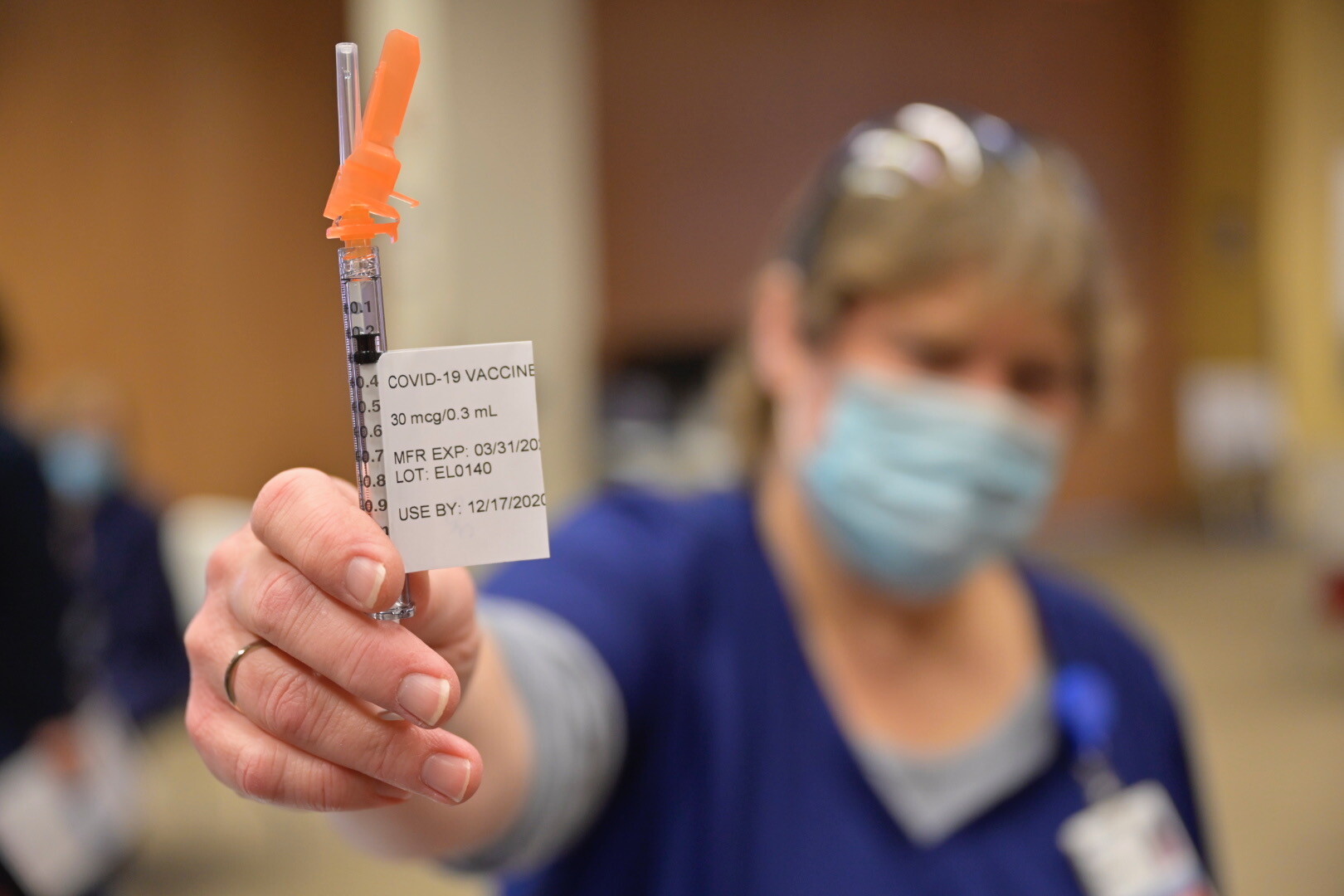
On Dec. 11, the FDA granted an Emergency Use Authorization for the Pfizer-BioNTech COVID-19 vaccine, with similar authorization for the Moderna COVID-19 vaccine coming a week later. Frontline health care workers across the United States, including at the hospitals of the University of Pennsylvania Health System, have received their first doses. Similar scenes are playing out in countries around the world. (Image: Dan Burke)
SARS-CoV-2 emerged with a bang, appearing out of nowhere and spreading with lightning speed. It affects the body in ways similar to other respiratory illnesses, yet also differently. It forced countries to take drastic actions—mask-wearing, social distancing, shutting down economies—never before seen or most recently experienced a century ago. Just a year after the world first heard about a novel coronavirus in Wuhan Province, China, vaccines that very effectively combat COVID-19 already exist.
Yet with vaccine approval, even the limited kind dictated by Emergency Use Authorizations (EUA) like those in December in the United States issued for the Pfizer-BioNTech and Moderna vaccines, the question of distribution remains. The answer is not straightforward, with a seemingly unending set of decisions necessary before the shots actually reach individuals.
At the broadest level, how do international dose allocations look? From there, how does each country circulate its stock? In the U.S., that means to 64 jurisdictions, most of them states. Jurisdictions then distribute to health systems or nursing homes or whichever facilities top their list, and those places independently decide who moves to the front. And on and on down the line. Without digging too deep, it’s easy to see the monumental task at hand for those deciding how to spread out what is, at present, a scant resource.
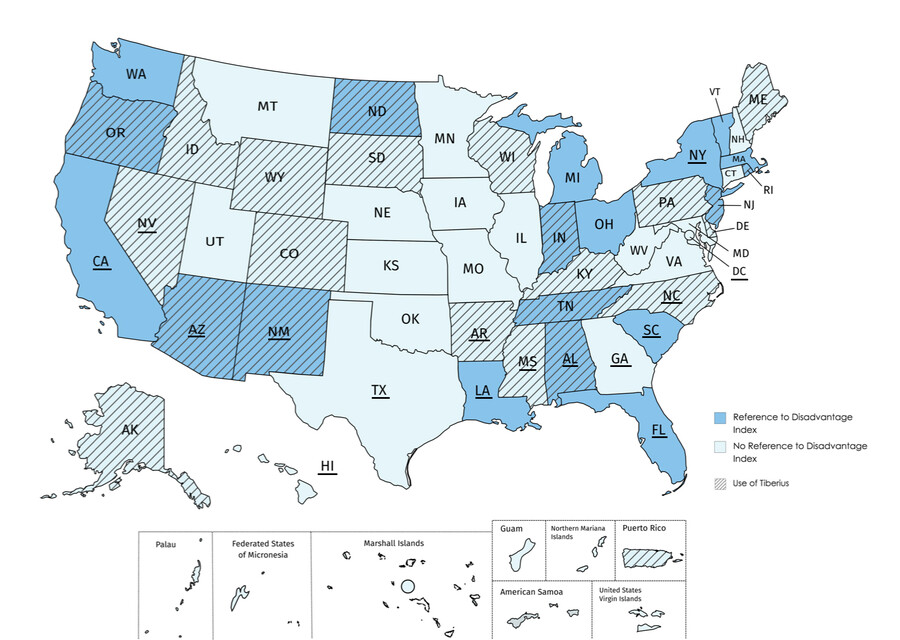
Bioethicist Harald Schmidt of Penn Medicine and colleagues analyzed the vaccine distribution proposals of the 64 U.S. jurisdictions with an eye toward equity. They found that 18 states plan to use a disadvantage index in some capacity, represented in darker blue on the map. Tiberius, designated with hatch marks, is software the CDC helped develop to assist states with vaccine allocation. (Image: Courtesy of Harald Schmidt)
As of this writing, COVAX, an initiative jointly run by the World Health Organization (WHO) and several other global organizations, recommended proportional allocation to start, meaning each of 190 participating countries—which does not currently include the U.S.—would get vaccine doses for 3% of its population, prioritizing essential health workers. In the U.S. in early December, the Advisory Committee on Immunization Practices (ACIP) of the Centers for Disease Control and Prevention (CDC) published a framework to guide states, recommending allocations for the initial phases.
Both sets of guidance barely skim the surface with regard to equity, a fact that troubles Penn experts like bioethicist Harald Schmidt and behavioral scientist Alison Buttenheim.
“We know that this disease has disproportionately burdened some groups,” says Buttenheim of Penn Nursing. From March 2020 through the end of the year, Black and Hispanic/Latino individuals were hospitalized at three to three-and-a-half times the rate of non-Hispanic whites, according to CDC data. Black individuals were more than twice as likely to die from COVID-19 as non-Hispanic whites. “We also know that these groups are the least likely to report being excited about getting a vaccine,” she adds. “Initially, we’re going to have scarce supply, and there’s a worry that this will all contribute to worsening disparities and inequities.”
It doesn’t have to be that way, says Schmidt of Penn Medicine. “None of this is a foregone conclusion.”
Vaccine numbers
In mid-November 2020, drug maker Moderna announced that its vaccine to combat COVID-19 was 94.5% effective. That came just days after Pfizer and partner BioNTech made similar efficacy claims about theirs. Both use messenger RNA to order the body to initiate a defense against COVID-19, a technique developed by Penn’s Drew Weissman and Katalin Kariko, who has since moved to BioNTech.
That two vaccines are already being distributed in the United States, with 20 worldwide in large-scale Phase 3 clinical trials, is incredible to Paul Offit. He directs the Vaccine Education Center at the Children’s Hospital of Philadelphia (CHOP) and is a Penn Medicine professor of vaccinology.
“In less than a year we’ve made a vaccine,” he says. “It’s a technological breakthrough. A tour de force. It’s amazing, especially given the level of disdain for science in [the Trump] Administration.”
If all goes accordingly, the companies making the three frontrunner vaccines—Pfizer-BioNTech, Moderna, and AstraZeneca, in partnership with Oxford University—expect to produce a combined 5.3 billion doses in 2021. The Pfizer-BioNTech and Moderna vaccines each require two shots. Should the AstraZeneca vaccine require just one, that means potential immunization for some 3.1 billion people this year, about 40% of the world’s population. As of Jan. 5, in less than a month of vaccine distribution in the U.S., nearly 5 million people had received an initial dose, just shy of 2% of the population.
Global allocation
These numbers may sound large, but despite millions of shots already given, beyond the initial roll-out phase it’s still unclear who specifically falls into which bucket, says Matthew McCoy, an assistant professor in Penn Medicine’s Department of Medical Ethics and Health Policy.
When COVID vaccines were more theoretical than not, the WHO arm tasked with guiding the organization—called SAGE or the Strategic Advisory Group of Experts on Immunization—highlighted several ethical principles to govern allocation. “They said that any distribution of vaccines should advance human well-being and honor global equity, national equity, reciprocity, and legitimacy,” says McCoy, whose work focuses on bioethics and public policy. “But COVAX decided to take a much more straightforward approach.” That is, proportional allocation based on population size.
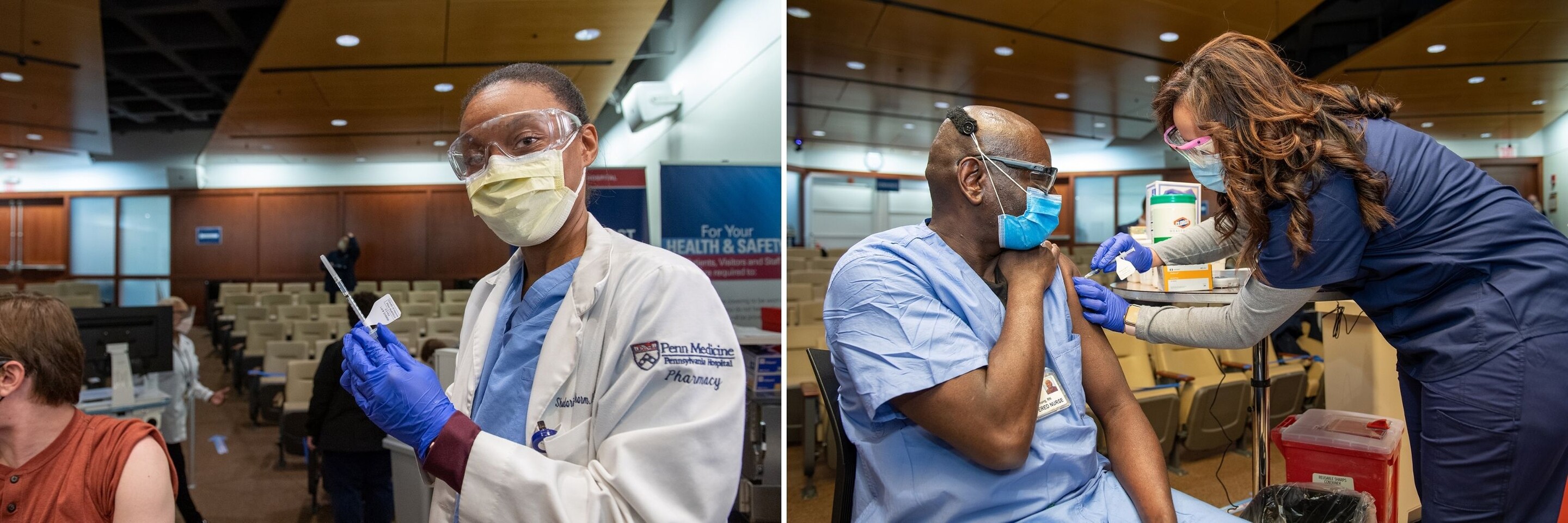
On Wednesday, Dec. 16, Penn health care workers began receiving doses of Pfizer’s COVID-19 vaccine. Pennsylvania Hospital pharmacist Shadaria Shuler (left) prepares a shot. Joanne Ruggiero, clinical director for Women’s Health and Behavioral Health at Pennsylvania Hospital, administers a vaccination to Emergency Department nurse Eric Young (right). (Image: Dan Burke)
“That means that in the first push, countries will get vaccine doses for 3% of their population with priority for health care workers. The next goal is vaccine for up to 20% of the population with priority for people who are at higher risk for death or serious illness from the virus,” he says. “After that, COVAX plans to start accounting for each country’s risk profile, trying to prioritize those countries the hardest hit by the virus, either in terms of health or economic impact.” (It’s unclear whether vaccine distribution via COVAX has already begun.)
Though Penn philosopher Kok-Chor Tan believes this approach trumps vaccine nationalism, whereby countries hoard doses to protect their own populations, “literal equality isn’t properly sensitive to variations on the ground,” he says. “It’s not attuned to the way the pandemic is actually impacting different countries.”
To address that, Tan, McCoy, and others, including Penn Vice Provost for Global Initiatives Ezekiel Emanuel, proposed in September 2020 what they called the Fair Priority Model, shared in the journal Science. McCoy, Emanuel, and others further argued for it in a January 2021 paper in the journal BMJ.
RELATED
The Fair Priority Model is a three-phase plan for worldwide distribution of what was, at the time, a COVID vaccine in the abstract. “Our proposal said that in the first phase, you allocate according to a country’s needs,” says Tan, who studies human rights and global justice. “Distribute with the aim of minimizing premature death due to COVID-19. It’s not equal allocation but rather equitable allocation.” The second phase addresses those same issues, plus tries to reduce what the researchers called “serious economic and social deprivations” like school and nonessential business closures. The third and final phase moves to reduce community transmission.
Tan says he finds the Fair Priority Model ethically superior to the WHO’s proposal. But, in an imperfect world, the two models can work together, he adds. In a forthcoming American Journal of Public Health paper, Emanuel and Tan (with three other co-authors) explain that the Fair Priority Model can supplement the WHO’s scheme by specifying when exceptions to equal allocation are ethically required.
Now that vaccine distribution has begun in many places, the ethics question becomes even more urgent, Tan says. “It’s real. It’s no longer something in the future.”
It’s not a one-and-done situation, McCoy adds. “The vaccine is going to arrive in batches and these questions will continue to arise. We need to continue to think about ways to optimize allocation,” a scenario made more challenging because COVAX has little authority over how countries divvy up doses within their borders.
U.S. distribution
For the United States, the branches on that decision tree span all 50 states, plus a handful of large cities, affiliated islands, and territories. Yet despite their independence, these places aren’t making decisions in a vacuum.
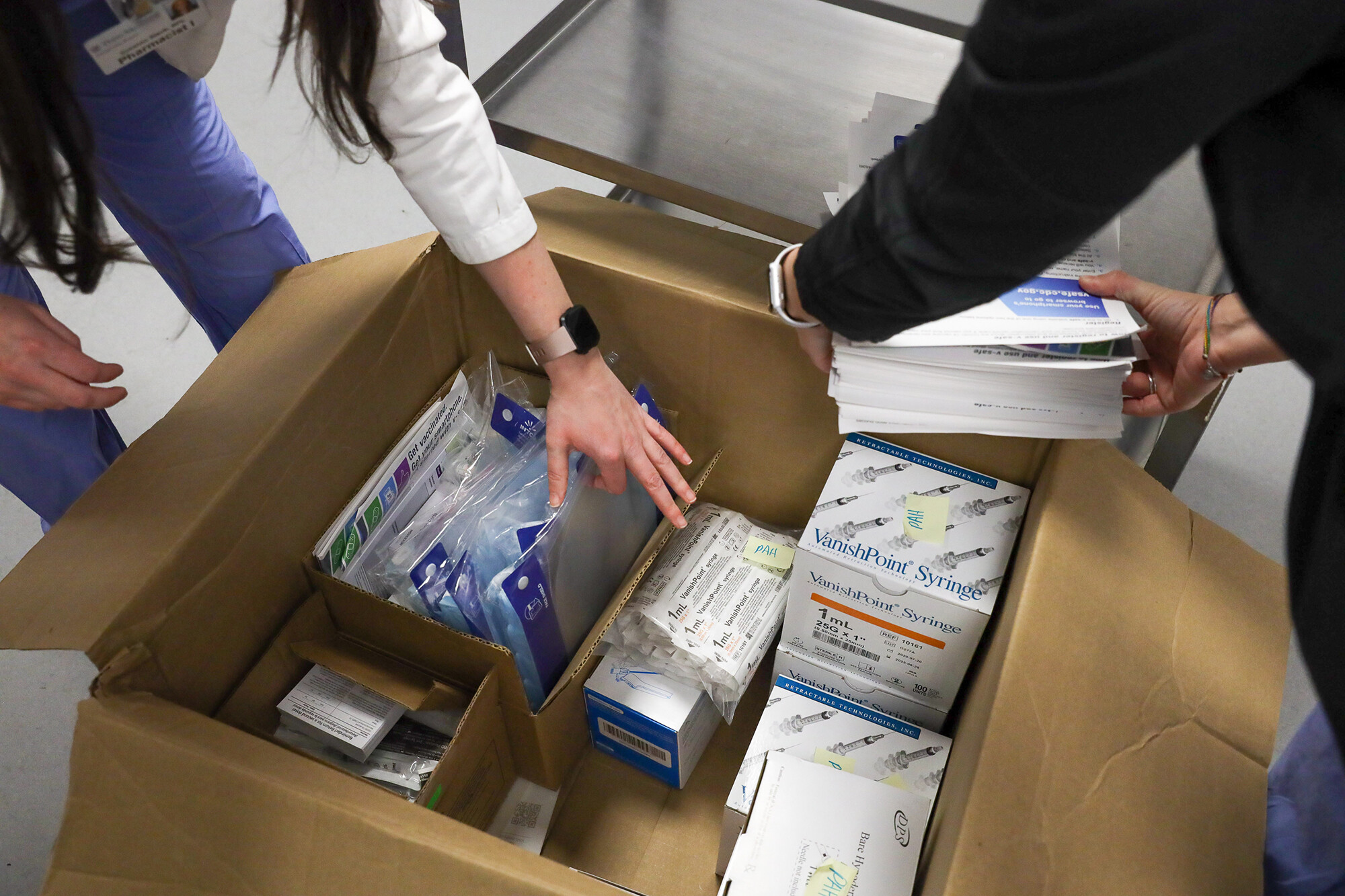
A complicated calculus went into global and national vaccine allocation, with many decisions happening before supplies—like the face shields, syringes, and reminder cards seen here—arrived at facilities. (Image: Dan Burke)
Much like SAGE’s guidance to the WHO, a panel of experts convened by the National Academies of Sciences, Engineering, and Medicine provided advice at the request of the CDC and the National Institutes of Health. Buttenheim, scientific director of Penn’s Center for Health Incentives and Behavioral Economics, was on that committee.
After two months of weekly video meetings, listening to and reading expert testimony, and public hearings, the group published the “Framework for Equitable Allocation of COVID-19 Vaccine” in September 2020. Buttenheim led the chapter about vaccine demand.
“The framework strives to allocate what we know will be scarce supply in a way that is fair and equitable and mitigates disease. Having to say who should be in line first and why is hard,” she says. “We wanted to make sure the framework at the very least did not exacerbate, and ideally would address, disparities and inequities in health care.”
In the first phase, you allocate according to a country’s needs. Distribute with the aim of minimizing premature death due to COVID-19. It’s not equal allocation but rather equitable allocation.
Kok-Chor Tan, professor of philosophy in the School of Arts & Sciences
To address this, the committee suggested a four-phased approach that, in part, prioritized such populations by focusing on groups in which they are disproportionately represented, Buttenheim explains. For example, front-line health workers at high risk—included in the committee’s first phase—likely captures nurses and respiratory therapists and custodial staff, groups that traditionally skew female and include a higher proportion of racial minorities.
Beyond that, the committee recommended the federal government set aside 10% of its total allocation to redistribute to jurisdictions with greater vulnerability, identified through use of a vulnerability index tool. “We made an argument that if a state or city has a higher proportion of people affected by the disease,” she says, “they should get a larger vaccine allocation based on that and distribute it onward with that same focus.”
Of course, the National Academies framework isn’t law; it’s guidance for ACIP, the CDC’s advisory committee, which then offers recommendations to states. According to Schmidt, the latest word from ACIP did not incorporate a disadvantage index.
“That raises this question, what happens to social equity?” he says. “It’s there but not with the same high salience as in the Academies’ report. If we want to take social justice seriously, it’s not smart to allocate according to population. Politically, that might be the easiest thing to do but if we’re just doing things that are easy, we’ll again disadvantage racial and ethnic minorities. We’re all set up again to say these groups are just not as important.”
Jurisdiction plans
The final verdict hasn’t yet been read, however. Jurisdictions create and carry out their own distribution plans, initial drafts for which they submitted to the CDC in November 2020. They filed close-to-final versions by Dec. 4.
Schmidt, Buttenheim, and a group of Penn students, with colleagues from Harvard, Georgetown, and CHOP analyzed the proposals with an eye toward equity. They found that at the time, 18 states planned to use a disadvantage index in some capacity. “That’s pretty encouraging,” Schmidt says. “ACIP has not recommended this but regardless, states are looking into it. California developed its own index. Tennessee goes on the record saying, ‘We’ll reserve 10% of our vaccine allocation.’”
Buttenheim is equally heartened. “The strong default here would be proportional allocation,” she says. “It’s impressive that any states are even signaling use of a vulnerability index.”
Important to note is a CDC rule regarding COVID vaccines: No jurisdiction will receive more until it uses up its first batch. To secure additional doses quicker, states may be incentivized to offer vaccines to people they know will take them—groups that don’t necessarily overlap with the disadvantaged populations that, from an ethical standpoint, Schmidt and others believe deserve priority.
Here, the researchers stress the need for transparency and open communication.
“You don’t just show up with a new vaccine and have immediate buy-in,” Buttenheim says. “A lot of groups have been really mistreated in medical research. We need to unpack the distrust people feel. It can take many forms.” Maybe it’s suspicion around the medical industrial complex or the research that led to the vaccines. Maybe it’s disinterest in doing something that feels experimental. “We need to figure out if it helps when people can get vaccinated at familiar locations they know and trust, rather than just at a centralized clinic or large health system,” she adds.
An ever-changing situation
As the situation evolves, those entities offering vaccines must progress with it to ensure the world eventually reaches herd immunity, when enough people are immune such that COVID-19 can no longer spread unchecked. It’s the only way to truly stop the virus from circling the globe again and again, Offit says.
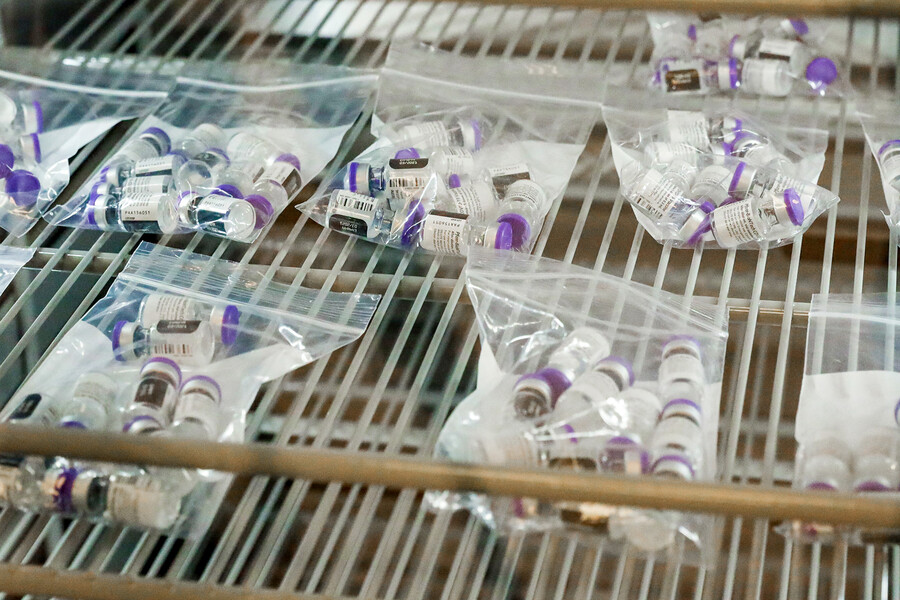
Bags of vials of the Pfizer-BioNTech COVID-19 vaccine. The doses must be stored at ultra-low temperatures (-112° to -76° Fahrenheit), but can survive in a refrigerator for five days. Once they’re needed, each vial requires 30 minutes at room temperature, plus a careful process that includes inversion and dilution with a saline solution, before being drawn up into a syringe. (Image: Dan Burke)
“There’s never been an example in the history of humankind of a pathogen eliminating itself by inducing immunity in a population. That has never happened, and it never will,” he says. “The only way to do this is with a vaccine. Vaccines induce herd immunity. Natural infection never does.”
Some places like the United Kingdom and Canada have already begun distributing a COVID vaccine. And in the U.S., with the EUA for the Pfizer and Moderna vaccines, Americans have started getting it, too.
Even as the world moves into this new pandemic phase, so many questions remain. Do these vaccines prevent those who receive them from infecting others? How long does immunity last? Will the vaccines protect against virus mutations like those already emerging? On the distribution side, how do countries ensure that their most vulnerable—people who, in many instances, have historically been overlooked or mistreated—get the vaccination? How do countries prevent exacerbating persistent inequities? There’s plenty more work to do.
“The first quarter or half of 2021 is a pretty narrow window,” Buttenheim says. “We’re going to have to get it right. We don’t want to blow this amazing opportunity.”
Editor’s Note: This piece was originally published on Dec. 17, 2020. It has been updated to reflect the most current information, as of Jan. 7, 2021.
On the move: Water quality and antimicrobial resistance testing goes mobile
Penn researchers have developed a mobile field laboratory allowing them to test water quality and track antimicrobial resistance in and around San Cristóbal in the Galápagos.
Penn researchers Vanessa and Alexis North are studying one of the largest collections of Egyptian blue objects ever found in the ancient Near East, shedding new light on how the world’s first synthetic pigment may have traveled far beyond Egypt.
A new role for dental providers? Rethinking where vaccines are given
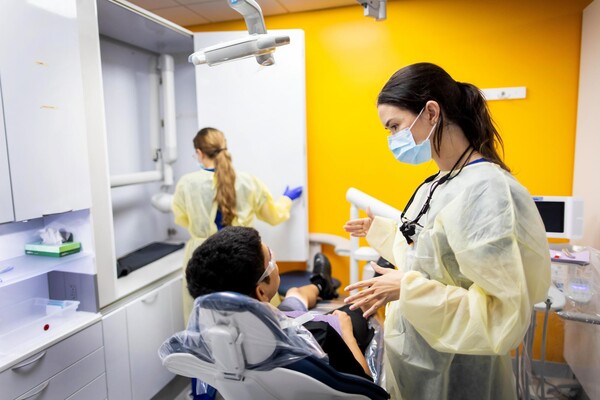
Vaccinations have traditionally been administered in primary care settings or pharmacies. However, for about a decade, some states have authorized dentists to administer vaccines, and many others did so during the COVID-19 pandemic. The effectiveness of this approach has led some countries and states to expand or consider expanding the role of dental providers in delivering routine vaccines, including those against COVID-19 and the human papillomavirus (HPV), and in providing vaccine education.
Penn student develops a way for computer chips to run more efficiently
Fluid Silicon, a platform from President’s Sustainability Prize winner Nhlanhla Mavuso, allows computer chips to continuously monitor their health and self-tune as their characteristics change. The technology has the potential to reduce energy usage in data centers and improve reliability in mission-critical applications.