A link between social environment and healthy brains in wild rhesus macaques
Research from Penn, Arizona State University, the National Institute of Mental Health, and elsewhere finds that on the island of Cayo Santiago, female monkeys with a higher social status had younger, more resilient molecular profiles.
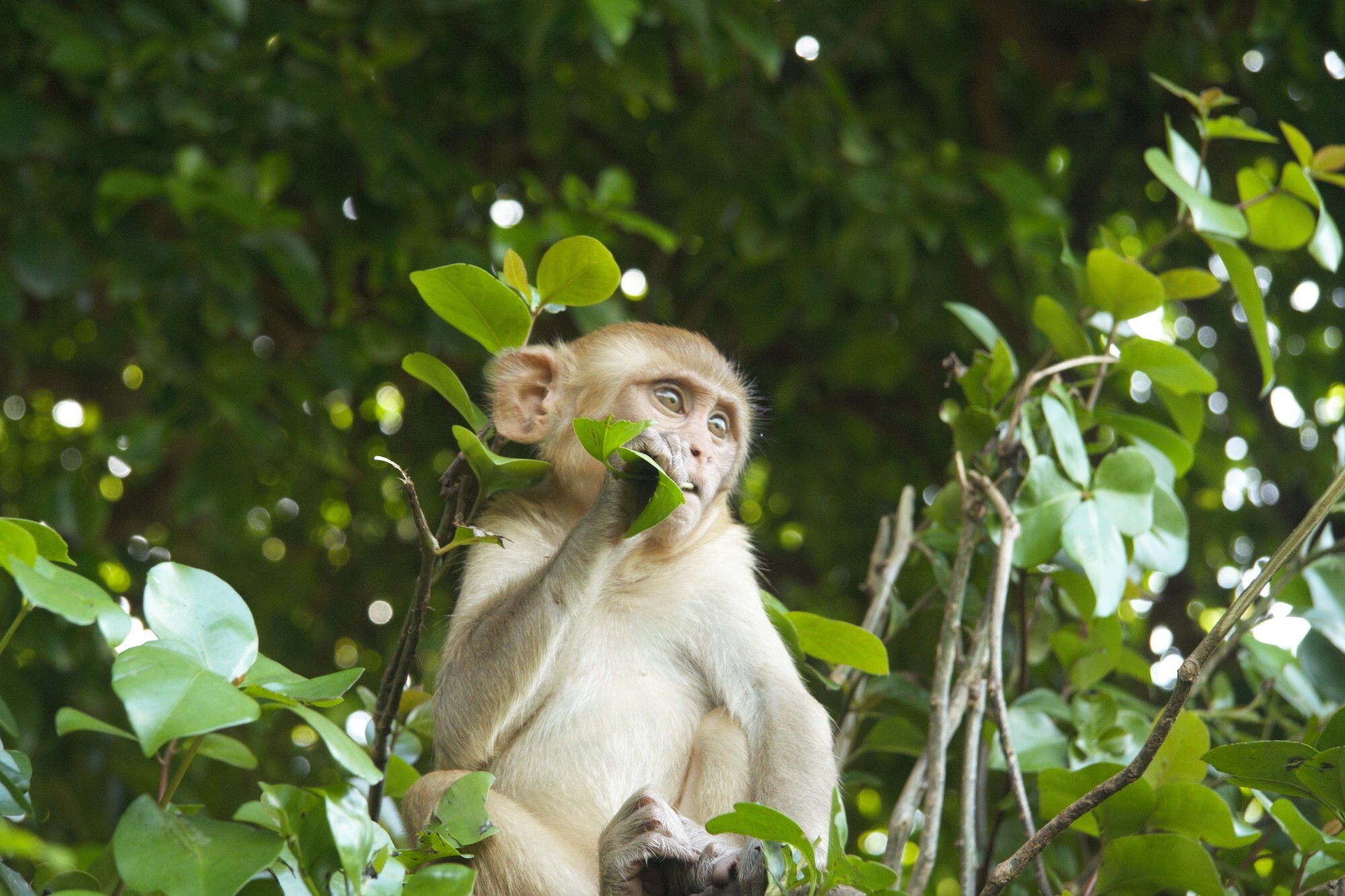
A team of researchers including Penn neuroscientist Michael Platt has been studying a colony of rhesus macaques on Cayo Santiago, a small Puerto Rican island, for more than a decade. (Image: Lauren Brent)
Some declines in health, mind, and body are inevitable. Yet studies have shown that maintaining a positive social environment can stave off some of aging’s key stressors and challenges. Scientists have long been interested in exploring these root causes and in studying how the environment may help slow the pace at which the human brain ages. With new technologies, they’ve begun to tease out the connection between the dynamics of an individual’s social environment and molecular changes in the brain.
With aging processes protracted over decades, human studies on aging are difficult to perform. So, researchers like Penn Integrates Knowledge University Professor Michael Platt and Noah Snyder-Mackler, an assistant professor at Arizona State University (ASU), have turned to nonhuman primates to better understand the link between social environment and physiology, from the organismal level all the way down to genes.
Now, in a new study, a team including Platt and led by Snyder-Mackler and postdoctoral fellows Kenneth Chiou of ASU and Alex DeCasien of the National Institute of Mental Health (NIMH), demonstrated that in a population of rhesus macaques, females with a higher social status had younger, more resilient molecular profiles, providing a key link between the social environment and healthy brains.
The team, which included researchers from the Caribbean Primate Research Center/University of Puerto Rico, University of Washington, University of Exeter, New York University (NYU), North Carolina Central University, University of Calgary, and the University of Lyon, published its findings in the journal Nature Neuroscience.
Penn Integrates Knowledge professor Michael Platt holds appointments in the Department of Psychology in the School of Arts & Sciences, the Department of Neuroscience in the Perelman School of Medicine, and the Marketing Department in the Wharton School.
Rhesus macaques are “the best-studied nonhuman primate model species in medicine,” Snyder-Mackler says. “These animals also show some of the same age-related changes that we see in humans, including declines in bone density and muscle mass, immune system changes, and an overall impairment of behavioral, sensory, and cognitive function.”
The study builds on more than 15 years of work by Platt’s team investigating the interactions between social behavior, genetics, and the brain in a wild population of macaques on Cayo Santiago, an island off the coast of Puerto Rico. “The discoveries made by our team demonstrate the value of all the hard work and resources invested in this long-term study,” says Platt, who has appointments in the University of Pennsylvania’s Perelman School of Medicine, School of Arts & Sciences, and the Wharton School.
It also shows the value of long-term collaborative networks across institutions, says James Higham, a professor of anthropology at NYU. “Long-term funding for such networks is the key to enabling important multidisciplinary findings in naturalistic animal populations.”
The social environment and biology of aging
A broad theme of Snyder-Mackler’s lab at ASU is to investigate the root causes and consequences of variation in the social environment, examined at scales from tiny molecules all the way to the whole organism.
In the past decade, new genomic technologies have propelled researchers to more extensively probe this dynamic interaction between the environment and the genome. Can a social or environmental adversity mimic older age at the molecular level? The answer is a decided yes, according to research the team recently published, one of the first studies showing that individual macaques that experienced a natural disaster had molecularly older immune systems.
In this case, the natural disaster was Hurricane Maria, and the group of monkeys was a population of free-ranging rhesus macaques living on the isolated island of Cayo. Platt has spent more than a decade studying these animals, which have lived on the island since 1938, managed there by the Caribbean Primate Research Center. Recent work of Platt and colleagues found that after Hurricane Maria, these macaques formed more friendships and became more tolerant of each other, despite fewer available resources.
To make connections between social status and the brain’s inner workings, the researchers undertook two studies: In one, they generated comprehensive gene expression datasets from 15 regions of the brain. In the other, they focused on one region in greater detail at the single cell level—in this case, a detailed analysis within the dorsolateral prefrontal cortex (dlPFC), an area associated with memory, planning, and decision-making. The team accompanied this work with detailed behavioral observations and data collection on 36 study animals (20 females and 16 males).
Emergent patterns
When they grouped each sample brain region by age, eight distinct gene clusters stood out. Among the most interesting clusters were those involved in metabolic processes, cell signaling, and the immune and stress responses. “We ended up identifying thousands of genes showing age-associated differences in expression patterns, including roughly 1,000 that show highly consistent patterns across the brain,” says ASU’s Chiou.
Next, they homed in on their analysis to magnify the brain’s prefrontal cortex at a single cell level. “We complemented our brain-wide gene expression data with measures of the expression of genes in 71,863 individual cells in the dlPFC across 24 females spanning the macaque lifespan,” Chiou says.
RELATED
The gene expression data allowed the researchers to classify each individual cell into eight broad neural cell types (e.g., excitatory neurons, microglia) and then further parse them into 26 distinct cell types and subtypes in the dlPFC brain region.
They also revealed strong parallels between macaque and human gene expression signatures of age. Some of this variation was specific to regions associated with degenerative neurological diseases, while others reflect conserved neurological patterns associated with older age across the whole brain. When compared to mouse and human brain data, the pathways showing the greatest similarities in variation linked to age across regions were central to brain cell-to-cell communication, brain growth, and a key brain regulatory gene for cell growth and death.
Not all the findings had human parallels, suggesting that the root causes of some neurodegenerative disease are also part of what make humans unique. These key differences between the effects of age in macaques and humans could help explain the unique mechanisms underlying some human neurodegenerative diseases.
Among the biochemical pathways showing the greatest age divergence across regions were energy pathways. Interestingly, human neurodegenerative diseases such as Parkinson’s disease, Huntington’s disease, and Alzheimer’s were associated with some of the most diverged gene sets between humans and monkeys.
“This suggests that while neurodegeneration pathways in humans differ from macaques in their age profiles in some regions, they still exhibit strong overlap with social adversity, paralleling epidemiological links in humans between social adversity and neurodegenerative diseases,” says DeCasien of NIMH.
Aging associated with social environment variation
Next, the team applied its data to the social aspects of macaque aging, which have several unique features.
In female macaques, dominance rank—the monkey equivalent of social status—is inherited from their mother and, for the most part, remains stable throughout life. This is very different from the pattern found in male macaques, that leave their groups when they mature and enter new groups at the bottom of the hierarchy. As their tenure in the new group lengthens, they rise in rank.
“Evidence in humans and other social species suggests that variability in the risk, onset, and progression of age-related morbidities is explained in part by variation in social adversity,” Snyder-Mackler says. “In female macaques, for instance, low social status is associated with increased mortality, and its effects on immune cell gene expression is similar to gene expression signatures of aging in humans.”
But was there a link between social adversity and molecular signatures of age in the macaque brain? The researchers found that the effect of rank on gene expression was particularly driven by younger molecular profiles in high-ranking females; this suggests that associations between higher rank and younger brain age are not expressed linearly along the social hierarchy but instead are specific to females with the highest ranks.
High social status may confer several advantages, including increased access to resources, more predictable environments, and decreased harassment from groupmates. “Our findings provide some of the first evidence of molecular parallels between aging and social adversity in the brain, providing a key mechanism linking adverse or conversely, beneficial environments and earlier onset and faster progression of age-related brain decline and disease,” DeCasien says.
Future work
These findings now provide valuable targets for future studies in a tractable, clinically important model of human health and aging, Platt says. “It’s possible that we might be able to modify one or more of these molecular pathways to slow the aging process in the brain. In addition, our findings show just how deeply social adversity is baked into our own brain biology, and strongly endorse efforts to reduce inequality in our society.”
These links potentially have a causal explanation; the chronic stress of social adversity, for instance, has been proposed to accelerate aging by promoting chronic inflammation from a weakened immune system. The work underscores the importance of considering the social environment as a key modifier of aging and health.
“There is no longer any doubt that the social lives of humans and other group living animals are inexorably intertwined with the rest of their biology,” says Lauren Brent, an associate professor at the University of Exeter. “Exciting future research will show us why our interactions with others might impact how quickly we age, and whether these impacts are reversible
This study’s data and findings may propel the field closer to this goal. “Our findings provide a rich molecular resource cataloging age-associated molecular changes in the brain in a model nonhuman primate living in a complex social and naturalistic environment,” says Snyder-Mackler. “We hope they will lend new insights into how we can all lead longer, healthier, happier lives.”
Funding for this research came from the National Institute on Aging, National Institute of Mental Health, National Science Foundation, and the National Institutes of Health Office of Research Infrastructure Programs.
Co-lead authors for the paper were Kenneth Chiou of Arizona State University and Alex DeCasien of the National Institute of Mental Health. Senior paper author was ASU’s Noah Snyder-Mackler.
On the move: Water quality and antimicrobial resistance testing goes mobile
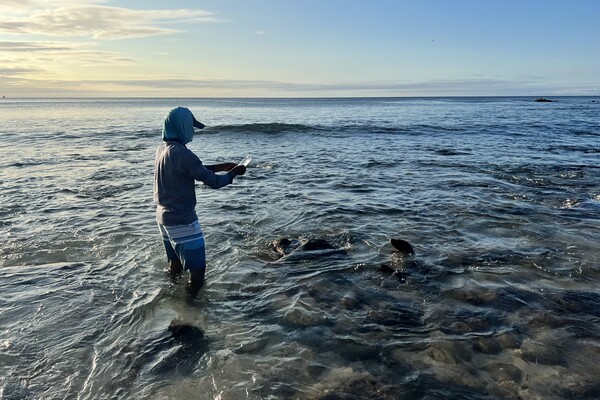
Penn researchers have developed a mobile field laboratory allowing them to test water quality and track antimicrobial resistance in and around San Cristóbal in the Galápagos.
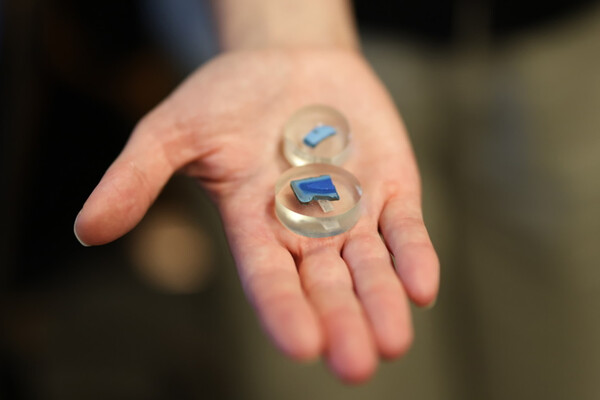
Penn researchers Vanessa and Alexis North are studying one of the largest collections of Egyptian blue objects ever found in the ancient Near East, shedding new light on how the world’s first synthetic pigment may have traveled far beyond Egypt.
A new role for dental providers? Rethinking where vaccines are given
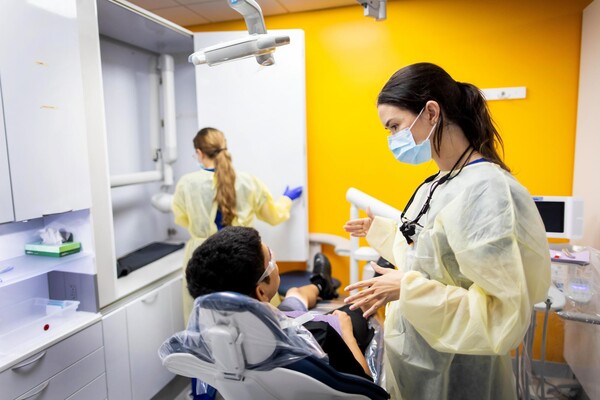
Vaccinations have traditionally been administered in primary care settings or pharmacies. However, for about a decade, some states have authorized dentists to administer vaccines, and many others did so during the COVID-19 pandemic. The effectiveness of this approach has led some countries and states to expand or consider expanding the role of dental providers in delivering routine vaccines, including those against COVID-19 and the human papillomavirus (HPV), and in providing vaccine education.
Penn student develops a way for computer chips to run more efficiently
Fluid Silicon, a platform from President’s Sustainability Prize winner Nhlanhla Mavuso, allows computer chips to continuously monitor their health and self-tune as their characteristics change. The technology has the potential to reduce energy usage in data centers and improve reliability in mission-critical applications.