How do natural disasters shape the behavior and social networks of rhesus macaques?
A team of researchers from Penn, the University of Exeter, and elsewhere found that after Hurricane Maria monkeys on the devastated island of Cayo Santiago formed more friendships and became more tolerant of each other, despite fewer resources.
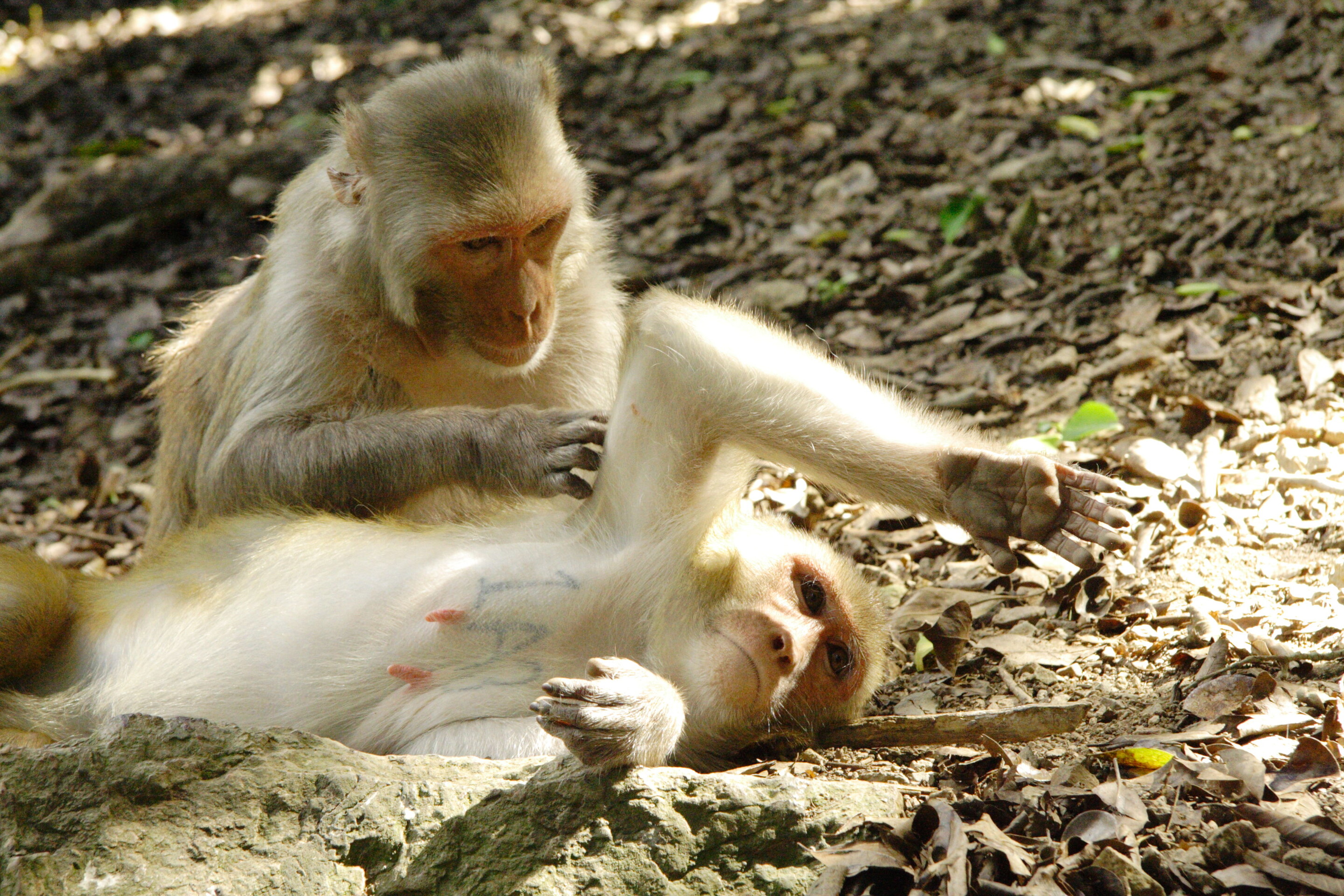
A team of researchers led by Penn neuroscientist Michael Platt had been studying a colony of rhesus macaques on Cayo Santiago, a small Puerto Rican island, for a decade when Hurricane Maria hit. The island had been devastated. A massive effort by the team on the ground allowed the work to get back up and running, putting the researchers in a unique position to study how the monkeys’ behavior may have changed in response to an acute natural disaster. (Image: Lauren Brent)
By the time Hurricane Maria made landfall in Puerto Rico in late 2017, then a Category 4 hurricane, a team of researchers led by University of Pennsylvania neuroscientist Michael Platt had been working on an island off the coast called Cayo Santiago for a decade, collaborating with scientists on the ground to study a colony of rhesus macaques there.
“You can imagine our devastation and fear when we saw Hurricane Maria headed for a direct hit on Cayo,” says Platt. “We couldn’t get in touch with any of our people to make sure they were OK. We also didn’t know if the monkeys were alive.” Several days later, once they confirmed their colleagues’ safety, they hired a helicopter to survey the damage.
The island had been devastated. The freshwater cisterns had been destroyed. Two-thirds of the green vegetation was gone, along with all of the research infrastructure. “Through some heroic efforts from the team down there, we were able to get research back up and running pretty quickly,” Platt says. “That put us in a unique position to study how the monkeys’ behavior may have changed in response to an acute natural disaster, the sort that’s becoming more common and intense as a result of climate change.”
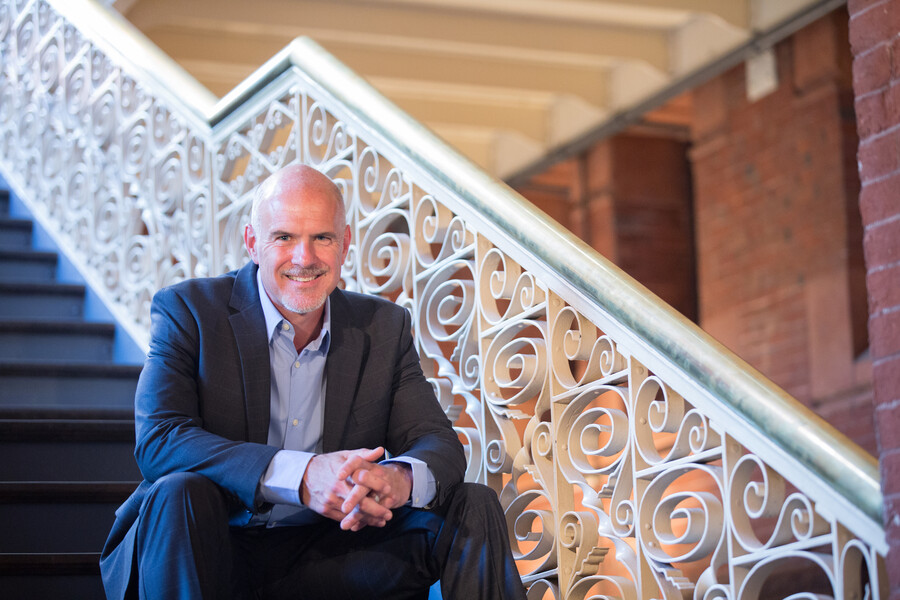
Penn Integrates Knowledge professor Michael Platt holds appointments in the Department of Psychology in the School of Arts & Sciences, the Department of Neuroscience in the Perelman School of Medicine, and the Marketing Department in the Wharton School.
In particular, the researchers, co-led by Lauren Brent of the University of Exeter, wanted to understand whether macaques’ social ties had shifted. Analyzing a dataset of detailed animal behavioral observations, they found that after Hurricane Maria, the animals actually became more social, more accepting of each other, and built new relationships, despite fewer available resources and potentially greater competition.
“Instead of increasing aggression, they became more tolerant,” says Camille Testard, a third-year doctoral student in Penn’s Perelman School of Medicine and lead paper author. “They extended their social networks, including more partners instead of strengthening key relationships like kin that they’ve had for a long time. This gives us information about the function of their social relationships.”
The team, which included colleagues from the University of Washington, the University of Roehampton, the University of Puerto Rico, New York University, and Arizona State University, shared its results in the journal Current Biology.
The big question
Because of the long-standing work on Cayo Santiago, the researchers already knew a great deal about the animals there. “Rhesus macaques are very sociable but live in a highly competitive society and so can be very aggressive to other members of their group,” says Brent, a biologist in Exeter’s Centre for Research in Animal Behavior.
To draw such conclusions in the past, the team had conducted focal animal sampling, during which an observer identifies and follows an individual monkey for 10 minutes, reporting every action and interaction. “That allows you to get a rich picture of each animal in snippets,” Platt says. “You rotate through all the animals in the population and can make detailed social network maps.”
RELATED
Given the island’s state after the hurricane, however, the researchers couldn’t track individual monkeys in the same way. They turned to scan sampling, during which an observer looks up at 30-second intervals to record every monkey around and what each is doing. “When research assistants in the field started noting changes in the monkeys’ behavior, that they seemed to be more tolerant of past competitors, we decided to run some in-depth social network analysis,” Brent says.
Testard joined the team in 2019, after data collection but in time for the analysis. She says they decided to concentrate initially on one question: Are the monkeys more social after the hurricane, in particular by spending more time together or grooming each other more? To get at this, the researchers looked at proximity—whether monkeys will sit next to each other, something they tend to avoid with those who are aggressive toward them—and grooming, the latter of which is a more powerful bond signal.
The researchers also made sure to adjust for potential biases from louder monkeys grabbing more attention during observations, and sub-sampled the data to guarantee an apples-to-apples comparison of datasets pre- and post-Maria. “We ran many simulations and analyses,” Platt says. “We feel confident we have unbiased data.”
More tolerance, more bonds
The scientists’ analyses showed that macaques’ behavior on the island had indeed changed after the storm. For one, the monkeys were more tolerant of each other, sitting next to each other and not fighting over every food scrap. “It’s somewhat passive behavior, but at least they’re not moving away from each other,” Platt says.
More interesting was the assertiveness with which the monkeys formed new relationships. “They actively worked on reaching out and making new connections,” Platt says. “In particular, it was those monkeys who didn’t have strong friends or alliances before the storm who seemed to be the most active.”
Beyond that, the animals opted for a path of least resistance. Testard and the others had hypothesized the animals would try to bond with partners optimal for the situation, such as kin or high-ranking individuals who could help them access now-scarcer resources. But in reality, the macaques simply collected as many new partners as they could.
Cayo has strong similarities to human urban societies. …There’s nowhere for the animals to go to find more shade. They have to stay together. This is similar to humans; they can’t just leave their homes. They want to stay and rebuild.
Camille Testard, third-year doctoral student the Perelman School of Medicine
“We expected the monkeys would use their closest allies to cope with the ecological devastation of the hurricane and so would invest in their existing relationships,” Brent says. “Instead, the macaques expanded their social networks and the number of individuals that may tolerate sharing limited resources, like a shady space to sit. Our closest friends can give us many things. But sometimes what we need is a social network where everyone is just friendly enough.”
In other words, sharing a resource like shade—suddenly in shorter supply—may not require a very strong connection. “Having weak bonds with new partners may allow you to get just what you need from the relationship,” Testard says.
Sustaining the behaviors
Three years on, the macaques on Cayo Santiago seem to have maintained the friendships formed after the hurricane. The animals also seem to remain more tolerant of each other. “That’s pretty remarkable,” Platt says.
Knowing this, is it possible to extrapolate the findings to human behavior? People do come together following a natural disaster like a hurricane or a flood, in a “surge of solidarity,” as Testard puts it. But those feelings and actions don’t tend to last.
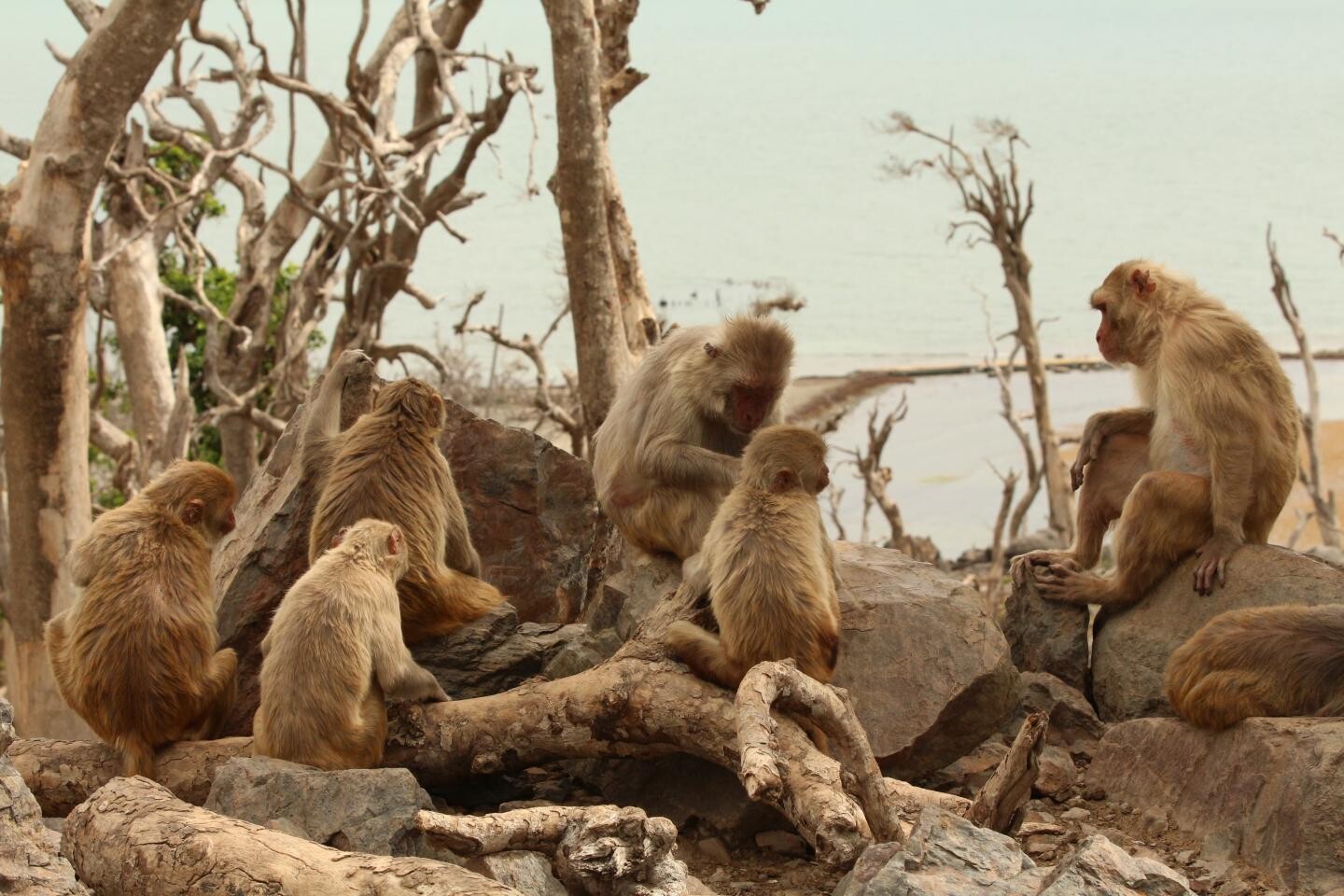
This image, taken in May 2018—about seven months after Hurricane Maria—shows a group of macaques on Cayo Santiago sitting together and grooming. (Image: Lauren Brent)
“Cayo has strong similarities to human urban societies,” she says. “It’s densely populated, and it’s an island; there’s nowhere for the animals to go to find more shade. They have to stay together. This is similar to humans; they can’t just leave their homes. They want to stay and rebuild.”
Platt says perhaps there’s a way to learn from the macaques’ ability to sustain these behaviors. “Social support is thought to be a major adaptive response to extreme stressors,” he says. “But we don’t fully grasp the mechanism for it yet.” This research, along with future work on questions like how Hurricane Maria physically changed the animals, moves us that much closer to an understanding.
Funding for this research came from the National Institutes of Health (Grants R01MH118203, U01MH121260, R01MH096875, P40OD012217, R01AG060931, and R00AG051764), National Science Foundation (Grant 1800558), and Royal Society (Grant RGS/R1/191182).
Other researchers included then-graduate student Sam M. Larson and postdoctoral fellow Michael Montague of the University of Pennsylvania; Marina Watowich of the University of Washington; Cassandre H. Kaplinsky, Harry H. Marshall, and Julia Lehmann of the University of Roehampton; Antonia Bernau and Matthew Faulder of the University of Exeter; Angelina Ruiz-Lambides of the University of Puerto Rico; James P. Higham of New York University; and Noah Snyder-Mackle of Arizona State University.
On the move: Water quality and antimicrobial resistance testing goes mobile
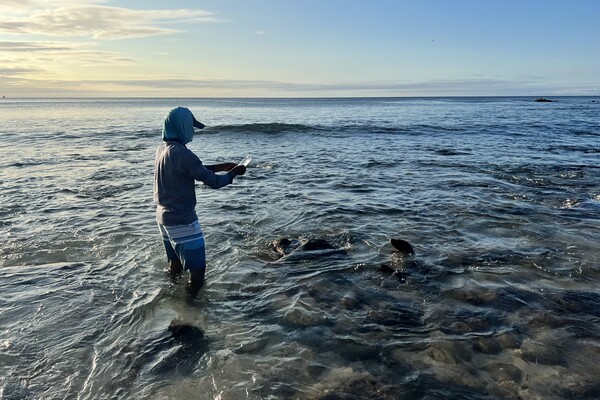
Penn researchers have developed a mobile field laboratory allowing them to test water quality and track antimicrobial resistance in and around San Cristóbal in the Galápagos.
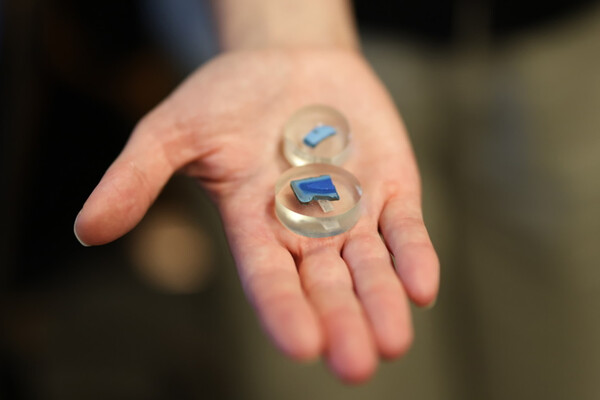
Penn researchers Vanessa and Alexis North are studying one of the largest collections of Egyptian blue objects ever found in the ancient Near East, shedding new light on how the world’s first synthetic pigment may have traveled far beyond Egypt.
A new role for dental providers? Rethinking where vaccines are given
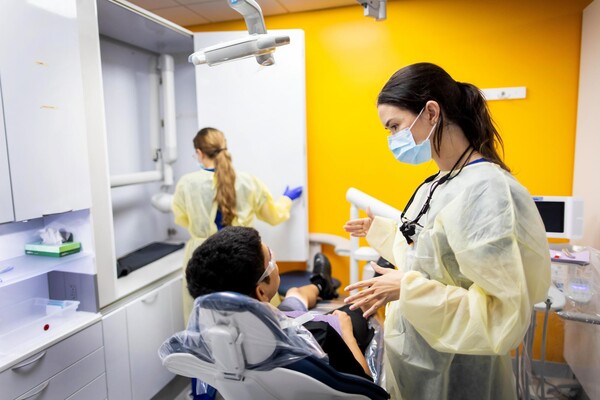
Vaccinations have traditionally been administered in primary care settings or pharmacies. However, for about a decade, some states have authorized dentists to administer vaccines, and many others did so during the COVID-19 pandemic. The effectiveness of this approach has led some countries and states to expand or consider expanding the role of dental providers in delivering routine vaccines, including those against COVID-19 and the human papillomavirus (HPV), and in providing vaccine education.
Penn student develops a way for computer chips to run more efficiently
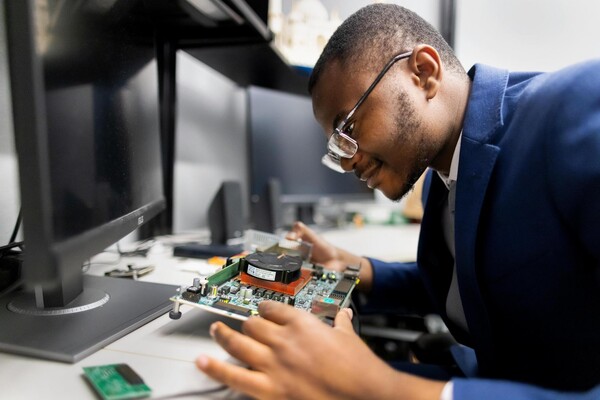
Fluid Silicon, a platform from President’s Sustainability Prize winner Nhlanhla Mavuso, allows computer chips to continuously monitor their health and self-tune as their characteristics change. The technology has the potential to reduce energy usage in data centers and improve reliability in mission-critical applications.