Researchers upend theory about the formation of the Milky Way Galaxy
New findings by Robyn Sanderson and collaborators suggest galaxy’s last major collision was billions of years later than previously thought.
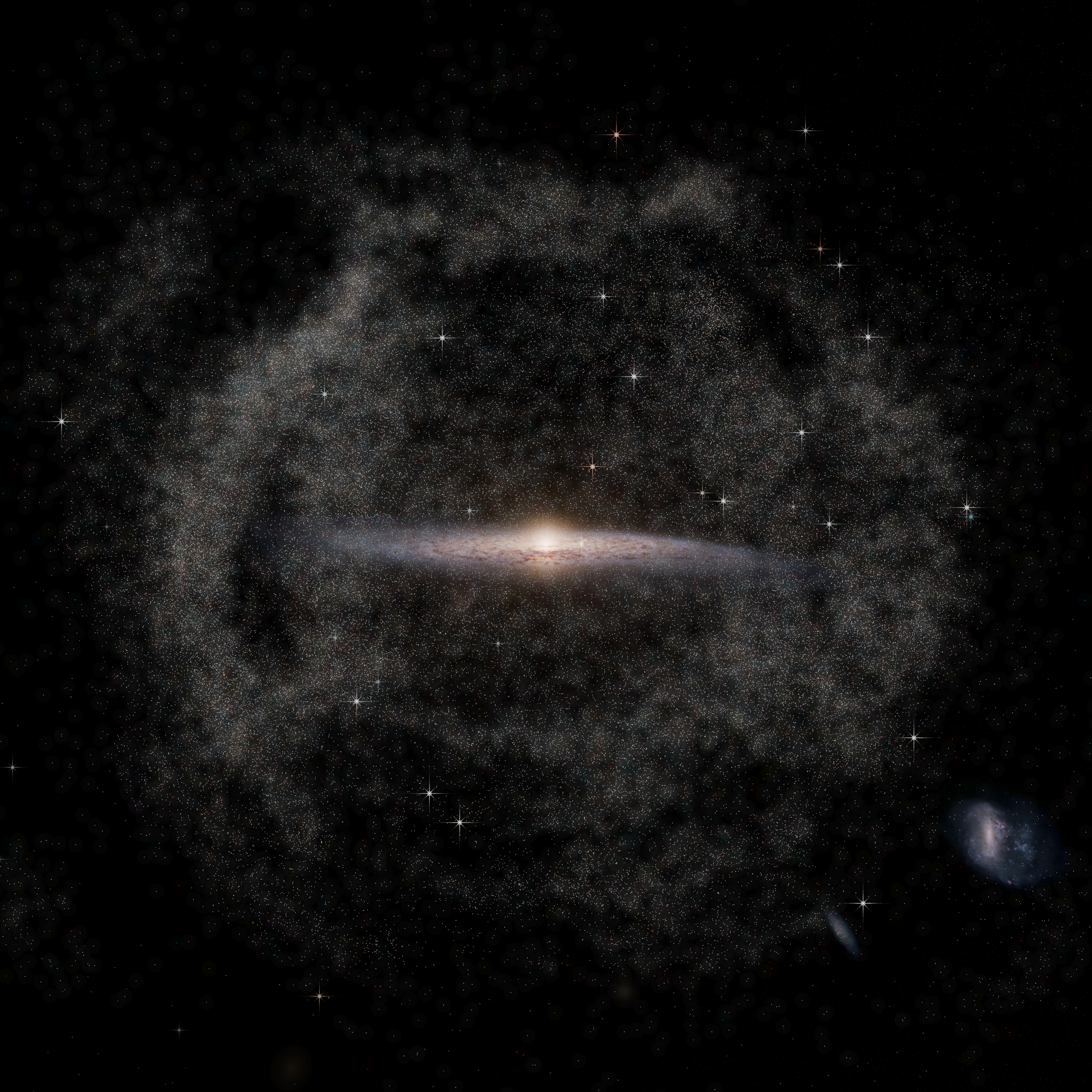
This image visualizes the Milky Way and its surrounding “halo” of stars. Most stars in the Milky Way lie in the disc (like the Sun, for example), but stars from past collisions end up in the halo, a large “cloud” of stars that extends outwards in all directions. These halo stars have been enhanced in this image, but in reality would be very dim compared to the disc. The halo appears messy and “wrinkly” here, a sign that a merger has occurred relatively recently.
(Image: Halo stars: ESA/Gaia/DPAC, T Donlon et al. 2024; Background Milky Way and Magellanic Clouds: Stefan Payne-Wardenaar)
Astronomer Robyn Sanderson and collaborators have recently published findings that reveal that the Milky Way galaxy’s last major collision occurred billions of years later than what was previously thought.
“The controversy is about when the Milky Way took in these stars,” Sanderson says. “Our study shows some stars, thought to be from an old merger, couldn’t be. The pattern that we see them forming would have changed or faded away by now.”
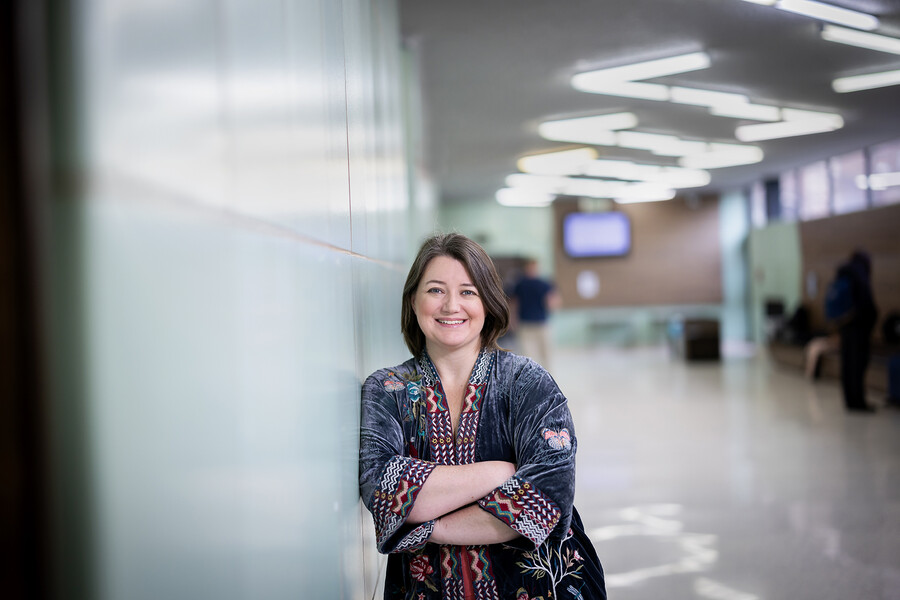
Assistant professor in the Physics & Astronomy Department in the School of Arts & Sciences Robyn Sanderson.
The discovery was made possible by Gaia, the European Space Agency’s “billion-star surveyor,” which is mapping more than a thousand million stars throughout the Milky Way and beyond, tracking their motions, luminosity, temperature, and composition. The team focused on the so-called “wrinkles” in our galaxy, which are formed when other galaxies collide with the Milky Way.
These wrinkles are like cosmic fingerprints left behind by past collisions, Sanderson says. By studying their patterns, cosmologists can trace the timeline of these events and understand the Milky Way’s evolutionary history.
“We get wrinklier as we age, but our work reveals that the opposite is true for the Milky Way. It’s a sort of cosmic Benjamin Button, getting less wrinkly over time,” says Tom Donlon, a former visiting scholar in the Sanderson Group and lead author of the new Gaia study. “By looking at how these wrinkles dissipate over time, we can trace when the Milky Way experienced its last big crash, and it turns out this happened billions of years later than we thought.”
By comparing their observations of the wrinkles with cosmological simulations, the team was able to determine that our last significant collision with another galaxy did not, in fact, occur between eight and 11 billion years ago, as previously believed.
“The simulations are crucial because they allow us to recreate past events that could have happened in the Milky Way and see if they align with what we observe,” Sanderson says. “In this case, they showed us that the timing of the last major collision was much more recent.”
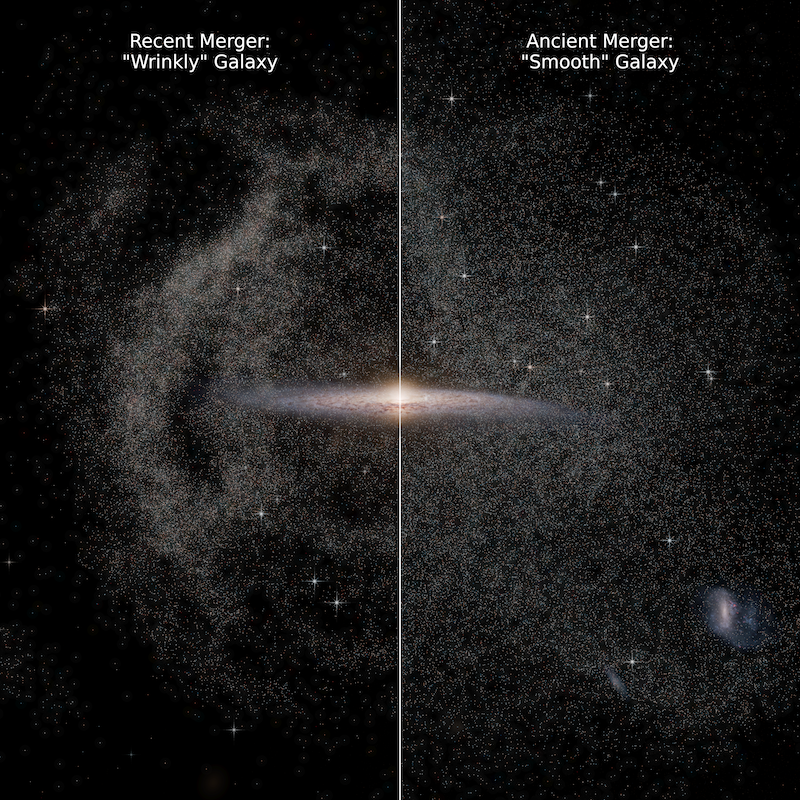
On the left the halo appears messy and “wrinkly,” a sign that a merger has occurred relatively recently. On the right, it appears smooth and uniform, a sign that a merger has instead occurred in the ancient past.
(Image: Halo stars: ESA/Gaia/DPAC, T Donlon et al. 2024; Background Milky Way and Magellanic Clouds: Stefan Payne-Wardenaar; LICENCE: CC BY-SA 3.0 IGO or ESA Standard License)
For the wrinkles of stars to be as obvious as they appear in Gaia data, they must have joined us no less than three billion years ago, at least five billion years later than was previously thought, says co-author Heidi Jo Newberg, a professor of astronomy at Rensselaer Polytechnic Institute. “New wrinkles of stars form each time the stars swing back and forth through the center of the Milky Way. If they’d joined us eight billion years ago, there would be so many wrinkles right next to each other that we would no longer see them as separate features,” she adds.
RELATED
A number of current and former Penn researchers contributed to the study, including Arpit Arora, who built all the models for the galactic potential used in the research, and Nondh Panithanpaisal, who standardized the method used to resimulate the formation of the structures, both graduates in the School of Arts & Sciences, and former undergraduate student researcher Emily Bregou contributed to the development of the resimulation code. Danny Horta, one of Sanderson’s collaborators from the Flatiron Institute also contributed to the study by analyzing the large, old galaxies that merged with the Milky Way long ago.
The collision is thought to have resulted in a large number of stars with unusual orbits. Previously, scientists dated it at between eight and 11 billion years ago in a collision called the Gaia-Sausage-Enceladus merger. Rather, Newberg and Donlon’s findings indicate that the stars may have resulted from the Virgo Radial Merger which crashed through the center of the Milky Way less than three billion years ago.
“Gaia is a hugely productive mission that’s transforming our view of the cosmos,” says Timo Prusti, project scientist for Gaia at ESA. “Results like this are made possible due to incredible teamwork and collaboration between a huge number of scientists and engineers across Europe and beyond.”
Nicola Jenner contributed to this story.
This work was supported by the NASA/NY Space Grant.
On the move: Water quality and antimicrobial resistance testing goes mobile
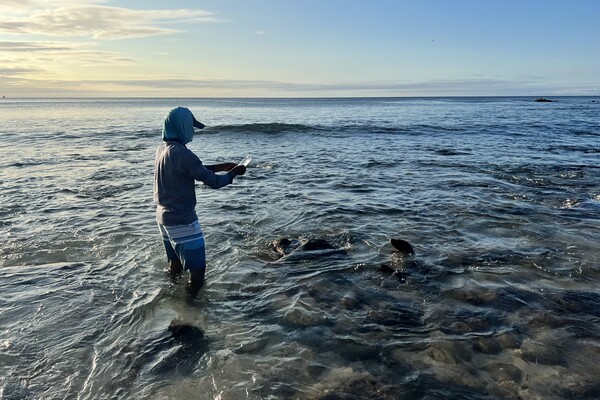
Penn researchers have developed a mobile field laboratory allowing them to test water quality and track antimicrobial resistance in and around San Cristóbal in the Galápagos.
Penn researchers Vanessa and Alexis North are studying one of the largest collections of Egyptian blue objects ever found in the ancient Near East, shedding new light on how the world’s first synthetic pigment may have traveled far beyond Egypt.
A new role for dental providers? Rethinking where vaccines are given
Vaccinations have traditionally been administered in primary care settings or pharmacies. However, for about a decade, some states have authorized dentists to administer vaccines, and many others did so during the COVID-19 pandemic. The effectiveness of this approach has led some countries and states to expand or consider expanding the role of dental providers in delivering routine vaccines, including those against COVID-19 and the human papillomavirus (HPV), and in providing vaccine education.
Penn student develops a way for computer chips to run more efficiently
Fluid Silicon, a platform from President’s Sustainability Prize winner Nhlanhla Mavuso, allows computer chips to continuously monitor their health and self-tune as their characteristics change. The technology has the potential to reduce energy usage in data centers and improve reliability in mission-critical applications.