Helping robots work together to explore the moon and Mars
Penn Engineers, NASA, and five other universities tested robotic systems designed to help unmanned explorers cooperate in the dunes of White Sands, New Mexico, paving the way for moon and Mars exploration.
5 min. read
School of Engineering and Applied Science Associate Professor Cynthia Sung leads a project that reimagines how unmanned extraterrestrial explorers navigate the Moon and Mars by building a system of robots that can link up and pull each other through tough terrain. (Video: Sean Grasso)
In early August, the crisp dawn sky above White Sands National Park glows faintly blue, gradually brightening as streaks of marigold and soft pink pierce the clouds with the rising sun. But although the powder-white sand of the 30-foot gypsum dunes is cool at dawn, air temperatures become blistering hot as the sun approaches its zenith.
“In 2021, as part of the Artemis program to return to the moon and one day venture to Mars, NASA put out a call seeking fresh ideas to overcome rover mobility limits,” says Cynthia Sung, an associate professor in Penn’s School of Engineering and Applied Science and a principal investigator of one of the projects. “My colleagues and I answered with TRUSSES, which stands for ‘Temporarily, Robots Unite to Surmount Sandy Entrapments, then Separate,’ and is essentially about getting robots to do together what they can’t do alone.”
The team envisioned robots that could physically connect and apply pulling and pushing forces to help each other maneuver over obstacles, says Sung. Current Mars and lunar rovers avoid areas such as slopes steeper than five degrees entirely, as mission planners won’t risk a multimillion-dollar rover getting stuck or damaged.
TRUSSES builds on earlier work called LASSIE. This project, led by Daniel Koditschek, Doug Jerolmack, and Feifei Qian, a former postdoctoral researcher in the Koditschek Lab at Penn Engineering, explored how a doglike robot, Spirit, could take scientific measurements of ground properties by simply walking over it.
Together with Sung and Mark Yim of Penn Engineering, the team added a layer of planning: robots that can use the terrain measurements to navigate a safe path and cooperate around an environment too risky to go it alone.
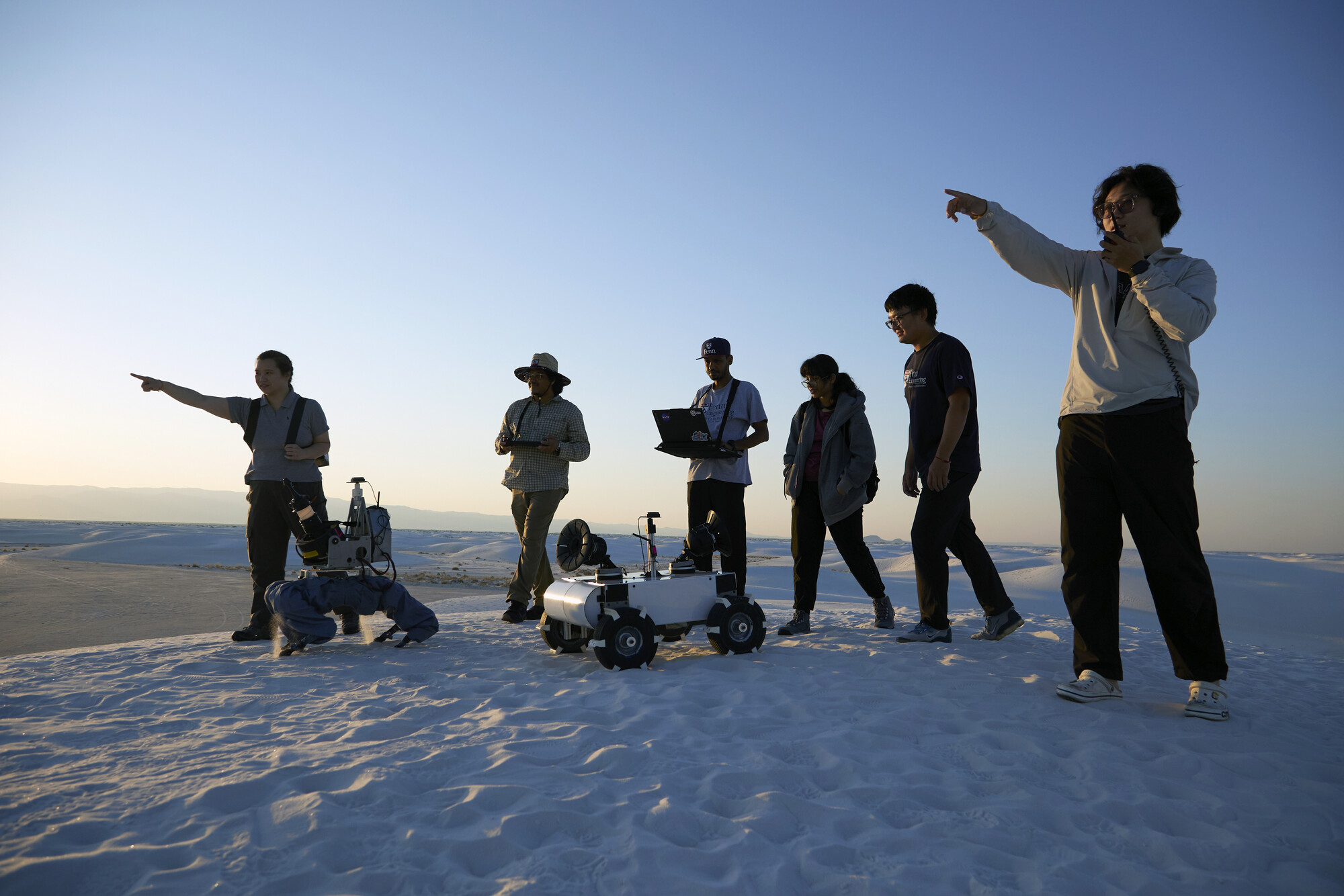
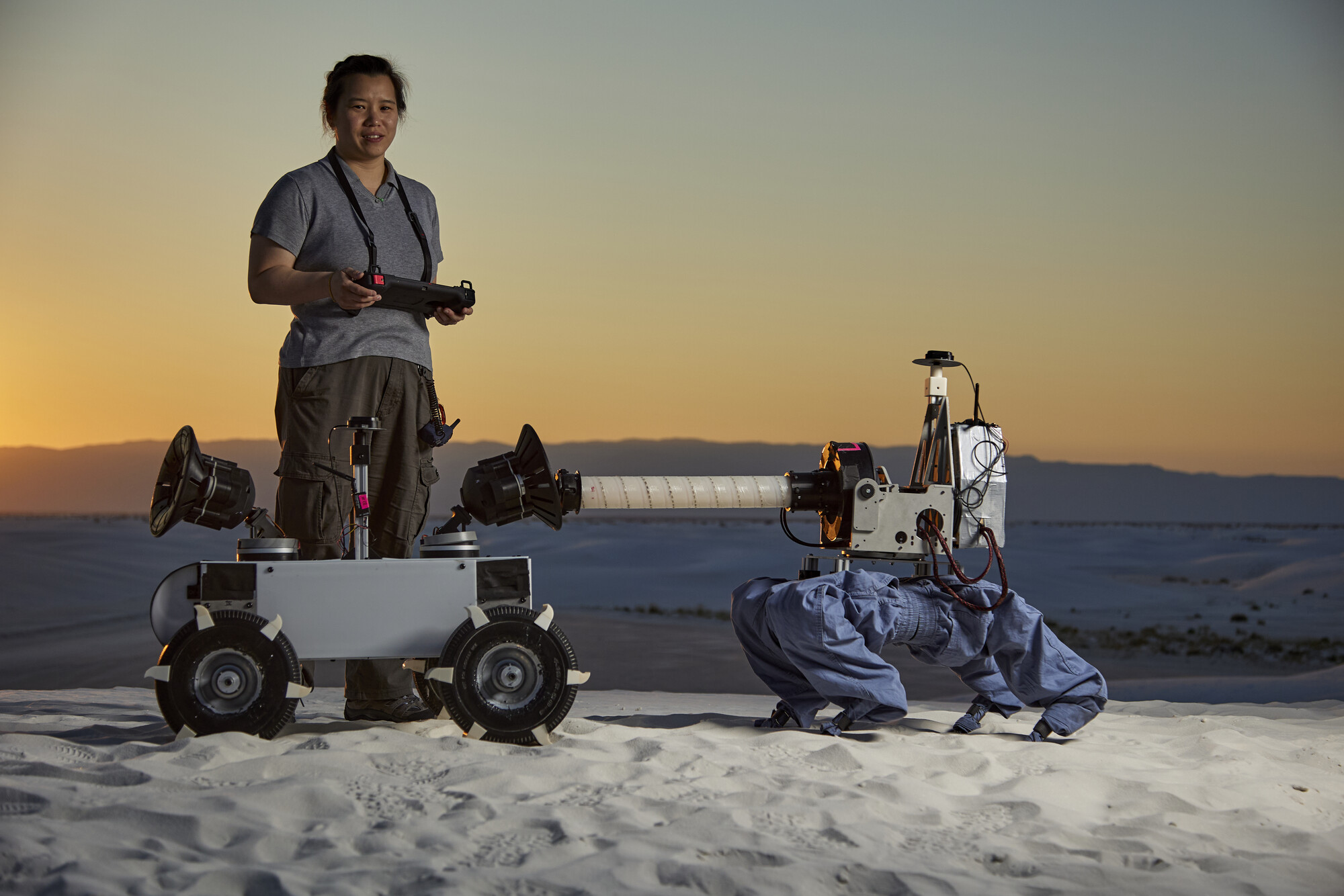
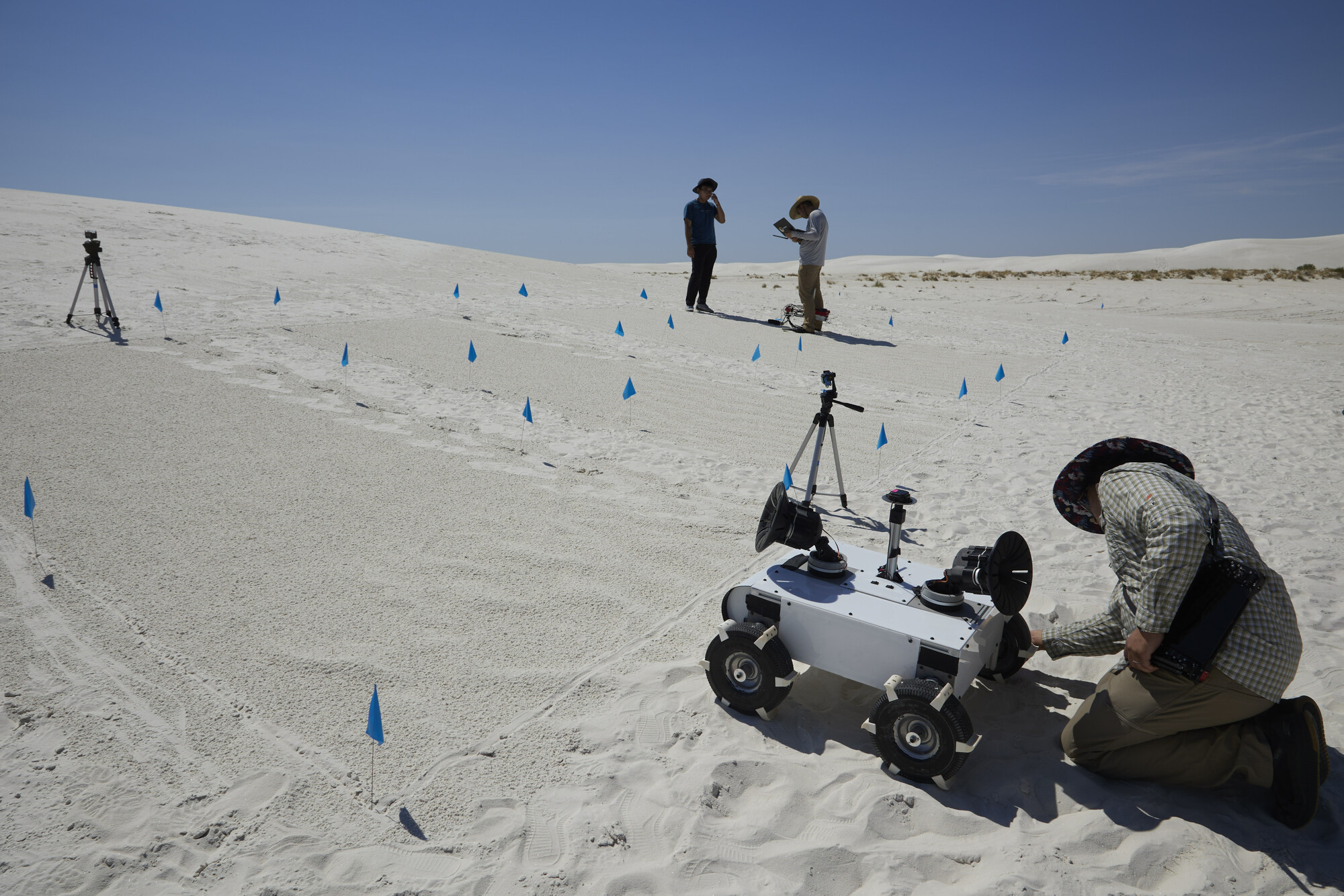
TRUSSES is a project led by the Sung Robotics Lab at Penn Engineering’s GRASP Laboratory. During field testing at White Sands National Park, Sung and her team performed a first-of-its-kind demonstration as wheeled and legged robot systems worked together to climb the steep, sandy dunes of New Mexico. Sung (bottom right) says the tests performed and data collected at White Sands serve as a trial run for a higher stakes test at NASA Ames Research Center early next year.
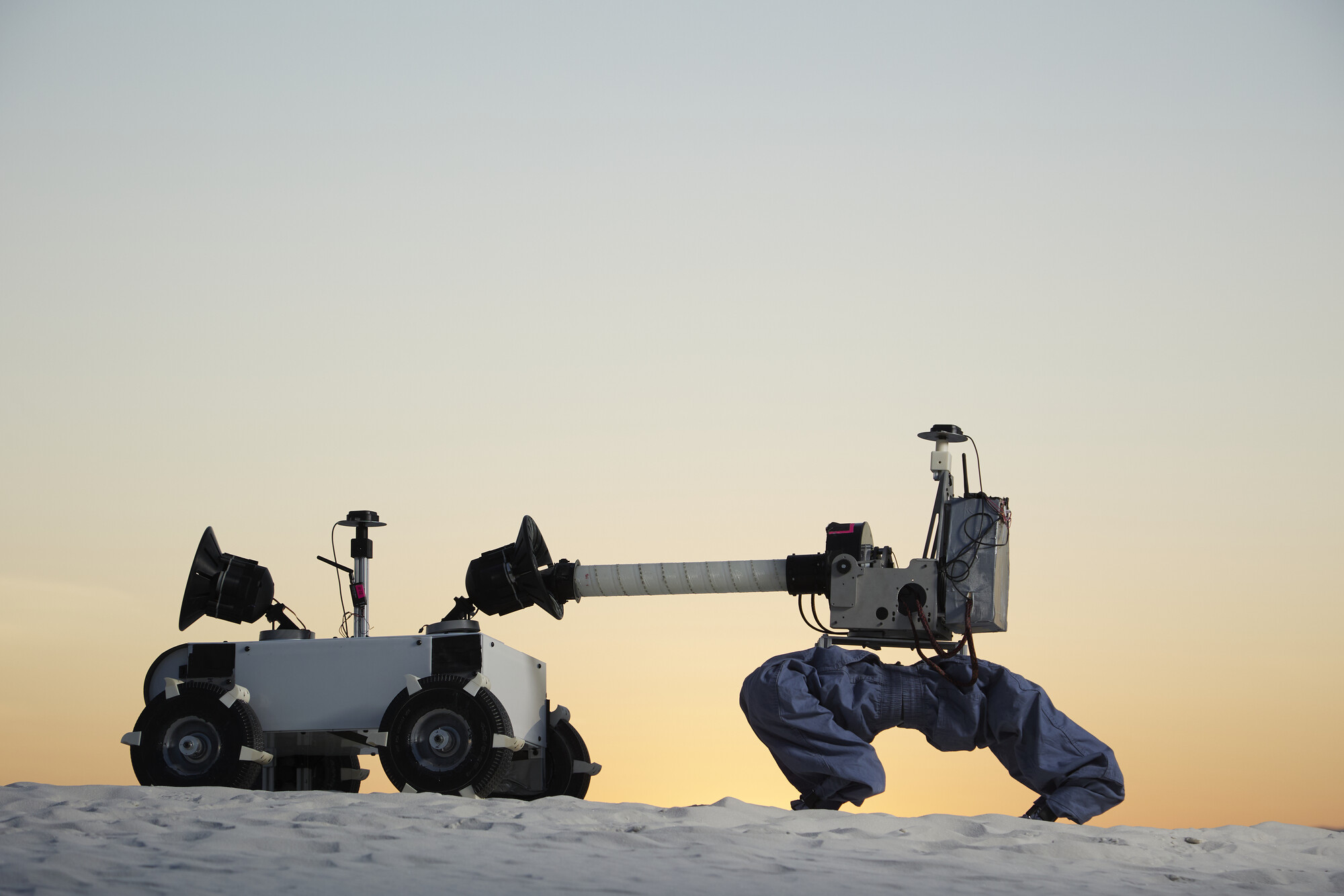
For instance, a wheeled rover, which is good for carrying large payloads but not highly maneuverable, could join forces with the inverse, a nimbler but payload-capped walking doglike robot. Linked arm-to-arm, the pair or trio of robots can stabilize each other on treacherous ground.
At White Sands, they tested this concept by tethering a rover to Spirit and sending them up a dune. Alone, each robot struggled, the wheels spun, and the legs slipped on a 15° sandy slope that proved too much.
But “when the robots connected, they were able to inch upward, together,” Sung says. A video from the field shows that the linked robots successfully crept about 2.5 meters up the dune, representing a triumph that the team considers “a big success.”
Until this summer, no one had ever shown robots physically aiding each other in a setting like this, says Sung.
Field experience proves invaluable
Shivangi Misra, a Ph.D. candidate in the Sung Robotics Lab, says that field testing is an “exceptional exercise in contingency creation” and planning. She says that in the dessert, when the heat led to battery failure and limited robot runtime, the team was able to improvise by setting up car windshield reflectors to shield the robots and other electronics from the sun.
“The reflectors were also helpful for us,” adds Akshay Ram Panyum, a doctoral student in Yim’s Modlab, “because it meant we didn’t have to make as many trips hauling the robots from the test sites to the tent, which saved time and kept us from overheating as well.”
The gypsum dunes of White Sands offered both a proving ground and a punishing test, where scorching heat and shifting sand pushed the robots and the TRUSSES team to adapt in real time.
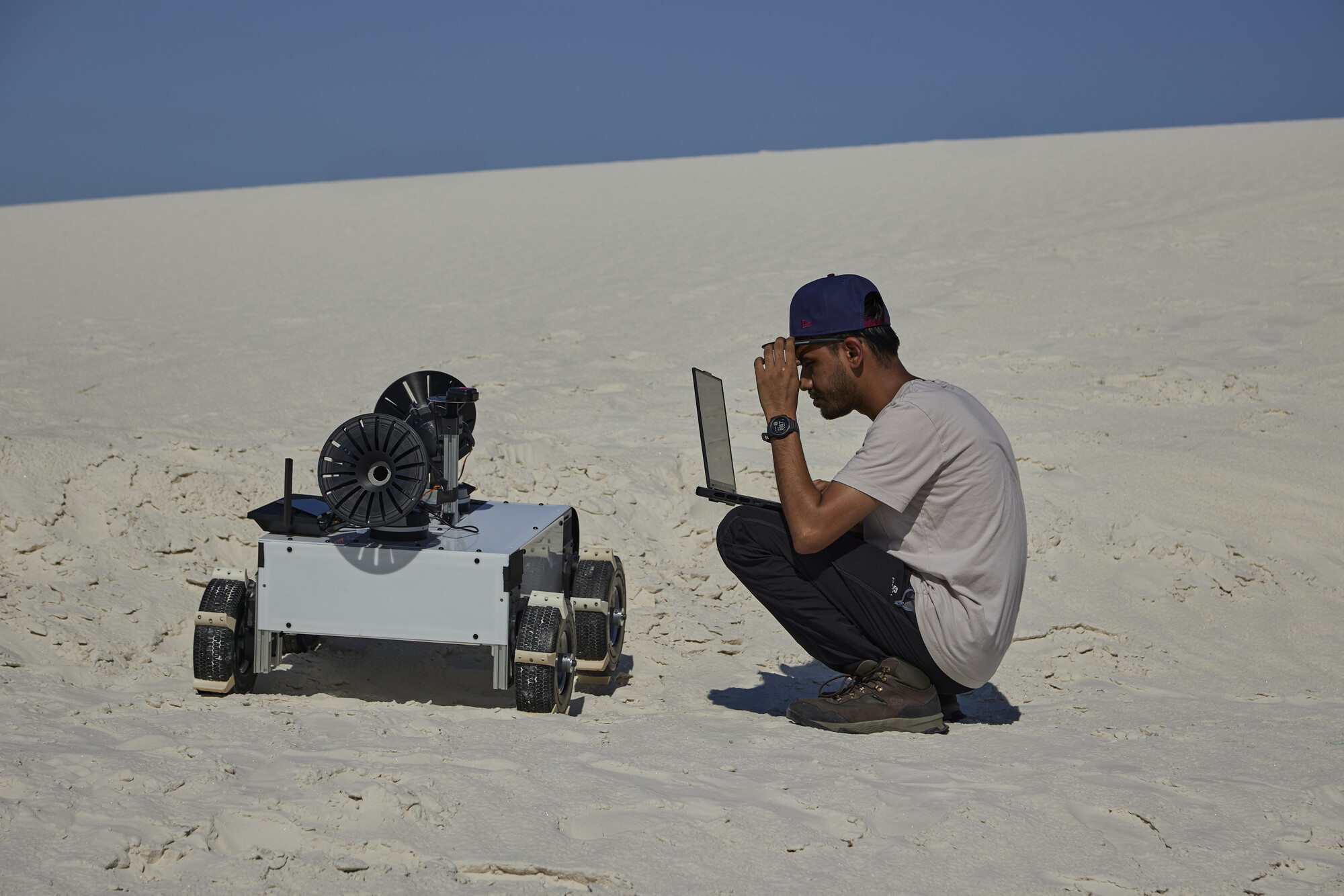
Panyam, who focuses on hardware, and Misra, who develops motion-planning software, were tasked with coordinating across teams.
“On a good day, everything works in a lab setting where you have motion-capturing cameras and other guides,” Misra says, “but out at White Sands, you can only rely on GPS, and there are errors there,” she explains, noting how GPS never localizes with the same accuracy that an in-lab system would.
Next up: A demonstration for NASA
With the desert trial complete, the TRUSSES team is preparing for its biggest challenge yet: a final demonstration of the multi-robot system to NASA’s Ames Research Center in California next year.
“They have a test bed that we think will just fit our demonstration,” Sung says, explaining that the robots will have only limited room to maneuver. That raises the stakes.
TRUSSES builds on earlier Penn Engineering research known as LASSIE, expanding from single-robot studies to multi-robot cooperation. Together, these projects unite interdisciplinary teams across Penn, NASA, and partner universities in preparing explorers for the moon and Mars.
“In the desert, if a robot goes haywire, you have a lot of space to run away,” Panyam says. “That’s not the case in Ames… If something goes crazy, we would potentially be disturbing our test bed where we’re supposed to run more experiments.”
Over the next few months, they plan to conduct another round of intensive sand trials, likely returning to beach dunes around New Jersey or the volleyball courts around campus, to iron out any remaining bugs.
“We’re a little nervous, sure,” says Misra of the fast-approaching Ames tests. “With every test we run, there is something to improve in the hardware, the software. But we’ve done what feels like the hard part, and we think we’re in pretty good shape for what comes next.”
Images by Justin Durner.
Cynthia Sung is an Associate Professor in the Department of Mechanical Engineering and Applied Mechanics and a member of the General Robotics, Automation, Sensing & Perception (GRASP) lab at the University of Pennsylvania.
Shivangi Misra is a doctoral student in the Sung Robotics Lab at Penn Engineering.
Akshay Ram Panyam is a doctoral student in the Yim Modlab at Penn Engineering.
The research was supported by NASA LuSTR program (Grant 80NSSC24K0127)
On the move: Water quality and antimicrobial resistance testing goes mobile
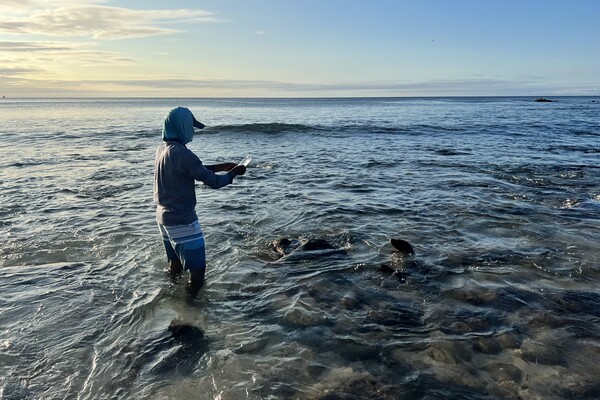
Penn researchers have developed a mobile field laboratory allowing them to test water quality and track antimicrobial resistance in and around San Cristóbal in the Galápagos.
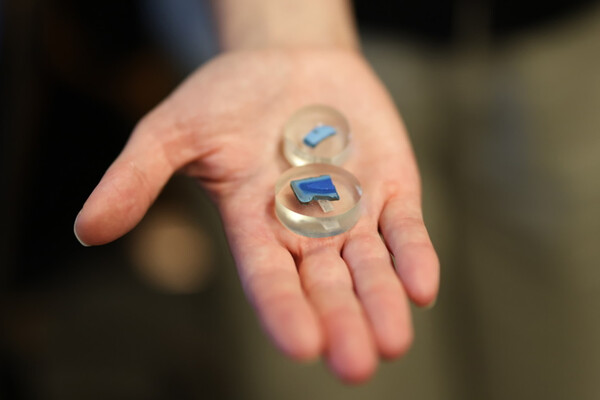
Penn researchers Vanessa and Alexis North are studying one of the largest collections of Egyptian blue objects ever found in the ancient Near East, shedding new light on how the world’s first synthetic pigment may have traveled far beyond Egypt.
A new role for dental providers? Rethinking where vaccines are given
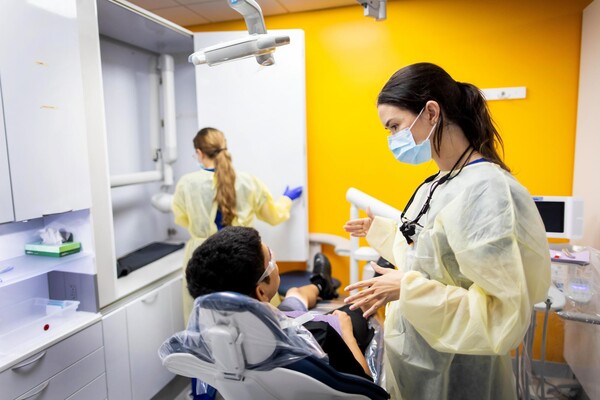
Vaccinations have traditionally been administered in primary care settings or pharmacies. However, for about a decade, some states have authorized dentists to administer vaccines, and many others did so during the COVID-19 pandemic. The effectiveness of this approach has led some countries and states to expand or consider expanding the role of dental providers in delivering routine vaccines, including those against COVID-19 and the human papillomavirus (HPV), and in providing vaccine education.
Penn student develops a way for computer chips to run more efficiently
Fluid Silicon, a platform from President’s Sustainability Prize winner Nhlanhla Mavuso, allows computer chips to continuously monitor their health and self-tune as their characteristics change. The technology has the potential to reduce energy usage in data centers and improve reliability in mission-critical applications.