Euclid Space Telescope launches exciting new possibilities
Professors of physics and astronomy Bhuvnesh Jain, Mark Trodden, and Gary Bernstein discuss the coming research findings from the European Space Agency’s Euclid Space Telescope.
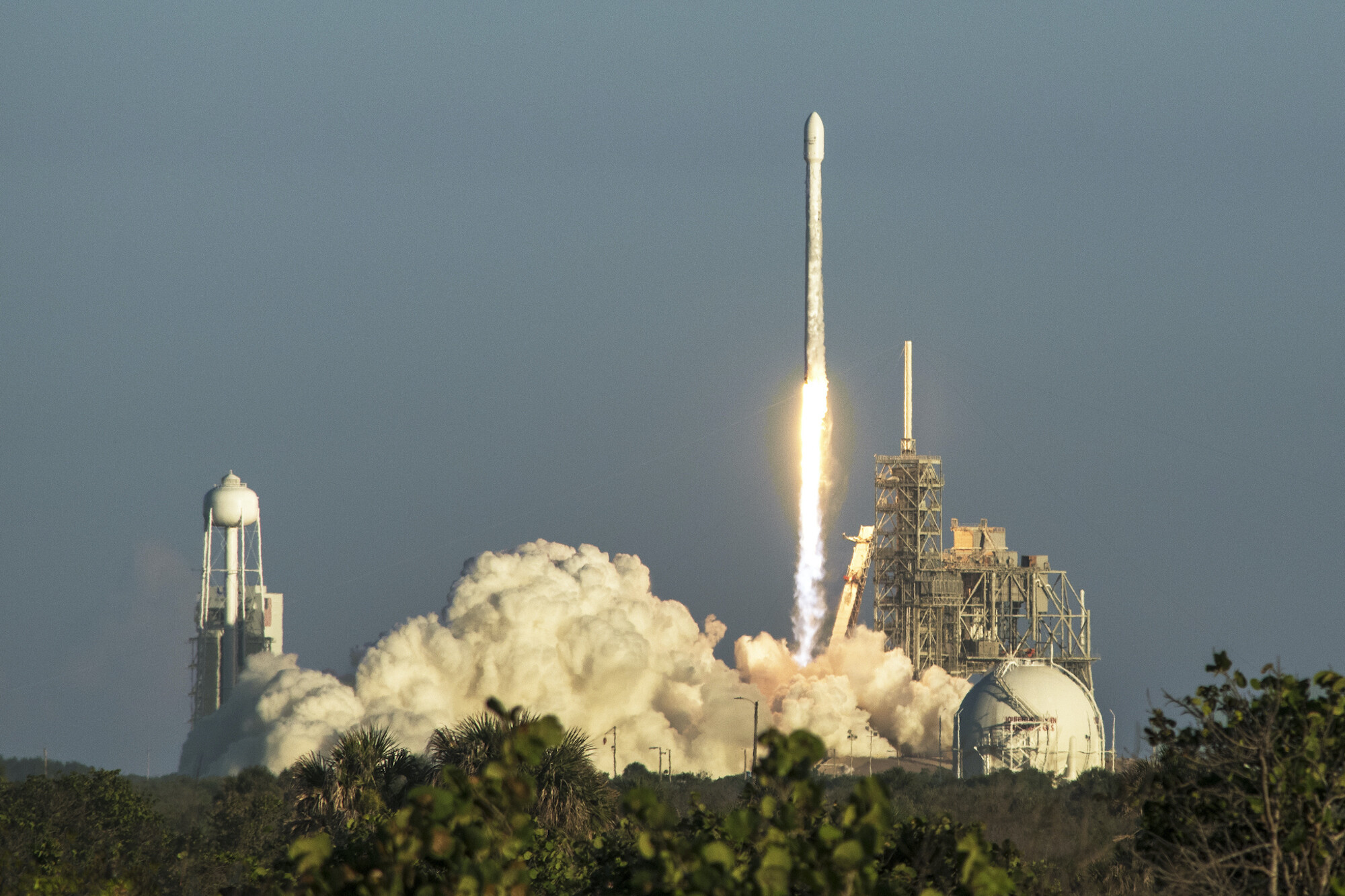
The European Space Agency’s latest astrophysics mission, Euclid, lifted off on a Space X Falcon 9 from Cape Canaveral in Florida, USA, at 17:12 CEST on 1 July 2023. Euclid has now started its month-long journey to Sun-Earth Lagrange point L2, located 1.5 million kilometers from Earth, in the opposite direction from the Sun.
(Image: iStock / Robert Michaud)
Lift off, the first of July. The European Space Agency’s (ESA) Euclid spacecraft soared skyward over Cape Canaveral Space Force Station, marking an endeavor 10 years in the making, involving 18 countries and drawing expertise from more than 100 labs and more than 1,200 collaborators.
Eight miles from Kennedy Space Center, at the launch site in Cape Canaveral, Bhuvnesh Jain, professor of physics and astronomy in the School of Arts & Sciences, and several students gazed cheerfully as the rockets delivering the payload, the Euclid telescope, raced to the cosmos to observe about a third of the sky.
“I was thrilled that we were able to bring several Penn students for this awe-inspiring moment,” Jain says. “Watching a space launch in person versus on a television screen is a whole different experience, and I’m sure it’s one that will stick with us for years to come.”
“Feeling the air vibrate as the sound waves from the rockets rippled through was incredible,” says Sam Charney, a fourth-year student in the College of Arts and Sciences from Swarthmore, Pennsylvania. “We were standing next to the ESA engineers and scientists who built the telescope and had come all the way from Europe to see their work come to fruition, so there was this immense excitement and relief watching it take off.”
“I shudder to imagine what the crowd’s response would have been had anything gone wrong,” jokes Sarah Kane, a May graduate from Mendham, New Jersey. “Fortunately, it all worked out, and we have some exciting data to look forward to in the coming years.”
The students that accompanied Jain were the largest group of students in attendance at the launch. Clockwise from left: Shivam Pandey, Helen Qu, Shubh Agrawal, Mathilda Nguyen, Sarah Kane, Jason Lee, Lorena Ribeiro, and Sam Charney.
(Image: Sam Charney)
The Euclid team at Penn
Jain worked closely with Gary Bernstein, Reese W. Flower Professor of Astronomy and Astrophysics, alongside an international team of collaborators in the Euclid Consortium to make the launch a reality.
“A space mission is quite the ask, so in the early 2000s, [Bhuvnesh] and I began to scope out the cosmology reach of a space telescope. Together with our colleagues, we then helped make the case to the larger astrophysics community and funding agencies,” Bernstein says, adding that the Euclid telescope differs from other space telescopes like James Webb and Hubble in that Euclid will stitch together a much larger representation of the entire sky, mapping billions of galaxies rather than getting high-resolution images of singular distant galaxies.
“This telescope will provide answers to the fundamental questions in not only astronomy but physics as a whole,” Jain says.
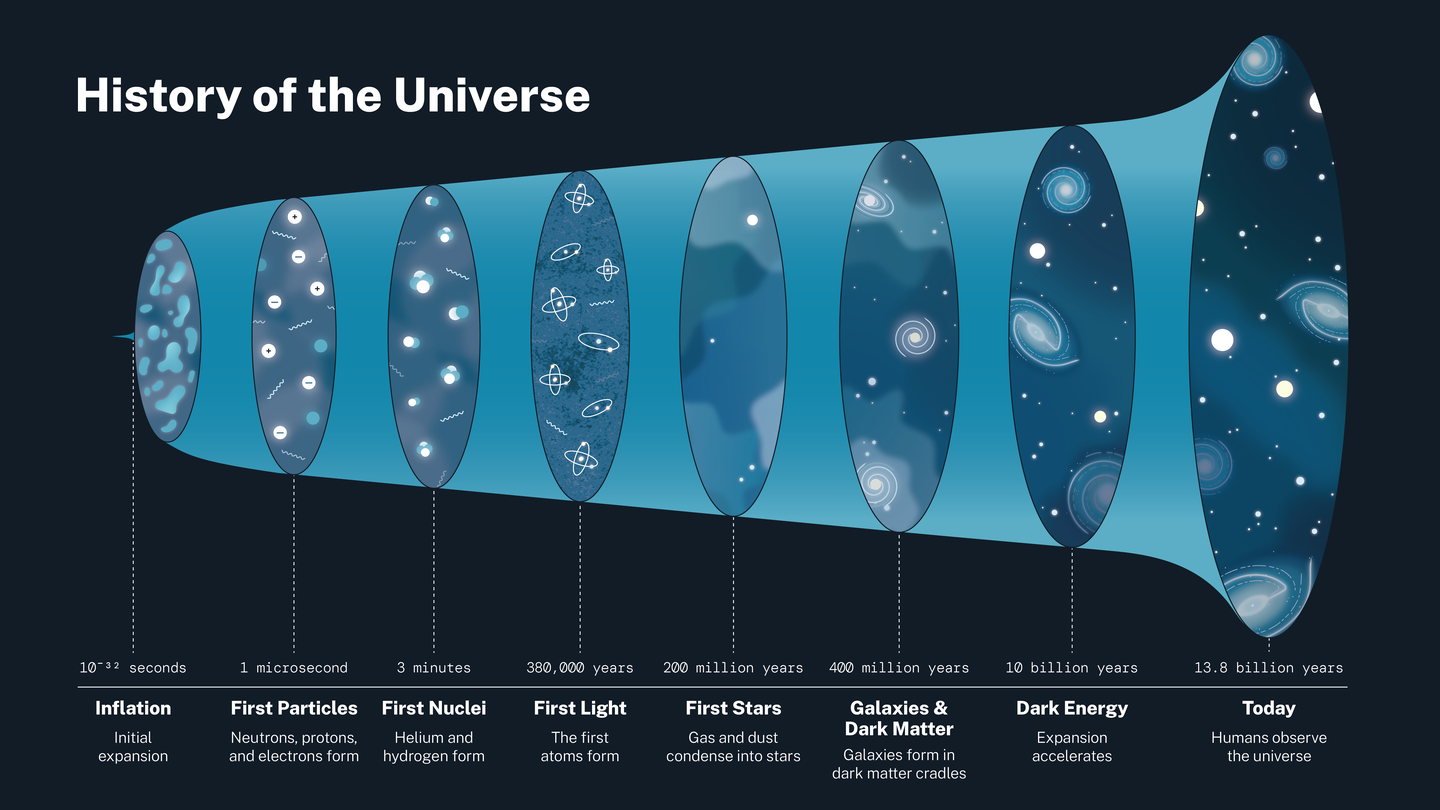
He says Euclid will give scientists more information about the structure and evolution of the universe, particularly dark matter along with the mysterious form of energy that increases the rate of expansion of the universe rather than slowing it down, dark energy.
“We are really interested in seeing how dark energy evolved over time,” he says. “This data will give us key insights into whether the dark energy’s effect is constant over time or if it varies. If it does vary, we’re dealing with a completely different kind of physics.”
Exploring dark energy with Euclid
Mark Trodden, Fay R. and Eugene L. Langberg Professor of Physics in the School of Arts & Sciences, develops the ideas Euclid’s collaborators aim to test and notes that scientists are interested in finding out more about the nature of dark energy.
“I’m excited to see if the rules that tell you how space and time evolve in response to the contents of space and time, general relativity, hold up under these new tests of gravity,” Trodden says.
He explains that, when Einstein first formulated his theory of general relativity in 1915, he added a cosmological constant—a term he coined—to balance out the gravitational attraction of matter, aiming to maintain a static universe, the prevailing notion at the time. But, in the late 1920s, the astronomer Edwin Hubble’s observations of distant galaxies revealed that the universe was indeed expanding.
Trodden says this led to a radical shift in cosmological models, including the development of the Big Bang theory, which posits an expanding universe. In light of these revelations, Einstein described his cosmological constant as his “biggest blunder.” But it found a place in a theoretical model of an expanding universe. While Einstein’s theory of general relativity on its own doesn’t directly address the rate of universal expansion, it provides the theoretical framework for understanding gravity and the dynamics of the universe.
“General relativity describes gravity as the curvature of spacetime caused by matter and energy. It provides the mathematical formalism to describe how the distribution of matter and energy influences the geometry of spacetime and, in turn, how objects move within it. But it might not be the final story,” Trodden says.
He asserts that general relativity is an excellent theory in all the ways scientists have tested it so far, but notes how the acceleration of the universe’s expansion might be telling them that there is something completely different about gravity on large scales.
“And so it could be that instead of there being some weird hypothetical stuff in the universe that’s causing space and time to behave oddly, it could be that the rules that tell space and time how to behave in response to normal stuff, like the stuff we’re made of, are not what we thought they were, and that’s called modified gravity, which is another possible set of explanations for the acceleration,” Trodden says.
He says he and many others look forward to the knowledge the Euclid mission will provide about the evolution of the universe from its infancy to later years and the future, noting that it will likely present answers to whether or not dark energy is truly driving expansion’s acceleration, or if it’s the cosmological constant, modified gravity, or any other new explanations.
The telescope and its mission
Jain says Euclid will start sending preliminary data within a month of the launch date.
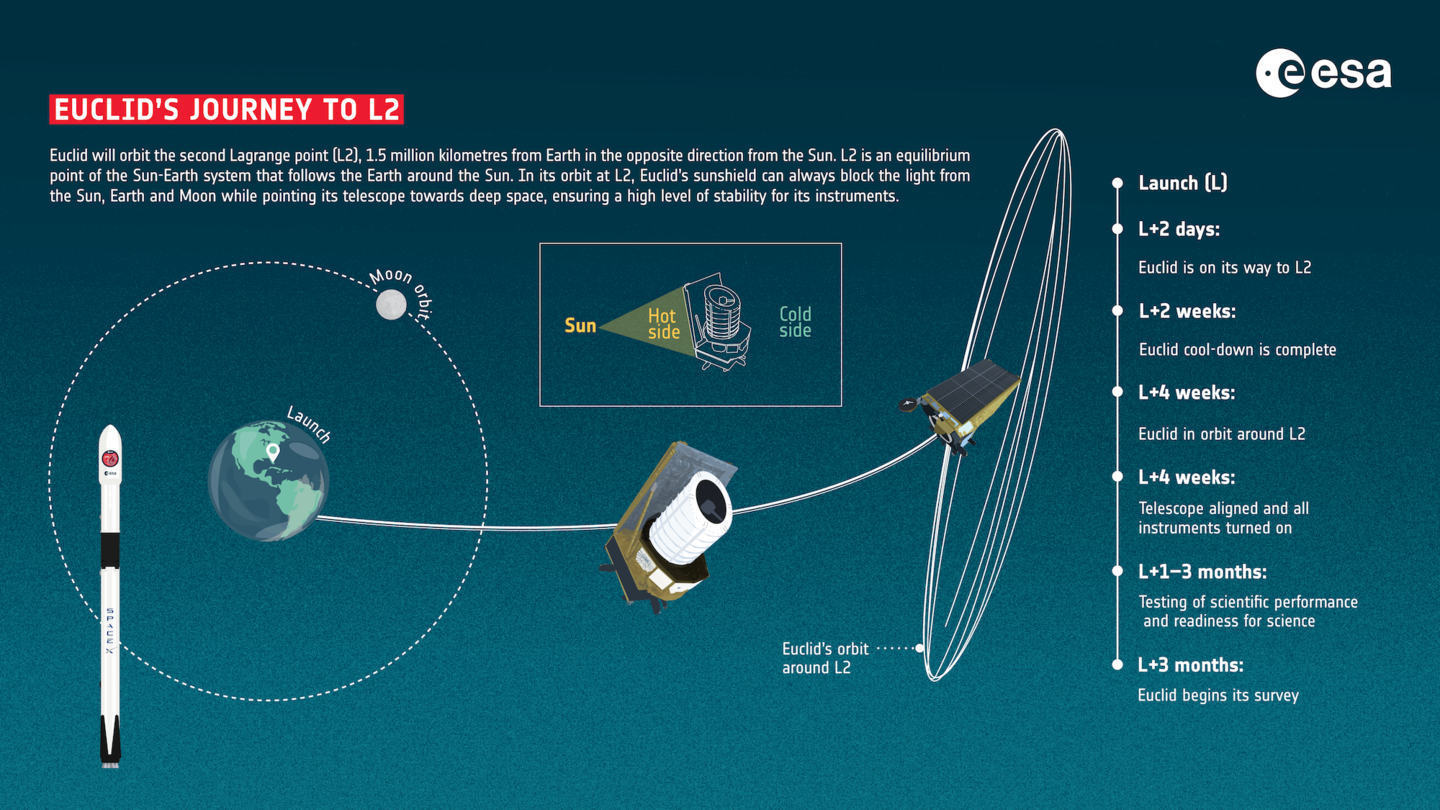
The telescope will spend its life orbiting near the second Sun-Earth Lagrange point (L2). It’s around 1.5 million kilometers (about 932,056 miles) away from Earth. It provides a stable location for the telescope to maintain the same relative position from Earth and the Sun, an ideal spot for observations.
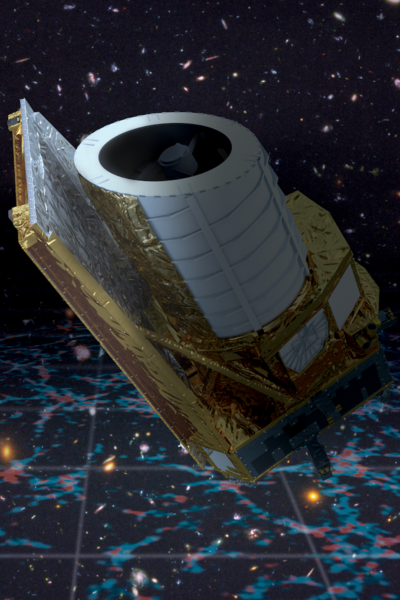
The space telescope will create a great map of the large-scale structure of the Universe across space and time by observing billions of galaxies out to 10 billion light-years, across more than a third of the sky.
(Image: ESA/Euclid/Euclid Consortium/NASA. Background galaxies: NASA, ESA, and S. Beckwith (STScI) and the HUDF Team, CC BY-SA 3.0 IGO.)
“Once it reaches L2, it will gather a lot of data during the first 30 days. It’s a period known as science verification, which means we’ll be making sure it is capable of its science goals in terms of the quality of the data,” Jain says. “Along the way, there’s going to be a moment when we’ll have our second big sigh of relief when we hopefully find out the telescope and detectors are working as intended.
“By Thanksgiving, Euclid will be in full survey mode. By next year, it will have captured more images of distant galaxies than the Hubble Space Telescope captured in its entire lifetime,” he says. “Euclid has a nominal lifetime of six years, and throughout those years it will make a series of data releases that will be made publicly available.”
Jain says the telescope has two primary scientific instruments: a visible-light camera (VIS) and a near-infrared spectrometer and photometer (NISP). These instruments will capture high-resolution color images of distant galaxies. The VIS will provide the images, which Jain, Bernstein, and their groups at Penn are particularly interested in, while the NISP will provide spectral information, which is essentially the breakdown of light into its component colors.
“It’s the first space mission that will measure this huge population of galaxies for cosmological studies, and it will do it with the exquisite resolution for every galaxy that one can get only from space. The research possibilities for many branches of astrophysics are just waiting to be tapped,” he says.
“It won’t just be cosmology, it will be studies of the internal structures and rotations of galaxies, studies of the environments of black holes, and studies of different classes of stars whose brightness oscillates in some fashion,” Jain says. “The discovery potential is truly immense, it’s an exciting time to be involved.”
In its orbit at L2, Euclid’s sunshield can always block the light from the Sun, Earth and Moon while pointing its telescope towards deep space, ensuring a high level of stability for its instruments. At L2, Euclid joins ESA’s Gaia mission and the ESA/NASA/CSA James Webb Space Telescope, which are also orbiting around this equilibrium point, each following well separated trajectories.
(Image: ESA (acknowledgement: work performed by ATG under contract to ESA), CC BY-SA 3.0 IGO)
Bhuvnesh Jain is the Walter H. and Leonore C. Annenberg Professor in the Natural Sciences and the co-director of the Center for Particle Cosmology in the Department of Physics & Astronomy at the School of Arts & Sciences at the University of Pennsylvania.
Mark Trodden is the Fay R. and Eugene L. Langberg Professor of Physics, associate dean for the natural sciences in Penn Arts & Sciences, and co-director of the Penn Center for Particle Cosmology.
Gary Bernstein is the Reese W. Flower Professor of Astronomy and Astrophysics in the Department of Physics & Astronomy in Penn Arts & Sciences
On the move: Water quality and antimicrobial resistance testing goes mobile
Penn researchers have developed a mobile field laboratory allowing them to test water quality and track antimicrobial resistance in and around San Cristóbal in the Galápagos.
Penn researchers Vanessa and Alexis North are studying one of the largest collections of Egyptian blue objects ever found in the ancient Near East, shedding new light on how the world’s first synthetic pigment may have traveled far beyond Egypt.
A new role for dental providers? Rethinking where vaccines are given
Vaccinations have traditionally been administered in primary care settings or pharmacies. However, for about a decade, some states have authorized dentists to administer vaccines, and many others did so during the COVID-19 pandemic. The effectiveness of this approach has led some countries and states to expand or consider expanding the role of dental providers in delivering routine vaccines, including those against COVID-19 and the human papillomavirus (HPV), and in providing vaccine education.
Penn student develops a way for computer chips to run more efficiently
Fluid Silicon, a platform from President’s Sustainability Prize winner Nhlanhla Mavuso, allows computer chips to continuously monitor their health and self-tune as their characteristics change. The technology has the potential to reduce energy usage in data centers and improve reliability in mission-critical applications.