Designing for discovery: The landscape of Penn’s campus
A new book blends history, design, and environmental insight, inviting readers to see Penn’s campus—and campuses everywhere—in a new light.
2 min. read
Image: Flying Monster
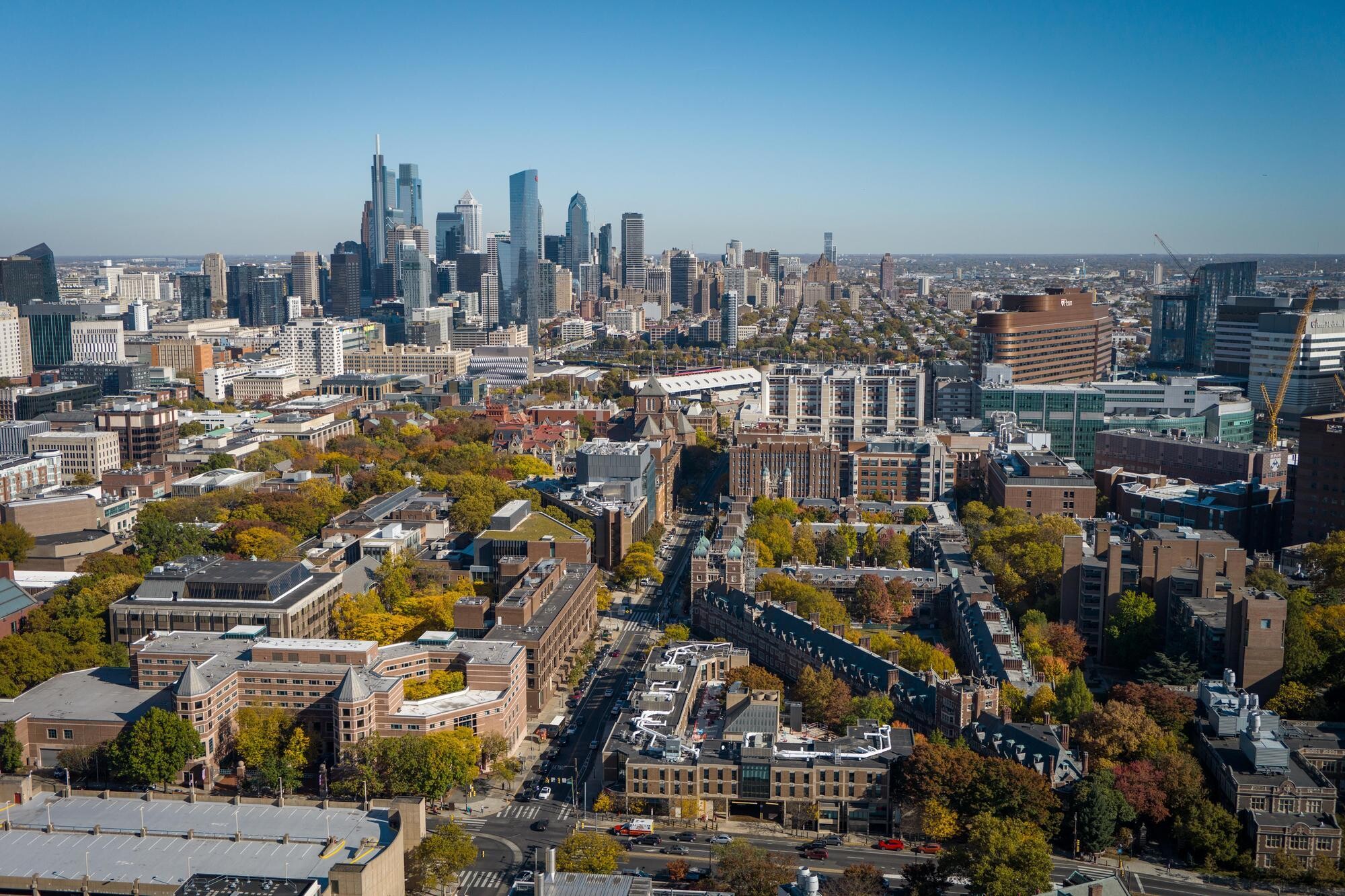
Developed in the open fields of West Philadelphia in the 1870s, the Penn campus now has more than 180 buildings across approximately 300 acres. This includes almost 100 acres of maintained landscapes like refined open lawns, gardens, and athletic fields with upwards of 6,200 trees that can be explored using the Penn Plant Finder.
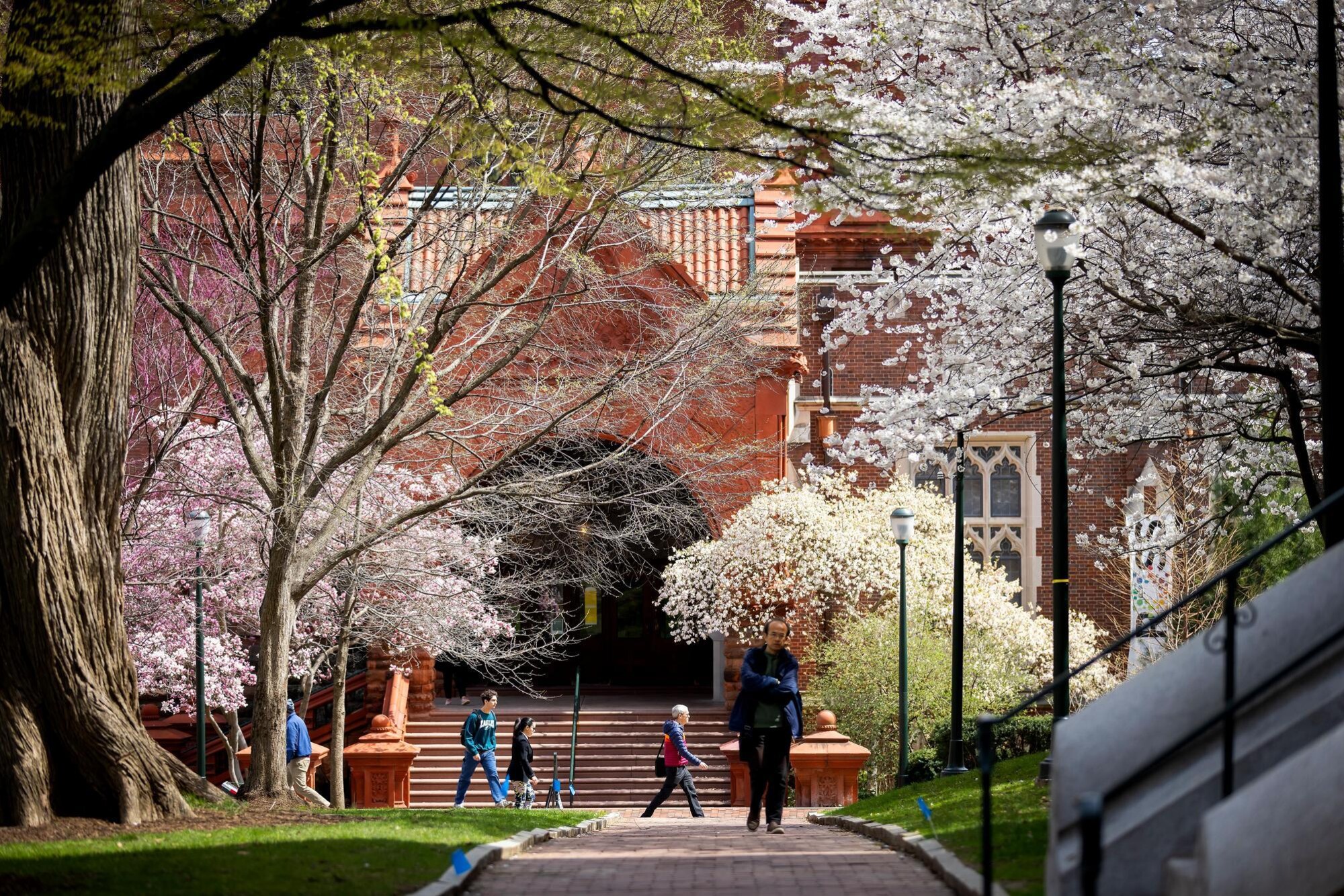
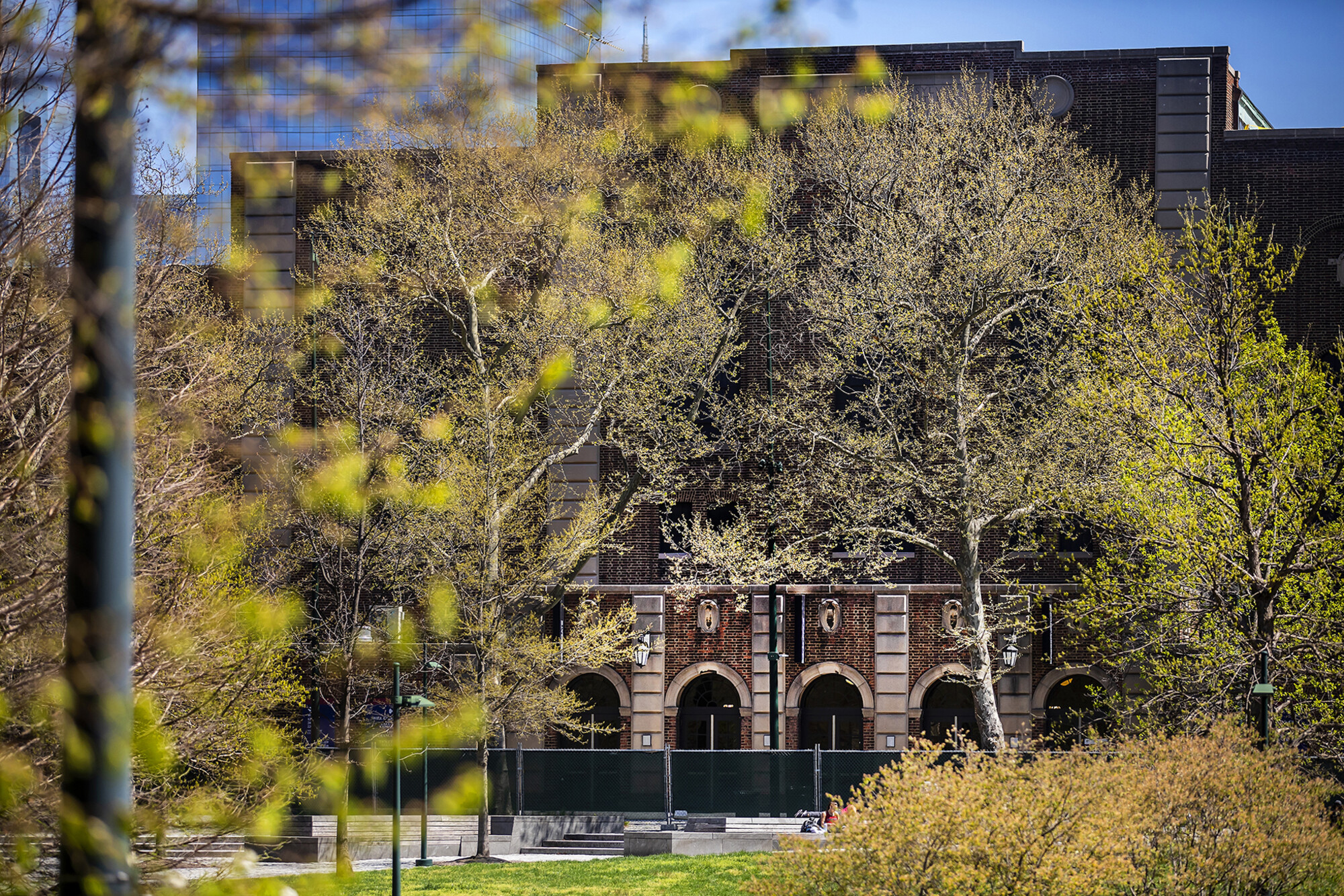
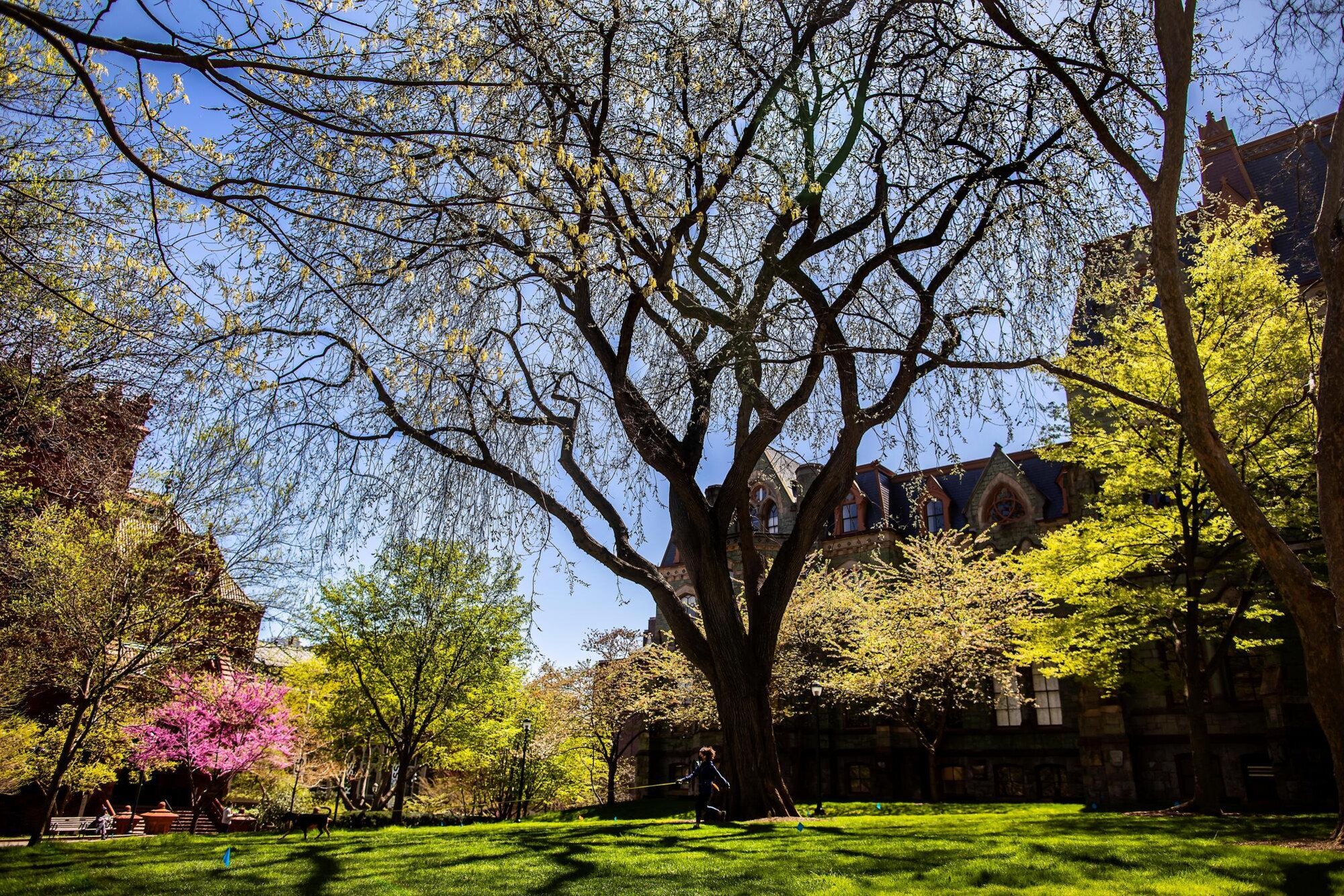
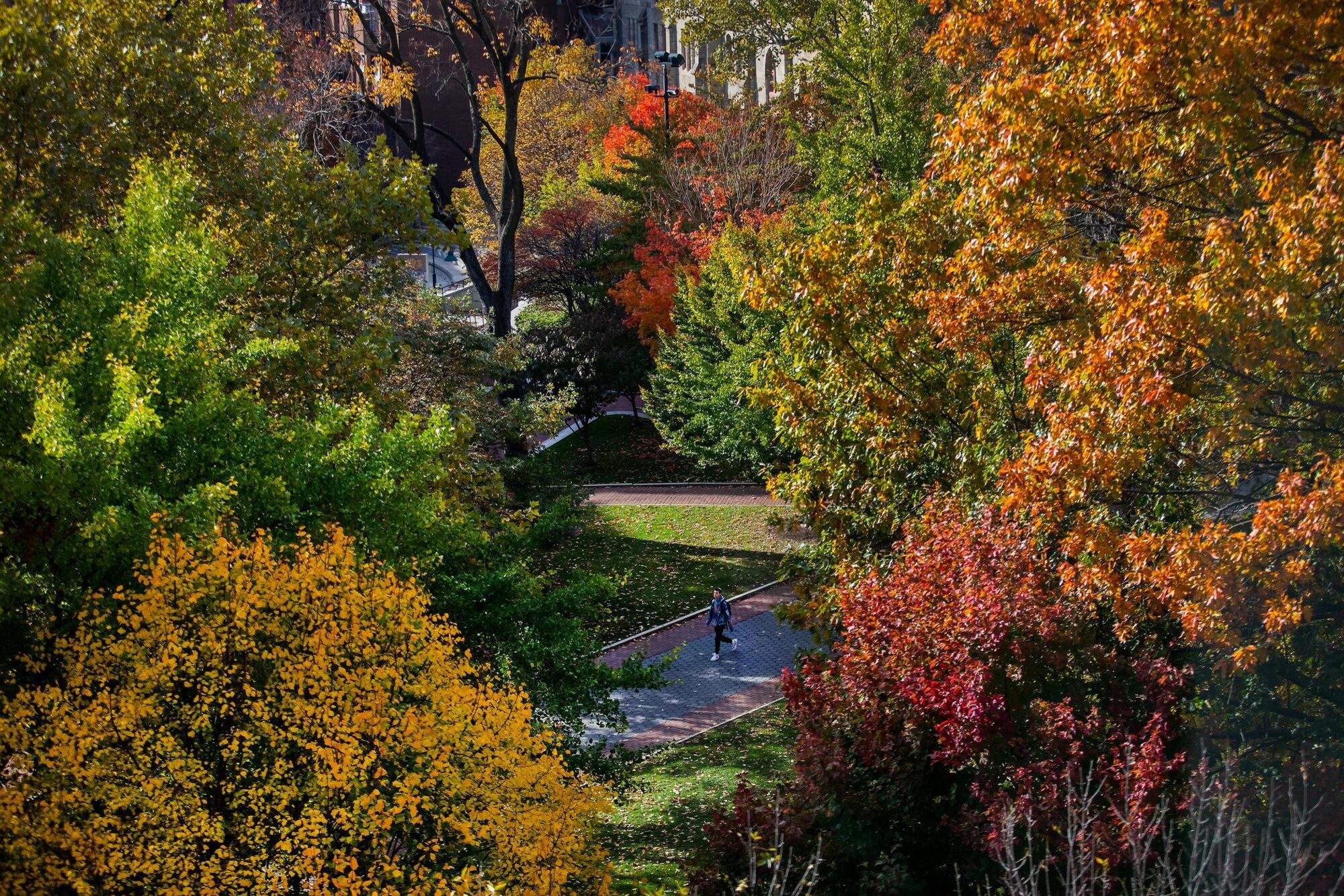
The Penn campus, now officially recognized as an arboretum, stands as a testament to decades of thoughtful planning and care, as well as to the enduring power of landscape to bring people together and foster learning. Saucer magnolias, star magnolias, and Yoshino cherry trees highlight the diversity of spring blossoms in the heart of campus (top left); When Shoemaker Green was revamped in 2012, great care was taken to preserve six London planetrees, originally planted following World War II (top right); In 1683, William Penn is believed to have signed a peace agreement with the Lenape people under a towering elm at what is now Penn Treaty Park along the Delaware River. A descendent of the tree has graced College Green for well over a century (bottom left); A variety of trees showcase diverse fall color on large shade trees in and around College Green (bottom right) (Image: Flying Monster).
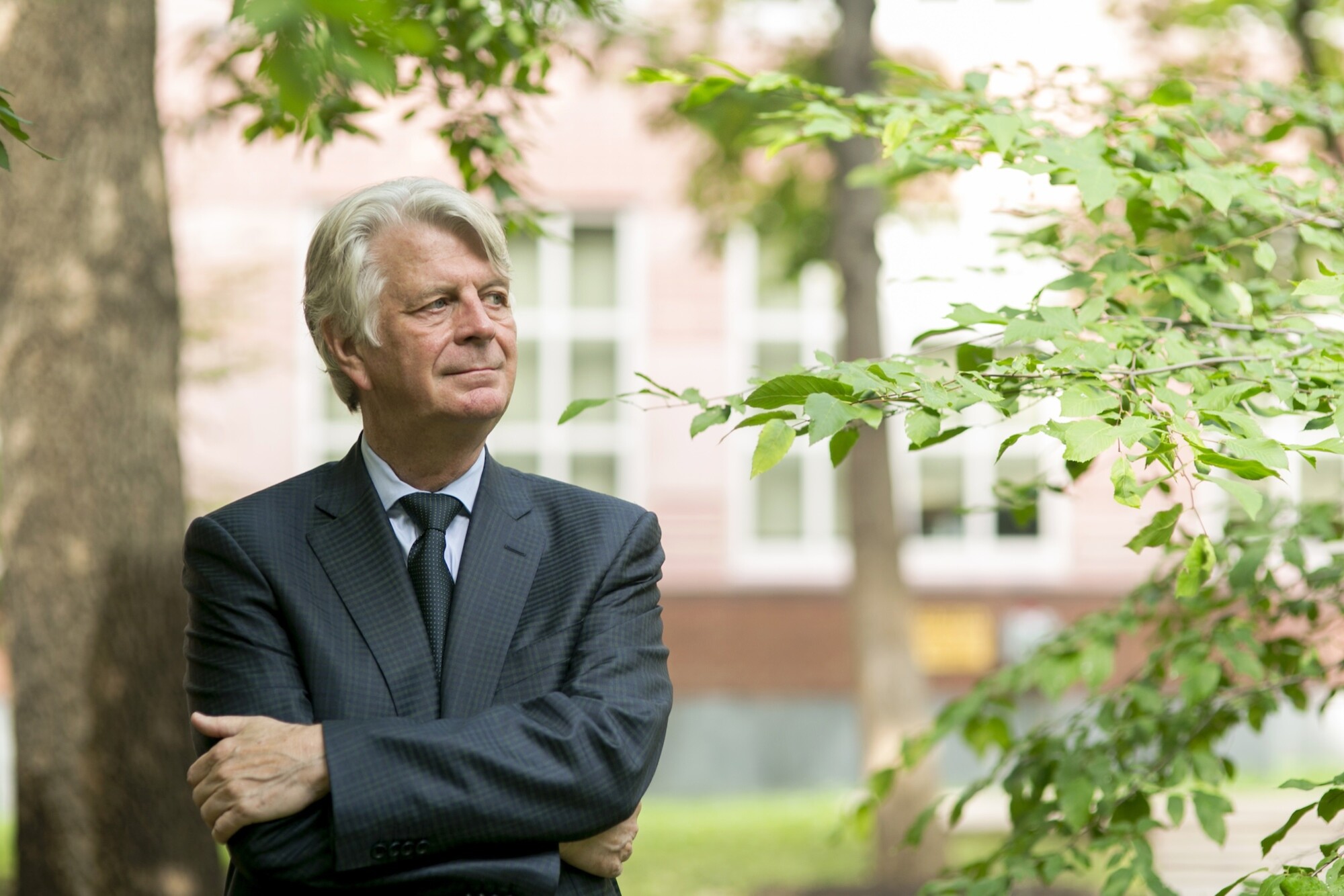
“This volume seeks to highlight the significance and impact of the university campus as an idea and a place of meaning across history, the arts and sciences, education, and applied practice,” says co-editor and landscape planner Fritz Steiner.
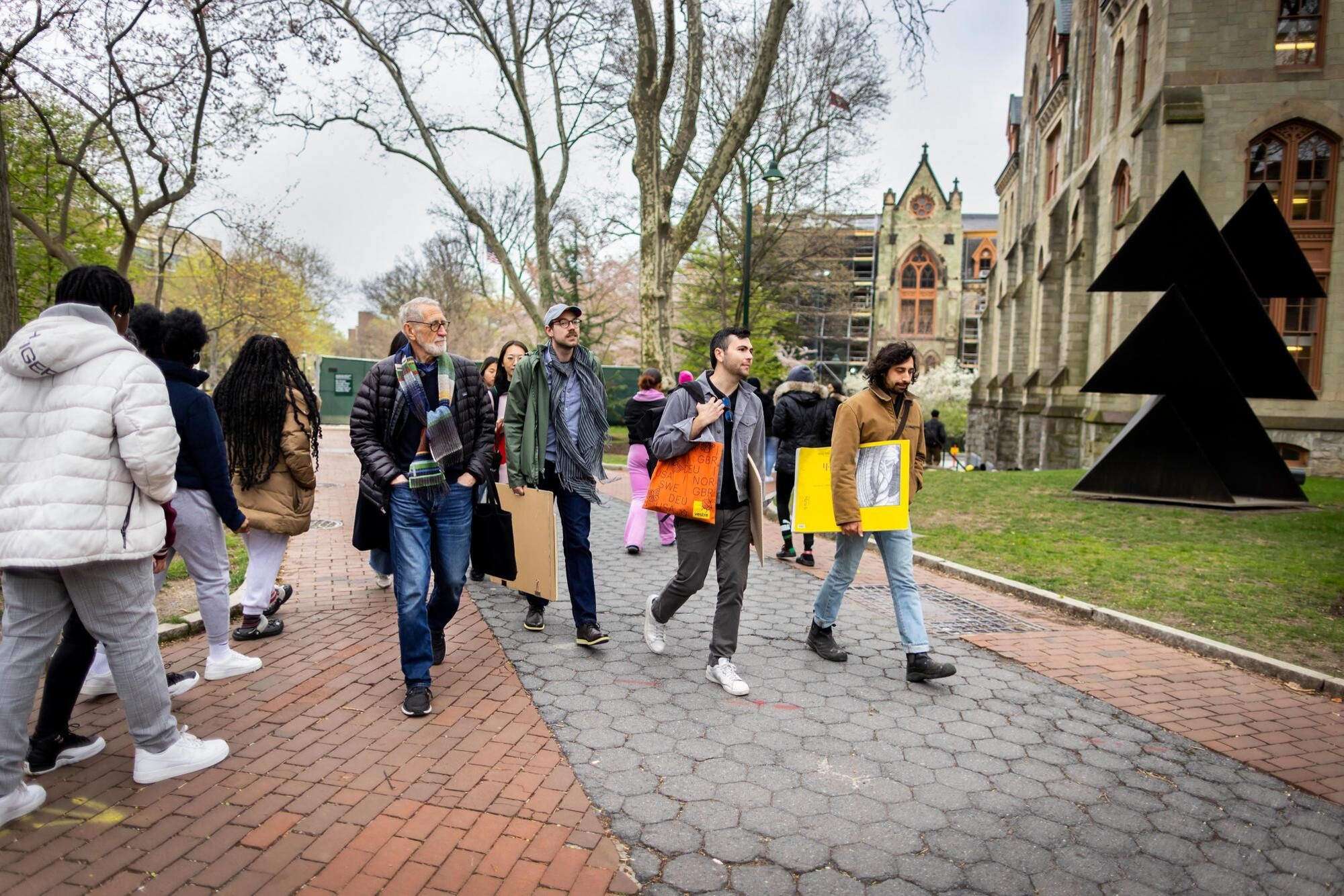
(Left) Landscape planner Fritz Steiner, dean of the Stuart Weitzman School of Design; (right) Laurie Olin with students.
It takes a village
“Planning and caring for a campus like the University of Pennsylvania requires the knowledge and involvement of many people, representing many disciplines, working over many years,” says Steiner, also the dean of Weitzman.
The book captures this complexity through its contributors—including co-editor Ignacio F. Bunster-Ossa, Robert Lundgren, Laurie Olin, Witold Rybczynski, and Catherine Seavitt—who have backgrounds in architecture, city planning, environmental science, and botany in addition to landscape architecture. (Watch a video of Seavitt, left, discussing the pawpaw, a favorite species of the native people of the Philadelphia region and the subject of her book chapter.)
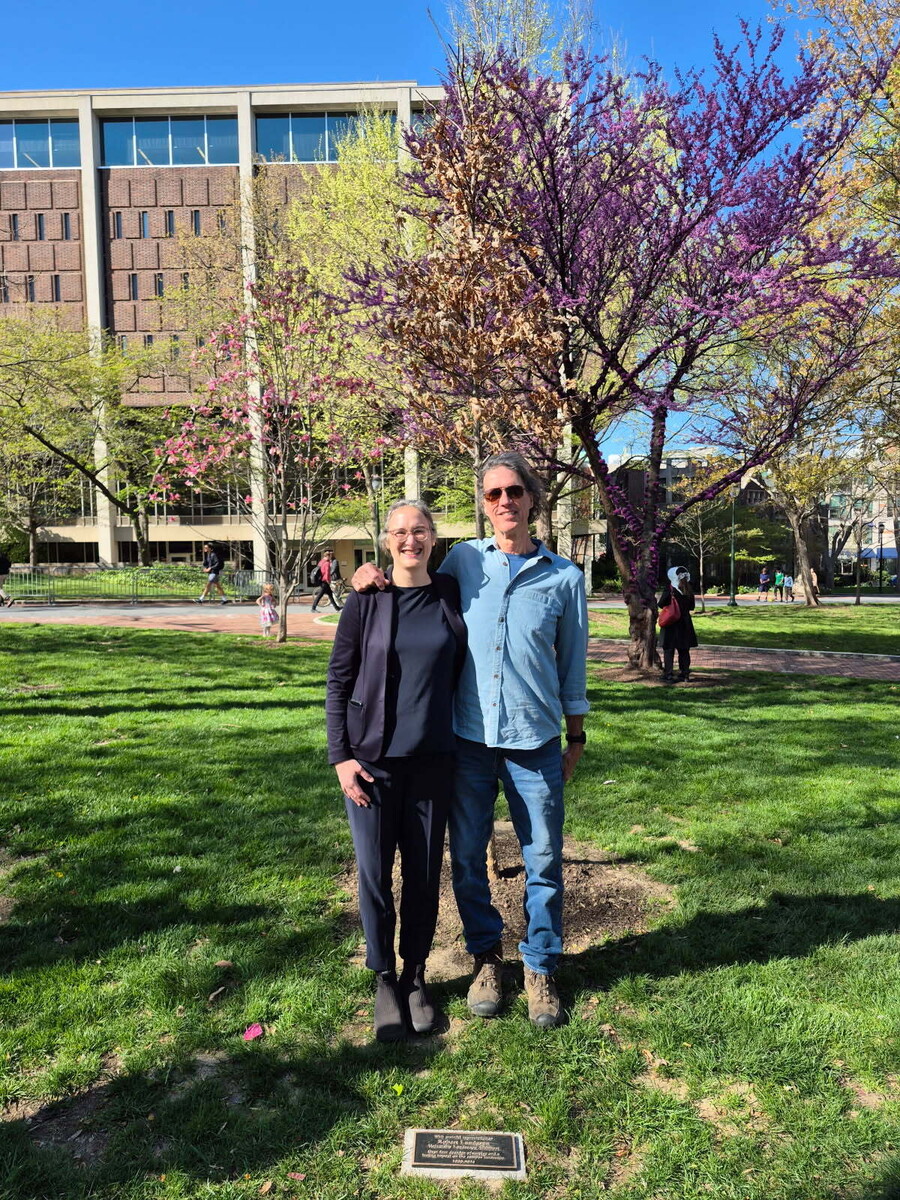
Chloe Cerwinka and Bob Lundgren in front of Lundgren’s honorary tree on College Green.
(Image: Courtesy of Facilities and Real Estate Services)
“The book was very much an interdisciplinary effort,” says Steiner.
One contributor, Chloe Cerwinka, is the landscape planner in Facilities and Real Estate Services (FRES) and co-author of a chapter on what it takes to manage a campus arboretum in the middle of a large city.
“As this book aptly describes, there’s a long history of collaboration between the design school and campus planning (now known as the Office of the University Architect) at Penn,” Cerwinka says, pointing to the 1977 Landscape Development Plan, which led to the creation of the University landscape architect position, and the 2018 Ecological Landscape Stewardship Plan, where Weitzman faculty provided valuable input on how to steward the University’s landscapes.
“This book helps close the gap between practice and theory, and I like that it takes a bird’s eye view as well as a detailed view from the perspective of the campus as an urban forest to the beauty and function of each individual tree,” she adds.
A built landscape for a connected community
Penn’s campus stands as a testament to decades of thoughtful planning and care, as well as to the enduring power of landscape to bring people together and foster learning.
“In our office, we always say that Penn’s campus landscape is the glue that connects the rest of the campus together,” says Cerwinka.
“One of the remarkable things about Penn is that each of its 12 Schools is within a short walk of College Hall and College Green—and that is not an accident,” adds Steiner. “It reflects generations of thoughtful planning and design that have helped create a campus that feels both cohesive and accessible.”
On the move: Water quality and antimicrobial resistance testing goes mobile
Penn researchers have developed a mobile field laboratory allowing them to test water quality and track antimicrobial resistance in and around San Cristóbal in the Galápagos.
Penn researchers Vanessa and Alexis North are studying one of the largest collections of Egyptian blue objects ever found in the ancient Near East, shedding new light on how the world’s first synthetic pigment may have traveled far beyond Egypt.
A new role for dental providers? Rethinking where vaccines are given
Vaccinations have traditionally been administered in primary care settings or pharmacies. However, for about a decade, some states have authorized dentists to administer vaccines, and many others did so during the COVID-19 pandemic. The effectiveness of this approach has led some countries and states to expand or consider expanding the role of dental providers in delivering routine vaccines, including those against COVID-19 and the human papillomavirus (HPV), and in providing vaccine education.
Penn student develops a way for computer chips to run more efficiently
Fluid Silicon, a platform from President’s Sustainability Prize winner Nhlanhla Mavuso, allows computer chips to continuously monitor their health and self-tune as their characteristics change. The technology has the potential to reduce energy usage in data centers and improve reliability in mission-critical applications.