Chapters of Change: Thirty years of life sciences transformation at Penn
In the fourth and final installment of the series, “Chapters of Change” highlights another transformational moment in Penn’s past when the evolution of life sciences research sparked the University to commit to investing in new research facilities and cross-disciplinary collaboration.
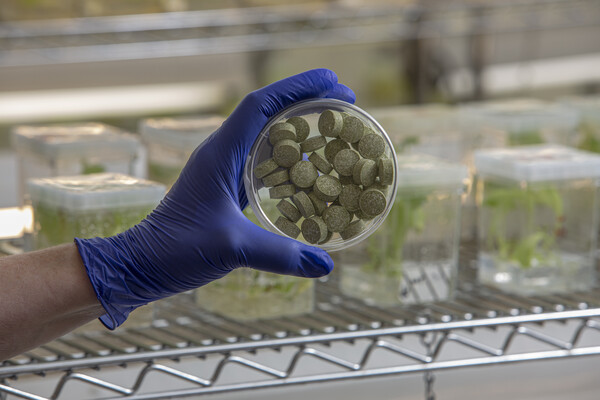
A bioengineered bean gum from the lab of Penn Dental’s Henry Daniell is found to reduce the levels of three microbes associated with head and neck squamous cell cancer to almost zero, without affecting the beneficial bacteria normally found in the mouth.
(Image: Kevin Monko/Penn Dental Medicine)
Fighting oral cancer with bioengineered chewing gum
Research led by Penn Dental’s Henry Daniell shows that antiviral and antibacterial chewing gums reduce the levels of three microbes linked to worse outcomes in oral cancers, paving the way for more effective and affordable therapies.
(From left) Bruce Levine, Stephan Grupp, Tom Whitehead, Emily Whitehead, Kari Whitehead, Carl June, and David Porter.
(Image: Daniel Burke)
A retrospective on CAR T cell therapy: From long shot to lifesaver
More than 30,000 patients have undergone CAR T cell therapy since it was developed by immunologist Carl June and his team at the University of Pennsylvania.
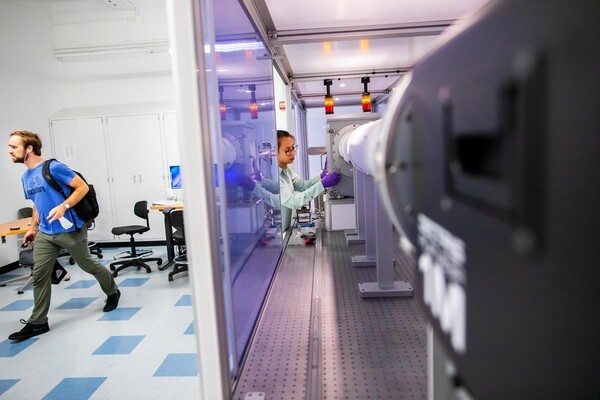
The "PARCCitect" team seeing the Betty supercomputer for the first time.
(Image: Ken Chaney)
Penn’s newest supercomputer is transforming research
Penn’s first campus-wide HPC and AI cluster, “Betty,” is expanding access to powerful computing, enabling groundbreaking projects, and fostering new collaborations across disciplines.
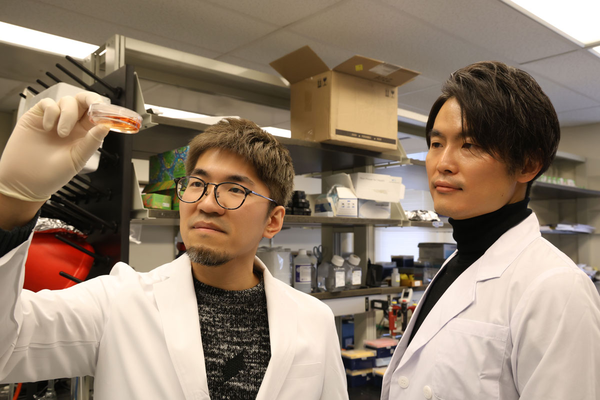
Michinori Mayama (left) and Kotaro Sasaki (right).
(Image: Courtesy of Kotaro Sasaki)
Stress tested, testing stress: Novel organoid models how the adrenal gland develops
Researchers led by Penn Vet’s Kotaro Sasaki and Michinori Mayama have developed an organoid system that faithfully mimics how the human adrenal gland develops and forms complex tissue structures, providing a powerful tool to study adrenal biology and laying the groundwork for regenerative therapies targeting adrenal diseases.
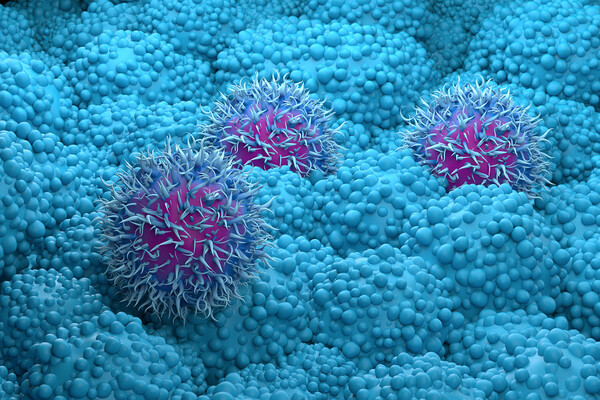
Image: Nemes Laszlo/Science Photo Library via Getty Images
Targeting tumor supporting cells: Advancing CAR T success in pancreatic cancer
Research led by Penn Vet’s Ellen Puré has used lipid nanoparticles to generate CAR T cells directed at a type of tumor support cells—cancer-associated fibroblasts—melting away the protective barrier around pancreatic tumor cells and paving the way for a potentially safer, more accessible, and cost-effective method to treat solid tumors.
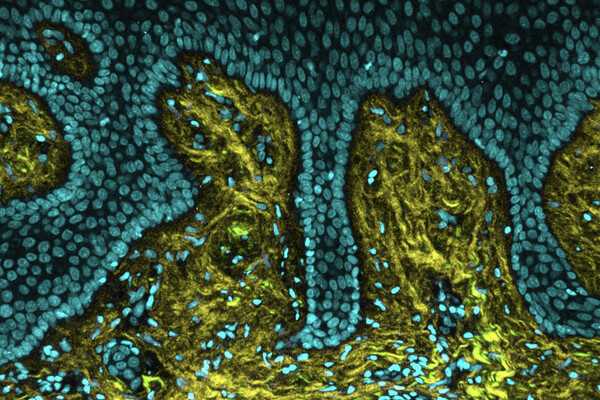
A section of healthy human gum tissue captured using an imaging technique called Second Harmonic Generation microscopy. In this sample, collagen fibers (shown in yellow), which give healthy gums their firm, resilient stiffness, are dense and well-organized—acting as a supportive scaffold for the surrounding cells (shown in teal).
(Image: Hardik Makkar)
A stiff defense: Rethinking gum disease
Penn Dental Medicine’s Kyle H. Vining and Hardik Makkar take a biomaterials approach to understanding periodontal disease, using a hydrogel system to investigate how the physical properties of the gum tissue impact inflammation.
Penn Today spoke with David Meaney, vice provost for research, about research at Penn—its current focus and plans for its growth and evolution in the continued quest to help make lives better.