Scientists from Denmark recently extracted and sequenced the oldest-ever DNA, from permafrost in Greenland, revealing a robust ecosystem of 135 species. Penn Today spoke with four faculty members about the potential power of ancient DNA.
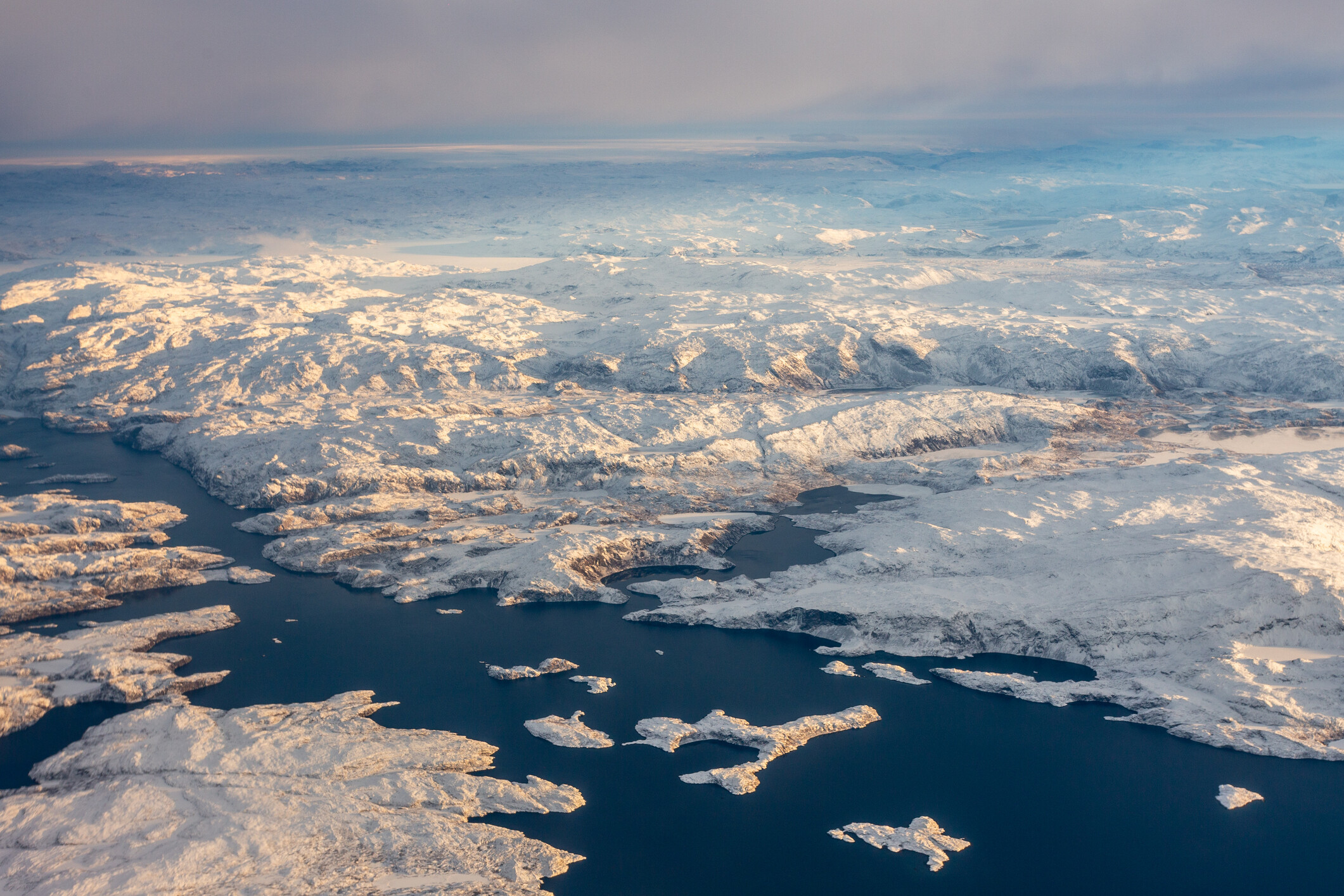
Genetic material extracted from permafrost in northern Greenland revealed the presence of a rich, warm, and vibrant ancient ecosystem in what is today a cold and rather barren landscape, offering promise for future scientific discovery based on ancient environmental DNA.
Last week scientists from Denmark shared an extraordinary find in the journal Nature. They recovered and sequenced fragments of DNA from organisms that lived 2 million years ago. The genetic material was recovered from permafrost deposits in Greenland and belonged to organisms including mastodons, hares, geese, insects, and plants such as poplar and birch trees.
The DNA is twice as old as any ever sequenced, giving researchers a new window into an ancient ecosystem that had previously been poorly understood. How might the ability to sequence such ancient DNA influence our understanding of Earth’s past and present? To find out, Penn Today checked in with four Penn faculty members—anthropologist Kathleen Morrison, biologist Corlett Wood, paleontologist Peter Dodson, and conservation biologist Daniel Janzen—about how the findings could shake up their fields.
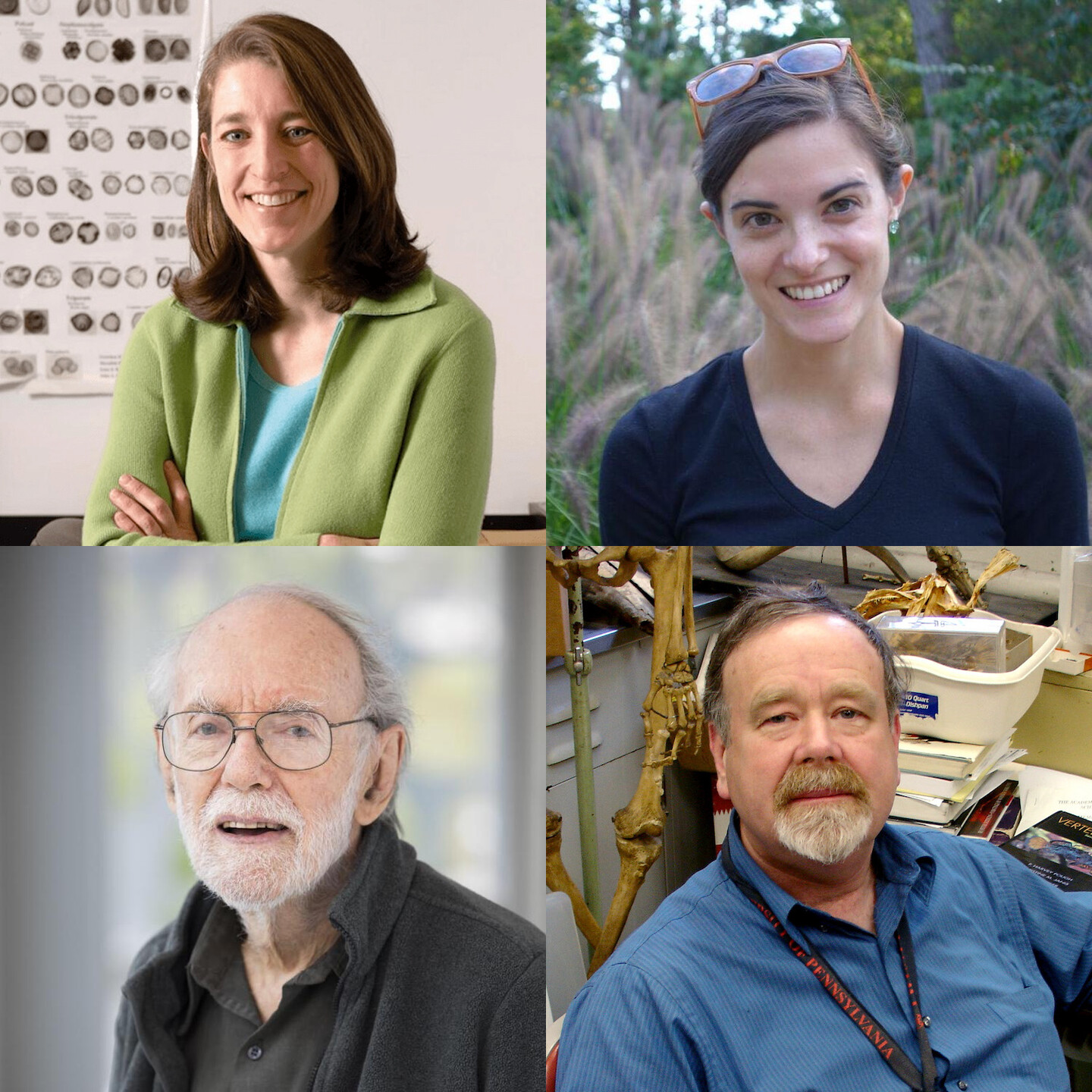
Clockwise from top left, scientists Kathleen Morrison, Corlett Wood, Peter Dodson, and Daniel Janzen share their reflections on the discovery and sequencing of 2-million-year-old DNA. (Images: University of Pennsylvania)
Kathleen Morrison, Sally and Alvin V. Shoemaker Professor and chair of the Department of Anthropology, School of Arts & Sciences
This study is very exciting and not only because the researchers were able to recover the oldest yet known DNA. What’s really promising is that this combination of ancient DNA (aDNA) and environmental DNA (eDNA) came together so well to provide a broad view of a past environment.
Environmental DNA has been valuable for contemporary ecological studies, for example, showing the presence of invasive Asian carp in Lake Michigan long before any actual fish were seen there, and aDNA has been widely used to study the remains of individual organisms. When we take these two kinds of research and apply them to samples found in sediments (unsurprisingly, we call this sedimentary ancient DNA or sedaDNA), a whole new world opens up.
If we want to study past environments rather than just individual organisms, we need a way to get something like a representative sample of the animals and plants that lived in a specific time and place. We usually do this by identifying what we call proxies of those ancient organisms, like pollen grains from past plants. Pollen analysts will identify thousands of pollen grains from a sediment sample to reconstruct the past vegetation, but there’s no simple way to do this for animals. So sedaDNA gives us a new tool for doing this, and also gives us yet another tool for reconstructing past vegetation. In paleoecology, we always try to use multiple proxies and compare them to one another, not only to increase accuracy but also to try and capture as much information as we can about the overall environment. This study shows that it’s possible to extend sedaDNA studies deep into the past.
I’d be thrilled if we could develop the capacity to do that kind of work here at Penn.
Corlett Wood, assistant professor, Department of Biology, School of Arts & Sciences
I study contemporary ecological communities, and for me one of the coolest things is understanding patterns of species interaction and coexistence: Who occurs with whom and who interacts with whom. That’s one of those things that, as far as I understand it, is much harder to do in ancient communities because they tend to be under sampled. One of the neat things about this paper is it detected a huge fraction more species than showed up in ancient pollen or fossil records, giving us a much more complete record of all the players that might have existed in this 2-million-year-old community.
Another thing that struck me right off the bat is how long ago 2 million years is. That’s just about the time that recognizable early humans were starting to evolve. It’s just a really long time ago. And one of the reasons this study is so scientifically fascinating is that DNA is a relatively fragile molecule. It degrades over time. There are a ton of enzymes that can break it down, and it’s really susceptible to damage from sunlight. One of the clever pieces of this work is the discovery that DNA can bind to minerals in soil and that seems to protect it, both from UV rays and also scavenging enzymes.
From the niche perspective of my field, evolutionary ecology, one thing that might be a little speculative but could be potentially powerful about ancient DNA is it gives you a chance to look directly at ancestral DNA sequences. If we had the right dataset, that could give us the ability to look at how members of communities are evolving over time, say, in a pollinator-plant interaction or a parasite-host interaction.
Finally, this shows us an awesome example of persistence in science. This team first collected samples in 2006, looked at them multiple times and couldn’t recover the DNA, kept not being able to recover it. But as genomic sequencing technology advanced, they were able to pull meaningful genetic data from their samples. And that led to this breakthrough.
Peter Dodson, professor of anatomy emeritus, School of Veterinary Medicine
It is remarkable what paleogenomics is accomplishing these days. We used to obsess over recovering DNA from a single specimen. Now it turns out that environmental DNA is capable of reconstructing entire ecosystems of animals, plants, and marine invertebrates. Remarkable.
We know that DNA is somewhat fragile, but it seems a bit more durable than previously understood. The authors suggest that 5 million years may be the upper time limit. From my narrow perspective as a dinosaur paleontologist, that still leaves a yawning gap of more than 60 million years until it gets interesting to me. Honestly, I don’t ever expect a credible report of dinosaur DNA, although important strides are being made with fossil biomolecules.
Daniel Janzen, professor and Thomas G. and Louise E. DiMaura Term Chair, Department of Biology, School of Arts & Sciences
A key thing here is that, to make sense out of the DNA that they pulled out of this old soil sample, the researchers needed a reference library of DNA barcodes from modern animals. This is what Winnie Hallwachs and a lot of Costa Ricans and Canadians have been doing in Costa Rica, creating a reference library of tropical insect DNA barcodes, also known as DNA species-specific fingerprints.
A lot of DNA has a characteristic fingerprint, so, if you get an unknown piece of DNA out of something, very often you can know whether it was a plant, a mammal, just from certain signatures. But once you get down to the level of asking, what species of plant, mammal, or insect, that's when you really need barcodes and a barcode reference library. By creating a collection of DNA barcodes for modern insects, we’re setting up the world for conservation and for other uses that don’t even exist yet.
This study was also a very positive example of the possible uses of environmental DNA. What I suspect is this work will start a small spurt of people asking questions like, How long can DNA last in soil? How does it decompose under certain temperature conditions, or with freezing and thawing, or with microbes? How long does it last in water? How long does it last on a doormat?
Just over the last year, we’ve been doing DNA barcode sampling from nine different national parks in Costa Rica. We are in the process of writing a paper for academia, the public, and the Costa Rican government that contrasts these parks by the quantity of insect biodiversity they contain in order to guide each park’s responses to climate change and the consequent biodiversity losses they are suffering. As a byproduct, this sets up at least 100,000 unknown tropical species of insects for their formal description. We have at least 30,000 new species in the taxonomic pipeline from one 10-acre plot of forest.
You could do the same thing, ask the same question, of any ecosystem using eDNA, and not just ones that exist today that you can walk out and see but also ones that were there one year ago, 10 years ago, 100 years ago, 1,000 years ago. It’s another kind of microscope. Another way of looking at the world itself through the eDNA fingerprints that every living thing leaves behind.
On the move: Water quality and antimicrobial resistance testing goes mobile
Penn researchers have developed a mobile field laboratory allowing them to test water quality and track antimicrobial resistance in and around San Cristóbal in the Galápagos.
Penn researchers Vanessa and Alexis North are studying one of the largest collections of Egyptian blue objects ever found in the ancient Near East, shedding new light on how the world’s first synthetic pigment may have traveled far beyond Egypt.
A new role for dental providers? Rethinking where vaccines are given
Vaccinations have traditionally been administered in primary care settings or pharmacies. However, for about a decade, some states have authorized dentists to administer vaccines, and many others did so during the COVID-19 pandemic. The effectiveness of this approach has led some countries and states to expand or consider expanding the role of dental providers in delivering routine vaccines, including those against COVID-19 and the human papillomavirus (HPV), and in providing vaccine education.
Penn student develops a way for computer chips to run more efficiently
Fluid Silicon, a platform from President’s Sustainability Prize winner Nhlanhla Mavuso, allows computer chips to continuously monitor their health and self-tune as their characteristics change. The technology has the potential to reduce energy usage in data centers and improve reliability in mission-critical applications.