What to know about measles and the current outbreak
Healthcare epidemiologist and infectious diseases specialist Judy O’Donnell gives facts about measles and its symptoms and important information regarding vaccination and immunity.
4 min. read
Key Takeaways
Measles is very easily transmissible—it is one of the most contagious infectious diseases on Earth.
It is easily preventable if you’re vaccinated and immune.
If people are not sure if they are vaccinated and immune, they should talk to their healthcare provider.
Measles is one of the most contagious infectious diseases on Earth, says Judy O’Donnell, professor of clinical medicine (infectious diseases) at the Perelman School of Medicine, “If people are not immune—meaning they’re susceptible to the viral infection—and they come into contact with an individual who has measles and can spread it to another person, that susceptible individual has a 90% chance of coming down with measles,” she says.
But the good news, says O’Donnell, is that it is easily preventable through vaccination. “Measles was essentially declared eliminated from the United States many years ago because we had such a highly effective vaccination campaign here for decades,” notes O’Donnell, who is also the associate chief medical officer for healthcare epidemiology for the University of Pennsylvania Health System and the section chief of the Division of Infectious Diseases at Penn Presbyterian Medical Center.
“Many people are vaccinated already and therefore protected from measles. However, if you are unsure of whether you have been fully vaccinated or are immune, then you should talk to your physician,” she urges.
Measles is an infection caused by a virus that usually manifests in children explains O’Donnell. “Historically—before we had vaccines—most human beings would acquire a measles infection naturally because it is so transmissible, usually in their first 5 to 10 years of life,” she says.
Measles symptoms and outcomes
The first symptom is typically a high fever—regularly over 102 and into the 103 range, notes O’Donnell, and for the first few days of the infection, “it’s a pretty nonspecific—a fever and then some general respiratory symptoms: runny nose, runny eyes, red eyes, and sore throat. But there’s no rash yet.”
The rash typically appears after 4 to 5 days, starting first at the top of the head and face and then traveling down the body to the feet.
But, as O’Donnell explains, it’s crucial for people to understand that even before someone with a measles infection develops the rash, they can spread the virus to others. “And it is transmitted through the air—that’s why it is so contagious,” she says.
People of any age who are not immune can potentially have a bad outcome if they become infected with the measles, notes O’Donnell. “About 1 in 5 people who get measles end up having to come into the hospital for some sort of care related to their measles,” she says, adding that 1 in 1,000 people will develop a neurological complication—encephalitis or brain swelling—which can cause permanent brain damage or, in some cases, death.
Measles vaccines
People born before 1957 are generally considered to be immune; there was no vaccine then, so essentially everyone contracted the disease says O’Donnell. The first vaccine came onto the market in 1963, so people born between 1963 and 1967 who were vaccinated likely received the killed or “cold” virus vaccine, which is no longer considered effective. People born after 1968 would have received the live virus vaccine, which has been used effectively since that time.
“If [people born after 1968] have evidence [of vaccination] from their childhood immunization cards or from talking to their parents, they should consider themselves immune,” says O’Donnell. “But it’s always a good idea to check,” she adds, especially people born in that window of time—in the late 1950s and early 1960s—who are not sure if they had measles or were vaccinated only with the killed virus vaccine.
Although, as O’Donnell explains, there is no specific therapy for a measles infection, there are treatment options for those who have had significant exposure and are not immune to help prevent a full-blown infection. “You can administer a dose of the vaccine immediately to provide some protection or offer intravenous immune globulin to someone who has been exposed and is susceptible to measles.”
If you think you’ve been exposed
O’Donnell advises people who are not immune and have been exposed to call the health department for their guidance on quarantining. “It can take up to 14 days after you have been exposed to develop an infection,” says O’Donnell. “And so, you may need to maintain some form of quarantine during that period of time.”
Anyone who has concerns about their risk of acquiring measles should talk to their doctor, says O’Donnell. “[Your doctor] can do a simple blood test to determine if you have immunity,” she says.
What are the most important things to remember about measles? “It’s very easily transmissible. It’s one of the most contagious infectious diseases on Earth, and it’s easily preventable if you're vaccinated and immune. And if you’re not sure if you’re vaccinated and immune, talk to your healthcare provider,” says O’Donnell.
On the move: Water quality and antimicrobial resistance testing goes mobile
Penn researchers have developed a mobile field laboratory allowing them to test water quality and track antimicrobial resistance in and around San Cristóbal in the Galápagos.
Penn researchers Vanessa and Alexis North are studying one of the largest collections of Egyptian blue objects ever found in the ancient Near East, shedding new light on how the world’s first synthetic pigment may have traveled far beyond Egypt.
A new role for dental providers? Rethinking where vaccines are given
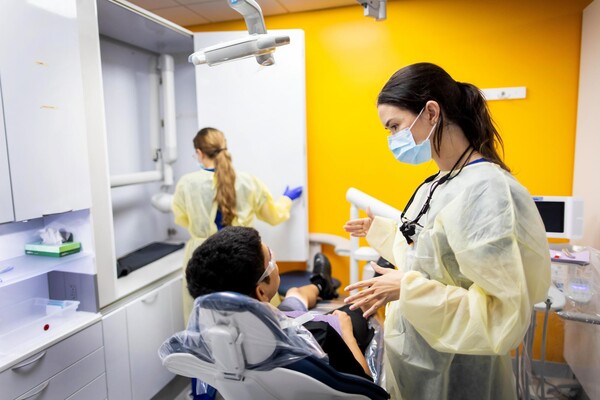
Vaccinations have traditionally been administered in primary care settings or pharmacies. However, for about a decade, some states have authorized dentists to administer vaccines, and many others did so during the COVID-19 pandemic. The effectiveness of this approach has led some countries and states to expand or consider expanding the role of dental providers in delivering routine vaccines, including those against COVID-19 and the human papillomavirus (HPV), and in providing vaccine education.
Penn student develops a way for computer chips to run more efficiently
Fluid Silicon, a platform from President’s Sustainability Prize winner Nhlanhla Mavuso, allows computer chips to continuously monitor their health and self-tune as their characteristics change. The technology has the potential to reduce energy usage in data centers and improve reliability in mission-critical applications.