Lumify Care, supported by the 2021 President’s Innovation Prize and co-founded by May graduate Anthony Scarpone-Lambert and NICU nurse Jennifferre Mancillas, launched an app in January and expects version 2.0 of its uNight Light later in 2022.
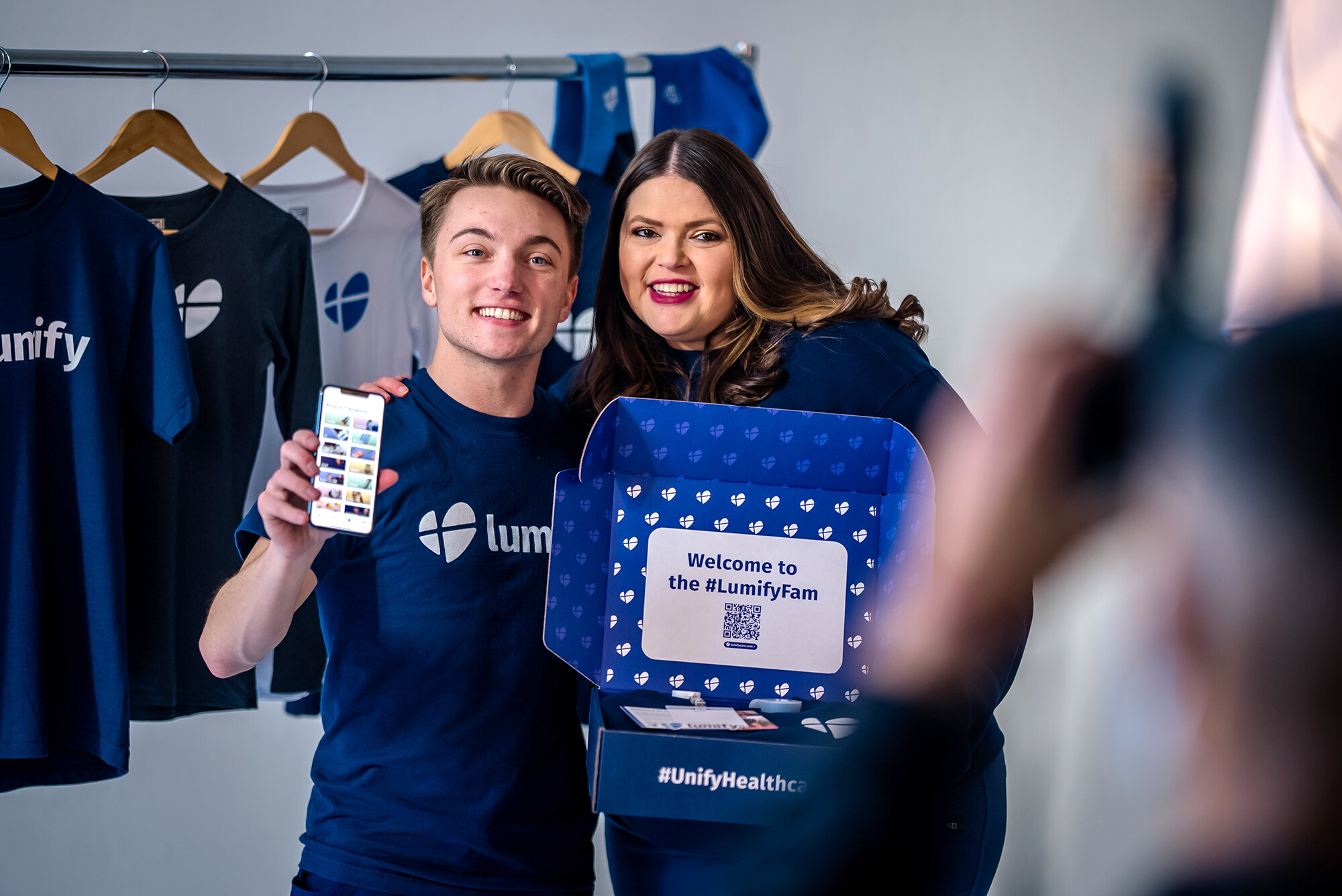
When Anthony Scarpone-Lambert (left) and Jennifferre Mancillas met at the Johnson & Johnson SONSIEL Nurse Hackathon in November 2019, he was a student at Penn Nursing, she a J&J Nursing Innovation Fellow and NICU nurse at Valley Children’s Healthcare in California. Initial conversations at the Hackathon planted the seeds for what would become Lumify, the company they co-run and for which Scarpone-Lambert earned the 2021 President’s Innovation Prize.
When Anthony Scarpone-Lambert and Jennifferre Mancillas first began working together—when he was a junior in Penn’s School of Nursing, she a neonatal intensive care nurse in California—they wanted to address one particular challenge for nurses: how to better care for patients in the dark without needing to turn on the lights.
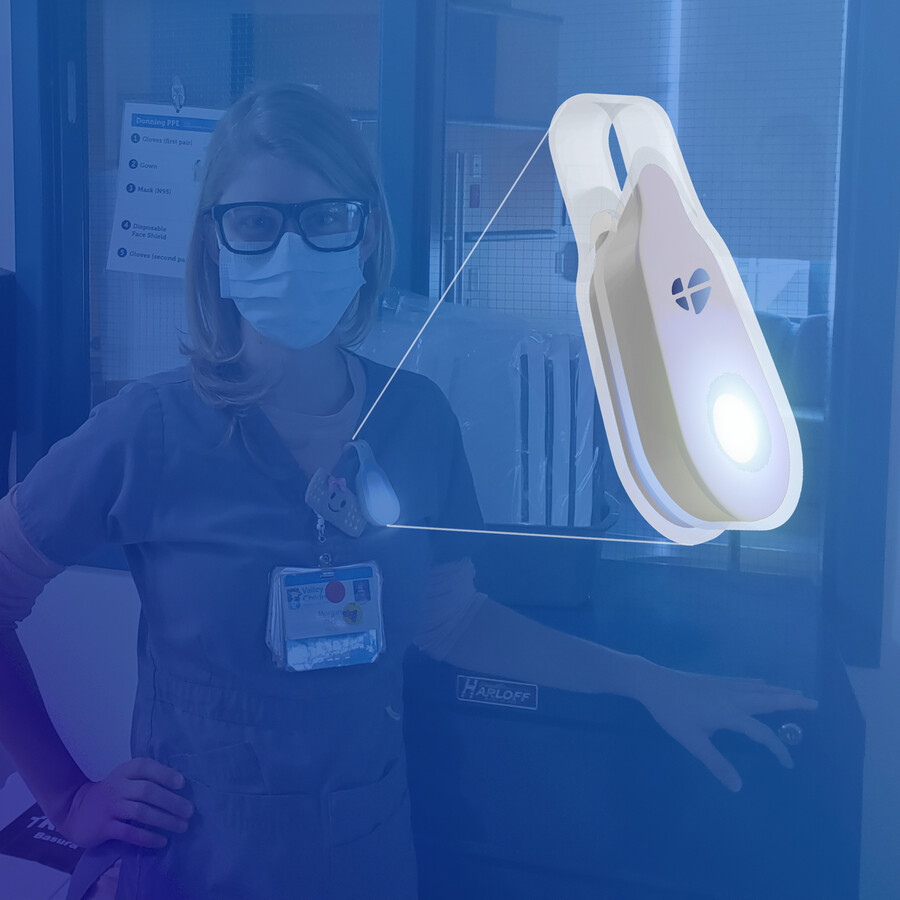
Their solution was uNight Light, a clip-on, battery-powered, lightweight device with modes for night vision, close-up care, and active alertness. It aids nurses by keeping both hands free and providing lighting that’s bright enough for them to work but soft enough to avoid disrupting a sleeping patient.
Coupled with an educational component and a nurse-focused social platform, uNight Light became the flagship product for Lumify Care, Inc., the company Scarpone-Lambert and Mancillas started in 2020 and which earned Scarpone-Lambert the 2021 President’s Innovation Prize from Penn.
“Anthony and the entire Lumify team—continuously thinking outside of the box—took their well-deserved President’s Innovation Prize and evolved their game-changing uNight Light in remarkable ways,” says Interim President Wendell Pritchett. “I am so impressed by their dedication, their determination, and their growth. There is no doubt that Lumify will have lasting and positive impact on the work that gets done each and every day by our health care heroes.”
The uNight Light is Lumify’s flagship product, a clip-on, battery-powered, lightweight device that aids nurses by keeping their hands free and providing lighting that’s bright enough for them to work but soft enough to avoid disrupting a sleeping patient.
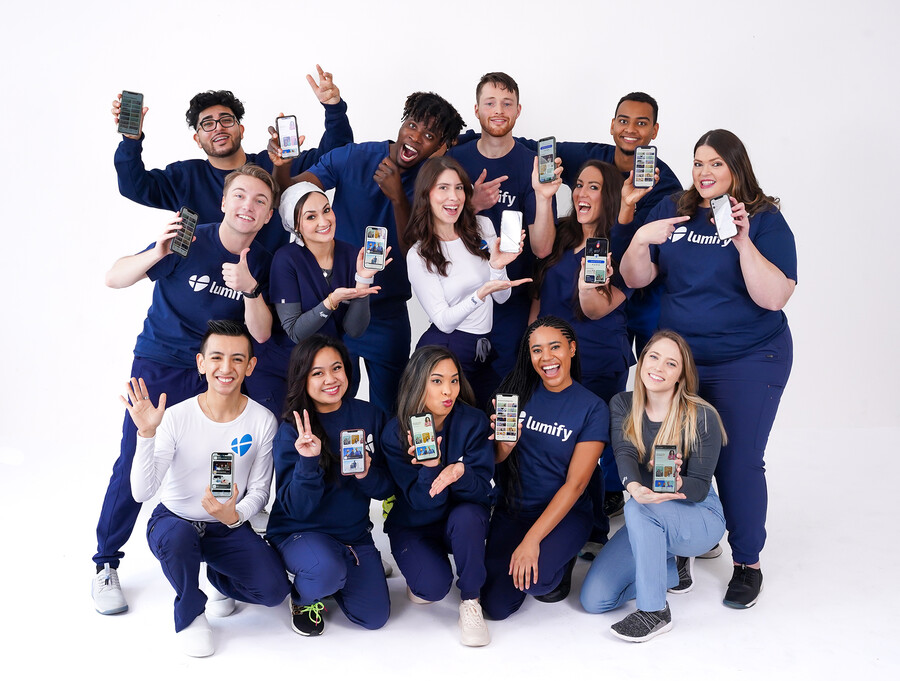
In the nine months since the award, Scarpone-Lambert and Mancillas’ vision for what the company might accomplish has expanded. They’ve hired several people and started thinking beyond direct-to-consumer products, conducting a pilot program to get Lumify tools into benefits packages at several hospitals. They’ve also expanded beyond nurses through an app they launched in January. This digital hub, a one-stop-shop for health care professionals to find resources, gear, and support, already has more than 100 partners, including Peloton and Penn-alum run Clove. In its first week, it attracted more than 1,000 users.
“When we won the President’s Innovation Prize, we were just launching our hardware. We had built this pretty large community of nurses with that first product,” Scarpone-Lambert says. “But then we wanted to figure out, how do we further help this community that we’ve established?”
Mancillas says they saw the uNight Light as a springboard. “Health care innovations are more often about patient care than for the health care workforce. Now, more than ever, we have an opportunity to rally around health care professionals and support them. We realized they waste so much time trying to navigate a system that’s so disjointed.”
The more the Lumify team spoke with people in their industry, the more they realized this to be true: No central space existed for these professionals to find everything they needed, from scrubs to wellness tools and continuing education opportunities. “We were seeing such a siloed ecosystem,” Scarpone-Lambert explains.
Lumify’s team has grown along with its product offerings. In January, Scarpone-Lambert and colleagues launched a new app, what he describes as a “super app for health care workers.”
That awareness prompted him and his colleagues to interview hundreds of nurses, nurse practitioners, respiratory therapists, and many other types of health care professionals; the majority they spoke with expressed stress over navigating this aspect of their professional life, which often includes thousands of dollars in out-of-pocket expenses. Mancillas and Scarpone-Lambert decided Lumify could streamline this and create a community at the same time. After all, they’d already done something similar with the uNight Light and its accompanying community, which, to date, has more than 25,000 members.
They secured some additional seed money from Y Combinator, a venture capitalist that provides funding for startups, then hired an engineer, a designer, and a marketing person. With the intel they’d gathered from the conversations during the summer of 2021, they began building an app.
We had built this pretty large community of nurses with that first product. But then we wanted to figure out, how do we further help this community that we’ve established?
May 2021 graduate Anthony Scarpone-Lambert, co-founder of Lumify Care
“There are so many products and tools out there like uNight Light, but health care workers cannot find them. It’s very easy for things to not be accessible,” says Scarpone-Lambert. “We wanted to broaden the community and the education piece. We basically expanded the sleep-first community we had already built.” The result? What Scarpone-Lambert describes as the “super app for health care workers.”
Free for users, the space offers products and support in categories from footwear to leadership. There’s a spot where people can post comments and questions and offer advice or their own stories. Long term, the Lumify team envisions becoming the “largest, most-inclusive digital home for health care workers,” Scarpone-Lambert says. That doesn’t mean forgetting about the uNight Light, however.
A second generation—rechargeable, with more adjustable light settings and a QR code on the back that leads to the app—will launch later in 2022. According to Lumify data, the first version lessened patient sleep disruptions by 70%, with 90% of users saying they’d recommend it to a friend or colleague; Scarpone-Lambert and Mancillas have high hopes for version 2.0.
RELATED
That sentiment carries over into how they feel about the continued support they’ve received from Penn faculty like Therese Richmond, Penn Nursing associate dean for research and innovation, and Jeffrey Babin of the Engineering Entrepreneurship program in Penn Engineering. They’re similarly grateful for the launchpad of the President’s Innovation Prize itself. “It really gave us this new level of empowerment to make the biggest impact possible,” Scarpone-Lambert says. “When we started, we were just a wearable light product. We really took that a big step further. We’ve now grown into this tech company.”
Not just any tech company, but one founded by nurses for nurses, Mancillas adds. “It started with a pain point we saw. Anyone should feel empowered to find solutions just like we did. We love to encourage and inspire nurse-led innovation.” Thanks to their own innovation, patients can now sleep better during hospital stays and many more health care professionals can feel better connected to their communities.
Homepage image: In the future, Scarpone-Lambert wants Lumify to keep growing and innovating. “It’s so crazy to think about how far we’ve come,” he says. But there’s more to do, he adds: “Health care workers need support now more than ever.”
On the move: Water quality and antimicrobial resistance testing goes mobile
Penn researchers have developed a mobile field laboratory allowing them to test water quality and track antimicrobial resistance in and around San Cristóbal in the Galápagos.
Penn researchers Vanessa and Alexis North are studying one of the largest collections of Egyptian blue objects ever found in the ancient Near East, shedding new light on how the world’s first synthetic pigment may have traveled far beyond Egypt.
A new role for dental providers? Rethinking where vaccines are given
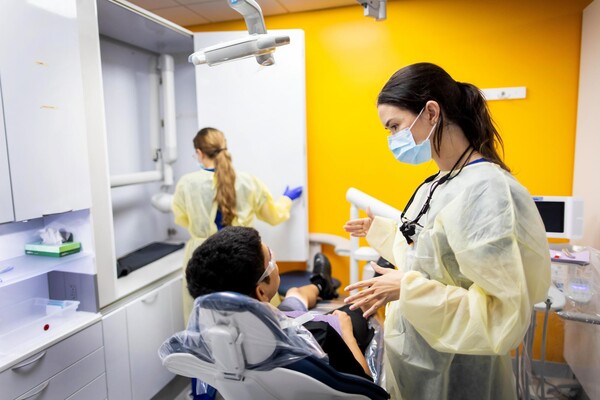
Vaccinations have traditionally been administered in primary care settings or pharmacies. However, for about a decade, some states have authorized dentists to administer vaccines, and many others did so during the COVID-19 pandemic. The effectiveness of this approach has led some countries and states to expand or consider expanding the role of dental providers in delivering routine vaccines, including those against COVID-19 and the human papillomavirus (HPV), and in providing vaccine education.
Penn student develops a way for computer chips to run more efficiently
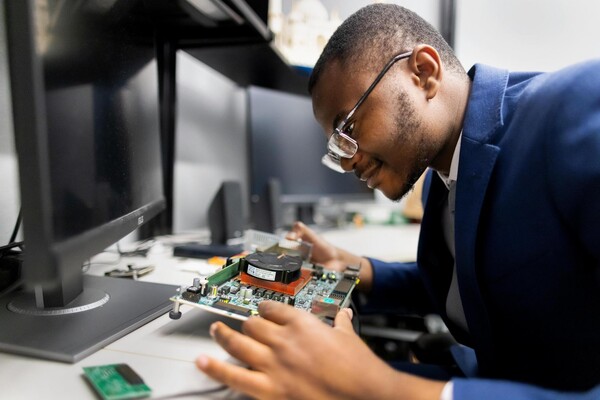
Fluid Silicon, a platform from President’s Sustainability Prize winner Nhlanhla Mavuso, allows computer chips to continuously monitor their health and self-tune as their characteristics change. The technology has the potential to reduce energy usage in data centers and improve reliability in mission-critical applications.