Every day, thousands of people use SEPTA's trains, trolleys, and buses to travel to and from Penn’s campus for work or school. But navigating the regional public transit system isn’t always easy—especially for those new to the area.
That’s why the University and SEPTA have collaborated to open the SEPTA Travel Center, the first of its kind on a college campus. Conveniently located in the Penn Bookstore at 3601 Walnut St., the Center is meant to be a go-to location for commuters with questions about SEPTA. It also offers assistance for those interested in learning more about Penn Transit, LUCY, New Jersey Transit, Amtrak, Indego Bike Share, and car sharing.
“Transportation in this region can be confusing,” says Brian Manthe, director of Penn’s Business Services Division (BSD), who oversees Parking and Transportation. “This Center will help people who’ve never used public transit before, it will inform commuters on how to take advantage of all the University City transit options, and it will provide a place for people to get a personal touch as new technology and innovations, like the SEPTA Key, are rolled out.”
The Center, which marked its grand opening with a ribbon-cutting ceremony last week, is staffed by SEPTA employees who have been trained on all of Philadelphia’s public transit offerings. It’s open to the public Monday through Friday, from 11 a.m. to 6 p.m.
“In addition to the space being great for Penn’s faculty, staff, and students, and the West Philadelphia community, it will also benefit visitors,” says Manthe. “Penn hosts so many different visitors, whether they come to campus for business or pleasure, and SEPTA is a great resource for them.”
The SEPTA token machine, which used to be located on the Bookstore’s second floor, has been relocated to the Center, which is most easily accessed through the Sansom Street entrance, between 36th and 37th streets. The discounted passes for Penn commuters, however, will still be managed through the Parking and Transportation Office located at 3401 Walnut St.
“We are excited to have the Center here at Penn and thank SEPTA for all the work they did to help make this happen,” Manthe says. “It will be a one-stop shop where individuals can find information about the integrated transit systems that serve Penn. Whether they need a ride on and around campus, help with a daily commute, or want to travel to New York or D.C., this Center can help familiarize you with all the available resources.”
On the move: Water quality and antimicrobial resistance testing goes mobile
Penn researchers have developed a mobile field laboratory allowing them to test water quality and track antimicrobial resistance in and around San Cristóbal in the Galápagos.
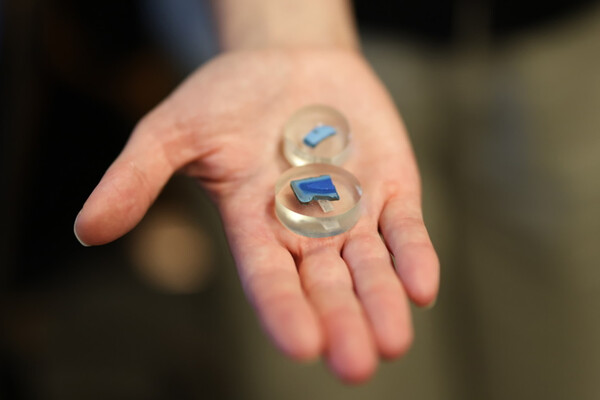
Penn researchers Vanessa and Alexis North are studying one of the largest collections of Egyptian blue objects ever found in the ancient Near East, shedding new light on how the world’s first synthetic pigment may have traveled far beyond Egypt.
A new role for dental providers? Rethinking where vaccines are given
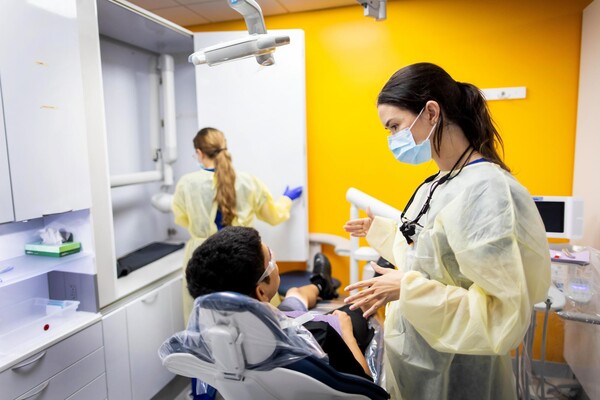
Vaccinations have traditionally been administered in primary care settings or pharmacies. However, for about a decade, some states have authorized dentists to administer vaccines, and many others did so during the COVID-19 pandemic. The effectiveness of this approach has led some countries and states to expand or consider expanding the role of dental providers in delivering routine vaccines, including those against COVID-19 and the human papillomavirus (HPV), and in providing vaccine education.
Penn student develops a way for computer chips to run more efficiently
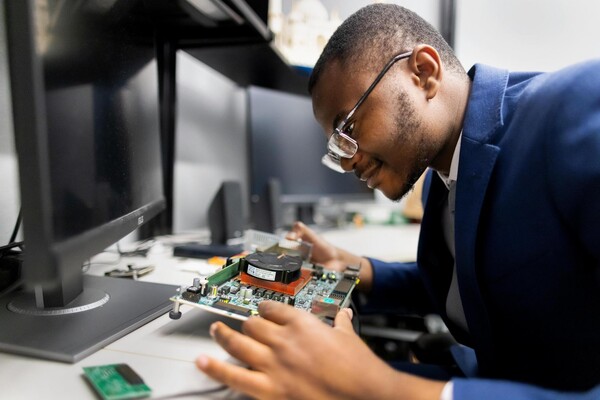
Fluid Silicon, a platform from President’s Sustainability Prize winner Nhlanhla Mavuso, allows computer chips to continuously monitor their health and self-tune as their characteristics change. The technology has the potential to reduce energy usage in data centers and improve reliability in mission-critical applications.