In a pilot study, Facilities and Real Estate Services is working with soil scientists and ecologists to take a scientific approach to managing campus land.
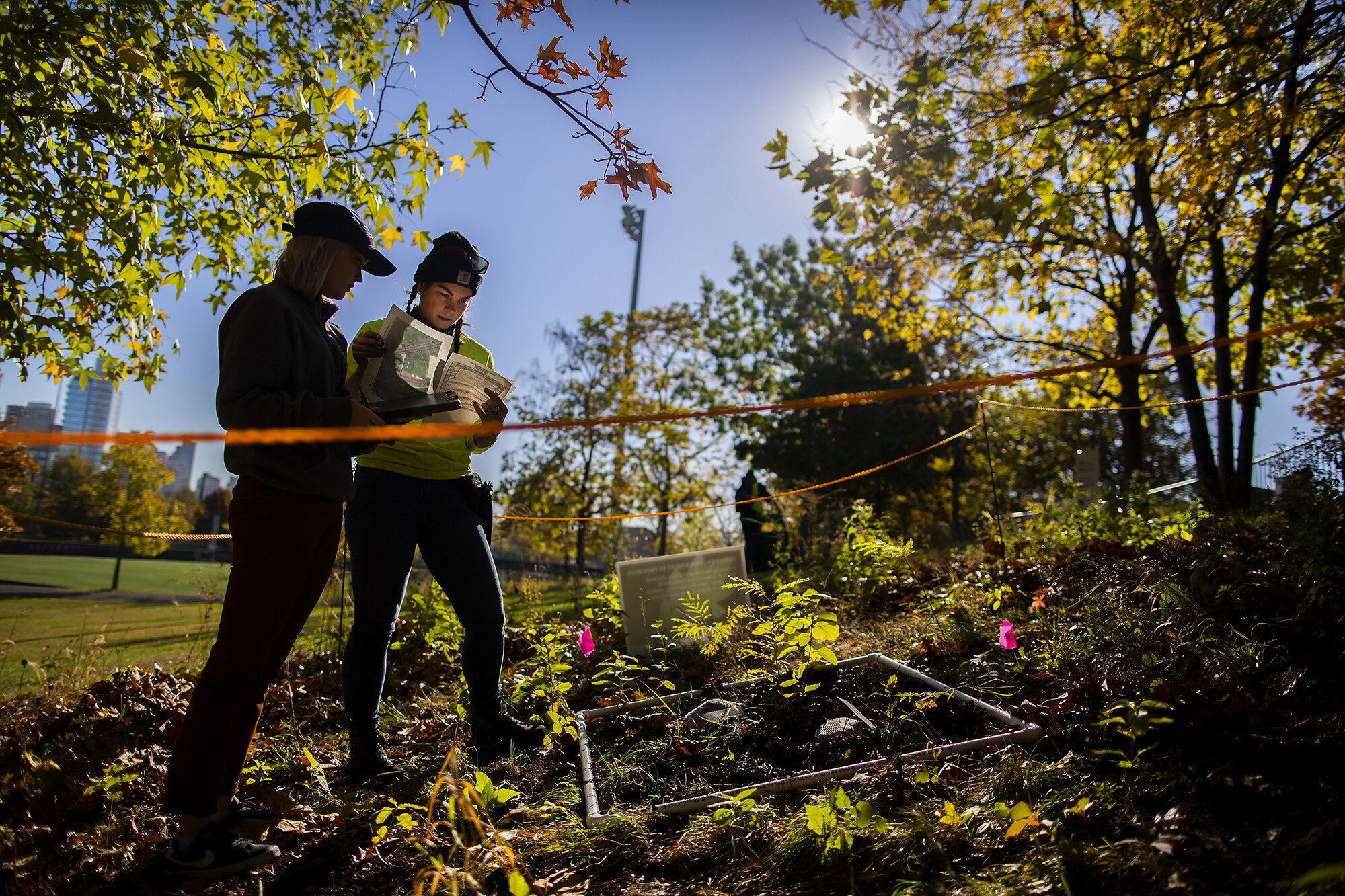
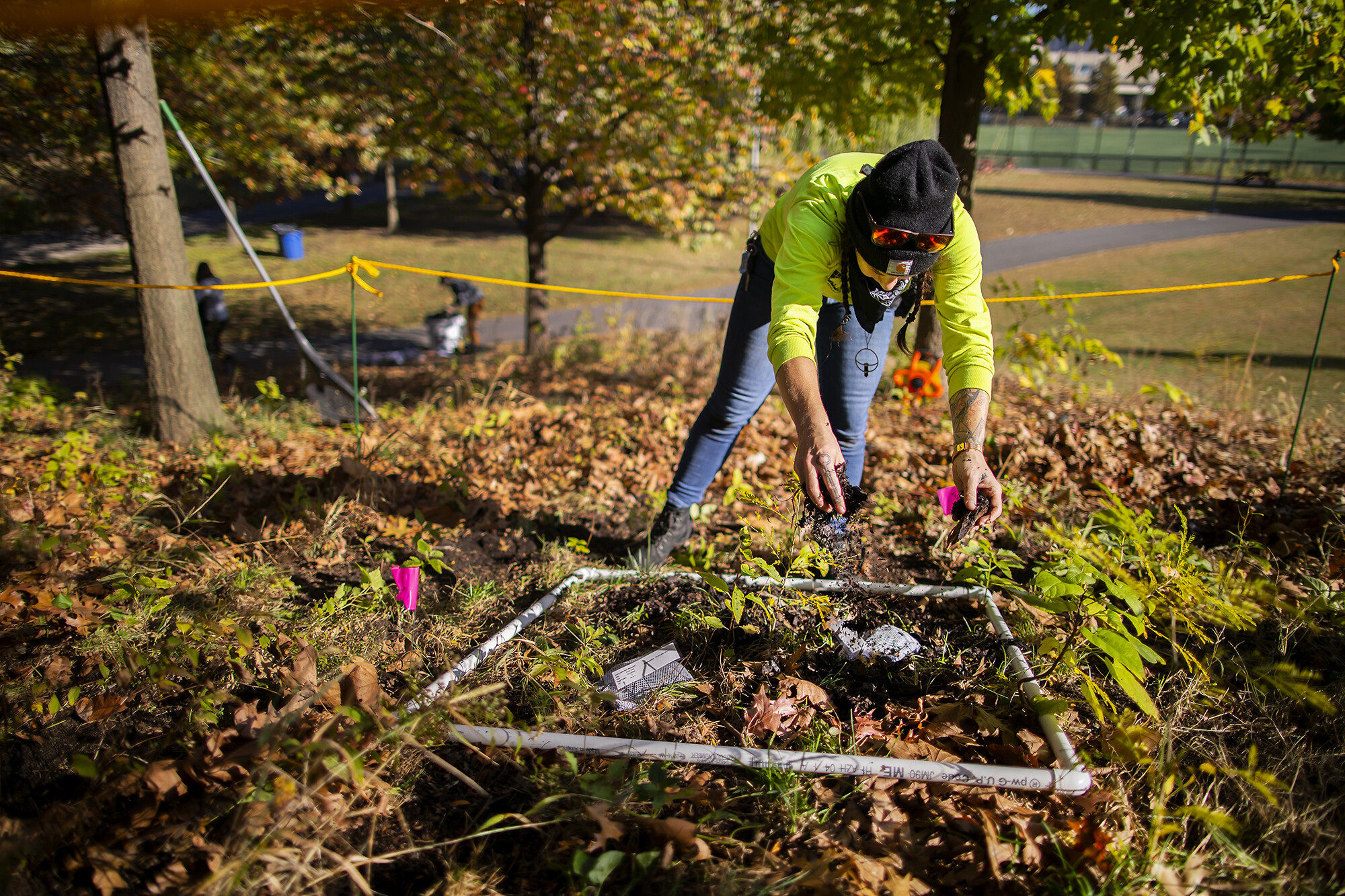
Eliza Nobles, a Morris Arboretum intern, and Jessie Buckner, an ecologist with Applied Ecological Services, set up the first plots at Penn Park on a sunny morning in October. Their study will examine how using leaf mulch or allowing fallen leaves to remain on a site impacts soil health and ecology.
Throughout the fall, Facilities and Real Estate Services (FRES) and contracted workers collect and remove leaves from campus walkways, lawns, and planting beds. From there, the leaves are transported to a composting facility at Penn Park and later used to mulch some out-of-the-way naturalized areas around that part of campus.
This fall, however, FRES is partnering with researchers on campus as well as with consulting ecologists to pilot a twist on that approach. At five locations around campus, the group is testing different methods of managing campus land. Specifically, they’re seeing if allowing leaves to remain in place or swapping shredded leaves for traditional hardwood mulch might lead to healthier soils and greater biodiversity.
“This initiative emerged from our Ecological Landscape Stewardship Plan, part of the Climate and Sustainability Action Plan 3.0,” says Bob Lundgren, University landscape architect. “Within that there are lots of examples of different management principles we could employ, like taking lawn and converting it to meadow, or taking English ivy beds and turning them over into native perennials. The idea behind this project is, Do we really need to use mulch all over the place, or could we find some areas where we can begin to take a more ecological approach to management?”
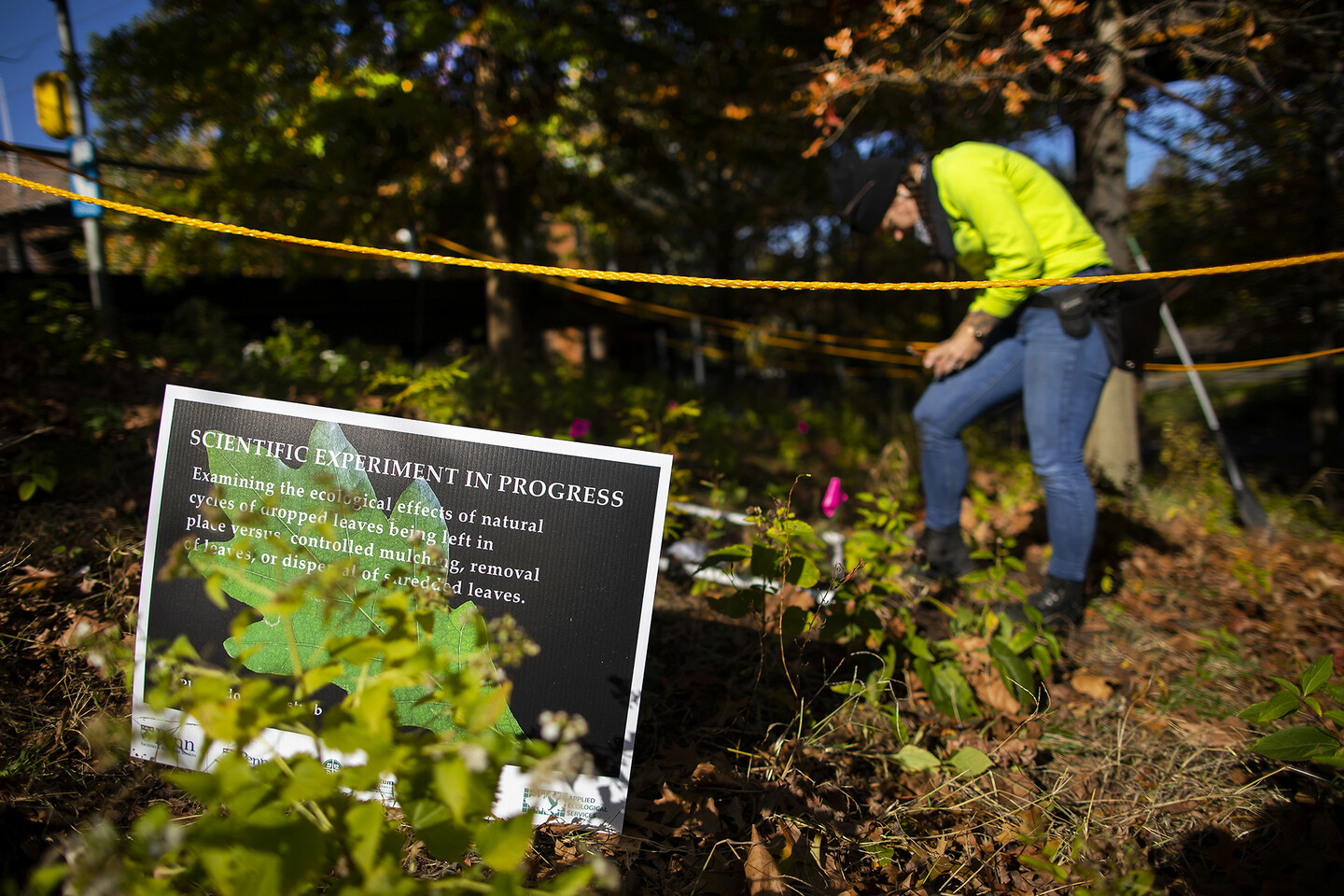
Signage at each study site on campus explains the project, also serving as a reminder not to disturb the plots.
The FRES team, headed by Lundgren, Penn landscape planner Chloe Cerwinka, and Sam Royer, supervisor of Penn Park, wanted to answer this question scientifically. They brought in ecologists from environmental consulting firm Applied Ecological Services (AES), including Penn alumni Mike McGraw and Jessie Buckner. On campus, soil scientist Alain Plante of the School of Arts and Sciences joined the effort, as did Eliza Nobles, urban forestry intern at the Morris Arboretum, and Charli Klein, a student in the Master of Environmental Studies program.
While expanses of lawn look tidy when they are free of leaves and garden beds look nice when they’re covered in a uniform layer of mulch, it takes considerable labor to remove those leaves, and significant expense to purchase, transport, and spread mulch. Leaf blowers and other landscaping equipment also consume fossil fuels and can contribute to carbon emissions. With this project, the Penn team is asking not only whether allowing some leaves to remain on the ground might benefit soil, plant, and animal life, but also whether the aesthetics of doing so might be acceptable to the campus community.
“We’re using campus as a living lab,” says Cerwinka. “If we have science to back up our management decisions—and in particular, science that is specific to our site—it can help us in changing the culture.”
Together the group identified five areas on campus—Penn Park, Shoemaker Green, Locust Walk near Hayden Hall, Memorial Walk, and Annenberg Walk—that could benefit from these changes but that each differ slightly in setting and in current management practices.
In October, Buckner, Nobles, and Royer set the experiment in motion, starting at Penn Park and working their way north.
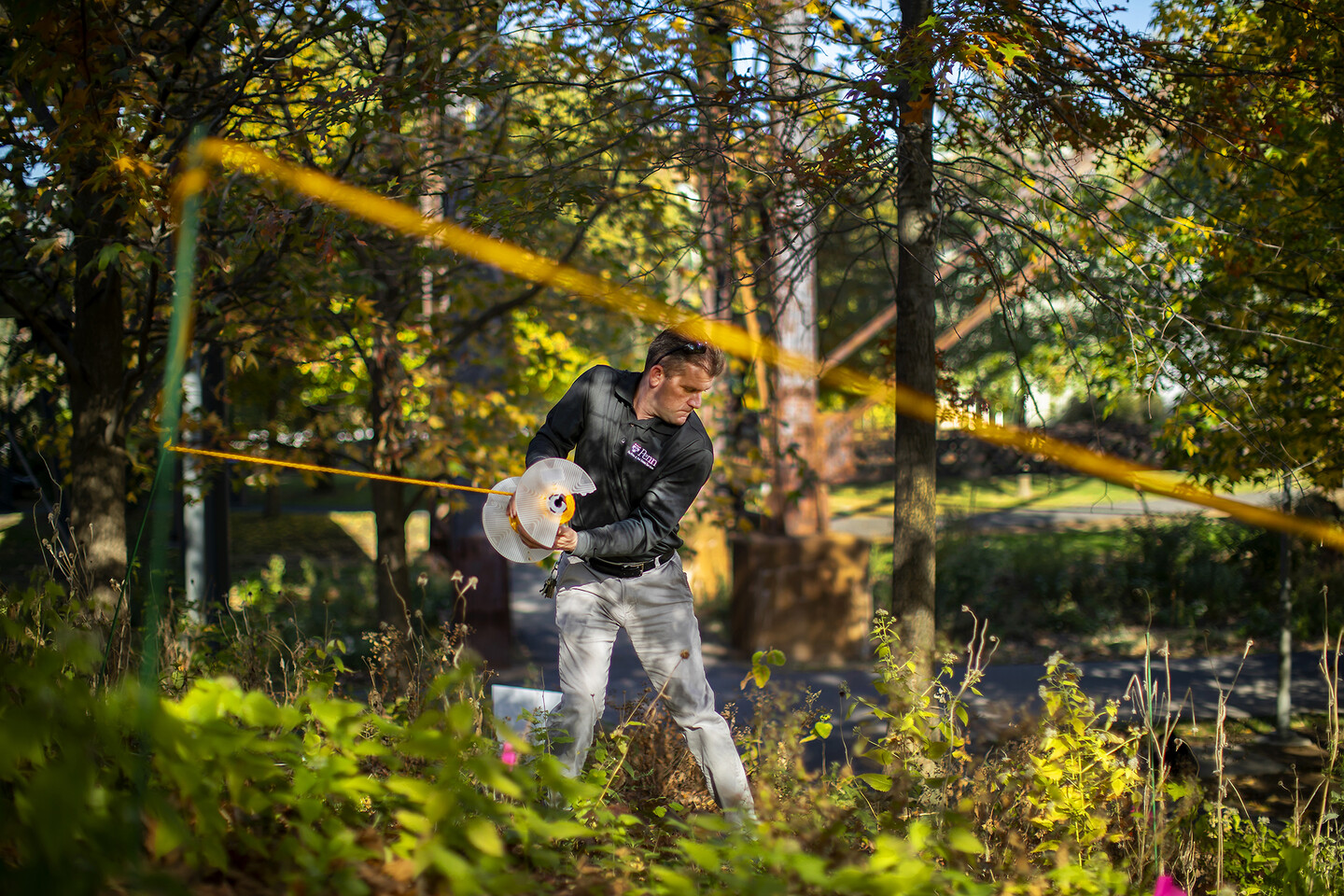
Cordoned off with rope and marked with signs stating, “Scientific Experiment in Progress,” each site includes a control plot, where management will be kept at the status quo, and two different experimental treatments. In one, shredded leaf material from the Penn Park composting facility was applied as mulch; in a second, leaves from trees above will be allowed to remain on the site.
Penn Park Supervisor Samuel Royer ropes off a study site. “One thing I’m hoping will shine through is that leaf litter will provide more nutrient value to the soil than mulch,” he says.
During the next six months, the research team will be collecting data from soil probes that measure ion exchange, analyzing additional soil properties, and counting insects found in each plot. Their hypothesis? That the leaf treatments will result in a richer, healthier soil.
“One thing I’m hoping will shine through is that leaf litter will provide more nutrient value to the soil than mulch,” says Royer. “Not only can it provide all the benefits that mulch provides—maintaining soil moisture and reducing weeds—but it also provides nutrients that the plants growing there can use. That could help reduce fertilizer and maintenance costs.”
Plante, a professor in the Department of Earth and Environmental Science in the School of Arts and Sciences, has offered feedback on methods and measurements, keeping the team focused on designing experiments that can guide best practices down the line. He’ll also provide some infrastructure for conducting analyses next year.
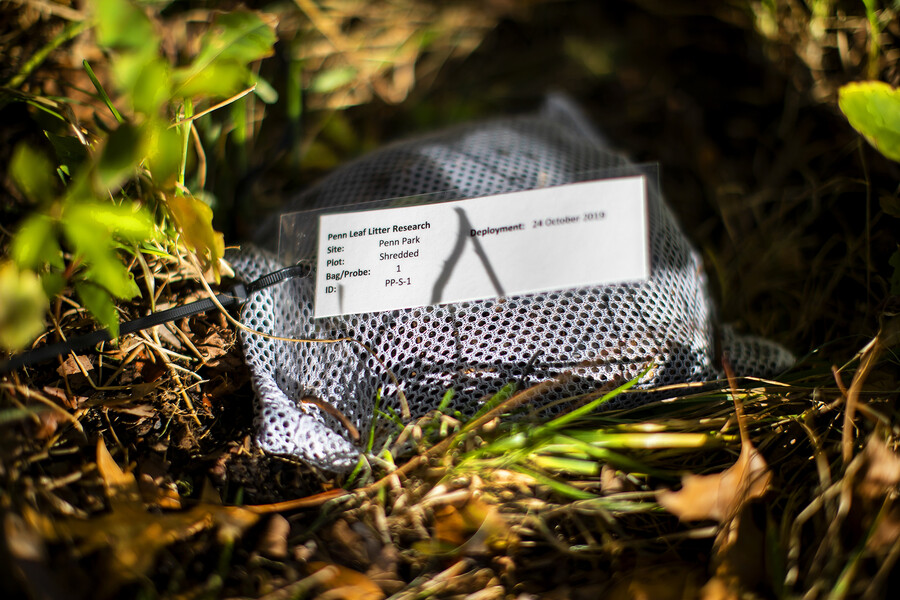
Small mesh bags filled with leaf material in each plot will be analyzed after six months, assessing the plant material that remains and the insects making use of the site.
“I think it’s great that FRES is thinking about this,” says Plante. “The results from this experiment could have direct implications for carrying out our Climate and Sustainability Action Plan.”
This effort is one of several projects that FRES is working on with AES to improve the ecological stewardship of campus landscapes. Others include offering training in ecology to Penn’s landscape-management crews, and incorporating design features into campus building to minimize the chances of birds suffering fatal collisions with windows.
So far, feedback on the project suggests that there is an openness among the Penn community to pushing back against the dominant aesthetic of highly groomed landscapes. During campus tours Lundgren led during Homecoming Weekend, he pointed out and discussed the experimental plots to participants. “Overall, I got positive reactions,” he says. “I think a mindset that includes sustainability and ecology is finally kicking in.”
Bob Lundgren is University landscape architect in the Division of Facilities and Real Estate Services at the University of Pennsylvania.
Chloe Cerwinka is the landscape planner in the Division of Facilities and Real Estate Services at the University of Pennsylvania.
Sam Royer is Penn Park supervisor for the Division of Facilities and Real Estate Services at the University of Pennsylvania.
Alain Plante is professor and undergraduate chair in the Department of Earth and Environmental Science in the University of Pennsylvania School of Arts and Sciences.
Eliza Nobles is the urban forestry intern at the Morris Arboretum of the University of Pennsylvania.
Jessie Buckner is an ecologist at Applied Ecological Services.
Mike McGraw is a senior wildlife biologist and ecologist at Applied Ecological Services and a lecturer in the University of Pennsylvania Master of Environmental Studies program.
Buckner applies shredded leaves to one of the experimental plots at Penn Park.
On the move: Water quality and antimicrobial resistance testing goes mobile
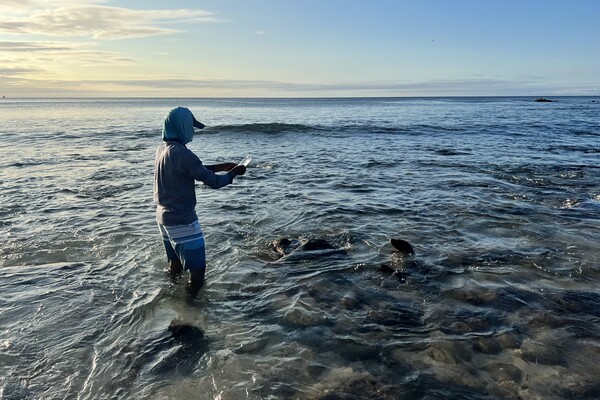
Penn researchers have developed a mobile field laboratory allowing them to test water quality and track antimicrobial resistance in and around San Cristóbal in the Galápagos.
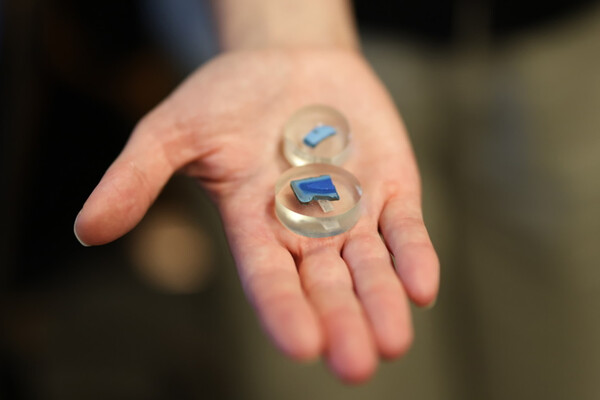
Penn researchers Vanessa and Alexis North are studying one of the largest collections of Egyptian blue objects ever found in the ancient Near East, shedding new light on how the world’s first synthetic pigment may have traveled far beyond Egypt.
A new role for dental providers? Rethinking where vaccines are given
Vaccinations have traditionally been administered in primary care settings or pharmacies. However, for about a decade, some states have authorized dentists to administer vaccines, and many others did so during the COVID-19 pandemic. The effectiveness of this approach has led some countries and states to expand or consider expanding the role of dental providers in delivering routine vaccines, including those against COVID-19 and the human papillomavirus (HPV), and in providing vaccine education.
Penn student develops a way for computer chips to run more efficiently
Fluid Silicon, a platform from President’s Sustainability Prize winner Nhlanhla Mavuso, allows computer chips to continuously monitor their health and self-tune as their characteristics change. The technology has the potential to reduce energy usage in data centers and improve reliability in mission-critical applications.