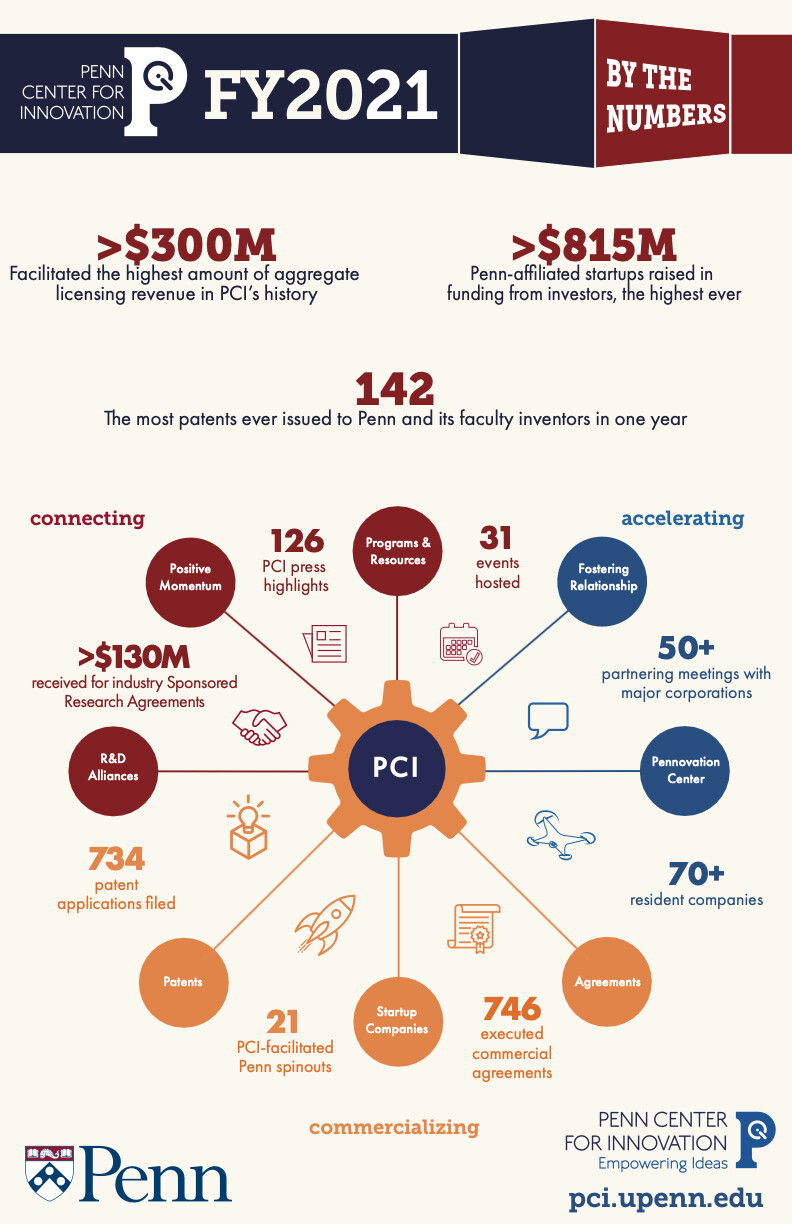
With its highest number of patents issued, commercial agreements, corporate-sponsored research funding, and licensing revenue receipts in a single period, the Penn Center for Innovation experienced a landmark fiscal year.
This past year has been record-breaking for the Penn Center for Innovation including the highest number of patents issued naming Penn-affiliated researchers. Penn Today shares some highlights from the Center’s milestone year and what the future has in store for the translation of discoveries and ideas created at the University.
Established as part of the Penn Compact 2022, PCI was designed to provide inventors and innovators with the best chance to impact the world at large. Now, seven years later, PCI has experienced a record-breaking fiscal year.
“The Penn Center for Innovation was founded as a one-stop shop for faculty, staff, and students interested in bringing their research products to the public. The life-changing discoveries that have taken place since its inception are truly extraordinary,” says Gutmann. “I am very proud of the facilitative work that flourishes there and look forward to watching the University build on PCI’s incredible momentum.”
“We truly had a ‘knock-it-out-of-the-park’ year, in spite of the fact that we’re operating in the midst of the greatest disruption any of us will likely ever experience, and I think that’s extraordinary,” says John Swartley, associate vice provost and PCI managing director. “I am really grateful to the entire PCI team who continue to be extremely productive in working with faculty and external partners to create connections and enter into agreements. The pace of innovation at Penn did not slow down.”
Highest number of patents issued and new commercial agreements
One of the highlights from the 2021 Year in Review is the 142 United States patents awarded, the most ever issued to Penn and its faculty inventors in a single year. Part of this success, Swartley says, is attributable to PCI’s role as a place that puts a strong emphasis on fostering connections. “Shifting to an approach of making productive connections between faculty innovators and potential business partners helps to explain the types of increasingly successful translative and innovative activities that have occurred here at Penn” he says.
A highlight of PCI’s achievements over the past fiscal year. (Image: Penn Center for Innovation)
Specific patents highlighted in this year’s report include a novel autophagy inhibitor that has potential for treating cancer, which was invented by Jeffrey Winkler of the School of Arts & Sciences and Ravi Amaravadi of the Perelman School of Medicine and was recently licensed by Pinpoint Therapeutics, which is housed at Pennovation Works. Arjun Raj is also named as an inventor on a patented technology that can detect single nucleotide polymorphisms, which was licensed by LCG Biosearch and has the potential to be used in a wide range of fields. Three patents were also issued to Charlie Johnson, Rebecca W. Bushnell Professor of Physics and Astronomy, whose lab is working on diagnostic sensors.
This year’s high number of issued patents is “a testament to the strength of the science and the creativity of Penn researchers,” says Swartley. “We would not be able to do that if we didn’t have this exceptional, inventive talent at the University faculty level.”
The fact that the University is an “active player” in this process, providing resources and infrastructure that help researchers and investors envision a clearer path from idea to commercialization, makes these agreements and partnerships even more valuable, says Swartley. “It’s a virtuous cycle that builds on itself,” he says. “It’s taken more than a decade to bring all the pieces together, but it’s resulted in a very robust environment for investing.”
The future of innovation at Penn
Moving forward, Swartley hopes to see PCI’s successful model continue to prosper and build on the strong foundation put in place during the past decade, with specific goals that include finding new ways to support early-stage projects and expanding their physical sciences portfolio.
Swartley says that the staying power of PCI is also thanks to Penn’s “extraordinary vision and leadership” achieved through Compact 2022, Gutmann, Senior Vice Provost for Research Dawn Bonnell, and other members of Penn’s executive leadership team and the Penn Board of Trustees.
“They were ahead of their time by thinking about the importance of supporting consolidated innovation resources and moving ideas beyond Penn,” says Swartley. “Because of the way that the Compact has played out, in a way that is so positive and inspiring to innovators, students, alumni, and to all University stakeholders, PCI has a momentum that is hard to deny.”
PCI’s sixth annual Celebration of Innovation event is happening Dec. 2 with options to attend either in-person at the Singh Center for Nanotechnology or virtually on Zoom. Along with recognizing the highest number of Penn inventors awarded issued patents in any single year, PCI will also give special awards for the Inventor of the Year, Deal of the Year, Emerging Inventor of the Year, Startup of the Year, and the Paul D. Sehnert Partner of the Year.
On the move: Water quality and antimicrobial resistance testing goes mobile
Penn researchers have developed a mobile field laboratory allowing them to test water quality and track antimicrobial resistance in and around San Cristóbal in the Galápagos.
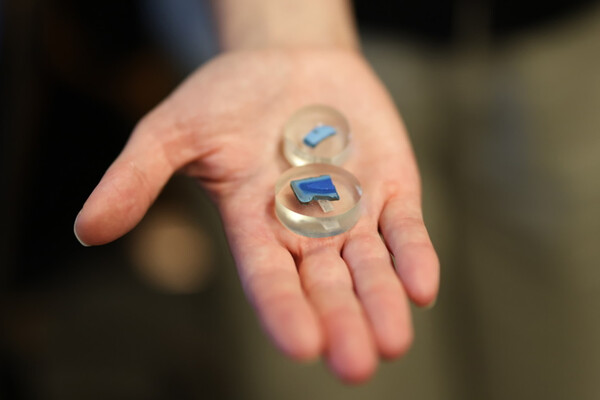
Penn researchers Vanessa and Alexis North are studying one of the largest collections of Egyptian blue objects ever found in the ancient Near East, shedding new light on how the world’s first synthetic pigment may have traveled far beyond Egypt.
A new role for dental providers? Rethinking where vaccines are given
Vaccinations have traditionally been administered in primary care settings or pharmacies. However, for about a decade, some states have authorized dentists to administer vaccines, and many others did so during the COVID-19 pandemic. The effectiveness of this approach has led some countries and states to expand or consider expanding the role of dental providers in delivering routine vaccines, including those against COVID-19 and the human papillomavirus (HPV), and in providing vaccine education.
Penn student develops a way for computer chips to run more efficiently
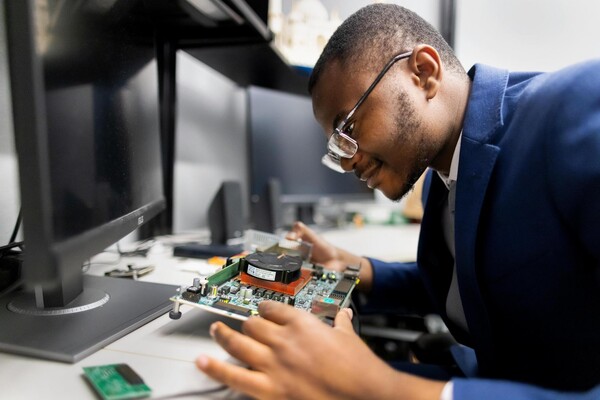
Fluid Silicon, a platform from President’s Sustainability Prize winner Nhlanhla Mavuso, allows computer chips to continuously monitor their health and self-tune as their characteristics change. The technology has the potential to reduce energy usage in data centers and improve reliability in mission-critical applications.