With a mussel hatchery in the future for the Schuylkill River, students in Byron Sherwood’s field biology course used scientific rigor to ask how effectively these filter feeders might render the water clean.
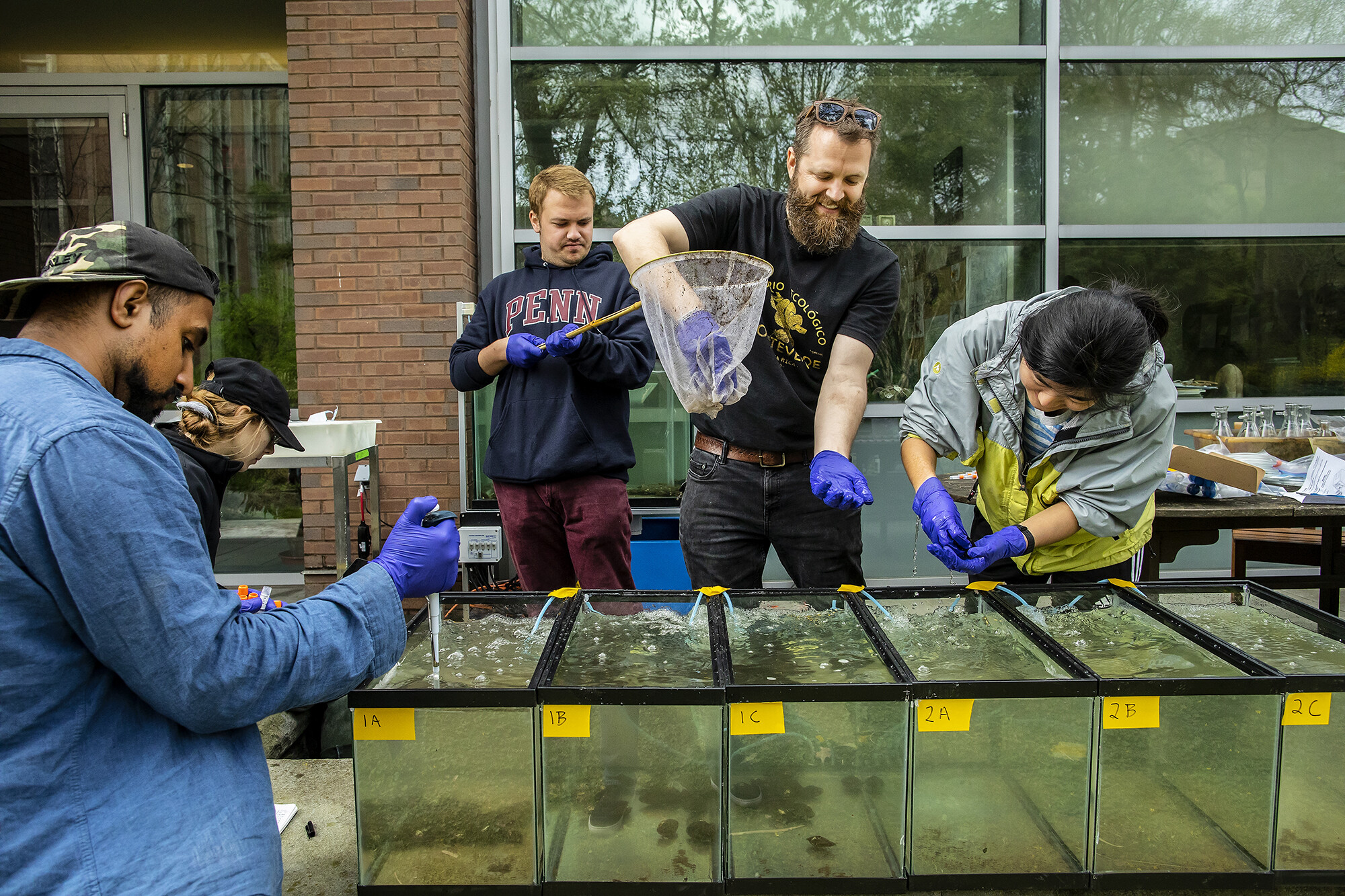
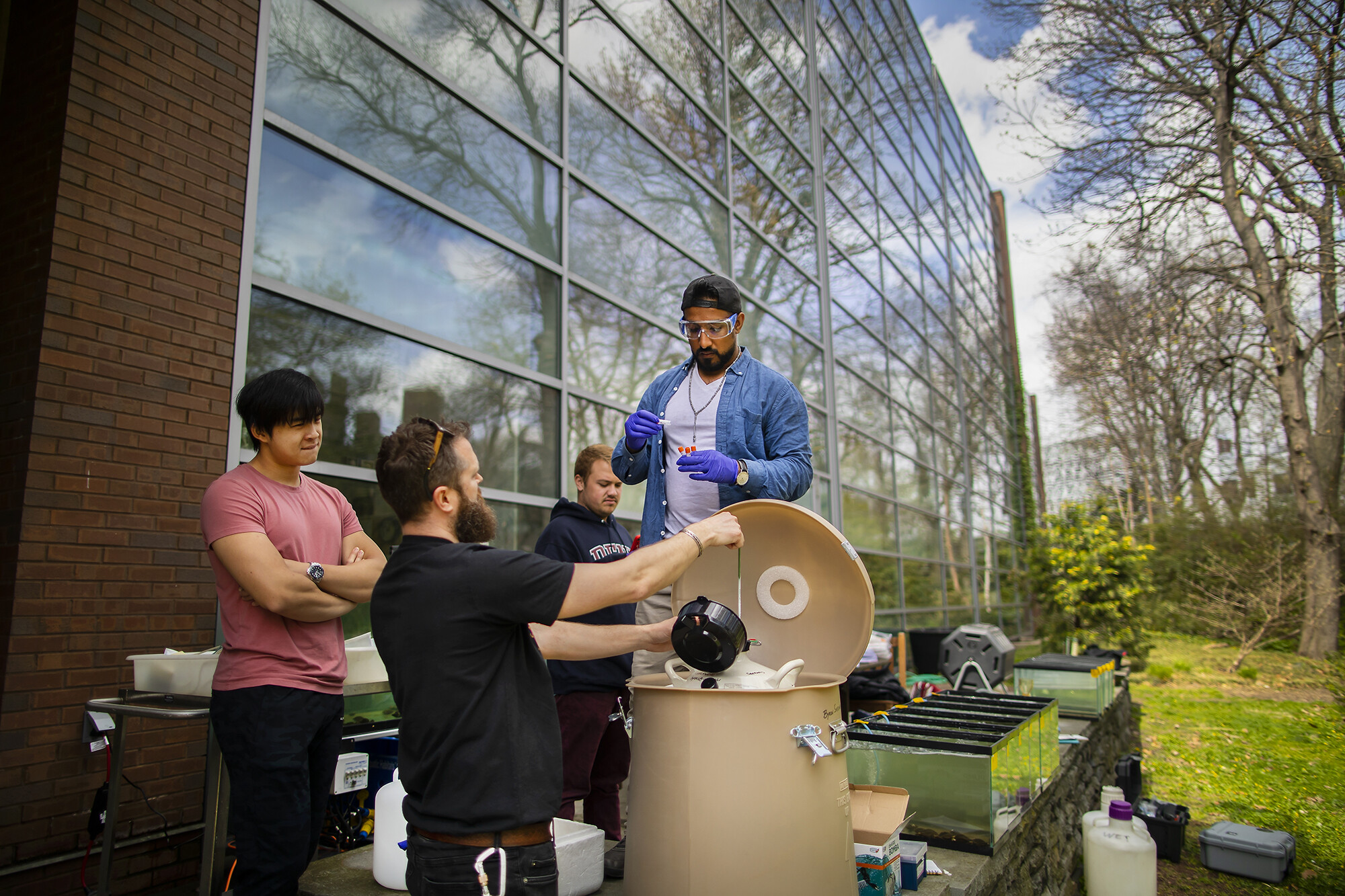
It was all hands on deck as Byron Sherwood (center) and members of his field biology class tested the ability of freshwater mussels to remove particles and bacteria from Schuylkill River water. Students (from left) Ahsen Kayani, Izzy Viney, Eric Ellison, and JaHyun Yang, as well as T.C. Sun (not pictured), busied themselves collecting DNA, culturing bacteria, and evaluating how much sediment the mussels filtered out.
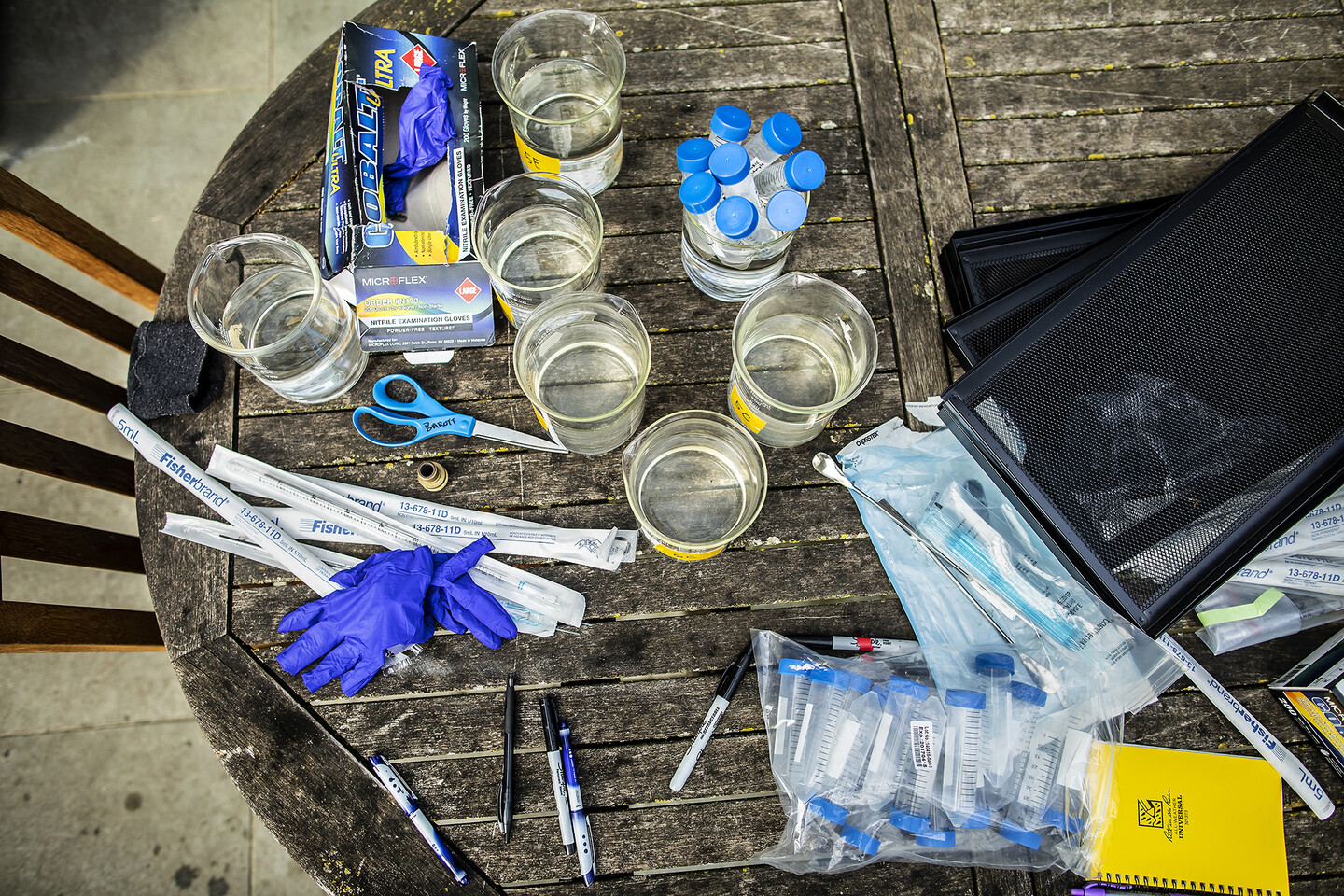
The strong breeze made things complicated. Out on the back patio of Penn’s Lynch Labs, the five students in Byron Sherwood’s field biology course were managing pipettes, graduated cylinders, liquid nitrogen, water pumps, zip ties, and dozens of small sample tubes—not to mention six aquariums and a giant tank full of mussels. Small gusts threated to knock over equipment, blow away carefully pre-weighed filters, or introduce debris into their tanks. But quick thinking, nimble reflexes, and some on-the-go adjustments kept their experiments running smoothly.
Their objective? To evaluate the ability of mussels to clean the water, which had been freshly collected from Philadelphia’s own Schuylkill River early that morning.
“For me, some of the most impactful experences in my education came from hands-on learning outside,” says Sherwood, a senior fellow in Penn’s Biology Department. “That was requirement number one for me in designing this course. We can have some time in lab to learn techniques, but my goal was to be out of the classroom as much as possible.”
Sherwood achieved this aim with Field Studies in Aquatic Microbial Ecology, leading the students on weekly trips to various sites around the city to observe and take samples from its urban waters.
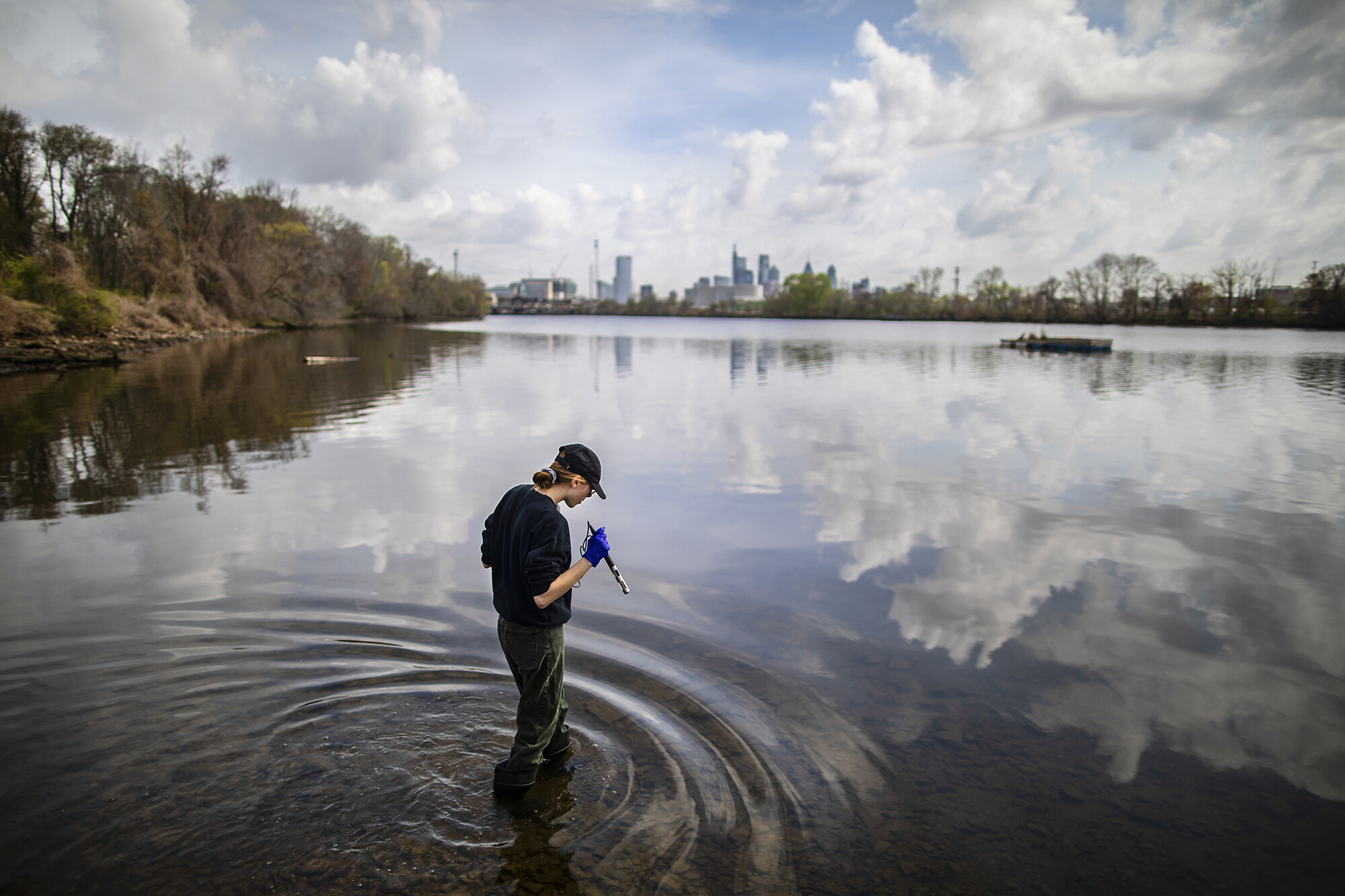
Viney, a senior, uses a hand-held probe to measure water temperature, pressure, salinity, and dissolved oxygen. Class excursions to locations such as Bartram’s Garden in Southwest Philadelphia gave students the opportunity to flex their scientific skills, but also to broaden their sense of the city. “I wanted to make sure they have a fuller picture of Philadelphia,” says Sherwood.
A microbial ecologist, Sherwood moved to the Philadelphia area two years ago with his family, including wife Katie Barott, an assistant professor in the biology department, after having completed a postdoctoral position at the University of Hawaii at Manoa. While his research had entailed studying the contribution of marine microbes to carbon dioxide emissions, he realized that in his new environs, he’d have to reframe his perspective.
“Just after we got here, I realized there’s no ocean,” he deadpans.
There is, however, no shortage of waterways, from the Schuylkill and Delaware rivers to smaller tributaries, like the Wissahickon and Cobbs creeks.
On the class field trips, Sherwood turned his and his students’ attention to the life in those waters, the bacteria that eke out a living amid the industrial toxins, runoff, and combined sewer overflows that pummel and pollute the rivers during heavy rain storms.
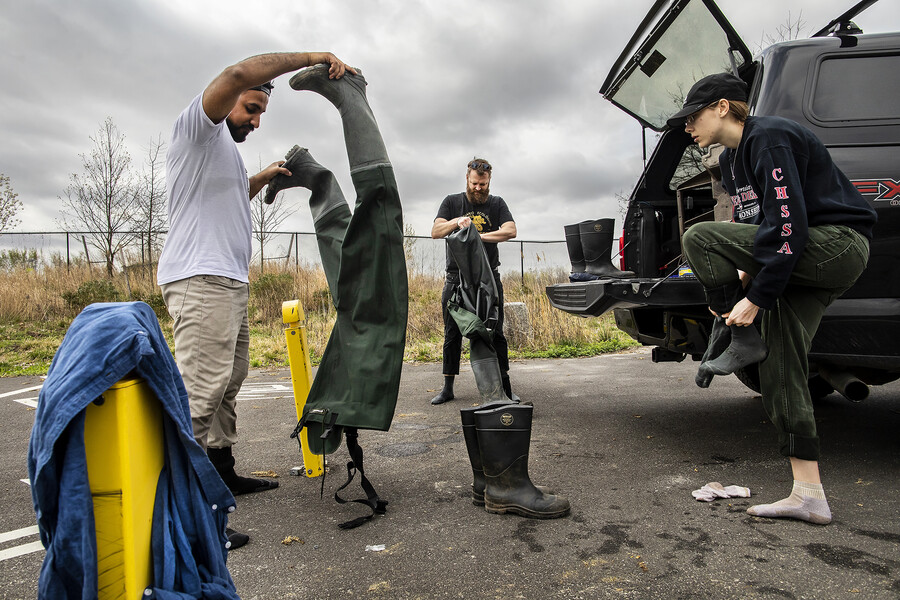
Hip waders and extra pairs of dry socks were necessary equipment for field work, as Kayani and Viney joined Sherwood on an early morning trip to collect water from the Schuylkill River to use in their experiments.
“I’m interested in what they eat, what they choose not to eat, who they kill or get killed by, and how all those tiny interactions scale up,” he says. “It’s ecology at the smallest scale.”
Getting out of the classroom and into the field was a draw for senior Izzy Viney of Carlsbad, California, who is majoring in cell and molecular biology. “When we went on these excursions,” she says, “we ended up having quite in-depth discussions about ecology and microbiology, just walking around and being in nature. Dr. Sherwood would facilitate our conversations and really try to probe us to to think deeply.”
When not the field, each student developed a proposal in the model of a National Science Foundation Graduate Research Fellowship application, guided by Sherwood.
A timely aquatic project allowed the class’s research to take on a practical slant. In January, the Commonwealth of Pennsylvania dedicated $7.9 million to create a mussel hatchery at Southwest Philadelphia’s Bartram’s Garden. The hatchery, which is set to open in 2023 and is being developed by the nonprofit Partnership for the Delaware Estuary, may give rise to half a million freshwater mussels each year.
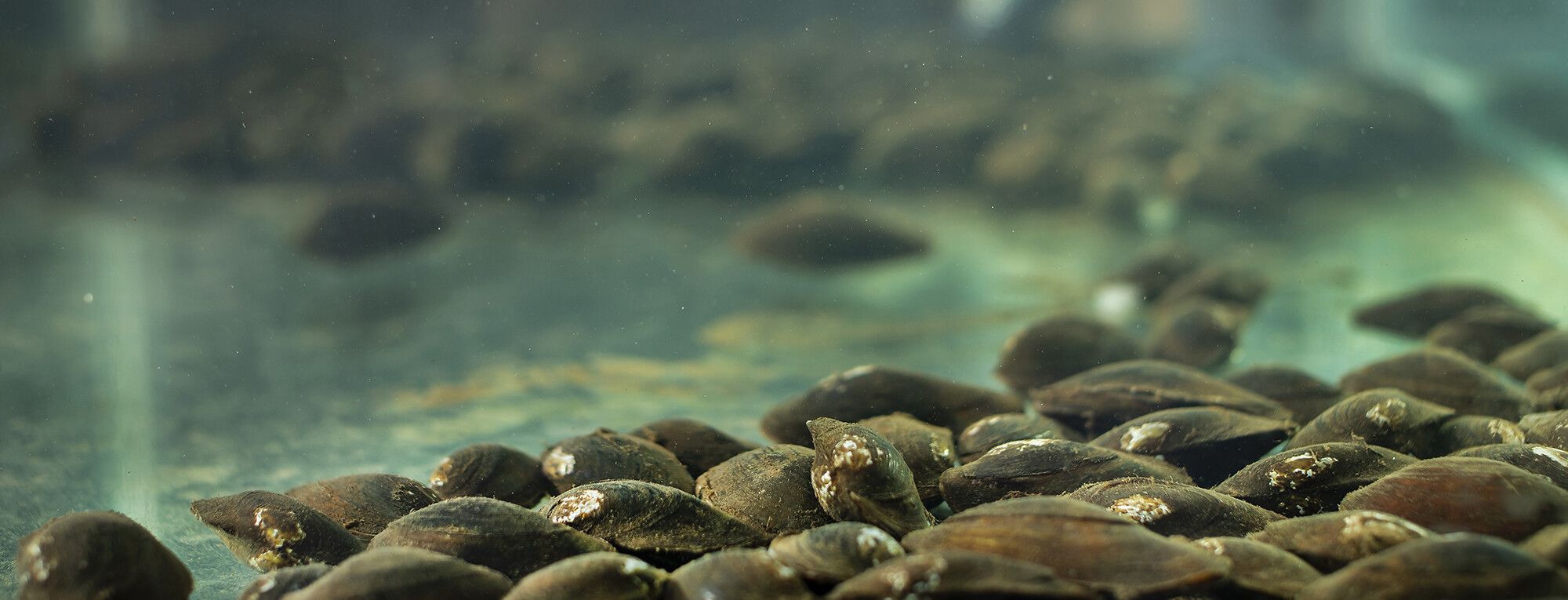
Freshwater mussels filter feed but it’s unclear if they might make river water safer to drink. The students’ experiments are getting at that question, using these alewife floaters, named for the fish species they rely on to reproduce.
“Reading some of the popular news coverage of this,” says Sherwood, “the line I kept seeing is, ‘Mussels are going to clean the water.’” But he didn’t know what that meant on a scientific—specifically, a microbial—level, and what evidence existed to back it up.
After clearing the idea with the Partnership’s lead scientist, Danielle Kreeger, he directed the class to interrogate the hypothesis as the basis of their scientific pursuits.
“I posed the question, ‘Imagine you’re the CEO of the Philadephia Water Department and you’re being told that somebody wants to put mussels in the Schuylkill River, which could potentially decrease the cost of cleaning drinking water for the city,’” he says. “‘What are the two or three most basic things that you would want answered in order to determine if this project is worth your investment?’”
The students framed their hypotheses and designed experiments accordingly. They posed questions such as, do mussels reduce the number of bacteria and human pathogens in the water and if so, how quickly, and do they have a preference for what size particles they filter?
On a breezy, sun-dappled Friday in April, they got to work.
Kayani works quickly to get a sample into liquid nitrogen. What the results reveal about the ability of mussels to purify water will help inform the implementation of a mussel hatchery set to open on the Schuylkill in 2023.
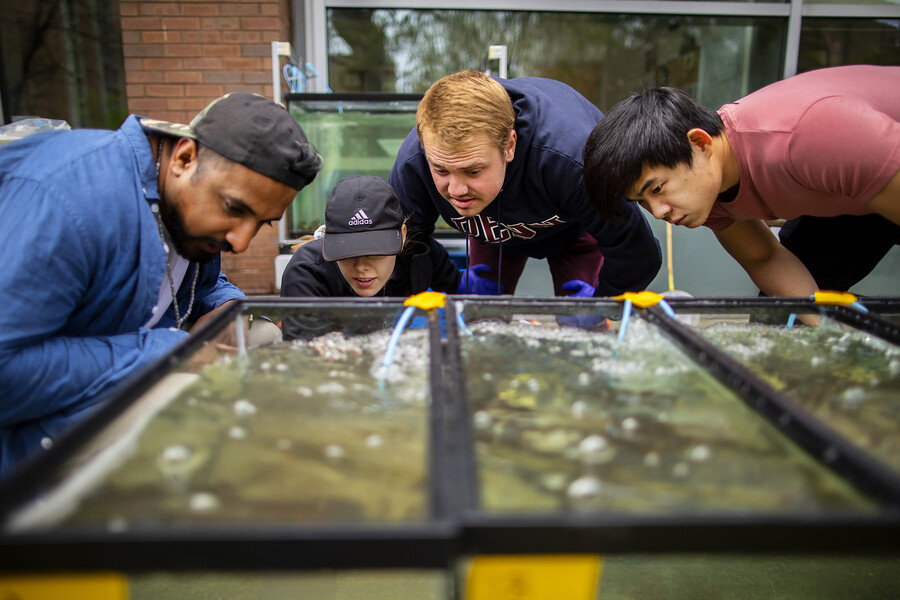
Over the course of the afternoon, it was clear that the mussels, a freshwater species called alewife floaters, were having an effect: Water in the experimental tanks appeared clarified, as if it had worked its way through a Brita filter, compared to the more murky control tanks. But the more intricate follow-up work, including DNA analysis, counting bacterial colonies, and using flow cytometry to quantify the mussels’ filtering ability, will reveal with precision how the bivalves alter and interact with their aquatic environment.
Although each student was responsible for an individual project, the class also coordinated to ensure everyone was able to accomplish what they needed to.
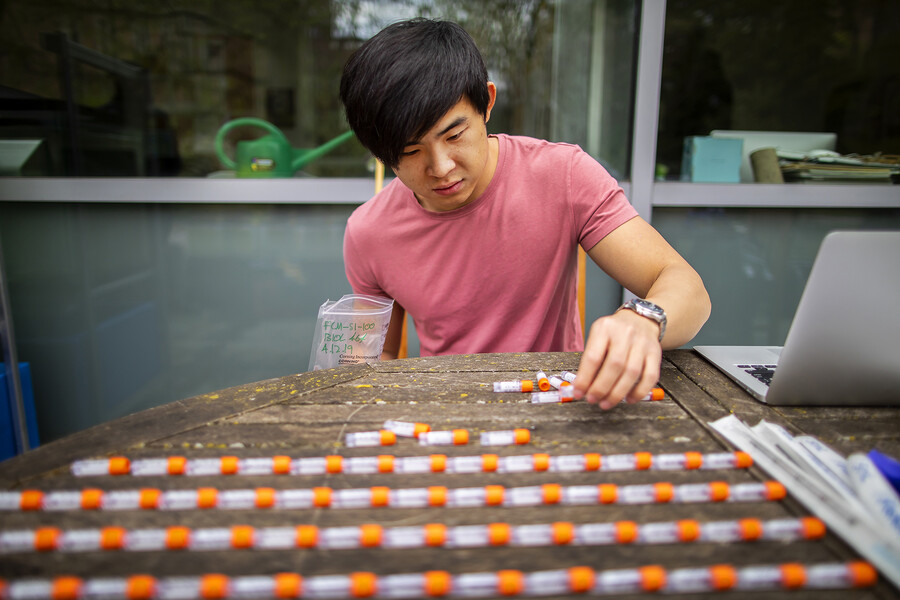
For senior T.C. Sun, here carefully arranging sample tubes, the course was one of the best he took at Penn. “I’d rather be out here than in a lecture hall and you learn just as much.”
“It was an important lesson in teamwork,” says JaHyun Yang, a senior biology major from Fairfax, Virginia.
In between fitting catheter tubes to a water pump, T.C. Sun, a senior biology major from North Potomac, Maryland, reported that the field course constituted “one of the best classes” he’s taken at Penn. “I’d rather be out here than in a lecture hall, and you learn just as much if not more.”
Sherwood is hopeful that once all the results and analyses are complete, the study may be solid enough to publish. And in the meantime, Kreeger invited him to join the scientific advisory board of the Partnership for the Delaware Estuary’s Mussels for Clean Water Initiative, where he’s offered input in the lead-up to implementing the Bartram’s project, considering questions such as what species or mix of species to introduce. A demonstration hatchery is already up and running at the Fairmount Water Works, but the Bartram’s project is envisioned as a production facility that could have a real impact on water quality.
“The questions we’re asking are really important,” Sherwood says. “There’s already a lot of public investment in this project, so anything we can contribute is of value.”
For the students, the experience gave them a taste of what it means to be a scientist, in all its untidy glory.
Each class member had an individual proposal to investigate, but worked together to execute the experiments.
“The whole structure of the class taught me a lot about how science works in the real world, where things can be uncertain,” says Yang, who is considering possible careers in scientific art or conservation. “Some things can happen at the last minute that you’re not expecting,” she notes, like when the flow cytometer broke halfway through counting our bacteria samples. “You couldn’t be too attached to what you wrote down in the proposal.”
“The next phase of this field course ‘experiment’ is to provide Penn students the opportunity to engage with the broader Philadelphia community,” says Sherwood. “There’s a real opportunity here to share these types of outdoor experiences with our neighbors in West Philadelphia.”
Students had to keep organized to gather an array of data at various time points.
Homepage photo: Senior Ahsen Kayani checks on the water levels in the tanks in preparation for adding mussels. Contending with the elements, as the work was done outdoors, by Kaskey Park, students had to be flexible to complete their experiments.
On the move: Water quality and antimicrobial resistance testing goes mobile
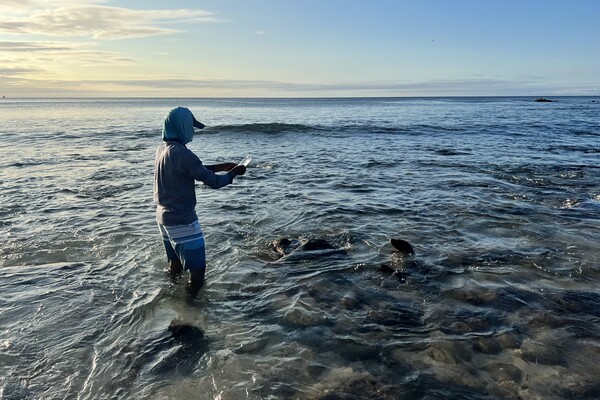
Penn researchers have developed a mobile field laboratory allowing them to test water quality and track antimicrobial resistance in and around San Cristóbal in the Galápagos.
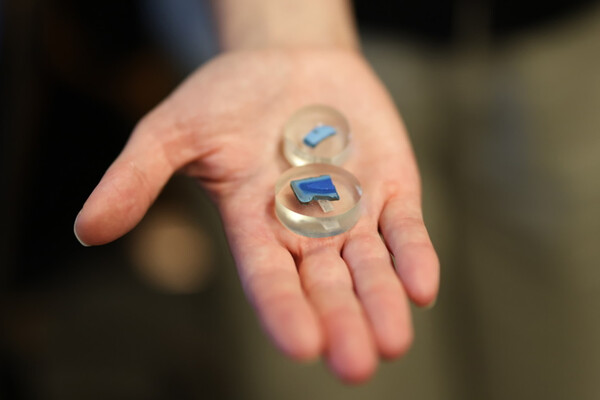
Penn researchers Vanessa and Alexis North are studying one of the largest collections of Egyptian blue objects ever found in the ancient Near East, shedding new light on how the world’s first synthetic pigment may have traveled far beyond Egypt.
A new role for dental providers? Rethinking where vaccines are given
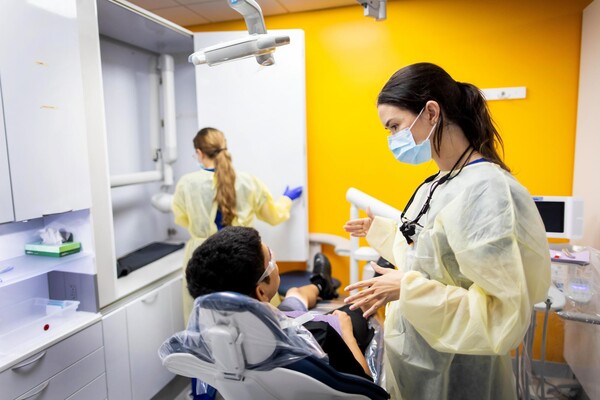
Vaccinations have traditionally been administered in primary care settings or pharmacies. However, for about a decade, some states have authorized dentists to administer vaccines, and many others did so during the COVID-19 pandemic. The effectiveness of this approach has led some countries and states to expand or consider expanding the role of dental providers in delivering routine vaccines, including those against COVID-19 and the human papillomavirus (HPV), and in providing vaccine education.
Penn student develops a way for computer chips to run more efficiently
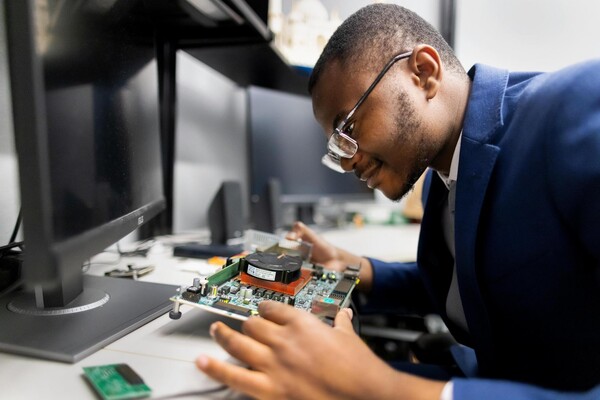
Fluid Silicon, a platform from President’s Sustainability Prize winner Nhlanhla Mavuso, allows computer chips to continuously monitor their health and self-tune as their characteristics change. The technology has the potential to reduce energy usage in data centers and improve reliability in mission-critical applications.