Political science prof reflects on legacy of John McCain
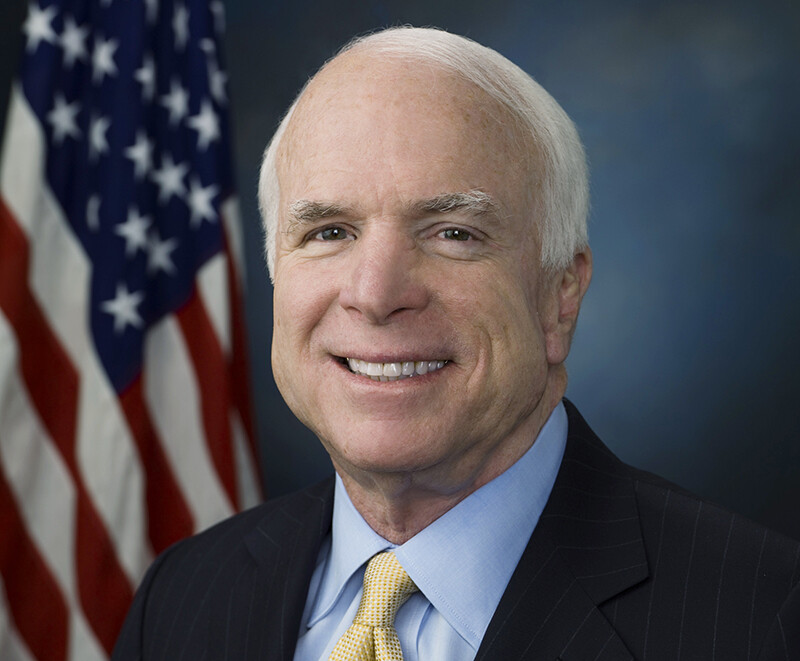
As the country remembers the life of U.S. Sen. John McCain, Fels Institute Director and Professor of Political Science Matthew Levendusky recalls “maverick-y” McCain moments.
With the passing of a giant in American politics comes a wave of days-gone-by memories and reminiscing of political moments—many of which, for former U.S. Sen. John McCain (R-AZ), are characterized by his “maverick-y” tendencies.
Days after the death of McCain at age 81, Matthew Levendusky, director of the Fels Institute of Government and a professor of political science, discusses some of the longtime Arizona senator’s most noble moments and how they might be remembered in the future.
Most people who pay attention to politics seem to know John McCain has a reputation as a “maverick,” but was this always the case with him? What was his record, or reputation, when he first came to the Senate?
McCain always had somewhat of an independent streak—he opposed President Reagan’s effort to send troops to Lebanon in 1983, for example—but that label really started to be applied to him in the 1990s and 2000s. This is when his more high-profile deviations from his party began—i.e., the McCain-Feingold campaign finance bill, his 2000 presidential run, etc.
Would a politician like John McCain be heralded for these buck-the-trend qualities today, or was his status more a product of an era gone by?
Yes, people would still herald someone like McCain. But as polarization has increased, there are fewer people willing to deviate from the party line. Part of the reason bipartisanship has declined is that there is less ideological overlap in Congress. Today, the most conservative Democrat in the Senate is Joe Manchin; the most liberal Republican is Susan Collins. But a generation ago, there were far more of such individuals. Think of folks like [former Georgia Senator] Sam Nunn or [former New York Senator] Al D’Amato. With fewer of those folks, there’s less opportunity for someone to take on a “maverick” label.
What do you think history will remember as his most “maverick-y” moment?
I think two moments will stand out. First, his actions to oppose torture under the Bush administration, mostly because his personal experience and his rhetoric were so powerful, and there was a moral force behind his position. Second, in part because it is so memorable, people will remember his “thumbs down” vote on the repeal-and-replace Obamacare vote in 2017. The latter was particularly consequential because for seven years—since the day the bill passed—Republicans had campaigned to repeal and replace Obamacare. That the deciding votes against the effort were Republicans is an important part of that story.
I’m surprised you didn’t mention his choice of Sarah Palin as his running mate. It seems extra maverick-y. Do you think that will end up not mattering as much to his legacy as many people suggest?
Actually, the more maverick-y choice would have been to pick Joe Lieberman, his longtime friend and former Democrat-turned-Independent senator. After the election, he said that’s what he wished he would have done. Palin was certainly an unconventional choice, but much less so when she was selected. At the time, she was seen as a more conventional Republican pick, though on the campaign trail and after, that image certainly changed.
What is his most significant legislative accomplishment? His push against earmarks, perhaps?
His fiscal conservatism is an important legislative victory, but I’d point to an older issue that’s now largely faded from view. In the mid-1990s, McCain was one of a handful of senators—including former Senator John Kerry—to push for normalization of diplomatic relations with Vietnam. The bill passed and was signed by President Clinton, and in 1995, we restored full diplomatic relations with Vietnam. The fact that McCain—who’d been a prisoner of war in Vietnam—was one of those leading this push says a lot about his character.
Do you think his maverick tendencies helped or hurt him, in the long run? Politically speaking. For example, while so-called left-leaning media might—in retrospect, anyway—admire him for taking the mic from the audience member at a forum who called into question President Obama’s character, some members of his party might have perceived that as weakness.
This speaks more to another dimension of McCain: his character and integrity. One of McCain’s defining traits is that he is someone who stands up for what he believes in, and truly wanted to serve his country. The maverick label comes from someone who will deviate from his party when his principles tell him it’s the right thing to do. There are many skilled legislators today, but few that you would say have a lot of character in that way.
The thing about being a maverick, one would think, is that it makes ascending the ranks in a party pretty difficult—but he was actually pretty close to the presidency, twice. How do you think he managed that success despite going against what was popular in the party?
The 2000 election is a good example of what political scientists call the “invisible primary.” I think you can make a case that McCain was more popular with voters, but Bush had the backing of the party establishment—key funders, party officials, other elected Republicans, etc. There’s an irony that someone more conventional may well have appealed to party insiders, but less so to voters.
Do you have a favorite John McCain line you could share?
One of my favorite lines is what he said when he conceded on election night 2008:
“I wish Godspeed to the man who was my former opponent and will be my president. And I call on all Americans, as I have often in this campaign, to not despair of our present difficulties, but to believe, always, in the promise and greatness of America, because nothing is inevitable here.”
It’s telling that it contains his faith in America, but also the class with which McCain carried himself politically. It’s telling that McCain asked former Presidents George W. Bush and Barack Obama—both of whom defeated McCain—to give eulogies at his funeral, but asked President Trump not to attend.
On the move: Water quality and antimicrobial resistance testing goes mobile
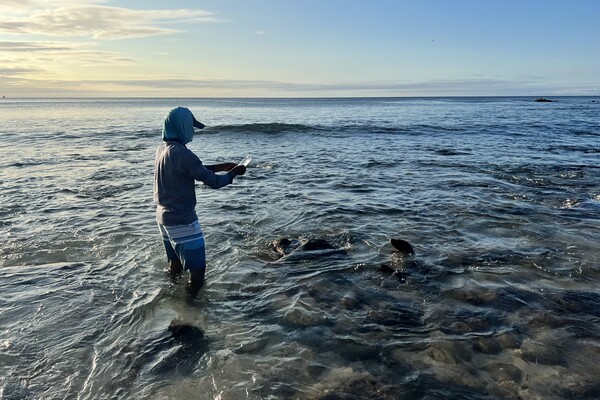
Penn researchers have developed a mobile field laboratory allowing them to test water quality and track antimicrobial resistance in and around San Cristóbal in the Galápagos.
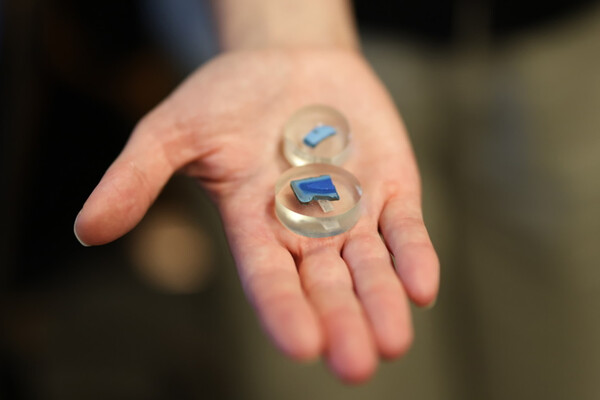
Penn researchers Vanessa and Alexis North are studying one of the largest collections of Egyptian blue objects ever found in the ancient Near East, shedding new light on how the world’s first synthetic pigment may have traveled far beyond Egypt.
A new role for dental providers? Rethinking where vaccines are given
Vaccinations have traditionally been administered in primary care settings or pharmacies. However, for about a decade, some states have authorized dentists to administer vaccines, and many others did so during the COVID-19 pandemic. The effectiveness of this approach has led some countries and states to expand or consider expanding the role of dental providers in delivering routine vaccines, including those against COVID-19 and the human papillomavirus (HPV), and in providing vaccine education.
Penn student develops a way for computer chips to run more efficiently
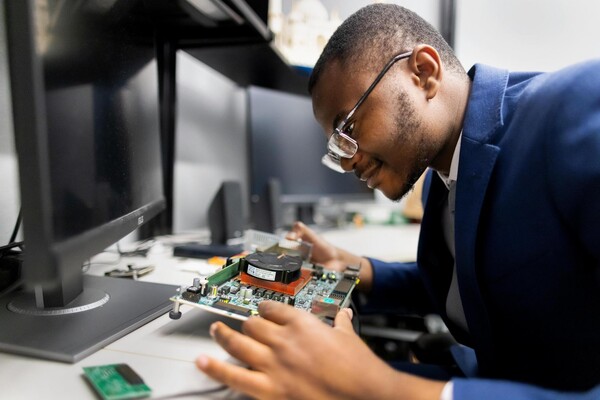
Fluid Silicon, a platform from President’s Sustainability Prize winner Nhlanhla Mavuso, allows computer chips to continuously monitor their health and self-tune as their characteristics change. The technology has the potential to reduce energy usage in data centers and improve reliability in mission-critical applications.