A decade-long Wharton study in Zambia has found that a short course helped girls stay in school, delay marriage, and deliver strong returns on public funding at low cost.
2 min. read
Can teaching teenage girls how to negotiate help them stay in school, marry later, and form more equal relationships? The answer appears to be yes—and those gains add up to strong economic returns for each dollar of public spending.
In 2013, Corinne Low, business economics and public policy professor at Penn’s Wharton School, introduced a negotiation skills course for eighth-grade girls in low-income areas of Lusaka, Zambia’s capital. A decade on, those who took part had stayed in school longer, delayed sex and marriage, wed partners closer to their own age, and held less traditional views about gender roles.
Each girl gained about 0.23 more years of schooling, with gains that generate significant economic value over time. As it is too early to see the impact on their earnings, the authors estimated the payoff using evidence from a study linking education to later-life outcomes in Ghana: about $6.60 in benefits for every dollar spent.
“The key thing that was unique about our negotiation curriculum is that it aimed to give agency to girls in a position of disempowerment,” Low says. “The problem with many traditional empowerment programs is that they presume girls have a power to change their own lives that doesn’t actually exist.”
On the move: Water quality and antimicrobial resistance testing goes mobile
Penn researchers have developed a mobile field laboratory allowing them to test water quality and track antimicrobial resistance in and around San Cristóbal in the Galápagos.
Penn researchers Vanessa and Alexis North are studying one of the largest collections of Egyptian blue objects ever found in the ancient Near East, shedding new light on how the world’s first synthetic pigment may have traveled far beyond Egypt.
A new role for dental providers? Rethinking where vaccines are given
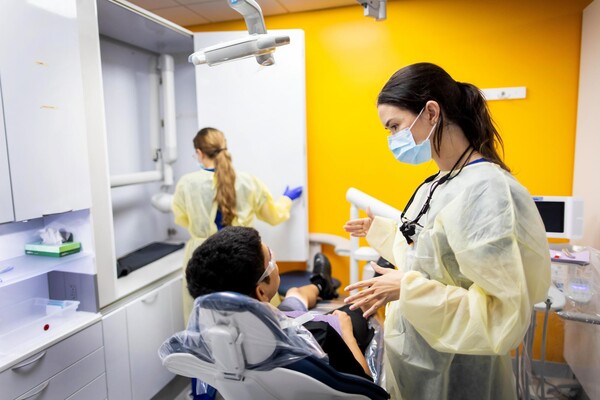
Vaccinations have traditionally been administered in primary care settings or pharmacies. However, for about a decade, some states have authorized dentists to administer vaccines, and many others did so during the COVID-19 pandemic. The effectiveness of this approach has led some countries and states to expand or consider expanding the role of dental providers in delivering routine vaccines, including those against COVID-19 and the human papillomavirus (HPV), and in providing vaccine education.
Penn student develops a way for computer chips to run more efficiently
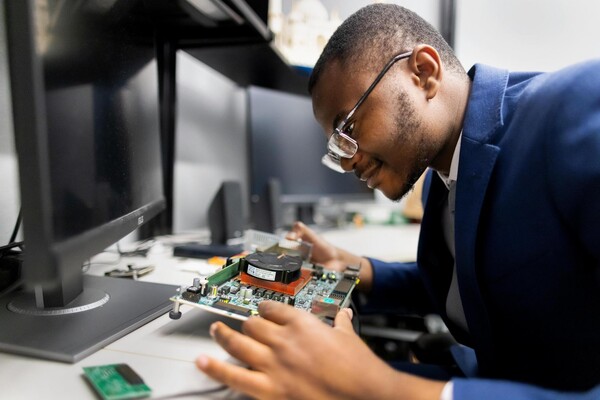
Fluid Silicon, a platform from President’s Sustainability Prize winner Nhlanhla Mavuso, allows computer chips to continuously monitor their health and self-tune as their characteristics change. The technology has the potential to reduce energy usage in data centers and improve reliability in mission-critical applications.