Penn School of Social Policy & Practice Professor Pens Children’s Book on Environmental Impact
PHILADELPHIA — Femida Handy, a professor at the University of Pennsylvania School of Social Policy & Practice, shows the next generation of young readers how to take steps toward becoming more environmentally friendly with her first children’s book, “Sandy’s Incredible Shrinking Footprint.”
Sandy, the main character, enjoys visiting her grandfather each summer at the beach and playing in the sand. One day, Sandy finds a pile of trash on the beach and learns how every person leaves an ecological footprint – and how it’s everyone’s responsibility to minimize those footprints.
The illustrations, by Adrianna Steele-Card, include artwork featuring a collage of repurposed, reused and recycled materials.
“Sandy’s Incredible Shrinking Footprint” advocates personal responsibility and provides a list of everyday steps children can take to minimize their environmental impact.
Handy’s co-author is Carole H. Carpenter.
Handy’s area of expertise is the economics of the non-profit sector, including micro-foundational issues of non-profits, non-governmental organizations and volunteerism. She also studies the economics of human behavior and organizational life, the economics of social welfare and the economics of environmental issues.
On the move: Water quality and antimicrobial resistance testing goes mobile
Penn researchers have developed a mobile field laboratory allowing them to test water quality and track antimicrobial resistance in and around San Cristóbal in the Galápagos.
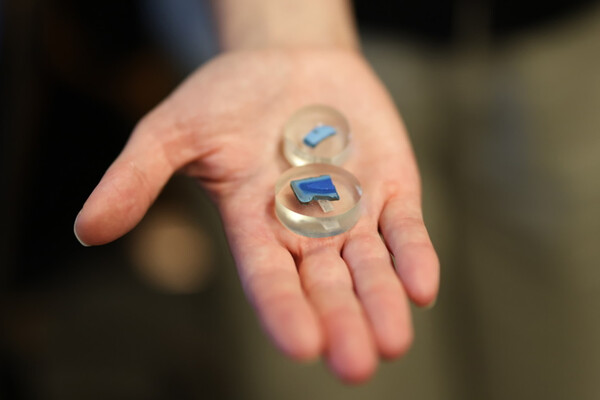
Penn researchers Vanessa and Alexis North are studying one of the largest collections of Egyptian blue objects ever found in the ancient Near East, shedding new light on how the world’s first synthetic pigment may have traveled far beyond Egypt.
A new role for dental providers? Rethinking where vaccines are given
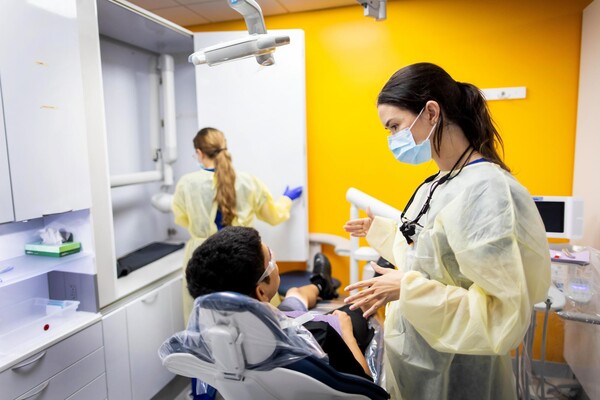
Vaccinations have traditionally been administered in primary care settings or pharmacies. However, for about a decade, some states have authorized dentists to administer vaccines, and many others did so during the COVID-19 pandemic. The effectiveness of this approach has led some countries and states to expand or consider expanding the role of dental providers in delivering routine vaccines, including those against COVID-19 and the human papillomavirus (HPV), and in providing vaccine education.
Penn student develops a way for computer chips to run more efficiently
Fluid Silicon, a platform from President’s Sustainability Prize winner Nhlanhla Mavuso, allows computer chips to continuously monitor their health and self-tune as their characteristics change. The technology has the potential to reduce energy usage in data centers and improve reliability in mission-critical applications.