Four takeaways from Penn’s School of Arts & Sciences researchers in the aftermath of the 2022 Supreme Court decision overturning the constitutional right to an abortion.
June 24 marked one year since the Supreme Court overturned Roe v. Wade after nearly half a century. That decision, stemming from the case Dobbs v. Jackson, gave states the right to make their own decisions about abortion access.
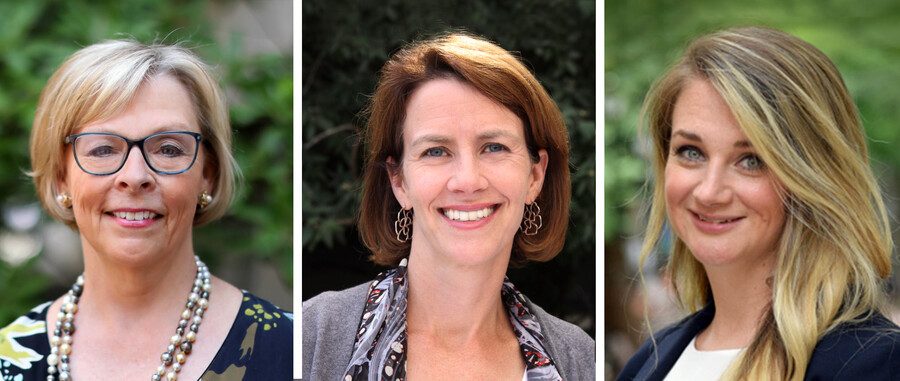
From left: Marci Hamilton, a professor of practice and founder and CEO of the nonprofit think tank CHILD USA; Paula Fomby, a professor of sociology; and Courtney Boen, an assistant professor of sociology.
(Images: Brooke Sietinsons, courtesy of Paula Fomby, courtesy of Courtney Boen)
Many have since sought to restrict or ban abortion altogether, says Marci Hamilton, a professor of practice and founder and CEO of the nonprofit think tank CHILD USA. “From my perspective, it’s a mixed bag in the states—and that’s what the Court intended,” she says. “This uneven distribution of women’s basic health needs and rights to control their bodies is corrosive to civil liberties generally. It has empowered and motivated the patriarchal strains in the culture that endanger women, children, and the vulnerable.”
The recent approval by the Food and Drug Administration of the first over-the-counter birth control pill in the U.S. won’t make a difference in the short term, she adds; it won’t be available until at least early 2024 and the cost is still unknown.
Half of all U.S. states have banned or restricted abortions. Just seven have enacted protective shield laws.
Fewer abortions are happening and where they take place has shifted.
The fear that this ruling would disproportionately harm marginalized populations is starting to play out, though it’s too early to tell the full effect.
And lastly, providers are feeling the strain, moving to states where abortion is still legal or changing the way they practice.
On the move: Water quality and antimicrobial resistance testing goes mobile
Penn researchers have developed a mobile field laboratory allowing them to test water quality and track antimicrobial resistance in and around San Cristóbal in the Galápagos.
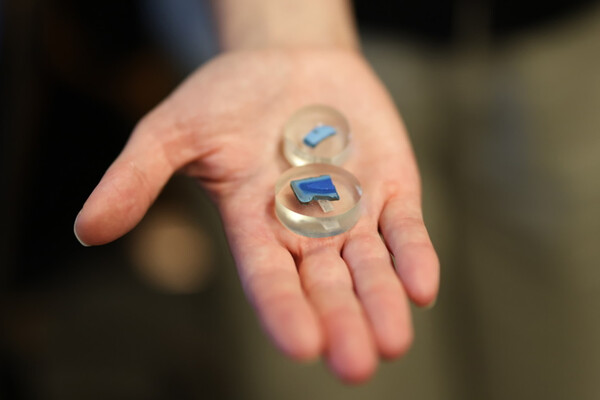
Penn researchers Vanessa and Alexis North are studying one of the largest collections of Egyptian blue objects ever found in the ancient Near East, shedding new light on how the world’s first synthetic pigment may have traveled far beyond Egypt.
A new role for dental providers? Rethinking where vaccines are given
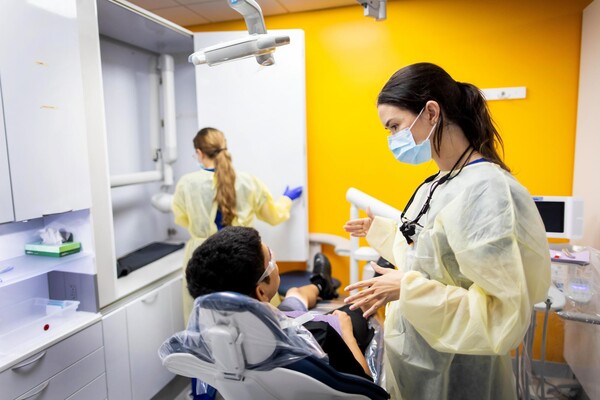
Vaccinations have traditionally been administered in primary care settings or pharmacies. However, for about a decade, some states have authorized dentists to administer vaccines, and many others did so during the COVID-19 pandemic. The effectiveness of this approach has led some countries and states to expand or consider expanding the role of dental providers in delivering routine vaccines, including those against COVID-19 and the human papillomavirus (HPV), and in providing vaccine education.
Penn student develops a way for computer chips to run more efficiently
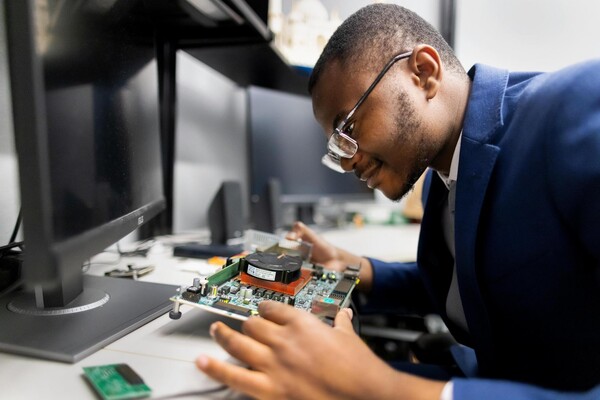
Fluid Silicon, a platform from President’s Sustainability Prize winner Nhlanhla Mavuso, allows computer chips to continuously monitor their health and self-tune as their characteristics change. The technology has the potential to reduce energy usage in data centers and improve reliability in mission-critical applications.