Vaughn A. Booker, associate professor of Africana Studies in the School of Arts & Sciences, investigates the history and diversity of 20th-century African American religions.
2 min. read
As a child, Vaughn Booker recalls asking his parents about all those letters in front of Rev. Dr. Martin Luther King, Jr.’s name. One set, they told him, meant that King was a minister, the other that he had a doctorate in some field of study. “I want both,” Booker responded. His parents laughed but offered encouragement.
Booker, the George E. Doty, Jr. & Lee Spelman Doty Presidential Associate Professor of Africana Studies in the School of Arts & Sciences, now has both a master of divinity from Harvard and a doctorate in religion from Princeton. But he ultimately decided not to go into the ministry and did not become an ordained reverend, more called by an academic approach to these subjects than “going through everything with [people], all the ups and downs—including burying them,” as his divinity school mentor, Charles G. Adams, warned he would need to do.
Today, Booker researches African American religious history with a focus on 20th-century African American religions. What he’s especially curious about is the intricacy of religion and spirituality. Or, as he puts it, “What does it actually mean to believe in something?”
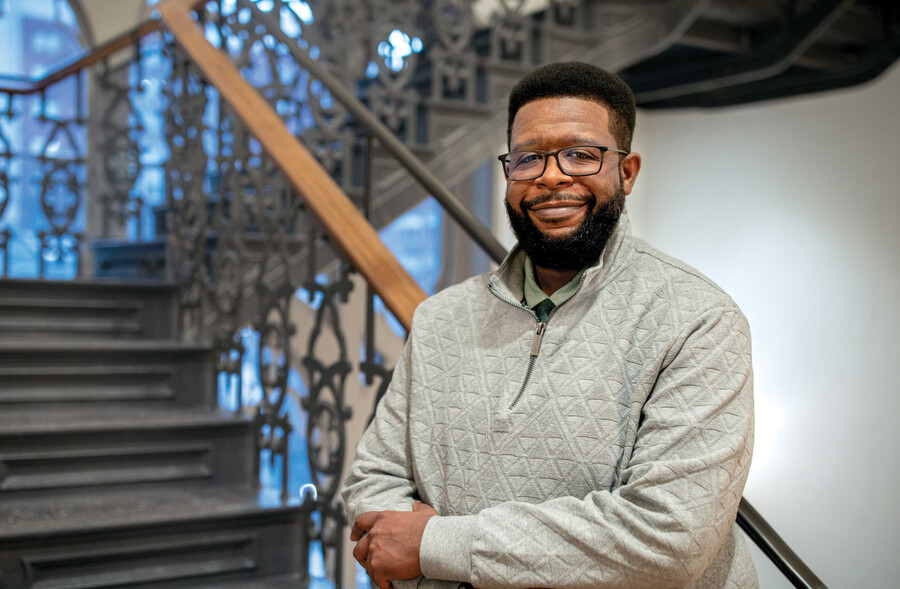
Vaughn Booker is the George E. Doty, Jr. & Lee Spelman Doty Presidential Associate Professor of Africana Studies
(Image: Courtesy of Omnia)
Part of this work means taking a closer look at assumptions. “There’s a Pew poll every year that says Black people are the most highly church-attending folks in the country,” Booker says. “But just being a church attendee doesn’t tell me anything about what you believe. So, the courses I offer, the research that I work on, is trying to get under the hood of all of those Black church affiliations and show that things are a little more complex.”
Booker is particularly interested in the diversity of African American belief. His first book, “Lift Every Voice and Swing: Black Musicians and Religious Culture in the Jazz Century,” explored the role of jazz celebrities like Ella Fitzgerald and Duke Ellington as representatives of African American religion in the 20th century, arguing that Black religiosity often extended beyond the bounds of the Black church. A current book project shows how African Americans have confounded expectations of religious decline by documenting irreverent religious and spiritual orientations from Emancipation to the present.
In the classroom, Booker incorporates similar themes. In his seminar about spiritual memoir, for example, first-year students read testimonies from a range of voices: a Methodist preacher turned secular humanist; a disco singer who became an openly gay minister and AIDS activist; and an eclectic Taoist member of the Wu-Tang Clan. Studying these texts, he says, is a way to expose undergraduates to a wide range of spiritual seekers.
On the move: Water quality and antimicrobial resistance testing goes mobile
Penn researchers have developed a mobile field laboratory allowing them to test water quality and track antimicrobial resistance in and around San Cristóbal in the Galápagos.
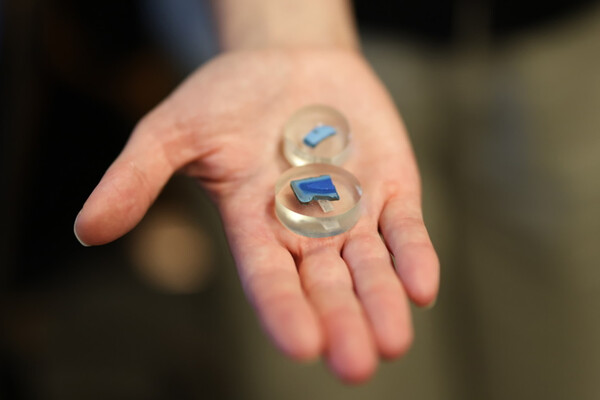
Penn researchers Vanessa and Alexis North are studying one of the largest collections of Egyptian blue objects ever found in the ancient Near East, shedding new light on how the world’s first synthetic pigment may have traveled far beyond Egypt.
A new role for dental providers? Rethinking where vaccines are given
Vaccinations have traditionally been administered in primary care settings or pharmacies. However, for about a decade, some states have authorized dentists to administer vaccines, and many others did so during the COVID-19 pandemic. The effectiveness of this approach has led some countries and states to expand or consider expanding the role of dental providers in delivering routine vaccines, including those against COVID-19 and the human papillomavirus (HPV), and in providing vaccine education.
Penn student develops a way for computer chips to run more efficiently
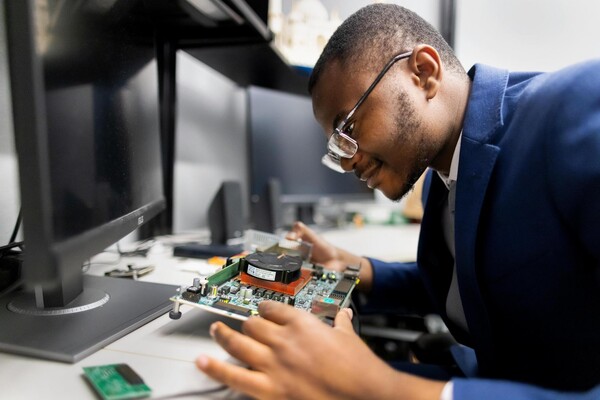
Fluid Silicon, a platform from President’s Sustainability Prize winner Nhlanhla Mavuso, allows computer chips to continuously monitor their health and self-tune as their characteristics change. The technology has the potential to reduce energy usage in data centers and improve reliability in mission-critical applications.