It’s been 50 years since Legionnaires’ disease was discovered in Philadelphia. David Barnes, associate professor of history and sociology of science, says people can learn a lot from that moment.
2 min. read
In the summer of 1976, Philadelphia was the center of everything as people around the country flocked to celebrate the nation’s bicentennial. Before the summer was over, however, the City would draw public scrutiny for a completely different reason: an unknown illness that left more than 30 people dead.
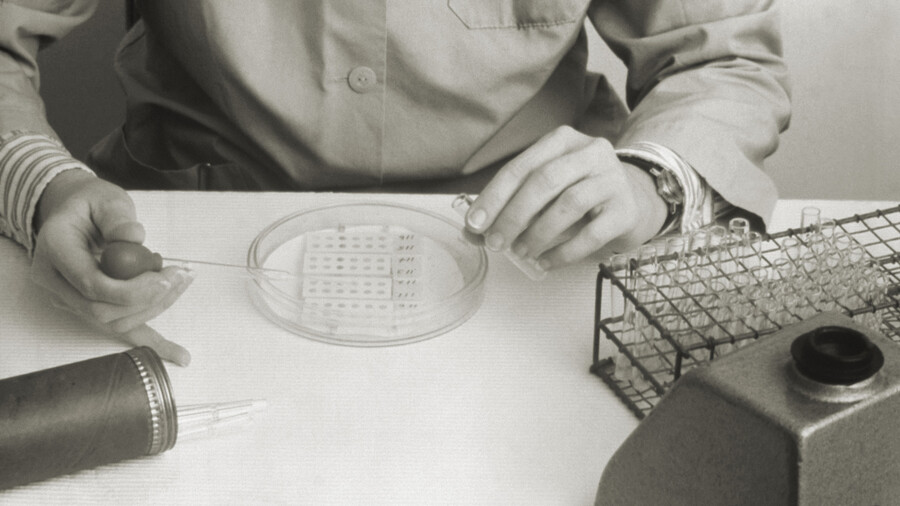
A laboratory technician performs an unidentified test during an investigation of Legionnaires’ disease, which is caused by the Gram-negative bacterium, Legionella pneumophila.
(Image: CDC/Martin D. Hicklin, MD)
“It was a medical mystery and people wanted answers,” says David Barnes, associate professor of history and sociology of science in the School of Arts & Sciences. “It was raising questions after years of relative confidence in medicine; that no one could explain it was very concerning.”
Barnes researches the history of medicine and public health, teaching courses that touch heavily on epidemics like COVID-19 or smallpox. He recalls the 1976 outbreak playing out on TV, as experts tried unsuccessfully to connect the dots.
Victims falling to the illness were seemingly unlinked—apart from a few factors: most were elderly men in their 70s and 80s and members of the American Legion, a veterans’ organization that had held its convention that year at Philadelphia’s prestigious Bellevue-Stratford Hotel. “It was this long-time City icon and this outbreak essentially shut it down,” says Barnes of the elite establishment, adding that for the City, it was a moment of crisis at a time of expected economic gains.
While uncertainty churned for months, the Centers for Disease Control and Prevention (CDC) eventually uncovered the culprit: a bacterium that thrives in wet environments associated with large institutional cooling symptoms. It is now known as Legionella pneumophila, which can infect humans through water systems. It can trigger Legionnaires’ disease, a severe and sometimes fatal form of pneumonia. This year marks 50 years since the disease reared its head, eventually paving the way for understanding how Legionnaires’ works.
Public attention to health crises can ebb and flow, but Barnes says that isn’t the only lesson of the largely forgotten Legionnaires’ outbreak, which, in hindsight, barely registers as an outbreak. “It’s worth looking back to remind ourselves that our complacency and confidence is often more fragile than it appears.” In other words, he adds, when public health systems succeed, they’re imperceptible—a luxury that disappears when they stop working.
On the move: Water quality and antimicrobial resistance testing goes mobile
Penn researchers have developed a mobile field laboratory allowing them to test water quality and track antimicrobial resistance in and around San Cristóbal in the Galápagos.
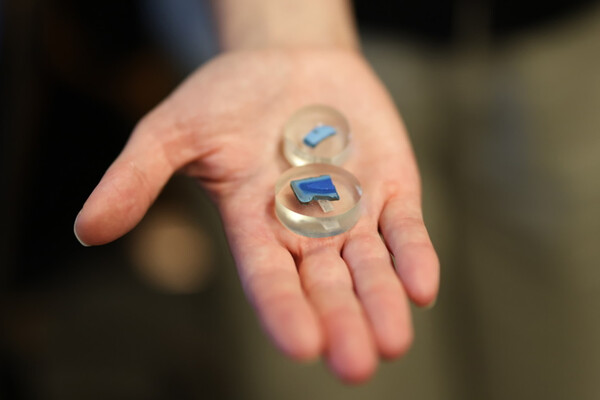
Penn researchers Vanessa and Alexis North are studying one of the largest collections of Egyptian blue objects ever found in the ancient Near East, shedding new light on how the world’s first synthetic pigment may have traveled far beyond Egypt.
A new role for dental providers? Rethinking where vaccines are given
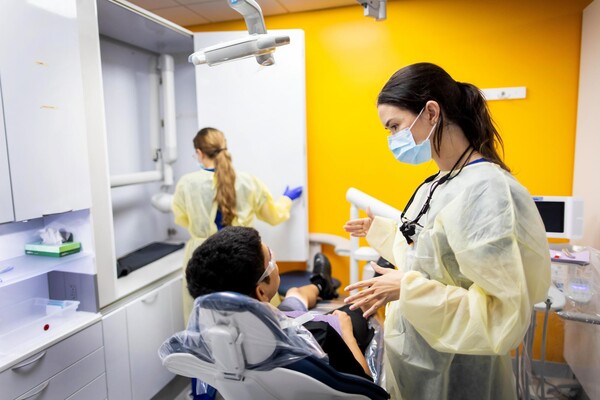
Vaccinations have traditionally been administered in primary care settings or pharmacies. However, for about a decade, some states have authorized dentists to administer vaccines, and many others did so during the COVID-19 pandemic. The effectiveness of this approach has led some countries and states to expand or consider expanding the role of dental providers in delivering routine vaccines, including those against COVID-19 and the human papillomavirus (HPV), and in providing vaccine education.
Penn student develops a way for computer chips to run more efficiently
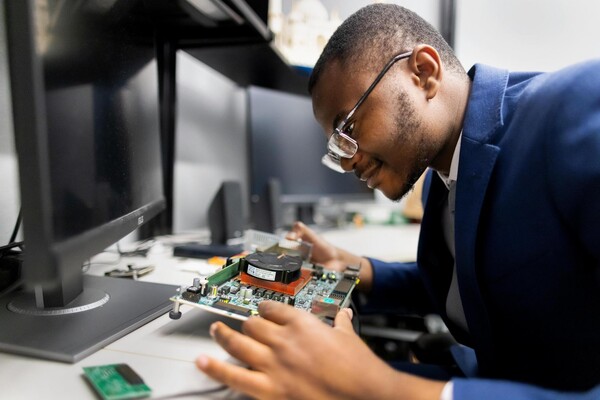
Fluid Silicon, a platform from President’s Sustainability Prize winner Nhlanhla Mavuso, allows computer chips to continuously monitor their health and self-tune as their characteristics change. The technology has the potential to reduce energy usage in data centers and improve reliability in mission-critical applications.