After decades of research and discovery, Michael Kahana in the School of Arts & Sciences and colleagues are closer than ever to an AI-guided device to treat memory loss.
2 min. read
In the late 1990s, a young Michael Kahana—then developing computer models of human memory—was invited to Harvard Medical School by a neurosurgeon friend to give grand rounds to the neurosurgery and neurology faculty. Afterward, he toured the ninth floor of Boston Children’s Hospital.
“It was the most important professional moment of my life,” says Kahana, Edmund J. and Louise W. Kahn Term Professor of Psychology in the School of Arts & Sciences.
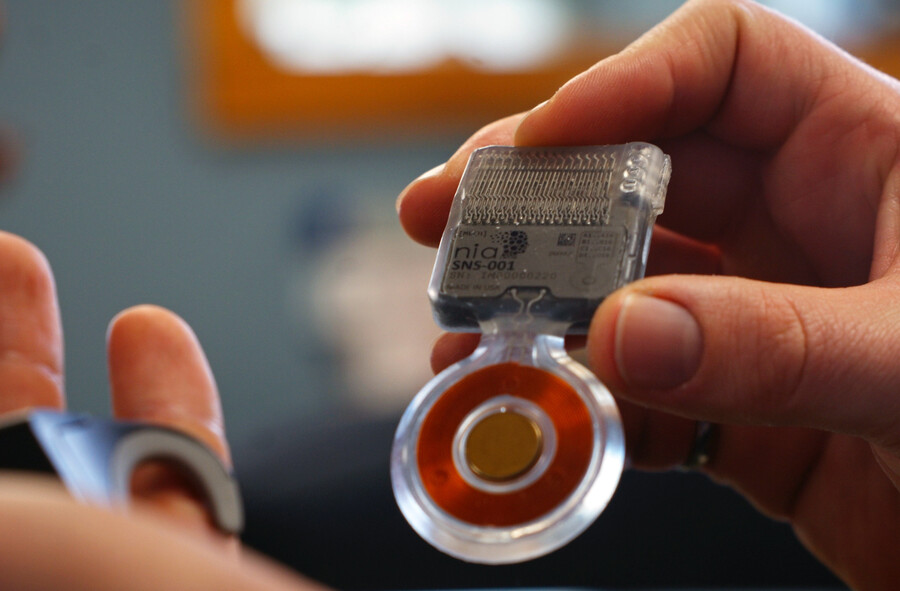
Michael Kahana and colleagues have created an implantable therapy device to treat memory loss in adult patients with traumatic brain injuries. Results of studies about the device’s effectiveness have been promising, and this past March the FDA gave it “Breakthrough Device Designation.”
(Image: Or Barak)
On the ninth floor, patients with drug-resistant epilepsy were undergoing weeklong monitoring with implanted electrodes to help plan a potentially curative surgery. Kahana observed a teen patient playing a video game as a recording system captured reams of never-analyzed data. Except for a small snippet used for seizure mapping, the data were deleted each night; there was nowhere to store such a massive amount of information.
These were the roots for a decades-long adventure, as Kahana calls it, leading to the realization that it’s possible to predict when somebody will remember and when somebody will forget.
That journey took another step this past March when the Food and Drug Administration (FDA) bestowed a “Breakthrough Device Designation” on the Smart Neurostimulation System (SNS), an implantable therapy created by Kahana and colleagues through their Penn spinout, Nia Therapeutics. The device treats memory loss in adult patients with traumatic brain injuries (TBI). The designation, which the FDA reserves for technologies that address unmet needs in serious conditions, qualifies the device for priority review, meaning it will likely be reviewed faster.
Nia’s SNS is the first device to receive the designation for TBI-related memory loss. The company, Kahana says, is preparing to begin clinical trials in 2027. The differentiator, he adds, is how the SNS employs artificial intelligence to guide a closed-loop technology, which analyzes distributed patterns of brain activity and uses personalized models to deliver bursts of stimulation during predicted memory lapses.
On the move: Water quality and antimicrobial resistance testing goes mobile
Penn researchers have developed a mobile field laboratory allowing them to test water quality and track antimicrobial resistance in and around San Cristóbal in the Galápagos.
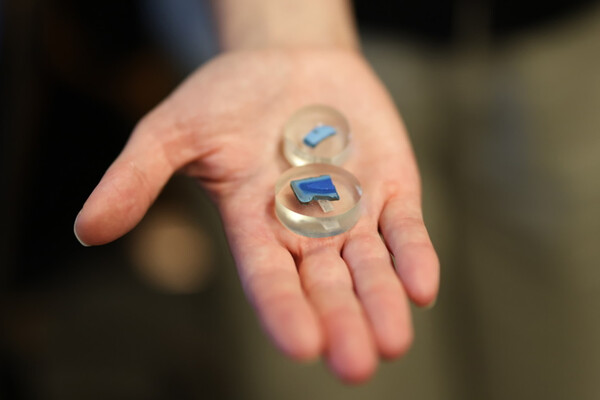
Penn researchers Vanessa and Alexis North are studying one of the largest collections of Egyptian blue objects ever found in the ancient Near East, shedding new light on how the world’s first synthetic pigment may have traveled far beyond Egypt.
A new role for dental providers? Rethinking where vaccines are given
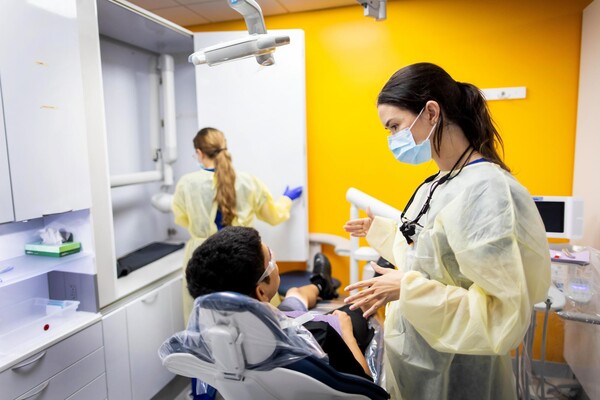
Vaccinations have traditionally been administered in primary care settings or pharmacies. However, for about a decade, some states have authorized dentists to administer vaccines, and many others did so during the COVID-19 pandemic. The effectiveness of this approach has led some countries and states to expand or consider expanding the role of dental providers in delivering routine vaccines, including those against COVID-19 and the human papillomavirus (HPV), and in providing vaccine education.
Penn student develops a way for computer chips to run more efficiently
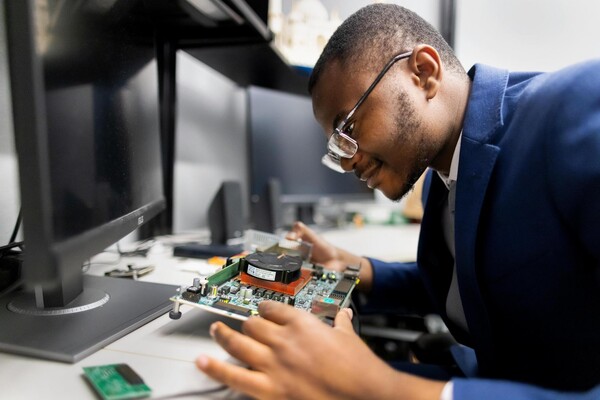
Fluid Silicon, a platform from President’s Sustainability Prize winner Nhlanhla Mavuso, allows computer chips to continuously monitor their health and self-tune as their characteristics change. The technology has the potential to reduce energy usage in data centers and improve reliability in mission-critical applications.