Penn researchers join ARPA-H initiative to develop next-gen fetal monitoring device
Researchers from the Perelman School of Medicine are part of a collaborative team awarded $39.3 million to provide clinicians with real-time information about fetal oxygen levels and reduce unnecessary interventions.
2 min. read
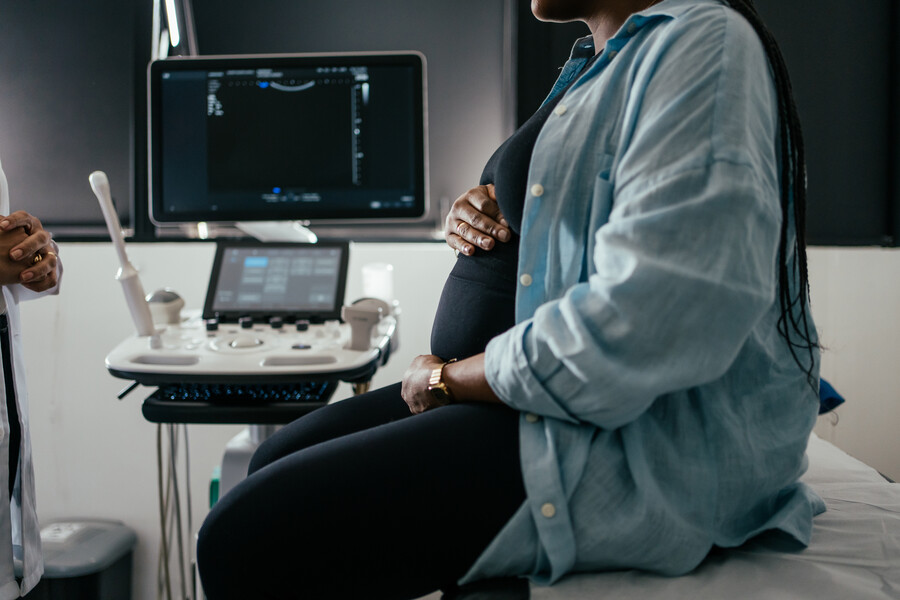
Clinicians may soon have a clearer picture of how babies are tolerating labor—and why complications occur—through a new federally funded effort to develop a wearable monitoring system capable of providing real-time insights into fetal oxygen levels during childbirth.
Researchers from the Perelman School of Medicine are part of a multi-institution team awarded up to $39.3 million by the Advanced Research Projects Agency for Health—an agency within the U.S. Department of Health and Human Services—through its Making Obstetric Care Smart program to develop OMEGA (Optical, Mechanical, and Electrical Global Assessment of fetal hypoxia), a wearable monitoring system designed to improve identification of fetal distress and guide clinical decision-making during labor.
“One of the biggest challenges in obstetrics is distinguishing between a fetus that is experiencing true distress and one that is responding normally to the stress of labor,” says Nadav Schwartz, a professor of obstetrics and gynecology at the Perelman School of Medicine and lead investigator of this Penn study. “Better information could help clinicians make more informed decisions, potentially improving outcomes for both mothers and babies while reducing unnecessary interventions.”
OMEGA is designed to move beyond traditional monitoring by providing a broader view of maternal-fetal health. The system will combine multiple noninvasive sensors to collect information from the mother, placenta, uterus, and fetus, creating a more complete picture of oxygen delivery and how a fetus responds during labor.
“With newer technology, including AI, we hope to contribute to a solution that’s easy to use in the delivery room and will impact millions of patients around the world,” says Gabriel Arenas, an assistant professor of obstetrics and gynecology at the Penn Medicine and co-investigator of the study.
On the move: Water quality and antimicrobial resistance testing goes mobile
Penn researchers have developed a mobile field laboratory allowing them to test water quality and track antimicrobial resistance in and around San Cristóbal in the Galápagos.
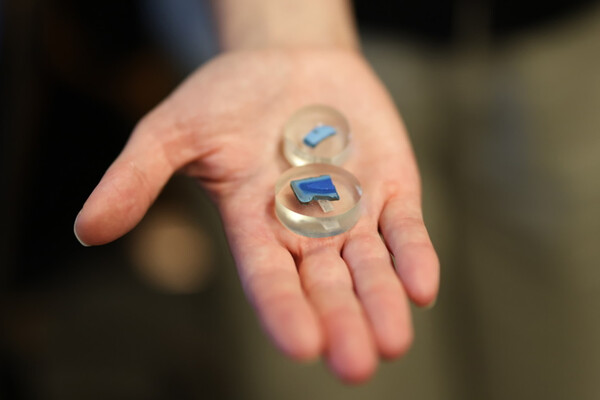
Penn researchers Vanessa and Alexis North are studying one of the largest collections of Egyptian blue objects ever found in the ancient Near East, shedding new light on how the world’s first synthetic pigment may have traveled far beyond Egypt.
A new role for dental providers? Rethinking where vaccines are given
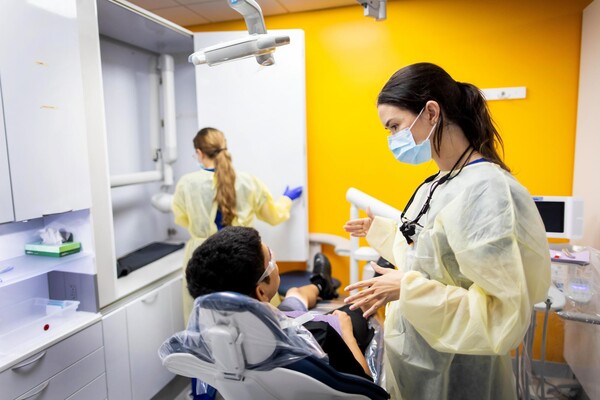
Vaccinations have traditionally been administered in primary care settings or pharmacies. However, for about a decade, some states have authorized dentists to administer vaccines, and many others did so during the COVID-19 pandemic. The effectiveness of this approach has led some countries and states to expand or consider expanding the role of dental providers in delivering routine vaccines, including those against COVID-19 and the human papillomavirus (HPV), and in providing vaccine education.
Penn student develops a way for computer chips to run more efficiently
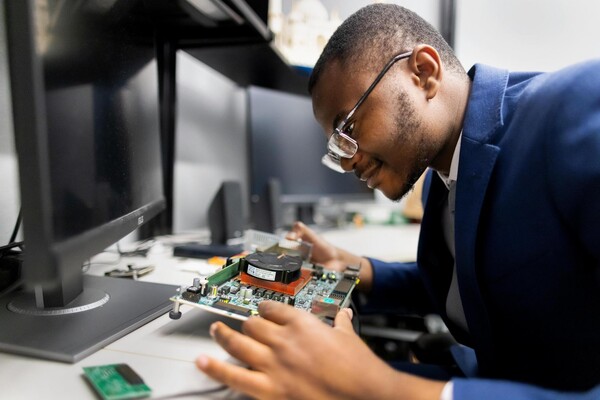
Fluid Silicon, a platform from President’s Sustainability Prize winner Nhlanhla Mavuso, allows computer chips to continuously monitor their health and self-tune as their characteristics change. The technology has the potential to reduce energy usage in data centers and improve reliability in mission-critical applications.