Illuminating gaps in perinatal palliative care evidence amidst abortion restrictions
A new review by a team of researchers led by Penn Nursing’s Abigail B. Wilpers highlights significant limitations in the existing evidence base for perinatal palliative care in the U.S.
2 min. read
A new review published in Health Affairs Scholar highlights significant limitations in the existing evidence base for perinatal palliative care (PPC) in the U.S., raising concerns about its capacity to adequately support a growing, vulnerable patient population increasingly directed towards it due to abortion restrictions.
The review, titled “Dobbs-driven expansion of perinatal palliative care: a scoping review of the evidence and its limits,” was conducted by a team of researchers led by Abigail B. Wilpers, an assistant professor in Penn Nursing’s Department of Family and Community Health. PPC is an interdisciplinary approach that provides comprehensive support from prenatal diagnosis through labor, birth, neonatal care, and end-of-life support for families facing pregnancies complicated by life-limiting fetal conditions. This care integrates medical management with psychosocial and bereavement support, aiming to facilitate values-driven decision-making for families.
“Our review reveals a significant and concerning gap in the evidence for PPC in the United States, especially at a time when more families are being directed to this care due to abortion restrictions,” says Wilpers. “We urgently need robust, U.S.-based research to truly understand if PPC can effectively and equitably meet the needs of all vulnerable patients, ensuring their safety, comfort, and well-being in an increasingly complex landscape of reproductive health.”
The authors underscore that existing PPC evidence is limited, leaving critical gaps in understanding its safety, effectiveness, acceptability, and equity—factors essential for assessing if PPC meets its intended goals and serves diverse populations.
On the move: Water quality and antimicrobial resistance testing goes mobile
Penn researchers have developed a mobile field laboratory allowing them to test water quality and track antimicrobial resistance in and around San Cristóbal in the Galápagos.
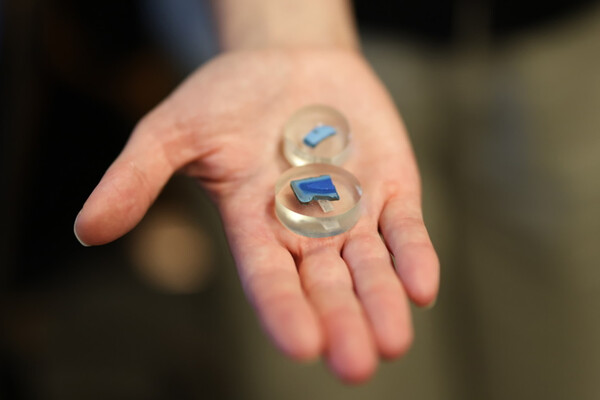
Penn researchers Vanessa and Alexis North are studying one of the largest collections of Egyptian blue objects ever found in the ancient Near East, shedding new light on how the world’s first synthetic pigment may have traveled far beyond Egypt.
A new role for dental providers? Rethinking where vaccines are given
Vaccinations have traditionally been administered in primary care settings or pharmacies. However, for about a decade, some states have authorized dentists to administer vaccines, and many others did so during the COVID-19 pandemic. The effectiveness of this approach has led some countries and states to expand or consider expanding the role of dental providers in delivering routine vaccines, including those against COVID-19 and the human papillomavirus (HPV), and in providing vaccine education.
Penn student develops a way for computer chips to run more efficiently
Fluid Silicon, a platform from President’s Sustainability Prize winner Nhlanhla Mavuso, allows computer chips to continuously monitor their health and self-tune as their characteristics change. The technology has the potential to reduce energy usage in data centers and improve reliability in mission-critical applications.