Key details of fat cells uncovered, advancing potential treatments for obesity and diabetes
The findings from the Penn Medicine study represent the first structural details of uncoupling protein 1, which allows fat tissue to burn off calories as heat.
New research has unlocked insights into how “good fat” tissue could potentially be harnessed to combat obesity and remove glucose from the blood, helping to control diabetes. Published in Science Advances, the work is a collaboration between researchers with the Perelman School of Medicine and University of Cambridge, Free University of Brussels, and University of East Anglia.
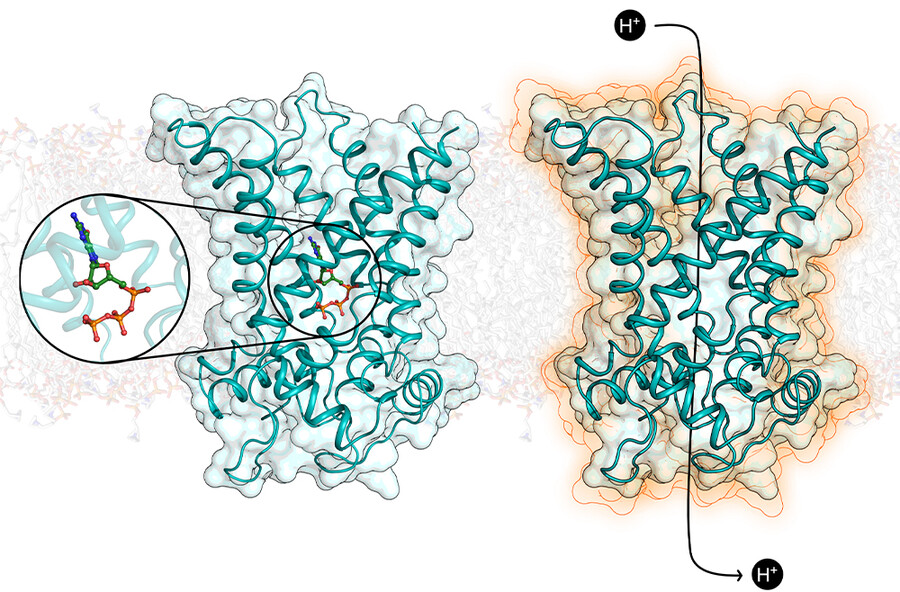
The human uncoupling protein in brown adipose tissue in its inactive form (left), inhibited by a nucleotide, and in its activated form (right), which short-circuits the mitochondrion to produce heat.
(Image: Penn Medicine News)
Human bodies consist of two types of fat: brown and white. Brown fat breaks down blood sugar (glucose) and fat molecules, generating heat in response to cold temperatures helping to maintain normal body temperature. The majority of fat in humans is white fat, and building up too much white fat contributes to obesity and other health issues.
Using the Krios G3i, a cryogenic electron microscope at the Singh Center for Nanotechnology, researchers were able to view mitochondrial uncoupling protein 1 (UCP1)—a protein which allows fat tissue to burn off calories as heat—in atomic detail for the first time. This work uncovered new insights into how this protein’s activity in brown fat cells could potentially be harnessed for weight loss.
“This is an exciting development that follows more than four decades of research into what UCP1 looks like and how it works,” says Vera Moiseenkova-Bell, a professor of systems pharmacology and translational therapeutics in the School of Medicine and faculty director of the Beckman Center for Cryo-Electron Microscopy. “These new findings would not have been possible without the collaboration between everyone involved.”
On the move: Water quality and antimicrobial resistance testing goes mobile
Penn researchers have developed a mobile field laboratory allowing them to test water quality and track antimicrobial resistance in and around San Cristóbal in the Galápagos.
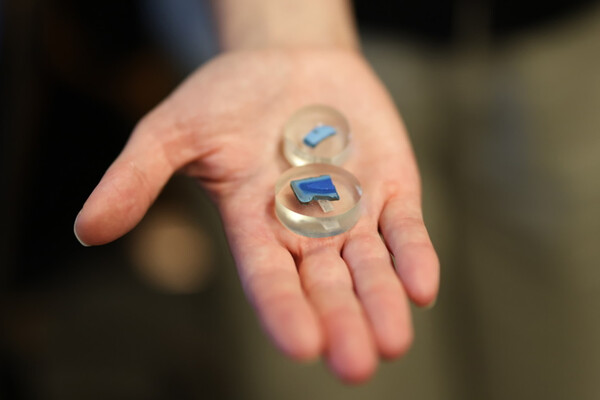
Penn researchers Vanessa and Alexis North are studying one of the largest collections of Egyptian blue objects ever found in the ancient Near East, shedding new light on how the world’s first synthetic pigment may have traveled far beyond Egypt.
A new role for dental providers? Rethinking where vaccines are given
Vaccinations have traditionally been administered in primary care settings or pharmacies. However, for about a decade, some states have authorized dentists to administer vaccines, and many others did so during the COVID-19 pandemic. The effectiveness of this approach has led some countries and states to expand or consider expanding the role of dental providers in delivering routine vaccines, including those against COVID-19 and the human papillomavirus (HPV), and in providing vaccine education.
Penn student develops a way for computer chips to run more efficiently
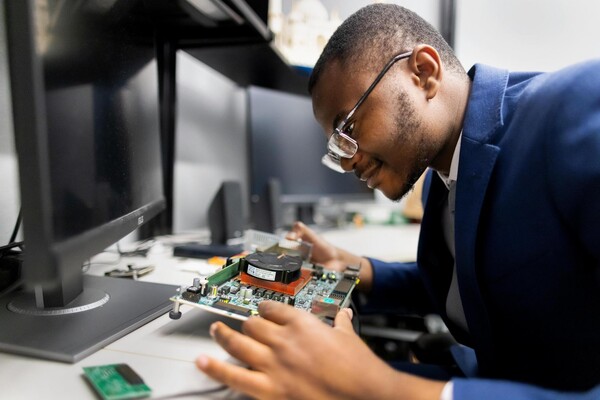
Fluid Silicon, a platform from President’s Sustainability Prize winner Nhlanhla Mavuso, allows computer chips to continuously monitor their health and self-tune as their characteristics change. The technology has the potential to reduce energy usage in data centers and improve reliability in mission-critical applications.