As Pennsylvania districts consider later bells, Penn Medicine sleep and neuroscience experts explain why adolescent biology can make early school start times especially challenging.
2 min. read
For many teenagers, the hardest part of the school day may begin well before the first bell rings: waking up when their brains are still wired for sleep.
That biological mismatch is receiving renewed attention in Pennsylvania, where recent updates to the state School Code give districts more flexibility to explore later start times for secondary students. The change does not require districts to move the first bell, but it gives communities a clearer path to consider whether later schedules could better support students’ health, safety, and learning.
Sleep experts have long argued that middle and high schools should start no earlier than 8:30 a.m., a benchmark supported by major medical organizations. The reason is not simply that teenagers stay up too late. During puberty, circadian rhythms shift, making adolescents naturally sleepy later at night and more likely to need sleep later in the morning.
“This is not simply a matter of teenagers making better choices at bedtime,” says Indira Gurubhagavatula, a professor of sleep medicine at the Perelman School of Medicine. “It is an issue of misalignment between school schedules and known features of teen sleep biology. Personal habits are important, but they are not a fix for a problem that is fundamentally driven by internal biological wiring.”
“Study after study has shown that when school starts later, teens sleep more, not less,” says Gurubhagavatula. The effects of chronic sleep loss can extend well beyond the classroom. Gurubhagavatula noted that insufficient sleep in teens is associated with more headaches, stomach complaints, daytime sleepiness, visits to the school nurse, depression, anxiety, suicidal thoughts, difficulty controlling impulses, and unhealthy choices around caffeine, nicotine, alcohol, marijuana, food, and exercise.
Sleep also matters for the developing brain, says Raquel Gur, a professor of psychiatry, neurology, and radiology. During adolescence, the brain undergoes changes that support learning, memory, emotional regulation, and decision-making. Deep sleep helps young people encode, consolidate, and retain what they learn. “Sleep is not something happening off to the side,” Gur says. “It is integrated with the brain’s development during this vulnerable and important period.”
When adolescents do not get enough sleep, Gur says, the effects can show up in attention, learning, memory, emotional regulation, reward-seeking, and decision-making. “Sometimes people look at a teen’s behavior and say, ‘What were they thinking?’” Gur says. “But in adolescence, the tools for thinking through decisions are still coming online and when sleep is restricted, those tools are even less available.”
On the move: Water quality and antimicrobial resistance testing goes mobile
Penn researchers have developed a mobile field laboratory allowing them to test water quality and track antimicrobial resistance in and around San Cristóbal in the Galápagos.
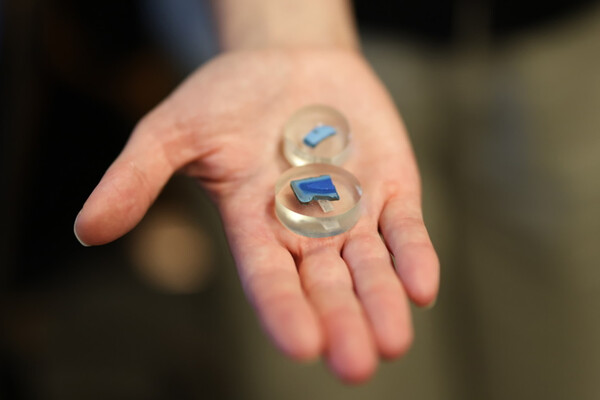
Penn researchers Vanessa and Alexis North are studying one of the largest collections of Egyptian blue objects ever found in the ancient Near East, shedding new light on how the world’s first synthetic pigment may have traveled far beyond Egypt.
A new role for dental providers? Rethinking where vaccines are given
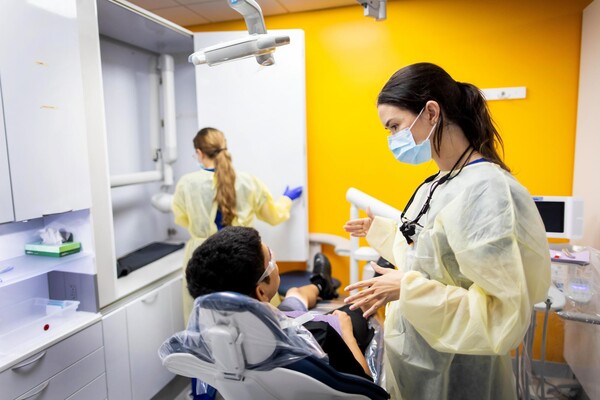
Vaccinations have traditionally been administered in primary care settings or pharmacies. However, for about a decade, some states have authorized dentists to administer vaccines, and many others did so during the COVID-19 pandemic. The effectiveness of this approach has led some countries and states to expand or consider expanding the role of dental providers in delivering routine vaccines, including those against COVID-19 and the human papillomavirus (HPV), and in providing vaccine education.
Penn student develops a way for computer chips to run more efficiently
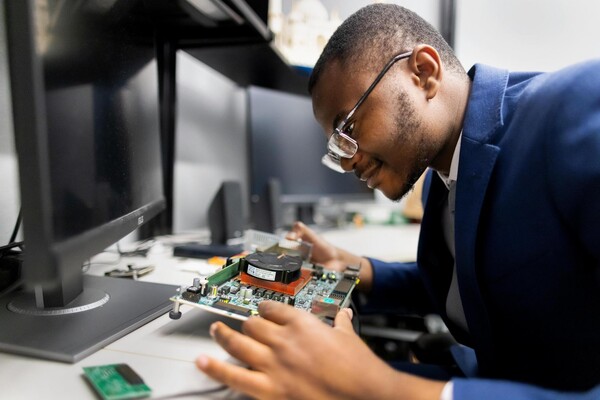
Fluid Silicon, a platform from President’s Sustainability Prize winner Nhlanhla Mavuso, allows computer chips to continuously monitor their health and self-tune as their characteristics change. The technology has the potential to reduce energy usage in data centers and improve reliability in mission-critical applications.