To deliver hospital-level care at home, practice makes perfect
Years of planning come to fruition as Penn Medicine’s Hospital at Home teams test run a new era of patient care devoted to better outcomes and fewer readmissions.
2 min. read
Mr. Three was lying in a bed, his face contorted in frustration. He had come to the Emergency Department at the Hospital of the University of Pennsylvania (HUP) after passing out in his attic, and now the doctor just told him he had cellulitis and he would need to be admitted for two to three days. Mr. Three didn’t want to be away from his dogs that long. A nurse approached his bed.
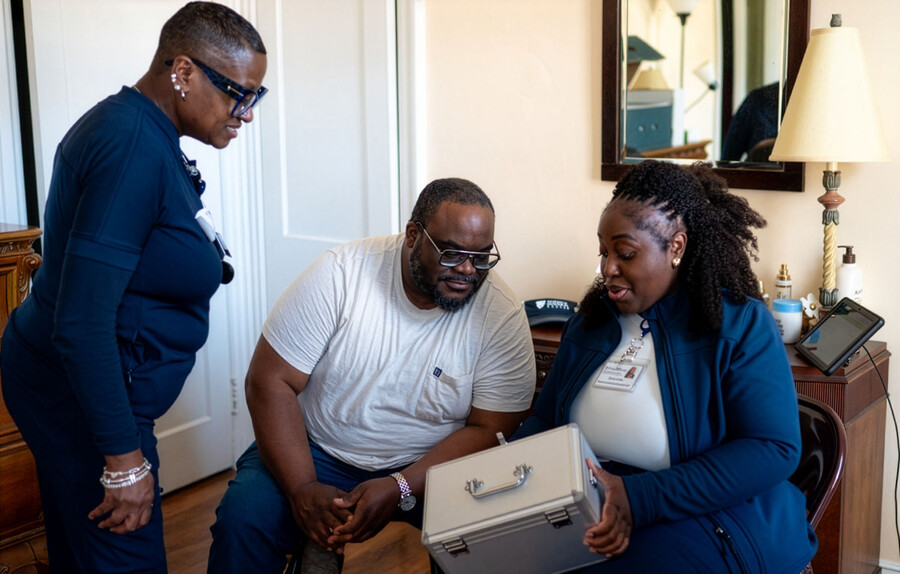
Nurses practice how to talk to patients about properly storing medications while they are enrolled in Hospital at Home.
(Image: Courtesy of Penn Medicine News)
“Hi, Mr. Three, my name is Lakenia. I’m one of the nurses with Hospital at Home. It’s basically a program—a creative and innovative program,” Lakenia Miller said. Then she paused. “I’m sorry, I’m really nervous!”
A chorus of “that’s OK, you’re doing great!” came from the nurses standing behind her. Miller caught her breath and continued, not missing another beat as she introduced the patient to a new program that would allow him to receive hospital-level care from the comfort of his home.
Moments later, she reflected: “I was a little nervous doing that, but in the real world it will be easier for me to help the patient understand,” Miller said.
Practice and readiness for the real world was exactly the point. Miller’s conversation with Mr. Three (not a real patient) was part of a simulation exercise that stretched over four days in early April 2026, just a week before Penn Medicine officially launched its Hospital at Home program at HUP and Penn Presbyterian Medical Center. The rehearsal served as a low-stakes way for clinical teams to test run the process, work out bugs, and shake off nerves ahead of the enrollment of real patients in this newest mode of acute care in patients’ homes.
On the move: Water quality and antimicrobial resistance testing goes mobile
Penn researchers have developed a mobile field laboratory allowing them to test water quality and track antimicrobial resistance in and around San Cristóbal in the Galápagos.
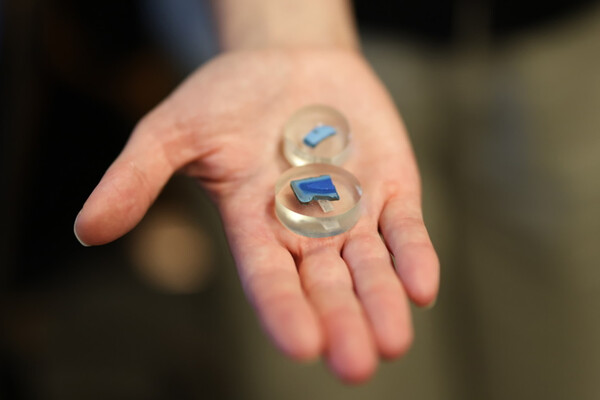
Penn researchers Vanessa and Alexis North are studying one of the largest collections of Egyptian blue objects ever found in the ancient Near East, shedding new light on how the world’s first synthetic pigment may have traveled far beyond Egypt.
A new role for dental providers? Rethinking where vaccines are given
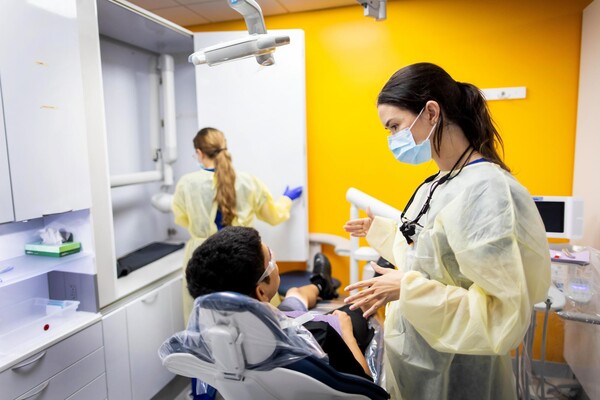
Vaccinations have traditionally been administered in primary care settings or pharmacies. However, for about a decade, some states have authorized dentists to administer vaccines, and many others did so during the COVID-19 pandemic. The effectiveness of this approach has led some countries and states to expand or consider expanding the role of dental providers in delivering routine vaccines, including those against COVID-19 and the human papillomavirus (HPV), and in providing vaccine education.
Penn student develops a way for computer chips to run more efficiently
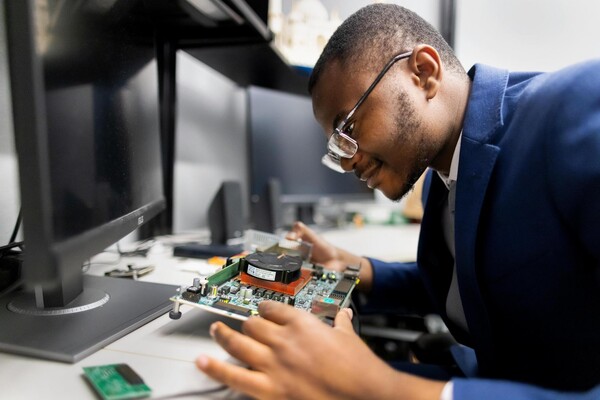
Fluid Silicon, a platform from President’s Sustainability Prize winner Nhlanhla Mavuso, allows computer chips to continuously monitor their health and self-tune as their characteristics change. The technology has the potential to reduce energy usage in data centers and improve reliability in mission-critical applications.