Karl Nycklemoe, a Consortium Dissertation Fellow at Penn’s McNeil Center for Early American Studies, focuses his research on how U.S. expansionism usurped Indigenous communities’ aquatic governance by remaking the region’s waters into an ‘open’ navigable resource.
Karl Nycklemoe is an Consortium Dissertation Fellow at Penn’s McNeil Center for Early American Studies and a Ph.D. Candidate at Stony Brook University. His current research focuses on how U.S. expansionism and settler-colonization were contingent on usurping Indigenous communities’ aquatic governance by remaking the region’s waters—lakes, rivers, wetlands, and floods—into an “open” navigable resource.
Karl Nycklemoe is a Consortium Dissertation Fellow at Penn’s McNeil Center for Early American Studies.
(Image: Courtesy of MCEAS)
“I found that historians had not seriously considered the Upper Mississippi’s history before 1850,” Nycklemoe says. “The watershed was not a wilderness, but part of a vast network of connections facilitated by Indigenous polities and peoples, and the community of other-than-humans who knew the water as their home.”
Nycklemoe approached his dissertation project with the question “Why are some parts of our world deemed replaceable, and others venerated? Why is it that the Mississippi is seen as both a body to reengineer and a place to preserve?”
As a MCEAS Fellow, “I find reviewing archival collections with only scant descriptions in finding aids to be the most rewarding part of the research process,” he says. “Truthfully, sometimes this means spending hours going through papers that, in the end, had little to say about my current research. Thankfully, I have had the fortune to find a document that not only informs my research, but pushes me to reconsider the life and influence of rivers in history.”
On the move: Water quality and antimicrobial resistance testing goes mobile
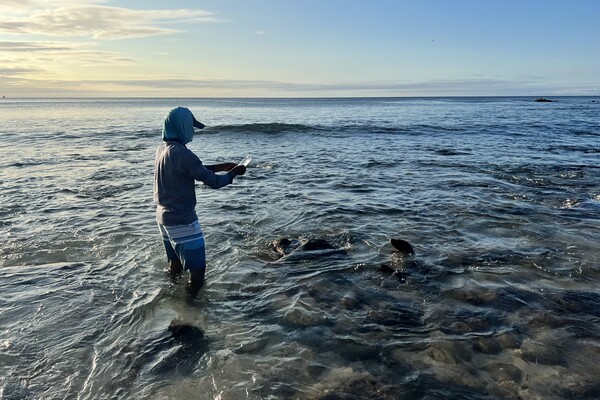
Penn researchers have developed a mobile field laboratory allowing them to test water quality and track antimicrobial resistance in and around San Cristóbal in the Galápagos.
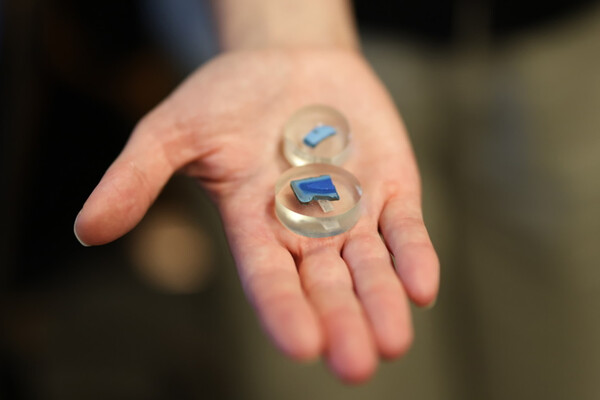
Penn researchers Vanessa and Alexis North are studying one of the largest collections of Egyptian blue objects ever found in the ancient Near East, shedding new light on how the world’s first synthetic pigment may have traveled far beyond Egypt.
A new role for dental providers? Rethinking where vaccines are given
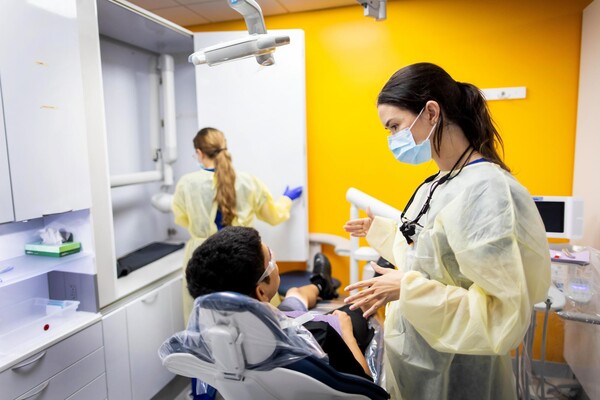
Vaccinations have traditionally been administered in primary care settings or pharmacies. However, for about a decade, some states have authorized dentists to administer vaccines, and many others did so during the COVID-19 pandemic. The effectiveness of this approach has led some countries and states to expand or consider expanding the role of dental providers in delivering routine vaccines, including those against COVID-19 and the human papillomavirus (HPV), and in providing vaccine education.
Penn student develops a way for computer chips to run more efficiently
Fluid Silicon, a platform from President’s Sustainability Prize winner Nhlanhla Mavuso, allows computer chips to continuously monitor their health and self-tune as their characteristics change. The technology has the potential to reduce energy usage in data centers and improve reliability in mission-critical applications.