Students test one way to combat extreme heat in Philadelphia
Third-year students Nafisa Bangura and Angelica Dadda expanded upon a multidisciplinary research endeavor to evaluate a reflective pavement coating as a tool to mitigate extreme heat. Their work may inform policy efforts to improve urban heat resilience.
4 min. read
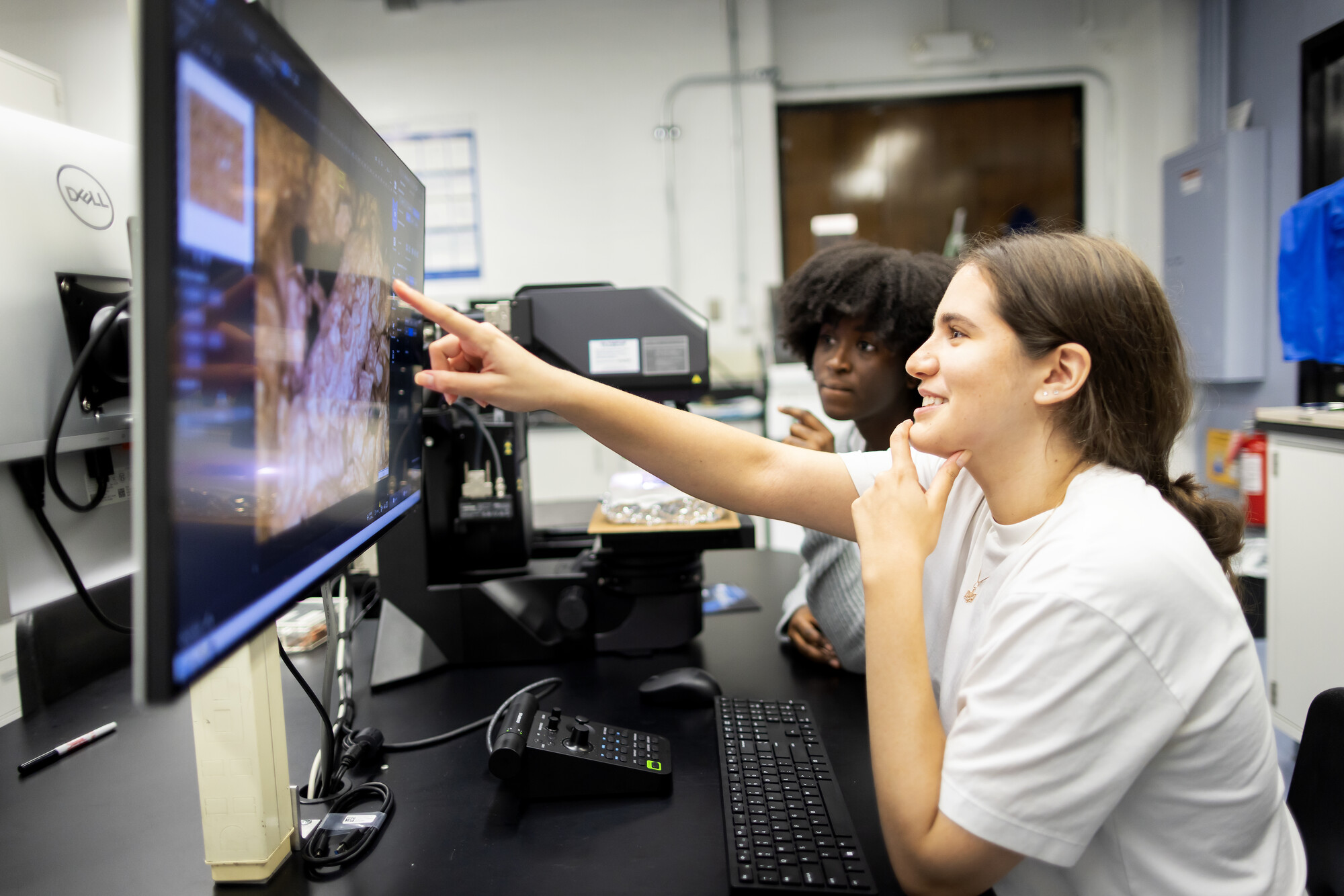
Third-year students Nafisa Bangura (left) and Angelica Dadda (right) are part of an undergraduate-led research team exploring the efficacy of CoolSeal, a pavement coating designed to reduce surface and air temperatures in urban areas exposed to extreme heat. Over the summer, the duo expanded this work by participating in a Penn Undergraduate Research Mentoring Program project.
The CoolSeal project—kickstarted by a grant from Penn’s Environmental Innovation Initiative to Russell Composto, professor of materials science and engineering in SEAS and Penn’s vice provost for undergraduate education, and Kristin Field, director of education at The Internet of Things for Precision Agriculture—involves collaborators from SEAS, the City of Philadelphia’s Office of Sustainability, and the Weitzman School of Design. Pioneered by third-year Julia Chiang and fourth-year Colby Snyder, this project to help address urban heating aligns with Penn’s strategic framework In Principle and Practice by promoting multidisciplinary pursuits, supporting local communities, and leading on pivotal climate-related challenges.
“This is a great opportunity to connect our students to a real-world problem around urban heat mitigation—and it’s also cool science,” says Composto, who served as PURM faculty mentor for the CoolSeal project.
PURM, administered by the Center for Undergraduate Research & Fellowships, provides students finishing their first or second year at Penn with a 10-week summer research experience under the mentorship of a faculty member. Bangura and Dadda, along with fellow third-year and PURM participant Dylan York, spent the summer examining the performance of CoolSeal by GuardTop at Hunting Park, a neighborhood in North Philadelphia exposed to excessive heat.
Evaluating CoolSeal for heat mitigation
Over three site visits, the trio collected data on surface and air temperatures—as well as supplementary measurements of wind and humidity—in relation to CoolSeal-treated and untreated asphalt. Zhan Shi, a graduate student at the Thermal Architecture Lab, led by assistant professor of architecture Dorit Aviv, mentored the undergraduate students throughout the summer, and helped them with measurement protocol and data collection to ensure scientific rigor and integrity. During each visit, the students recorded data between 9-10 a.m., noon-1 p.m., and 4-5 p.m. The PURM team found that CoolSeal lowers the surface temperatures of asphalt in Hunting Park.
“Throughout the summer, we observed a difference between CoolSeal and [uncoated] asphalt of about 9.2 degrees Fahrenheit,” says Bangura, a materials science and engineering (MSE) major in SEAS from Lawrenceville, Georgia. This finding verifies a similar CoolSeal study at Arizona State University (ASU) in Phoenix, and other schools, but was the first demonstration of CoolSeal’s effectiveness in a humid climate.
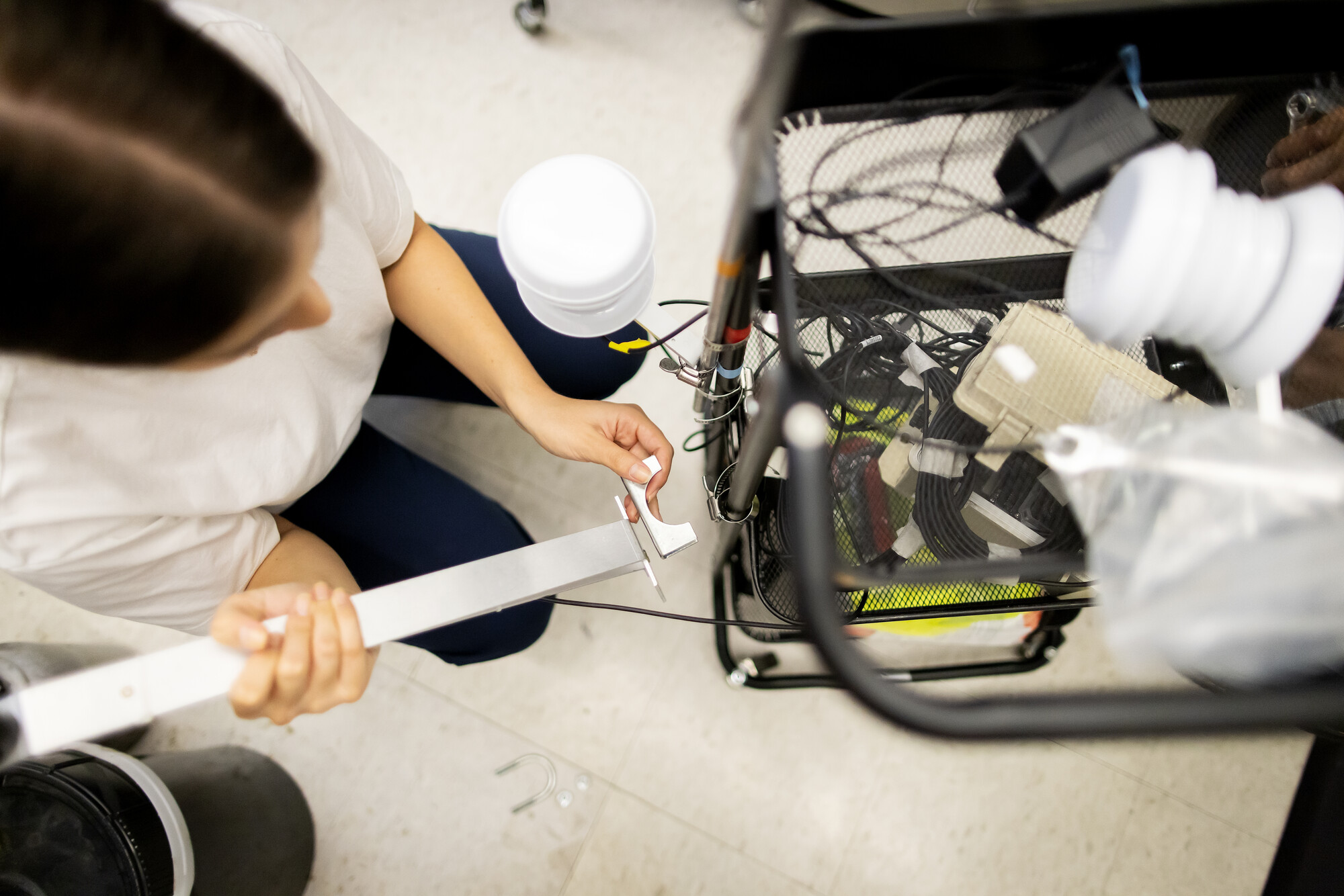
Angelica Dadda collecting data with her team’s weather cart at Hunting Park as part of their Penn Undergraduate Research Mentoring Program project.
(Image: Courtesy of Angelica Dadda and Nafisa Bangura)
The researchers also recorded mean radiant temperature (MRT), a metric that can be used for gauging human comfort in heated conditions. Studying the relationship between CoolSeal and MRT is pertinent to Philadelphia’s climate, where year-round humidity, rainfall, and freeze-thaw cycles are common versus the drier, arid environment of Phoenix.
“CoolSeal’s MRT was higher than that of uncoated asphalt during the 4-5 p.m. timeframe,” says Dadda, a chemical and biomolecular engineering (CBE) major from Manalapan, New Jersey. “ASU’s study also indicated that CoolSeal’s MRT was higher than uncoated asphalt, however, only after sunset, around 7:30-8:30 p.m.” Although not definitive, these differing timeframes may be due to factors like climate, location, and date of measurement.
One site visit overlapped with a Philadelphia heatwave, enabling the students to measure CoolSeal’s performance under extreme conditions.
“That day, we were able to note some of the greatest temperature differences between CoolSeal-coated surfaces and uncoated asphalt surfaces,” Bangura says.
York, a BSE major from Phillipsburg, New Jersey, spent his PURM experience building “a more sophisticated way of creating coding formulations,” Composto says. Although York’s role was primarily lab-based, he assisted Bangura and Dadda at Hunting Park with CoolSeal measurements. David Bujdos, a Ph.D. candidate in MSE and graduate research fellow in the Composto Lab, served as a peer mentor for the PURM students, advising them on best practices for data analysis.
Future efforts to build heat resilience
Although their PURM experience has concluded, Bangura and Dadda are continuing the CoolSeal research this semester. Next steps involve testing the efficacy of two CoolSeal coats versus one, as well as studying how the coating behaves in controlled environments.
The City of Philadelphia recently added a second coat of CoolSeal at Hunting Park, matching the amount recommended in the product’s application guide. This will enable Bangura and Dadda to evaluate CoolSeal against industry standards.
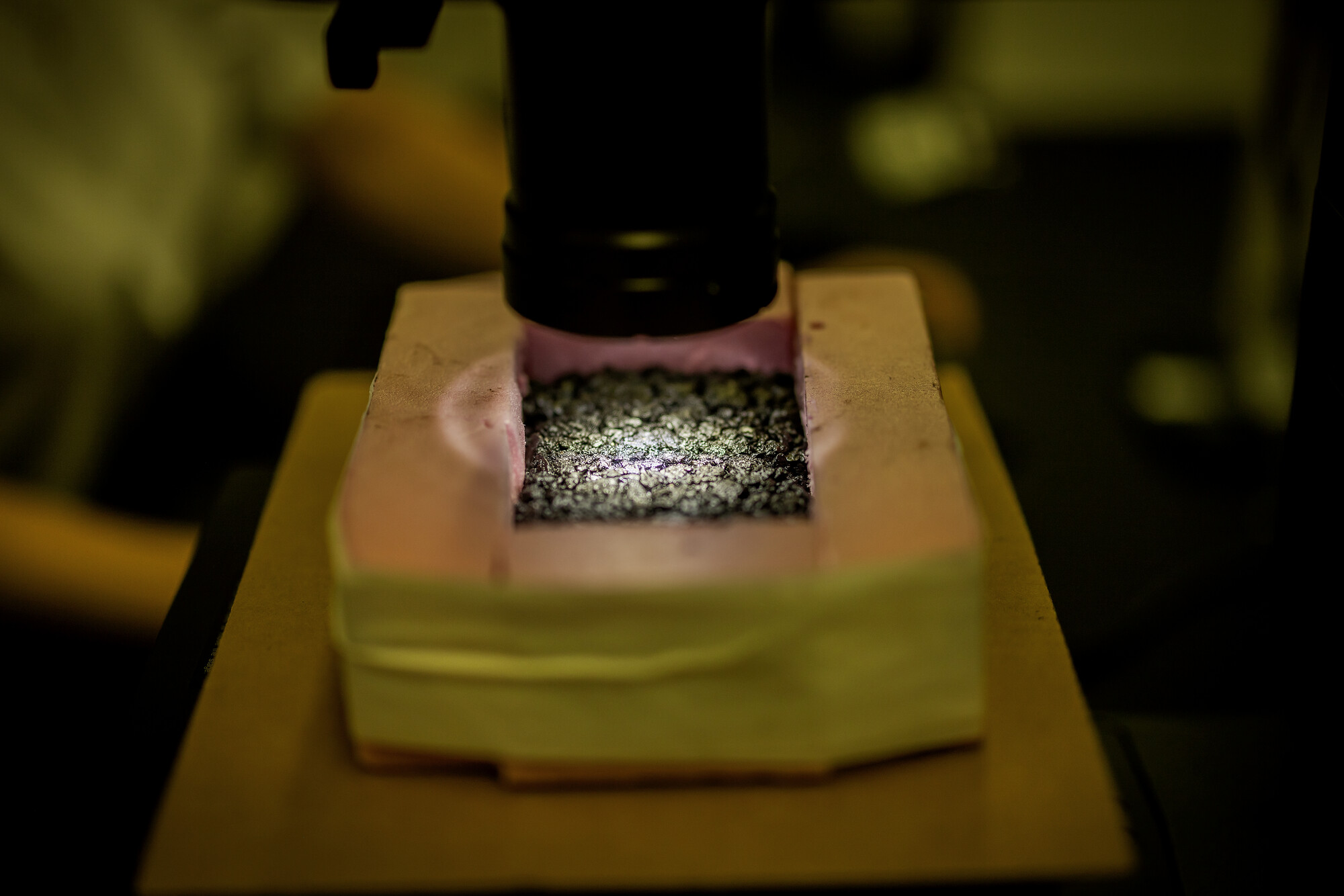
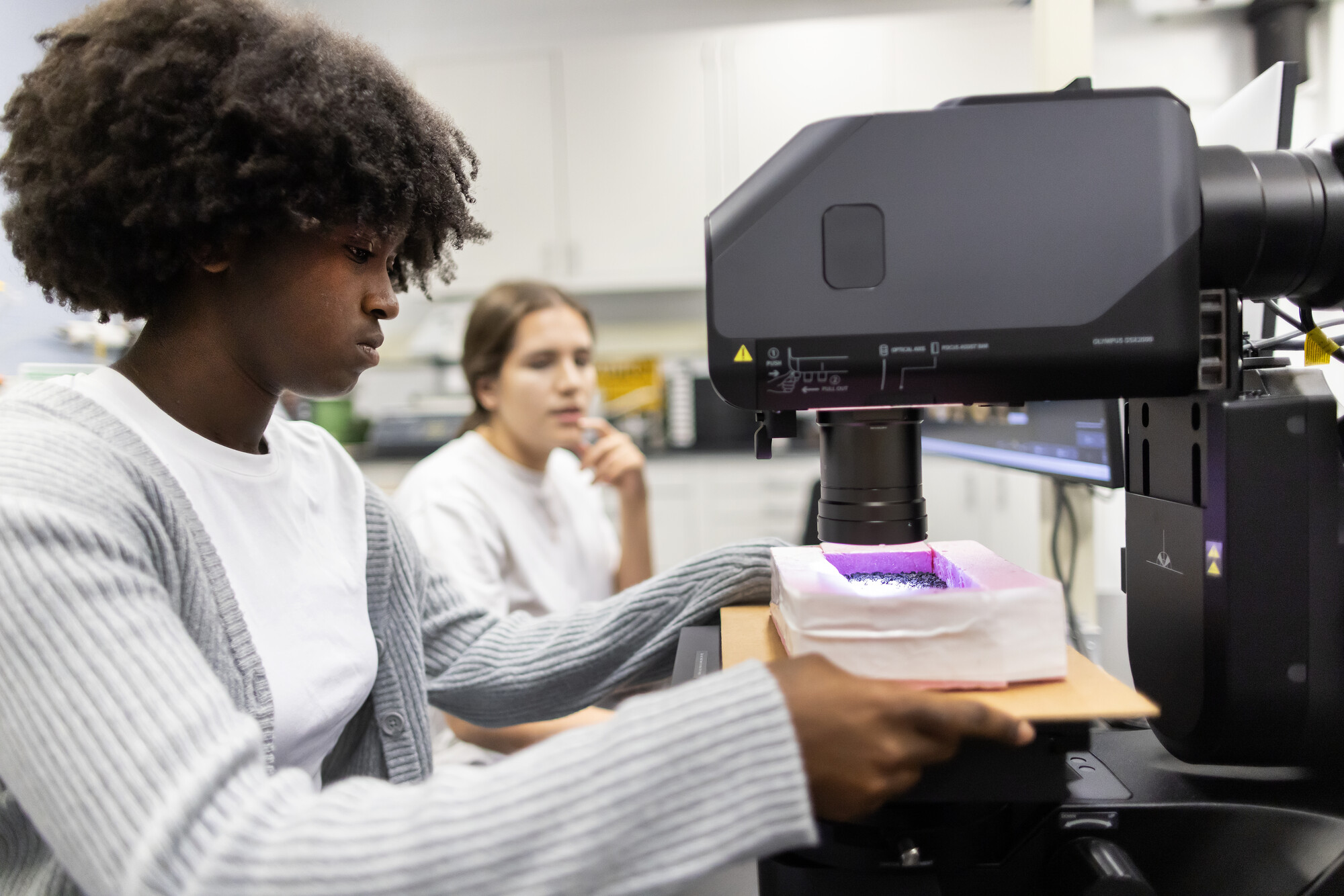
Nafisa Bangura and Angelica Dadda doing hands-on experimental work with CoolSeal-treated asphalt bricks in the Composto Lab.
The students will also test CoolSeal-treated asphalt bricks in their lab and at Pennovation Works for physical durability and thermal behavior. They aim to conduct “in-lab freeze-thaw cycles” that mirror some of Philadelphia’s unique climatic conditions, allowing them to better determine CoolSeal’s viability for local implementation.
“They would be saving the city a lot of money by understanding whether these coatings are working and how effective they are,” Composto says.
The CoolSeal project may also have policy-level implications for Philadelphia’s climate resilience efforts and can inform urban planning in other cities affected by extreme heat.
“Depending on what the goal is—whether it’s to reduce surface temperature or increase thermal comfort above the asphalt—I think different towns or local governments could decide on whether CoolSeal would be useful,” Dadda says.
On the move: Water quality and antimicrobial resistance testing goes mobile
Penn researchers have developed a mobile field laboratory allowing them to test water quality and track antimicrobial resistance in and around San Cristóbal in the Galápagos.
Penn researchers Vanessa and Alexis North are studying one of the largest collections of Egyptian blue objects ever found in the ancient Near East, shedding new light on how the world’s first synthetic pigment may have traveled far beyond Egypt.
A new role for dental providers? Rethinking where vaccines are given
Vaccinations have traditionally been administered in primary care settings or pharmacies. However, for about a decade, some states have authorized dentists to administer vaccines, and many others did so during the COVID-19 pandemic. The effectiveness of this approach has led some countries and states to expand or consider expanding the role of dental providers in delivering routine vaccines, including those against COVID-19 and the human papillomavirus (HPV), and in providing vaccine education.
Penn student develops a way for computer chips to run more efficiently
Fluid Silicon, a platform from President’s Sustainability Prize winner Nhlanhla Mavuso, allows computer chips to continuously monitor their health and self-tune as their characteristics change. The technology has the potential to reduce energy usage in data centers and improve reliability in mission-critical applications.