How AI could make autism screening more accessible
Penn Engineers have built an AI-powered system designed to gauge children’s ability to imitate body motions using video, offering a new and effective way to assess for autism.
2 min. read
Researchers at Penn Engineering and the Kennedy Krieger Institute are working to overcome the challenges of securing an autism assessment and diagnosis.
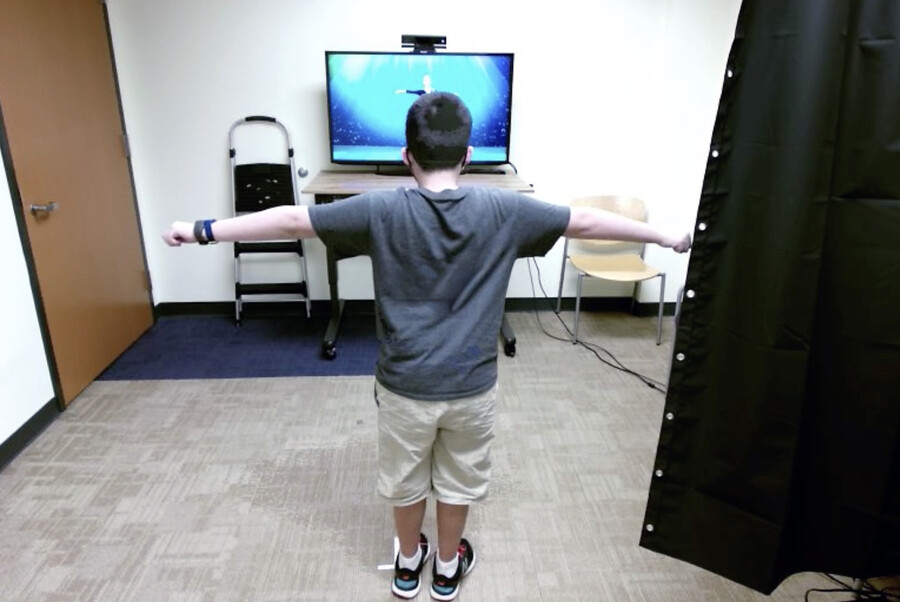
In a new study published in IEEE Transactions on Biomedical Engineering, René Vidal, Rachleff University Professor in Electrical and Systems Engineering in Penn’s School of Engineering and Applied Science and director of the Innovation in Data Engineering and Science (IDEAS) Initiative, collaborated with lead author and Ph.D. candidate Kaleab Kinfu and Stewart H. Mostofsky to develop an artificial intelligence system that measures a child’s ability to imitate simple body movements using nothing more than ordinary video. Their technology is referred to as Computerized Assessment of Motor Imitation, or CAMI, with CAMI-2DNet as their most recent iteration.
CAMI-2DNet builds on a series of studies that have steadily moved computerized motor imitation assessment closer to clinical use.
(Image: Courtesy of Penn Engineering)
“The technology offers a faster, more objective way to assess an important behavioral marker associated with autism,” says Vidal, who also holds a joint appointment in radiology in the Perelman School of Medicine. “We hope to see this tool eventually make high-quality screening available in more clinics, schools and homes.”
One of the earliest ways children learn is by imitating the people around them. Researchers have long known that children with autism often imitate these movements differently than their neurotypical peers, making motor imitation an important clue during developmental evaluations.
“Motor imitation is a critical building block for social development,” says Mostofsky. “This technology provides an objective way to measure imitation skills using tools that are far more accessible than specialized laboratory equipment. Our long-term goal is to better understand individual differences in autism and help inform interventions that address those differences.”
On the move: Water quality and antimicrobial resistance testing goes mobile
Penn researchers have developed a mobile field laboratory allowing them to test water quality and track antimicrobial resistance in and around San Cristóbal in the Galápagos.
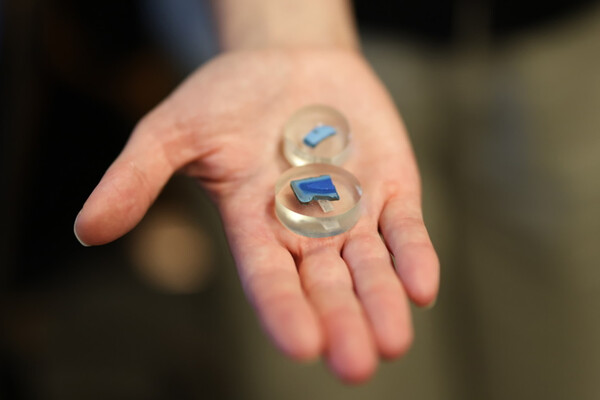
Penn researchers Vanessa and Alexis North are studying one of the largest collections of Egyptian blue objects ever found in the ancient Near East, shedding new light on how the world’s first synthetic pigment may have traveled far beyond Egypt.
A new role for dental providers? Rethinking where vaccines are given
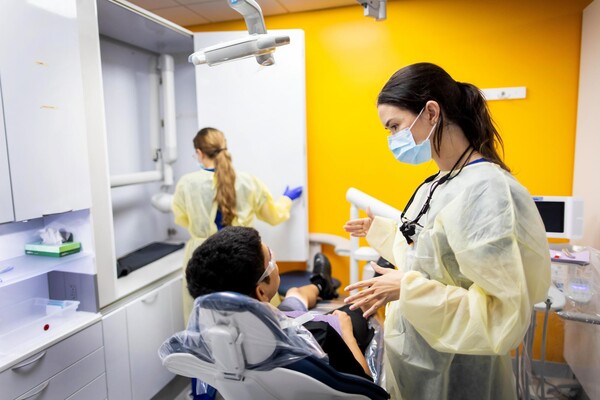
Vaccinations have traditionally been administered in primary care settings or pharmacies. However, for about a decade, some states have authorized dentists to administer vaccines, and many others did so during the COVID-19 pandemic. The effectiveness of this approach has led some countries and states to expand or consider expanding the role of dental providers in delivering routine vaccines, including those against COVID-19 and the human papillomavirus (HPV), and in providing vaccine education.
Penn student develops a way for computer chips to run more efficiently
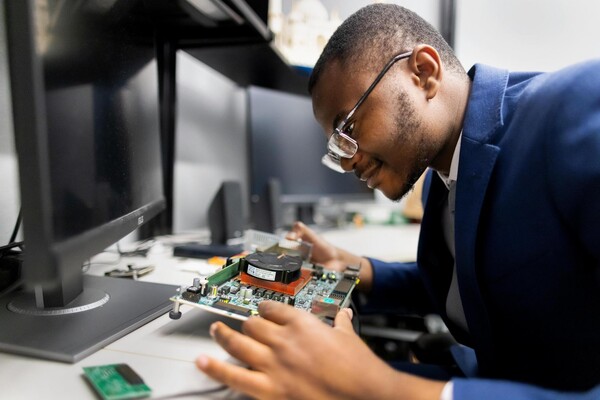
Fluid Silicon, a platform from President’s Sustainability Prize winner Nhlanhla Mavuso, allows computer chips to continuously monitor their health and self-tune as their characteristics change. The technology has the potential to reduce energy usage in data centers and improve reliability in mission-critical applications.