Geomimicry offers a new framework for engineering sustainable materials
In a new paper, Penn Engineers introduce geomimicry, a framework that explores whether the way soils, sediments, and other Earth-mediated substances behave—rather than what they are made of—may be useful for building sustainable materials.
2 min. read
When engineers look to nature for inspiration, they often turn to living systems. The flight of birds has influenced aircraft design, gecko feet inspired new adhesives, and lotus leaves led to the development of self-cleaning surfaces.
Researchers at Penn now argue that engineers should look somewhere else in nature as well: the ground beneath their feet.
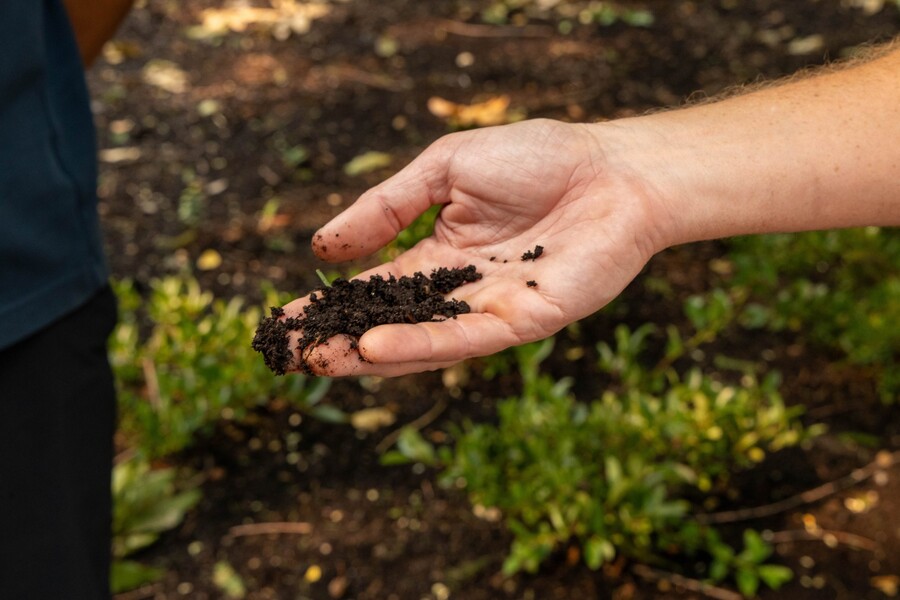
Penn Engineers are exploring whether the same principles that are used to design new materials could explain how natural soils acquire their remarkable properties.
(Image: Courtesy of Penn Engineering)
In a perspective paper published in APS Journals, the team introduces geomimicry, a framework that asks how soils, sediments, and other Earth-mediated materials have been shaped over geologic time, and how those processes can inspire the next generation of sustainable materials.
“Soils have been evolving locally in different places under climate, temperature cycles, rain, dryness and all of that,” says Paulo Arratia, Eduardo D. Glandt Distinguished Scholar and professor in mechanical engineering and applied mechanics (MEAM) in Penn’s School of Engineering and Applied Science. “We want to learn those rules so that we can re-engineer materials.”
The paper marks a milestone in a decade-long collaboration; Douglas Jerolmack, Edmund J. and Louise W. Kahn Endowed Term Professor in Earth and Environmental Science and professor in MEAM, Arratia, and their collaborators had been studying mudslides, soil, and “magic mud” that gives baseball pitchers the right amount of grip. The team’s most recent paper connects years of research into a new way of thinking about Earth materials.
Rather than asking how to classify different kinds of soil, Shravan Pradeep, a postdoctoral researcher working with Arratia and Jerolmack, wondered whether the same principles engineers use to design new materials could explain how natural soils acquire their remarkable properties. That perspective became one of the central ideas behind geomimicry: understanding materials by what they do rather than what they are made of.
The paper describes these as mechanical functional groups. Rather than asking whether a soil contains a particular kind of clay, geomimicry asks what that clay does. Does it help particles stick together? Allow a material to flow? Store or move water? The framework groups materials by these mechanical functions rather than by their chemical composition.
That shift helps explain why soils with different compositions can behave in surprisingly similar ways, while nearly identical soils can behave completely differently depending on where they formed.
On the move: Water quality and antimicrobial resistance testing goes mobile
Penn researchers have developed a mobile field laboratory allowing them to test water quality and track antimicrobial resistance in and around San Cristóbal in the Galápagos.
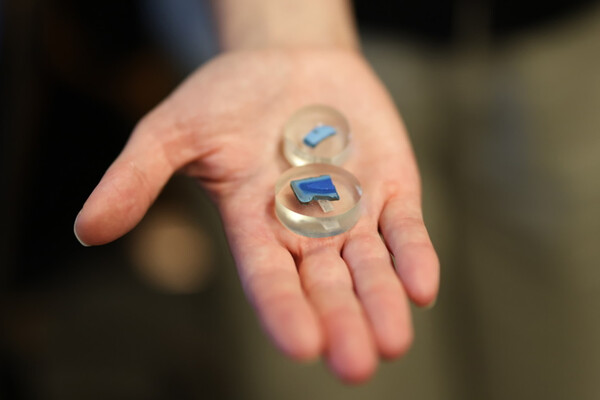
Penn researchers Vanessa and Alexis North are studying one of the largest collections of Egyptian blue objects ever found in the ancient Near East, shedding new light on how the world’s first synthetic pigment may have traveled far beyond Egypt.
A new role for dental providers? Rethinking where vaccines are given
Vaccinations have traditionally been administered in primary care settings or pharmacies. However, for about a decade, some states have authorized dentists to administer vaccines, and many others did so during the COVID-19 pandemic. The effectiveness of this approach has led some countries and states to expand or consider expanding the role of dental providers in delivering routine vaccines, including those against COVID-19 and the human papillomavirus (HPV), and in providing vaccine education.
Penn student develops a way for computer chips to run more efficiently
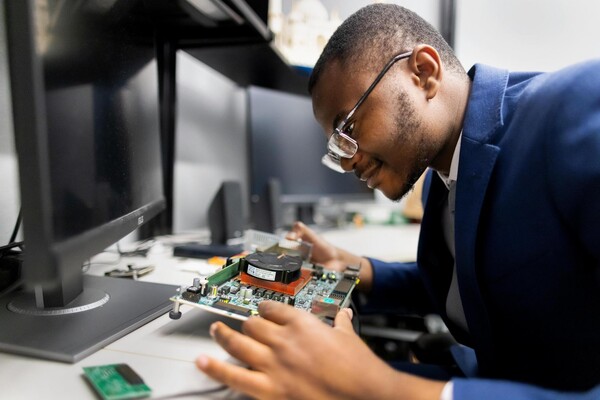
Fluid Silicon, a platform from President’s Sustainability Prize winner Nhlanhla Mavuso, allows computer chips to continuously monitor their health and self-tune as their characteristics change. The technology has the potential to reduce energy usage in data centers and improve reliability in mission-critical applications.