FireANTs brings AI speed and geometric precision to medical imaging
A new open-source algorithm dubbed ‘FireANTS’ can be applied not just in medical research, but clinical practice as well.
2 min. read
Engineers at the School of Engineering and Applied Science have developed an open-source algorithm that combines the speed of AI with the precision of geometry to compare complex medical images quickly and accurately, helping detect subtle changes that, over time, can signal disease. In some cases, the new algorithm can accomplish in minutes what would have taken prior techniques an entire week.
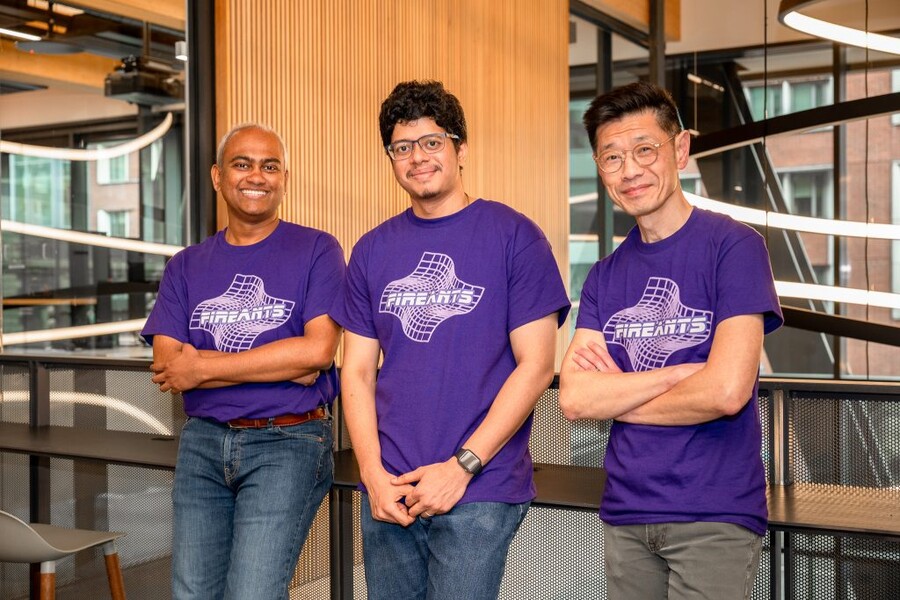
(From left) Pratik Chaudhari, first author Rohit Jena, and James C. Gee.
(Image: Sylvia Zhang)
Dubbed “FireANTs,” the algorithm operates differently than many AI approaches to analyzing medical images. “Typically, AI systems make predictions based on their training data,” says Pratik Chaudhari, assistant professor in electrical and systems engineering and co-senior author of a study in Nature Communications. “FireANTs, by contrast, borrows optimization techniques from modern AI but solves the matching problem mathematically, determining how one image actually corresponds to another without relying too much on guessing based on past examples.”
In tests, the team evaluated FireANTs across over a dozen datasets spanning more than 15,000 image pairs, multiple organ systems, different imaging modalities and various species, showing that the method could generalize across a wide range of imaging challenges.
Because FireANTs operates so quickly—running hundreds to thousands times faster than its predecessor, ANTs, depending upon the problem, with no loss in accuracy—the algorithm could be used not just in medical research, but clinical practice as well.
“In radiology, a large fraction of radiology reads involve follow-up imaging, to see what changes have occurred between scans,” says James C. Gee, professor of radiologic science and the study’s other co-senior author. “Image registration can help automatically pinpoint any differences but if the processing takes too long, it simply doesn’t fit into the clinical workflow. The speed makes a huge difference in making this practical for patient care.”
“FireANTs is not just a faster tool,” says Chaudhari. “It’s a way to make advanced image matching both performant and reliable, so researchers and clinicians can work at a scale and speed that wasn’t possible before, unlocking totally new workflows and applications.”
On the move: Water quality and antimicrobial resistance testing goes mobile
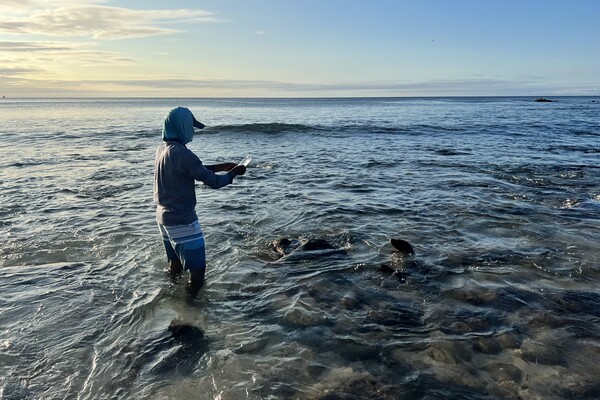
Penn researchers have developed a mobile field laboratory allowing them to test water quality and track antimicrobial resistance in and around San Cristóbal in the Galápagos.
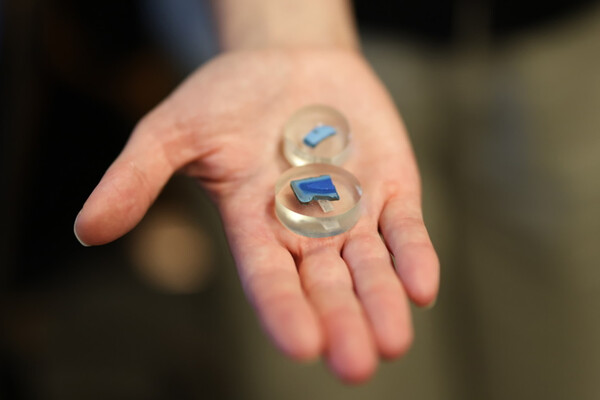
Penn researchers Vanessa and Alexis North are studying one of the largest collections of Egyptian blue objects ever found in the ancient Near East, shedding new light on how the world’s first synthetic pigment may have traveled far beyond Egypt.
A new role for dental providers? Rethinking where vaccines are given
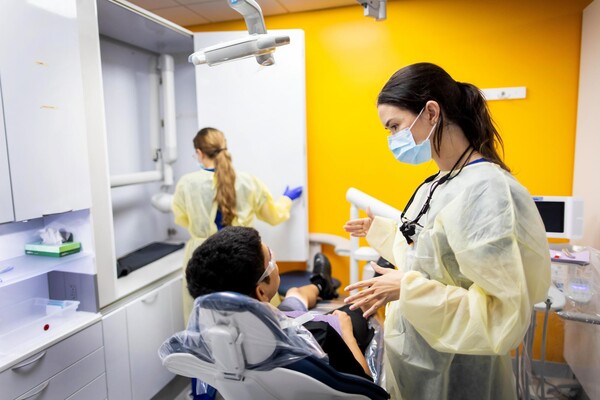
Vaccinations have traditionally been administered in primary care settings or pharmacies. However, for about a decade, some states have authorized dentists to administer vaccines, and many others did so during the COVID-19 pandemic. The effectiveness of this approach has led some countries and states to expand or consider expanding the role of dental providers in delivering routine vaccines, including those against COVID-19 and the human papillomavirus (HPV), and in providing vaccine education.
Penn student develops a way for computer chips to run more efficiently
Fluid Silicon, a platform from President’s Sustainability Prize winner Nhlanhla Mavuso, allows computer chips to continuously monitor their health and self-tune as their characteristics change. The technology has the potential to reduce energy usage in data centers and improve reliability in mission-critical applications.