The team behind the fully electric REV11 race car overcame technical challenges to successfully compete in this year’s Formula SAE Electric competition, placing 15th overall and earning first place in the Business Presentation event.
“The finish marked more than the end of a race,” says Arjun Sharma, operations lead at Penn Electric Racing. “It was a visible reminder of how far Penn Electric Racing has come, and how much this achievement meant to everyone who has worked to bring the team to this point.”
Competing against 108 teams, Penn Electric Racing finished 15th overall, and earned first place in the Business Presentation event, the GM Excellence in Technical Innovation Award and the Cummins Sustainable Power and Performance Excellence Award. The team also placed sixth in the Design Finals, which was the highest finish among Ivy League schools.
The team completed the acceleration event for the first time since REV3 and finished the endurance event for the first time since REV5.
“What stands out most to me is not just the results, but how the team got there,” says Vijay Kumar, Nemirovsky Family Dean of Penn Engineering and professor in mechanical engineering and applied mechanics. “Solving immediate and stressful problems at a competition takes real resolve, and pushing through major technical setbacks in the final days speaks to the depth of commitment on this team.”
With the success of REV11 behind them, Penn Electric Racing is already looking ahead. The team has begun work on REV12, its next-generation race car, which will feature a four-wheel-drive architecture and build on the engineering innovation and teamwork that define the program.
On the move: Water quality and antimicrobial resistance testing goes mobile
Penn researchers have developed a mobile field laboratory allowing them to test water quality and track antimicrobial resistance in and around San Cristóbal in the Galápagos.
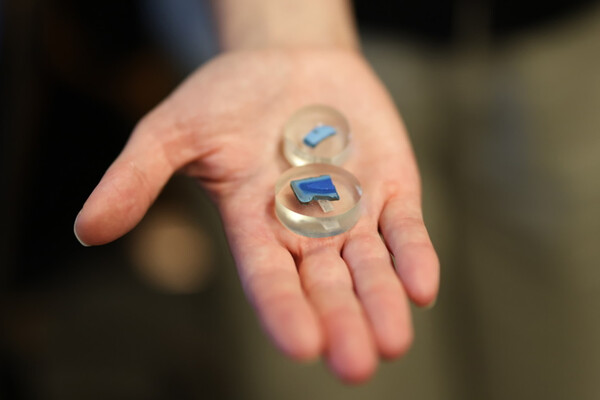
Penn researchers Vanessa and Alexis North are studying one of the largest collections of Egyptian blue objects ever found in the ancient Near East, shedding new light on how the world’s first synthetic pigment may have traveled far beyond Egypt.
A new role for dental providers? Rethinking where vaccines are given
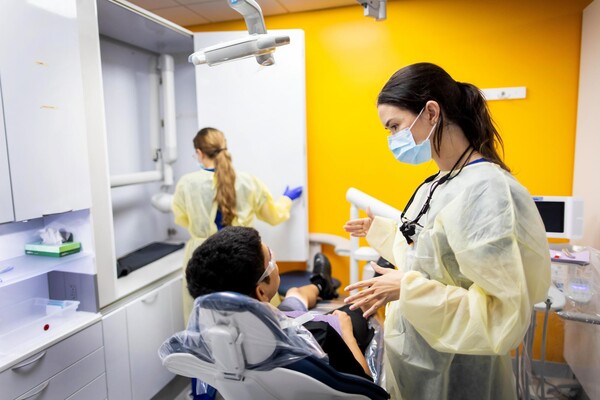
Vaccinations have traditionally been administered in primary care settings or pharmacies. However, for about a decade, some states have authorized dentists to administer vaccines, and many others did so during the COVID-19 pandemic. The effectiveness of this approach has led some countries and states to expand or consider expanding the role of dental providers in delivering routine vaccines, including those against COVID-19 and the human papillomavirus (HPV), and in providing vaccine education.
Penn student develops a way for computer chips to run more efficiently
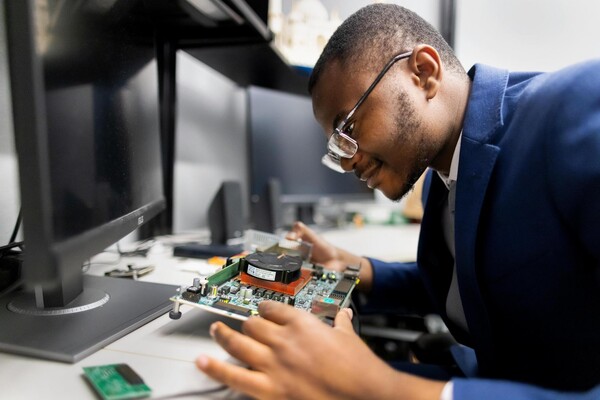
Fluid Silicon, a platform from President’s Sustainability Prize winner Nhlanhla Mavuso, allows computer chips to continuously monitor their health and self-tune as their characteristics change. The technology has the potential to reduce energy usage in data centers and improve reliability in mission-critical applications.