A new study from the Annenberg School for Communication finds that violent speech in movies is increasing over time, even in non-crime films.
1 min. read
A recent study from the Computational Social Science Lab at Penn’s Annenberg School for Communication, the School of Engineering and Applied Science, and the Wharton School—published in JAMA Pediatrics—has analyzed a massive number of English-language films to examine if the portrayal of violence in movies has changed over time. The study analyzed dialogue from over 166,000 films over the last five decades and found that violent language has increased in movies over time. While other studies have shown increases in film violence, the value of this analysis is its huge dataset. Amir Tohidi, a postdoctoral researcher at the Computational Social Science Lab, says that “including less extreme forms of violence would result in a higher overall count of violence.”
On the move: Water quality and antimicrobial resistance testing goes mobile
Penn researchers have developed a mobile field laboratory allowing them to test water quality and track antimicrobial resistance in and around San Cristóbal in the Galápagos.
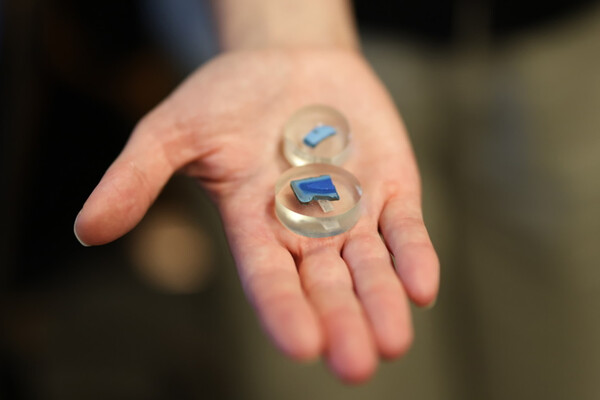
Penn researchers Vanessa and Alexis North are studying one of the largest collections of Egyptian blue objects ever found in the ancient Near East, shedding new light on how the world’s first synthetic pigment may have traveled far beyond Egypt.
A new role for dental providers? Rethinking where vaccines are given
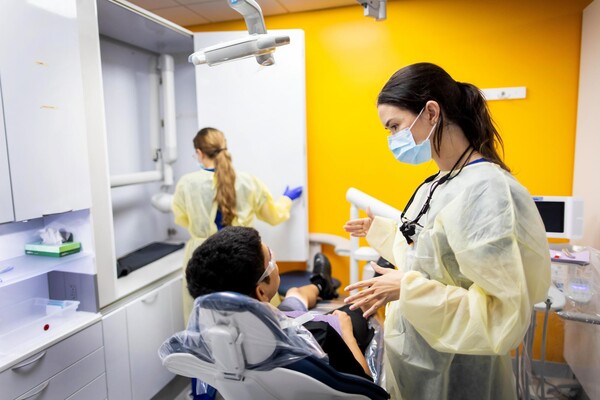
Vaccinations have traditionally been administered in primary care settings or pharmacies. However, for about a decade, some states have authorized dentists to administer vaccines, and many others did so during the COVID-19 pandemic. The effectiveness of this approach has led some countries and states to expand or consider expanding the role of dental providers in delivering routine vaccines, including those against COVID-19 and the human papillomavirus (HPV), and in providing vaccine education.
Penn student develops a way for computer chips to run more efficiently
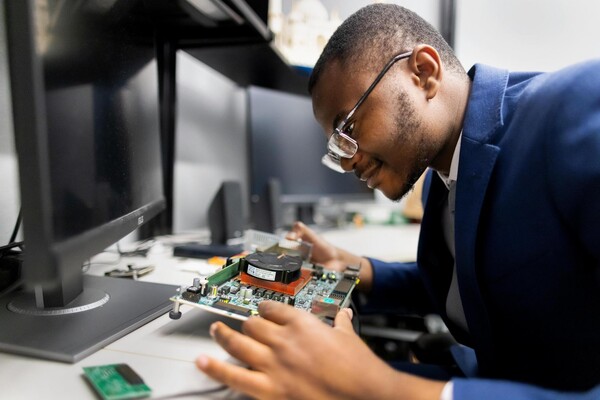
Fluid Silicon, a platform from President’s Sustainability Prize winner Nhlanhla Mavuso, allows computer chips to continuously monitor their health and self-tune as their characteristics change. The technology has the potential to reduce energy usage in data centers and improve reliability in mission-critical applications.