A typesetting workshop at Penn’s Common Press invited participants to reinterpret lines from the Declaration of Independence as part of the Typography of Independence project and Penn’s America 250 programming.
3 min. read
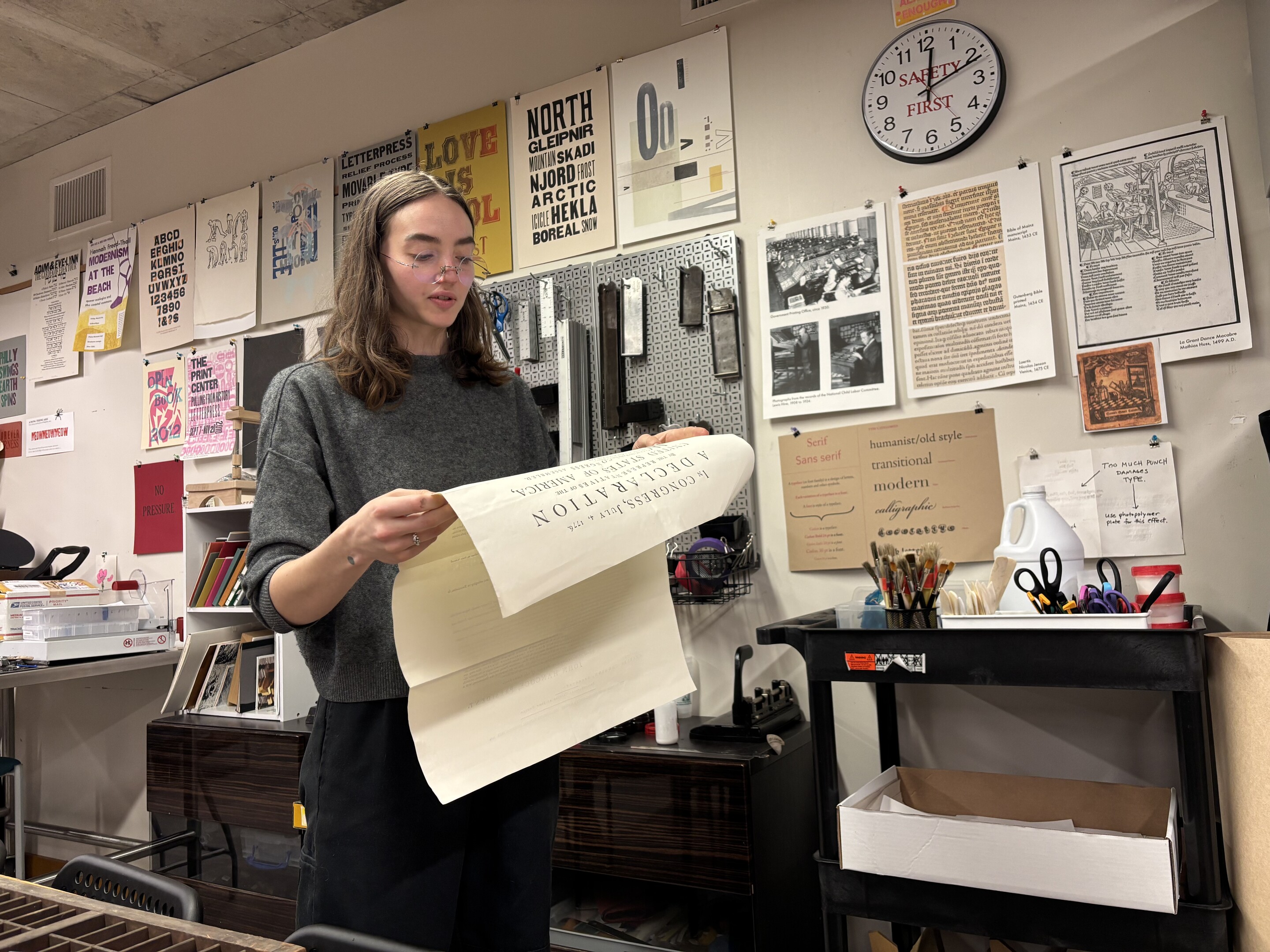
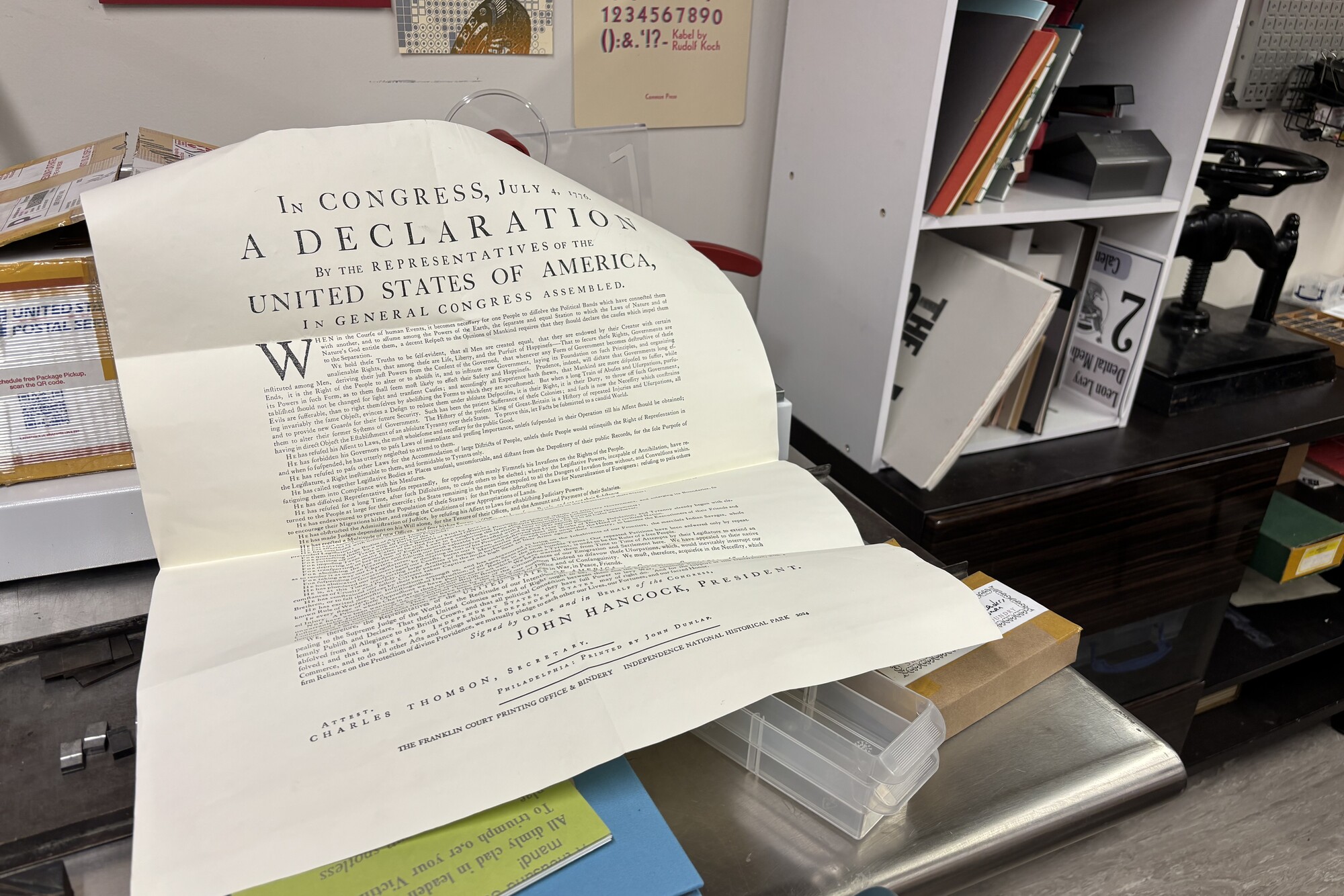
Erica Honson, project consultant for the Typography of Independence program at the Common Press, holds a copy of the Declaration of Independence, which replicates the original text from 1776. They helped to lead “Reinterpreting the Declaration: A Creative Typesetting Workshop,” a two-day event associated with Penn’s America 250 programming, which offered participants the ability to reconsider the text.
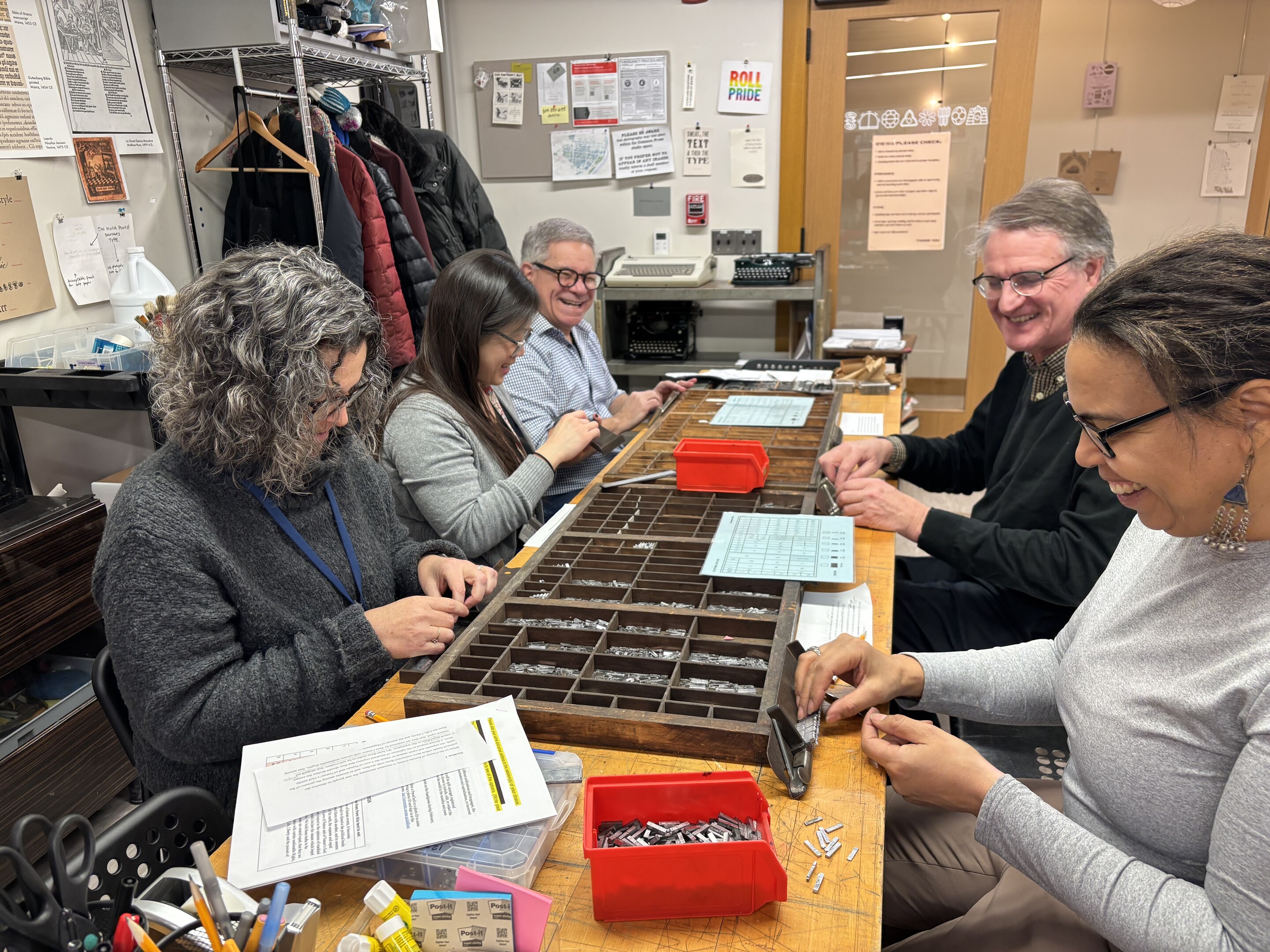
As frigid winter temperatures bore down on Philadelphia and Penn’s campus, the snug confines of the Common Press in the basement of the Fisher Fine Arts Library offered volunteer printmakers a chance to interact with the Declaration of Independence in a revolutionary way. Participants in “Reinterpreting the Declaration: A Creative Typesetting Workshop,” held Jan. 30 and 31, were tasked with setting one or two lines from the historic original text, and were invited to “preserve, alter, or omit words” in the assigned line if they chose to.
The practice—this license for interpretation—was actually not so out-of-step with how an 18th-century printer operated, according to Erica Honson, project consultant for the Typography of Independence program for this year, who led the first session before being joined by Common Press manager Jessica Peterson. “As some versions of the Declaration spread throughout the country and the world, printers took sections of the document, not necessarily the consecutive or complete text, and it was translated into other languages—in doing so they would change some of the capitalization and language,” Honson said. “So, printers really decided how it spread and that really changed the perception of it.”
The free public event, part of the Common Press’ The Typography of Independence project, is associated with Penn’s America 250 programming marking the nation’s semiquincentennial anniversary of the signing of the Declaration of Independence with numerous events, classes, and activities throughout the year.
“At Common Press, we want to demonstrate through hands-on experience how document production and information sharing has changed since 1776,” says Peterson. “Letterpress printing and typesetting seem like unusual, antiquated crafts in our digital age, but are actually part of the fundamental base of graphic design, computer-based communication, and universal literacy. The Typography of Independence program is just one of the ways that the Common Press is demonstrating this.”
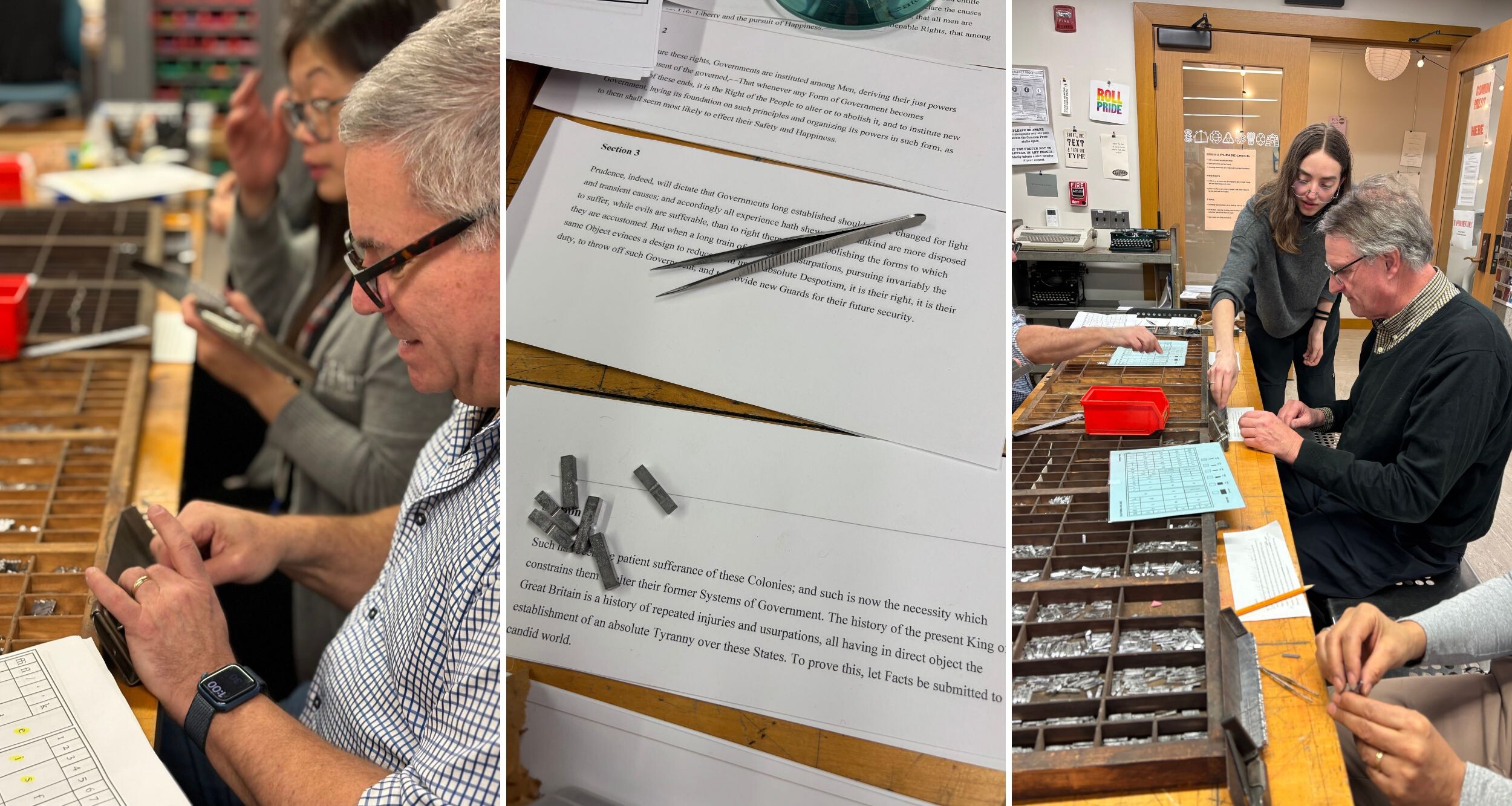
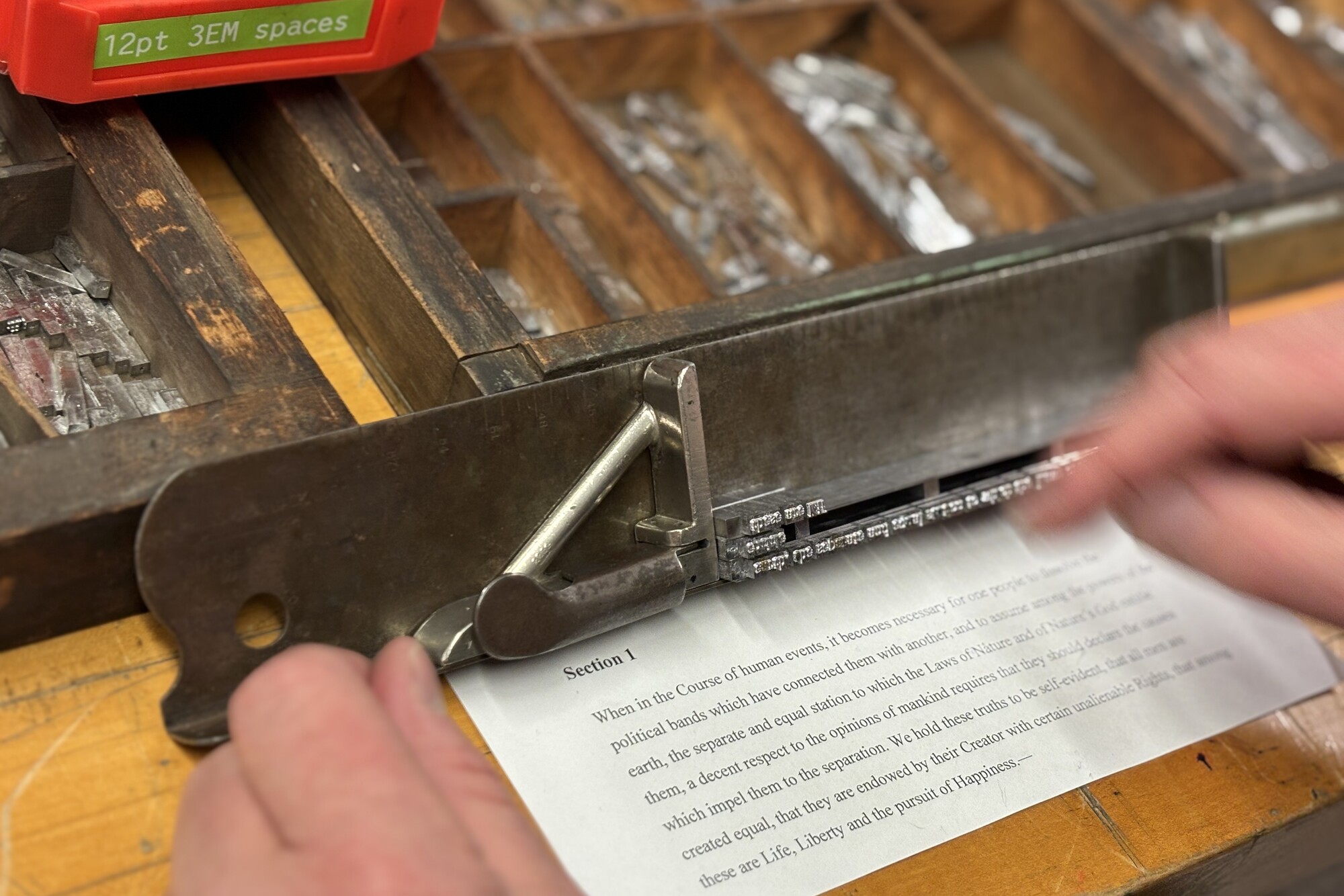
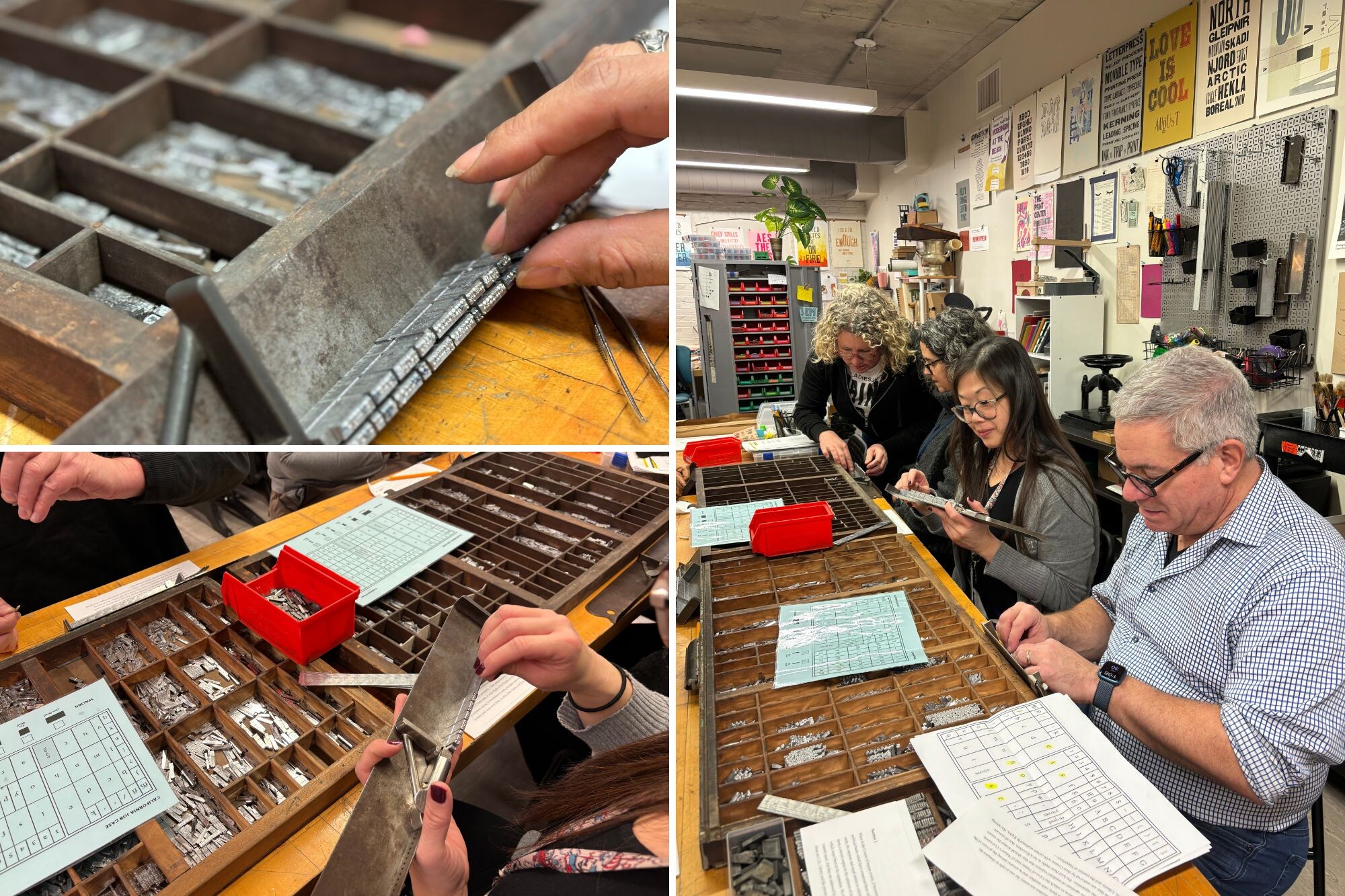
As the first team of five 21st-century volunteer typesetters arrived, Honson assigned a single line from the first section of the Declaration. Each participant was also given a “composing stick,” a shallow metal tray into which the tiny individual pieces of type were carefully placed, letter by letter, upside down, and from left to right.
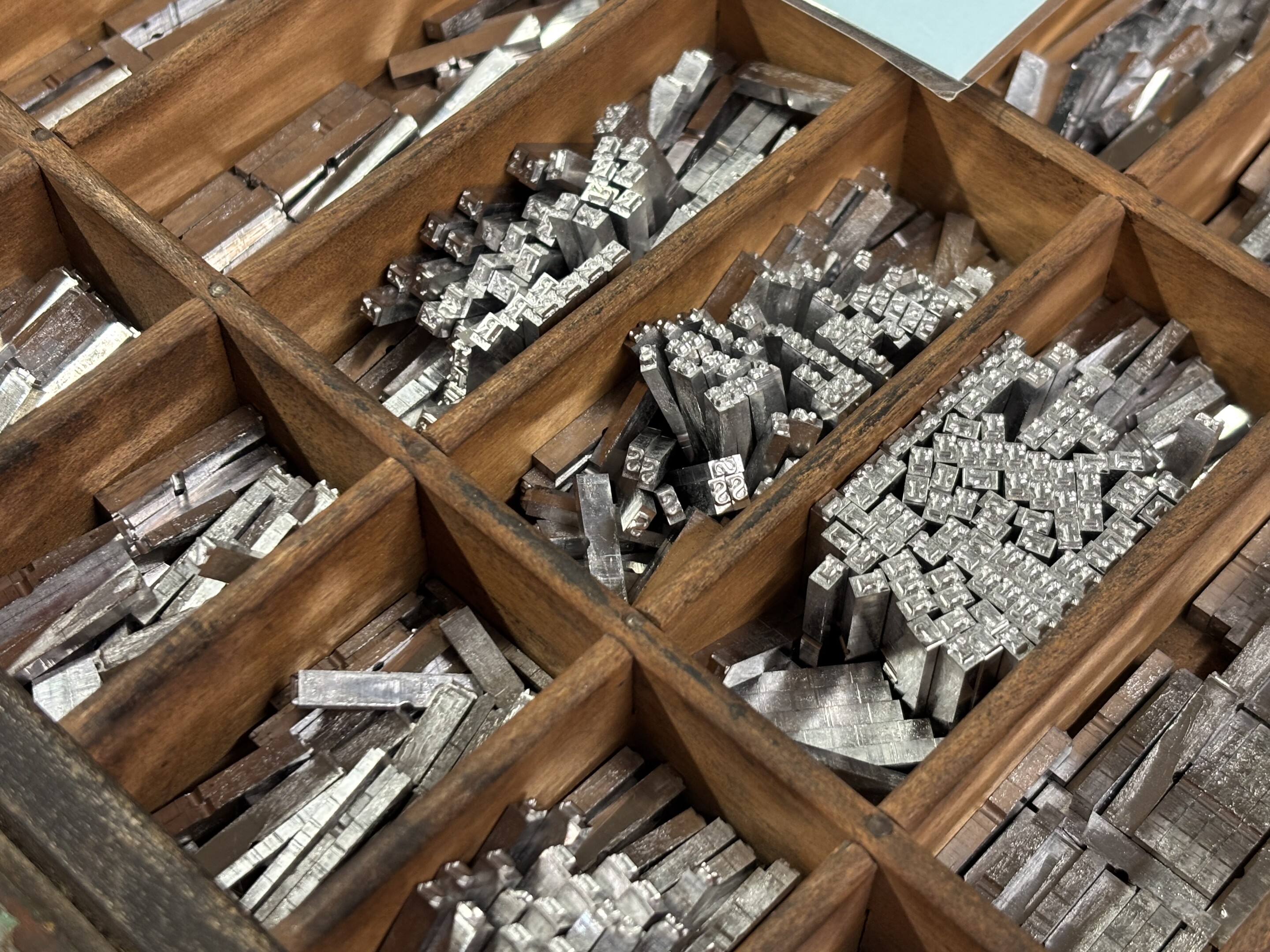
Taking a seat on either side of a long table with two large open wooden cases of type, the volunteers referenced a printout showing them where to find each letter’s location. Honson noted that the style and size of the type they were setting, Caslon 12-point, was the same that was used in the first official printing of the Declaration by John Dunlap. One by one, letters were fit into the composing sticks forming the freshly-interpreted text.
Over the two days, the 10 hourlong workshops attracted 35 volunteers who completed the reimagined Declaration of Independence. The Common Press staff then compiled the individual lines into the final document to be proofed, set on the press, inked, and printed. This version will also be left on the press until mid-April so that anyone interested can pull a print of it as a keepsake.
Peterson says that she was pleased to see so many people participated from Penn and the community—some coming from over an hour away to attend. “We had amazing feedback from participants,” she says. “One person said that ‘Typesetting this text made me think in new ways about American history.’”
“That is what Typography of Independence is all about,” says Peterson. “It allows people to focus on the material—how the physical print of the Declaration was made. As part of that, we wanted to have one creative experience during which the content of the Declaration was in some way addressed. Many people haven’t read the entire text of the Declaration, which is actually a very revolutionary and inflammatory text. I have been surprised by how much of the text is still relevant today.”
On the move: Water quality and antimicrobial resistance testing goes mobile
Penn researchers have developed a mobile field laboratory allowing them to test water quality and track antimicrobial resistance in and around San Cristóbal in the Galápagos.
Penn researchers Vanessa and Alexis North are studying one of the largest collections of Egyptian blue objects ever found in the ancient Near East, shedding new light on how the world’s first synthetic pigment may have traveled far beyond Egypt.
A new role for dental providers? Rethinking where vaccines are given
Vaccinations have traditionally been administered in primary care settings or pharmacies. However, for about a decade, some states have authorized dentists to administer vaccines, and many others did so during the COVID-19 pandemic. The effectiveness of this approach has led some countries and states to expand or consider expanding the role of dental providers in delivering routine vaccines, including those against COVID-19 and the human papillomavirus (HPV), and in providing vaccine education.
Penn student develops a way for computer chips to run more efficiently
Fluid Silicon, a platform from President’s Sustainability Prize winner Nhlanhla Mavuso, allows computer chips to continuously monitor their health and self-tune as their characteristics change. The technology has the potential to reduce energy usage in data centers and improve reliability in mission-critical applications.