From uncovering ancient ways of life to addressing the pressing threat of climate change, scholars at Penn Arts & Sciences are finding an upside to looking down.
2 min. read
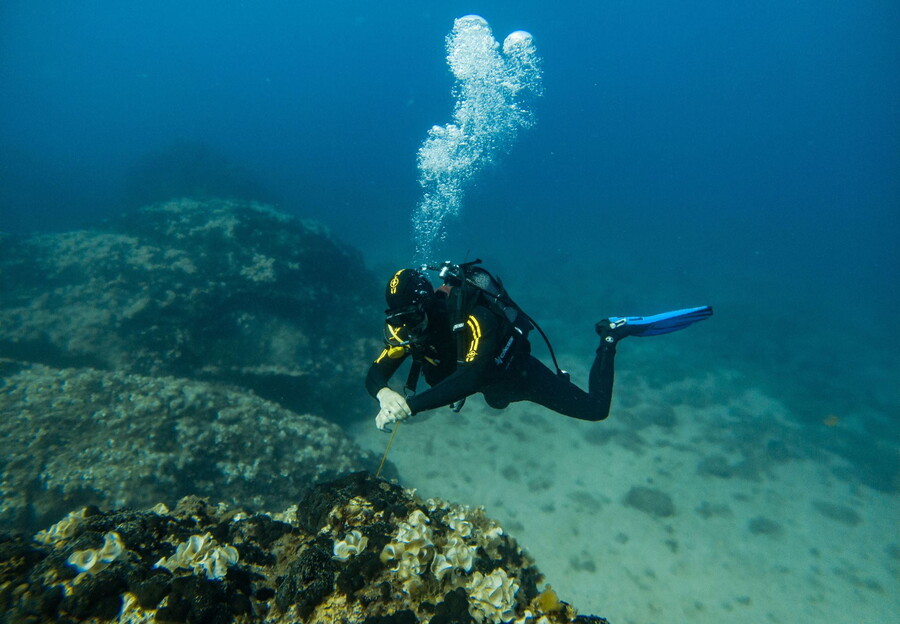
Shipwrecks are sunken time capsules, the stuff of lore. Konstantinos Raptis, an underwater archaeologist and second year Ph.D. student at Penn’s School of Arts & Sciences, dives deep to glimpse worlds that many of us can only imagine, of histories gone by and trade routes of the past.
To better understand trade and economics along the Mediterranean Sea during Late Antiquity, second-year Ph.D. student Konstantinos Raptis dives deep into the ocean. Artifacts and shipwrecks remain preserved on the seafloor, offering a rare time capsule from a world long gone by.
(Image: Courtesy of Konstantinos Raptis)
But insights into ancient economies are only the beginning. In Greenland, climate scientist Leigh Stearns is studying the beds of fast-receding glaciers; thousands of miles away, archaeologist Brian Rose is digging deep in Turkey to uncover long-buried ways of life. Their shared objective: to understand the hidden tombs and frozen mysteries that lurk beneath our feet.
“People don’t often look below; we’re very focused on what we can easily see,” says Alain Plante, who studies how soil stores and cycles carbon. “And yet every time I show a student what’s going on underneath us, it’s like this lightbulb goes off. They see there’s a whole world there.”
These Penn Arts & Sciences scholars are chasing answers to some of the deepest questions swirling around our vibrant and ever-changing planet. In doing so, they’re revealing hidden worlds that help us better understand our past, present, and future.
Plante’s lab looks at how anthracite coal, leftover from coal mining, has accumulated in soil on the banks of the Schuylkill and Susquehanna Rivers. With every sample, Plante and his team learn more about carbon cycling and storage. Rose also stays close to the ground, working through distinct and parallel levels of soil and debris layers called strata. For more than two decades, Rose co-directed excavations at Troy, an ancient city on Turkey’s western coast and famed in Greek mythology. Rose now spends the summer months at Gordion, now a UNESCO World Heritage Site, with a team of students and faculty from Penn and other institutions.
Konstantinos Raptis explores shipwrecks from Late Antiquity. One of his current projects is near the Fourni archipelago, a string of small Greek islands with 58 confirmed shipwrecks—the most ever found from Antiquity. Another project has Raptis doing survey work off the island of Delos, inspecting the remnants of a busy economic empire during the Hellenistic period. Stearns has spent nearly two decades studying Eastern Greenland’s Helheim Glacier, which is rapidly retreating as global temperatures spike, affecting sea level rise and water availability at lower latitudes.
On the move: Water quality and antimicrobial resistance testing goes mobile
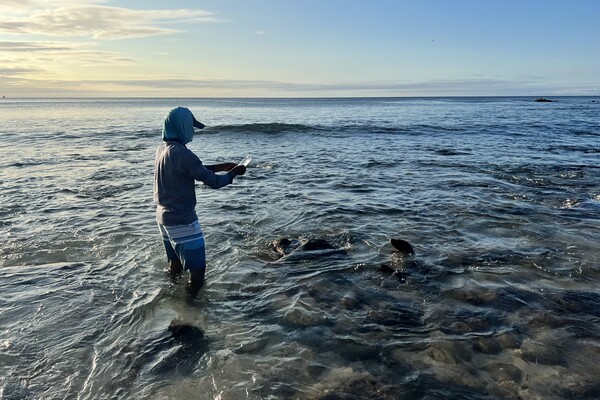
Penn researchers have developed a mobile field laboratory allowing them to test water quality and track antimicrobial resistance in and around San Cristóbal in the Galápagos.
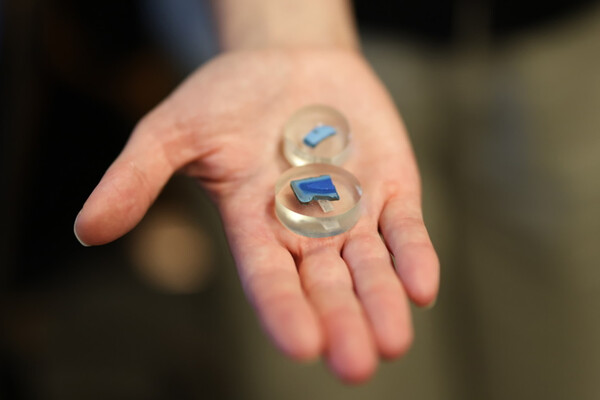
Penn researchers Vanessa and Alexis North are studying one of the largest collections of Egyptian blue objects ever found in the ancient Near East, shedding new light on how the world’s first synthetic pigment may have traveled far beyond Egypt.
A new role for dental providers? Rethinking where vaccines are given
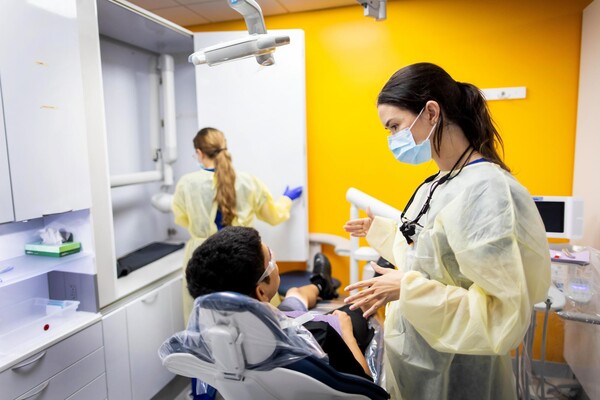
Vaccinations have traditionally been administered in primary care settings or pharmacies. However, for about a decade, some states have authorized dentists to administer vaccines, and many others did so during the COVID-19 pandemic. The effectiveness of this approach has led some countries and states to expand or consider expanding the role of dental providers in delivering routine vaccines, including those against COVID-19 and the human papillomavirus (HPV), and in providing vaccine education.
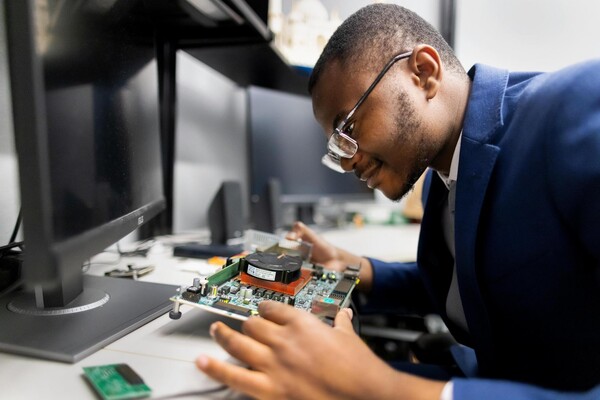
Penn student develops a way for computer chips to run more efficiently
Fluid Silicon, a platform from President’s Sustainability Prize winner Nhlanhla Mavuso, allows computer chips to continuously monitor their health and self-tune as their characteristics change. The technology has the potential to reduce energy usage in data centers and improve reliability in mission-critical applications.