How many American cities protect the rights of employed breastfeeding mothers?
In the United States, the majority of women have to work. But of the 151 largest U.S. cities, only New York and Philadelphia safeguard their rights around this issue.
A federal law, part of the Fair Labor Standards Act, requires that employers offer “reasonable break time” and a place that’s not the bathroom for expressing human milk. But the law’s many limitations mean many women aren’t covered.
Of the 151 largest cities across the United States, only Philadelphia and New York City have legislation that protects a nursing mother who returns to work outside the home and who wants to continue breastfeeding, according to research from the University of Pennsylvania and the Children’s Hospital of Philadelphia (CHOP) published in Breastfeeding Medicine.
There is a federal law, part of the Fair Labor Standards Act, but it only requires that employers offer “reasonable break time” and a place that’s not the bathroom for expressing human milk. Plus, its reach is limited, covering only hourly employees at companies with 50 or more workers, and annual company earnings of $500,000 or more.
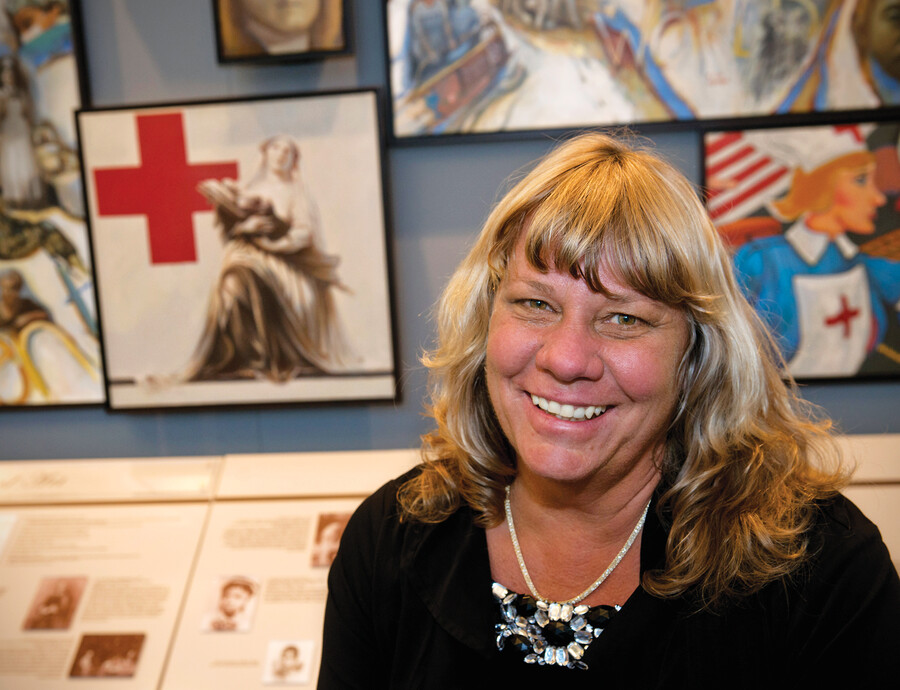
Diane Spatz, of Penn’s School of Nursing and CHOP, has long been an advocate for breastfeeding and the benefits for babies of human milk.
“Someone salaried would not be covered by the law. If a company has fewer than 50 employees, it doesn’t apply,” says Diane Spatz, a perinatal nursing and nutrition professor in the School of Nursing, and lactation program director at CHOP. “All the law says is you need to be given time and space. Clearly, there are much better opportunities for women.”
Working with six Penn Nursing undergraduates, Spatz and Elizabeth Froh, a nurse scientist at CHOP, created a study that incorporated a nationally representative sample, and delved into whether each place had its own city-specific legislation protecting breastfeeding mothers. The research team used a three-tiered approach, reviewing every city’s website, emailing each mayor’s office, and then following up with a phone call.
“You can easily access information about legal protections for breastfeeding moms on a federal and state level. But it’s a challenge to get at the city-level legislation,” says Froh, who is part of CHOP’s Center for Pediatric Nursing Research & Evidence-Based Practice, and an adjunct assistant professor in Penn Nursing. “It was surprising to all of us how difficult and inaccessible this information truly was.”
That’s where the students, who graduated in December 2017 and May 2018, played a role. During the 2017 fall semester and 2018 spring semester, they interacted at least once, and often more frequently, with officials from Washington, D.C., and from each state’s capital, plus the two next-largest cities.
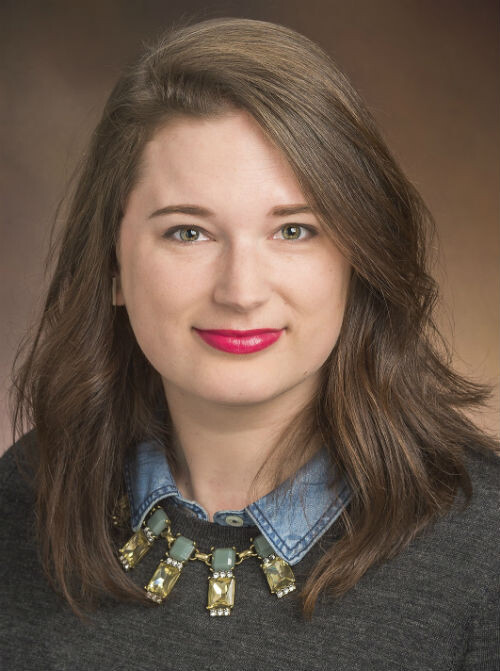
Emily Karsch, now a cardiac ICU nurse at Children’s National, was a research assistant on the team. Her role focused on emailing and calling 30 cities in 30 different states. After bumping up against silence, confusion, and defensiveness on many phone calls, Karsch consulted with Froh and Spatz about her approach.
“Toward the second half of the semester, I would say, ‘If I were a breastfeeding mother living in your city and wanted to go back to work, are there any protections for me if I need to take a break four hours into my 12-hour shift to pump and store milk?’” Karsch explains. “When I started using phrasing like I was the hypothetical mother calling, we got to the answer, ‘No there’s no protection’ much faster.”
As a nurse scientist, Elizabeth Froh works to translate her research from human milk science into cutting-edge clinical practice, and collaborates with others across the Department of Nursing in both research and evidence-based practice.
That’s the response she and others heard almost 100 percent of the time. A year of research by an eight-person team concluded that just Philadelphia and New York, 1.3 percent of the sample cities, had some version of local safeguards for nursing mothers returning to work outside the home.
“People have been asking us why we did this,” Froh says. “Well, 56 percent of the workforce in the United States is now women. With all of the limitations in the federal law, there is a huge segment of the working population that isn’t covered. We see this as a social-justice issue and a public-health issue. This one study, looking at what is out there currently, is just a starting point.”
Spatz says she hopes their findings might be a call to action, or at the very least a prompt to get local legislators thinking about such protections. She also believes there’s an opportunity for better education and to shift the burden off of mothers a little.
“Right now in the U.S., if a mom wants to be a breastfeeding mom and a working breastfeeding mom, really all of the onus is on her to figure it out,” Spatz says. “She’s got to be pretty determined.”
In an ideal world, the researchers agree, city-level laws would cover all working women, regardless of what field they’re in, how many hours per week they work, how often they get paid, and what size company or organization employs them. Language in the legislation would also seek more than just time and a non-bathroom space.
Beyond helping more women meet their personal breastfeeding goals, advances like the ones Spatz and Froh wish for matter because legally the strongest law outweighs any others. In other words, a city law that offers greater protection for a nursing mother overrides a weaker state or federal law.
Plus, this type of statute has a way of trickling upward, Froh adds. “The stronger the city-level legislation becomes across the board, the more cities that do it, the easier it is for the state to pass one,” she says. “If more states do it, it becomes that much easier for a federal law to pass. This is really where a grassroots effort could make an impactful difference.”
Because as Karsch’s research experience points out, there are many challenges a breastfeeding mother could encounter. Simply determining that New York City was one of the places that actually had this legislation took her three phone calls, combined with detective work to track down the right person, who had since moved to another position.
The six research assistants on the project, who graduated from the School of Nursing in December 2017 and May 2018, areAlexis Cascino, Sara Cerreta, Emily Karsch, Leah Kornberg, Jordan Lilley, and Lauren Welch.
On the move: Water quality and antimicrobial resistance testing goes mobile
Penn researchers have developed a mobile field laboratory allowing them to test water quality and track antimicrobial resistance in and around San Cristóbal in the Galápagos.
Penn researchers Vanessa and Alexis North are studying one of the largest collections of Egyptian blue objects ever found in the ancient Near East, shedding new light on how the world’s first synthetic pigment may have traveled far beyond Egypt.
A new role for dental providers? Rethinking where vaccines are given
Vaccinations have traditionally been administered in primary care settings or pharmacies. However, for about a decade, some states have authorized dentists to administer vaccines, and many others did so during the COVID-19 pandemic. The effectiveness of this approach has led some countries and states to expand or consider expanding the role of dental providers in delivering routine vaccines, including those against COVID-19 and the human papillomavirus (HPV), and in providing vaccine education.
Penn student develops a way for computer chips to run more efficiently
Fluid Silicon, a platform from President’s Sustainability Prize winner Nhlanhla Mavuso, allows computer chips to continuously monitor their health and self-tune as their characteristics change. The technology has the potential to reduce energy usage in data centers and improve reliability in mission-critical applications.