The monumental effort to scale up campus COVID-19 testing
Key facts and figures point to the scale of the Penn Cares testing program and how Project Quaker helped bring students back to campus this spring.
As of mid-March, more than 140,000 saliva-based tests for COVID-19 have been conducted since the start of the spring semester Penn Cares testing program.
A major component of Penn’s efforts to bring students back to campus this spring has been the Penn Cares testing program. Using a saliva-based testing platform, Penn can conduct twice-weekly tests for all undergraduate students and those living on campus and weekly tests for graduate students, faculty, postdocs, and staff who are on campus for four or more hours each week.
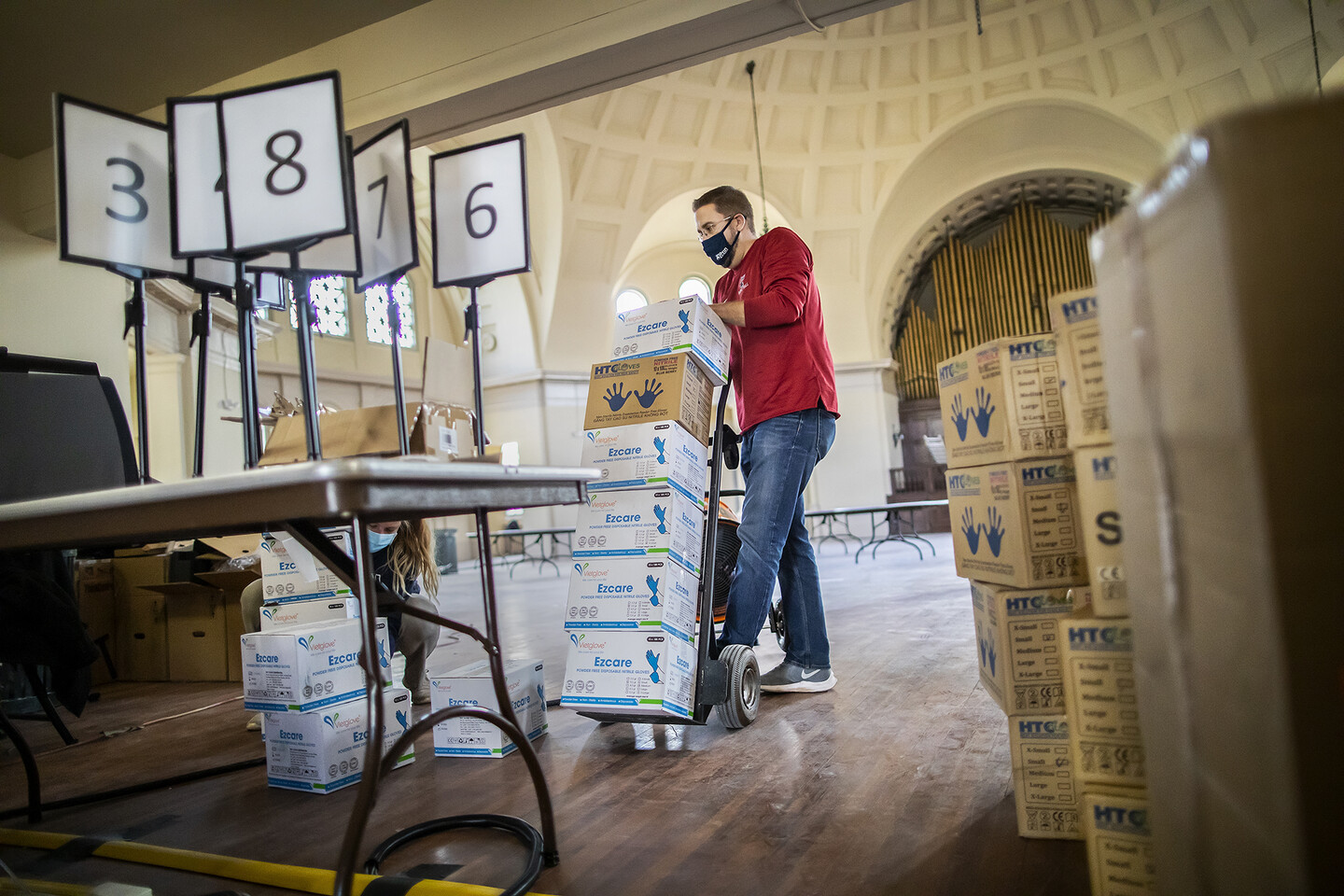
Launching this massive new COVID-19 screening program was made possible through a partnership between Penn Medicine, Wellness at Penn, and the Center for Public Health Initiatives (CPHI). This massive collaborative effort, known as Project Quaker, was essential for setting up the infrastructure of supplies, space, equipment, and staff needed to increase testing capacity on campus.
Penn Today highlights key facts and figures about the Penn Cares testing program, and how Project Quaker helped bring students back to campus for the spring semester.
140,910
The total number of tests completed since Jan. 3. So far, more than 20,000 members of the Penn community have been tested since the program was launched earlier this year and more than 12,000 tests have been conducted on a weekly basis since the start of February.
Testing data are updated weekly on Penn’s COVID-19 dashboard, which also provides information on positivity rates, overall prevalence, and the numbers of students in quarantine or isolation.
27
The total gallons of saliva collected by Penn Cares for testing (for each test, participants collect 1 mL of saliva).
This easy, safe, and non-invasive approach to COVID-19 testing produces results that are just as accurate and sensitive as the nasal swab tests that were used on campus this fall.
804
The number of people tested during a single hour at the High Rise/Du Bois tent at Rodin Field last week.
The success of Penn’s testing sites is made possible thanks to staff who are using their expertise in event management and logistics, experience that is instrumental in the smooth operation of multiple large-scale testing sites.
7
The number of testing sites available across campus.
Six of these sites—High Rise/Dubois tent, Annenberg Center, Richards tent, Houston Hall, the Palestra, and Ace Adams tent—are reserved for COVID-19 screening tests. The site in Irvine auditorium is used for PennOpen Pass “red pass” testing.
Other supplies provided by EHRS to labs across campus include 600 thermometers, 346 face shields, and more than 800 buckets of disinfectant.
62
The number of staff from all areas of the University who were reassigned to support COVID-19 mitigation efforts and programs. This includes staff who became directly involved with Project Quaker as well as those who were re-trained to work as contact tracers.
A number of staff have been reassigned to support COVID-19 mitigation efforts and programs, from supporting Project Quaker to working as contact tracers.
On the move: Water quality and antimicrobial resistance testing goes mobile
Penn researchers have developed a mobile field laboratory allowing them to test water quality and track antimicrobial resistance in and around San Cristóbal in the Galápagos.
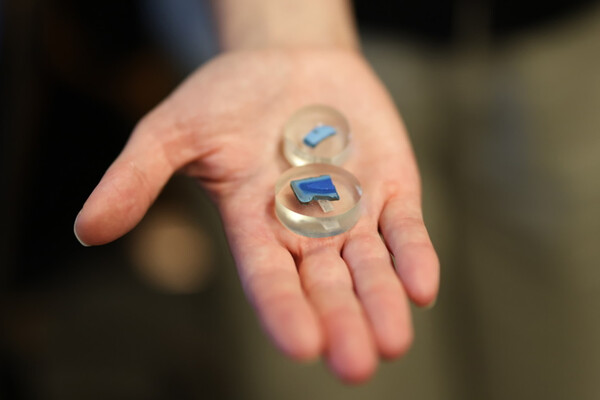
Penn researchers Vanessa and Alexis North are studying one of the largest collections of Egyptian blue objects ever found in the ancient Near East, shedding new light on how the world’s first synthetic pigment may have traveled far beyond Egypt.
A new role for dental providers? Rethinking where vaccines are given
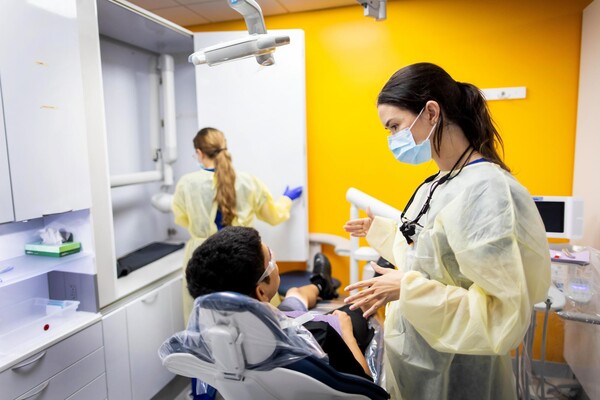
Vaccinations have traditionally been administered in primary care settings or pharmacies. However, for about a decade, some states have authorized dentists to administer vaccines, and many others did so during the COVID-19 pandemic. The effectiveness of this approach has led some countries and states to expand or consider expanding the role of dental providers in delivering routine vaccines, including those against COVID-19 and the human papillomavirus (HPV), and in providing vaccine education.
Penn student develops a way for computer chips to run more efficiently
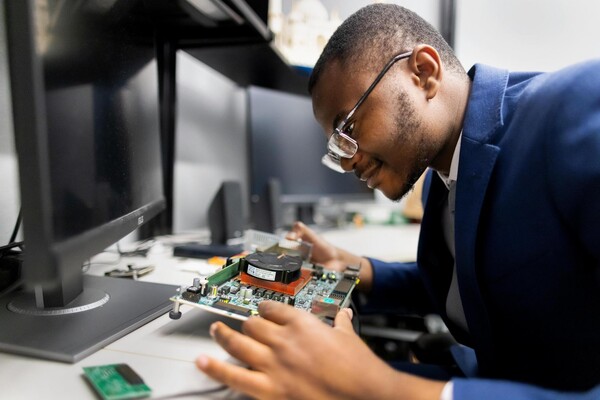
Fluid Silicon, a platform from President’s Sustainability Prize winner Nhlanhla Mavuso, allows computer chips to continuously monitor their health and self-tune as their characteristics change. The technology has the potential to reduce energy usage in data centers and improve reliability in mission-critical applications.