A new Penn Vet clinic brings support and hope for dogs with retinal disease
Penn Vet researchers work to better understand and help treat hereditary eye-related diseases in dogs.
2 min. read
When Zoey the cockapoo developed a fear of the dark, her owner, Adam Weitz, sought a veterinary ophthalmologist. The grim news was that Zoey had progressive retinal atrophy (PRA), a category of genetic, blindness-causing diseases that have no cure. Zoey would be totally blind in two years, he was told.
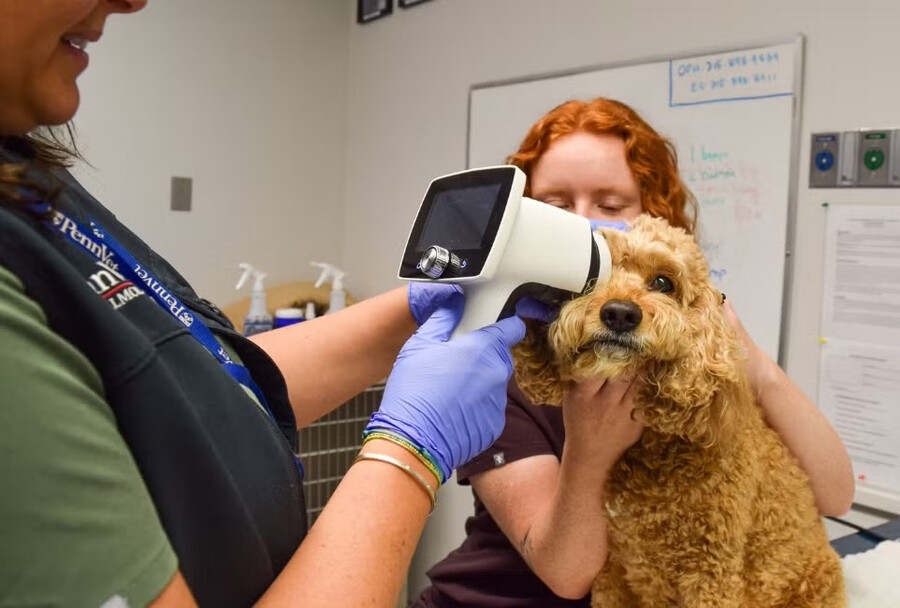
Weitz took Zoey to Penn Vet’s Retinal Clinic, a new sub-specialty clinic at the School of Veterinary Medicine (Penn Vet) dedicated to the study, diagnosis and monitoring of PRAs. Launched last November, Penn Vet’s Retinal Clinic was established to support patients affected by PRA and to inform owners about the diagnosis and progression and the disease.
The Penn Vet clinic’s patients provide information about these diseases and their progression amid real-life conditions, rather than only in a controlled environment, according to clinic director Valérie Dufour, an assistant professor of translational ophthalmology.
Some mutations have been linked to daytime blindness while others are associated with night blindness. Certain mutations are known to occur more often in particular breeds. Up to now, it has been believed that each mutation requires a specifically tailored treatment, but Dufour says Penn Vet’s Division of Experimental Retinal Therapies is actively exploring treatments with broader applications. The team’s efforts are yielding encouraging results that may soon help dogs and possibly humans, she says. “There’s still a lot of work to be done, but for some common mutations in dogs, we are hopeful to offer these treatment approaches within the next couple of years.”
While Penn Vet’s Retinal Clinic cannot yet provide treatment for the dogs that test positive for PRAs, their owners receive guidance on how to help their dogs cope with the disease, including information about alternatives such as nutritional supplements and products that may help dogs navigate their environment. Owners also learn more about PRAs, including what to expect and how their four-legged companions can still live active lives.
Weitz is pleased with his and Zoey’s experience with Penn Vet’s Retinal Clinic. He’s been giving the cockapoo, whose day vision is still good, nutritional supplements that Dufour advised are widely recommended but aren’t a cure. He has seen some improvement.
“She seems a little bit more upbeat,” Weitz says, “and I’ve noticed she’s not shaking as much at nighttime.”
This story is by Rita Giordano. Read more at Penn Vet.
On the move: Water quality and antimicrobial resistance testing goes mobile
Penn researchers have developed a mobile field laboratory allowing them to test water quality and track antimicrobial resistance in and around San Cristóbal in the Galápagos.
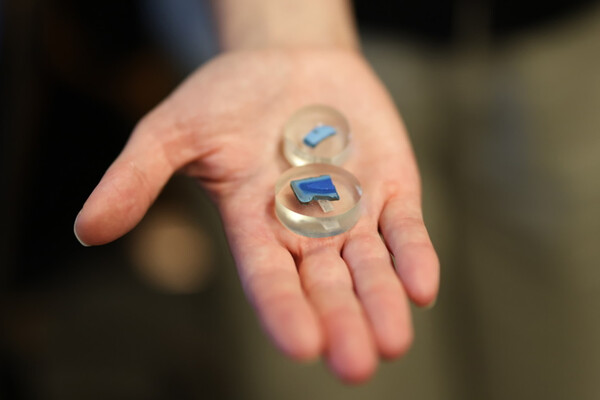
Penn researchers Vanessa and Alexis North are studying one of the largest collections of Egyptian blue objects ever found in the ancient Near East, shedding new light on how the world’s first synthetic pigment may have traveled far beyond Egypt.
A new role for dental providers? Rethinking where vaccines are given
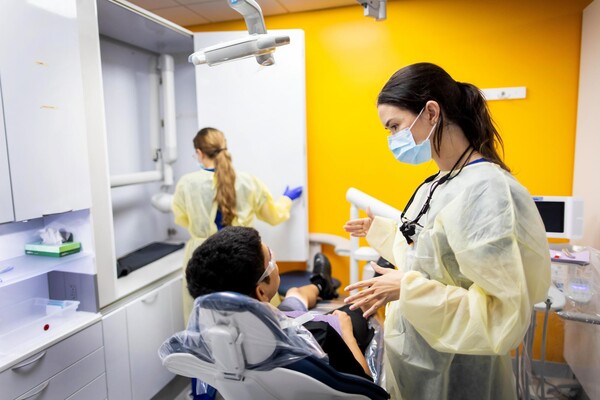
Vaccinations have traditionally been administered in primary care settings or pharmacies. However, for about a decade, some states have authorized dentists to administer vaccines, and many others did so during the COVID-19 pandemic. The effectiveness of this approach has led some countries and states to expand or consider expanding the role of dental providers in delivering routine vaccines, including those against COVID-19 and the human papillomavirus (HPV), and in providing vaccine education.
Penn student develops a way for computer chips to run more efficiently
Fluid Silicon, a platform from President’s Sustainability Prize winner Nhlanhla Mavuso, allows computer chips to continuously monitor their health and self-tune as their characteristics change. The technology has the potential to reduce energy usage in data centers and improve reliability in mission-critical applications.