From clinic to classroom: How two physicians are rethinking healthcare through business
The Wharton MBA and Lauder Institute MA in International Studies joint-degree program emphasizes regional expertise, culture, and policy so its students can learn to develop healthcare solutions.
2 min. read
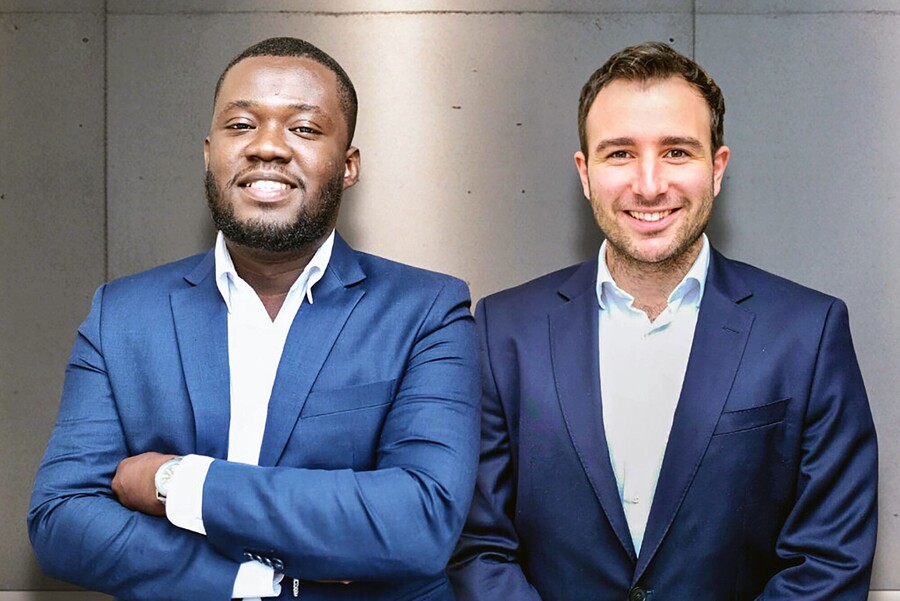
What drives a practicing physician to step away from medicine and pursue an MBA? For Samuel Nathan, a doctor from Ghana, and Dan Menéndez, a U.K.-trained physician, the answer lies in a shared realization: Improving healthcare often requires more than clinical expertise. Nathan and Menéndez are both students in the Wharton MBA and Lauder Institute MA in International Studies joint-degree program.
Samuel Nathan (left) and Dan Menéndez, students in the Wharton MBA and Lauder Institute MA in International Studies joint-degree program
(Image: Courtesy of The Lauder Institute)
The turning point for Samuel Nathan was the reality that a routine yet lifesaving CT scan was unaffordable. “You cannot treat them, not because you don’t have the skill but because the system is flawed,” he recalls. Insurance gaps, pricing barriers, and infrastructure constraints dictated outcomes long before a doctor could intervene. “A lot of medical doctors in Ghana feel very helpless,” he says. Nathan began to realize he could be more effective not as a clinician treating individual cases, but as a problem-solver confronting structural failure.
At Lauder, Nathan says, “I’ve realized there are so many stakeholders shaping outcomes—five, six, seven different layers beyond patients, but culture is key.” He points to informal savings systems across African communities, where groups pool money and distribute it to those most in need of treatment, as a blueprint for designing health insurance adoption. “If you want to introduce a health insurance model, you need to approach it from a cultural perspective.” Such solutions are inseparable, he says, from the broader economic opportunities in Africa. He is exploring these ideas at Lauder through the Politics and Policy Program, researching how African countries can align regulations to strengthen local pharmaceutical manufacturing.
As a resident doctor inside England’s National Health Service, Dan Menéndez encountered a quieter but persistent friction between those delivering care and those managing it. “A lot of the time, it felt that the managers didn’t quite understand the lived experiences of doctors,” he says.
Trained in medicine at King’s College London, Menéndez was taught to think across human, veterinary, and environmental health, from public health systems to infectious disease dynamics. In theory, it was an integrated view of how health actually works. In practice, he found fragmentation and systems operating in parallel rather than in sync.
“I wanted to understand all the sides of the system,” he explains. An MBA in management and finance, paired with Lauder’s cultural and international MA, offered that bridge. Having lived across multiple countries, Menéndez says, “I’m a big believer that people need to understand each other’s cultures to find real solutions.”
On the move: Water quality and antimicrobial resistance testing goes mobile
Penn researchers have developed a mobile field laboratory allowing them to test water quality and track antimicrobial resistance in and around San Cristóbal in the Galápagos.
Penn researchers Vanessa and Alexis North are studying one of the largest collections of Egyptian blue objects ever found in the ancient Near East, shedding new light on how the world’s first synthetic pigment may have traveled far beyond Egypt.
A new role for dental providers? Rethinking where vaccines are given
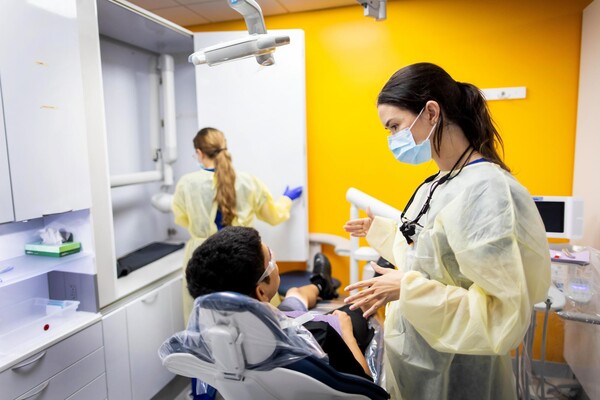
Vaccinations have traditionally been administered in primary care settings or pharmacies. However, for about a decade, some states have authorized dentists to administer vaccines, and many others did so during the COVID-19 pandemic. The effectiveness of this approach has led some countries and states to expand or consider expanding the role of dental providers in delivering routine vaccines, including those against COVID-19 and the human papillomavirus (HPV), and in providing vaccine education.
Penn student develops a way for computer chips to run more efficiently
Fluid Silicon, a platform from President’s Sustainability Prize winner Nhlanhla Mavuso, allows computer chips to continuously monitor their health and self-tune as their characteristics change. The technology has the potential to reduce energy usage in data centers and improve reliability in mission-critical applications.