Penn Nursing’s acute care and primary care programs help nurses master that continuum with clinical precision and compassion, at the bedside and beyond.
2 min. read
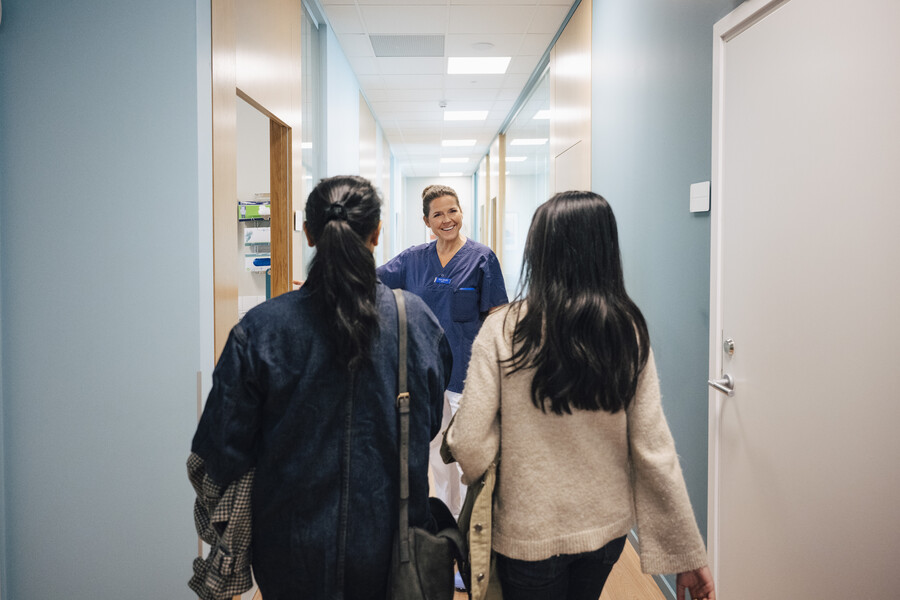
Adult-gerontology nursing is often mistaken for a field focused only on older adults. But talk to students, and a broader reality emerges. “Your day can vary widely,” says Julianna Grainge, a fellow in Penn Nursing’s Leonard A. Lauder Community Care Nurse Practitioner Program. Grainge currently sees patients over 60 in her clinical rotations as an adult-gerontology primary care nurse practitioner student. Still, as she notes, “You can care for patients from the age of 13 all the way through the end of life.”
That range defines the specialty population. A student might spend the morning helping a younger adult understand a new diagnosis, then shift in the afternoon to supporting an older patient managing multiple chronic conditions. Adult-gerontology care demands the ability to adapt communication styles, tailor education, and understand how needs evolve across decades of life.
At Penn Nursing, that philosophy anchors two advanced practice tracks: the Adult-Gerontology Primary Care Nurse Practitioner (AGPCNP) program and the Adult-Gerontology Acute Care Nurse Practitioner (AGACNP) program. Both prepare nurses to meet the rising complexity of adult health, but in distinct settings and with different day-to-day rhythms.
AGACNP and AGPCNP students share core clinical training, yet their paths look markedly different.
AGACNP students train to stabilize and treat medically complex patients in hospitals, ICUs, specialty units, and outpatient clinics. They develop skills in advanced assessment, diagnostic reasoning, complex pharmacologic management, and procedures.
Primary care students, on the other hand, focus on prevention, chronic disease management, and continuity across adulthood. Their clinical hours unfold in clinics, community health centers, and long-term care settings. “Primary care is about relationships across time,” says Susan Renz, Penn Nursing’s Primary Care NP program director. “Our graduates see the patient not just as they are, but who they’re becoming. We teach students to anticipate what care needs people have, so that you keep them out of the acute care environment.”
Many prospective students assume a Family Nurse Practitioner (FNP) degree is the most versatile choice. Penn faculty encourage deeper consideration.“ We prepare students to care for the full spectrum of adult life,” says Kathleen O. DeMutis, director of Penn Nursing’s Adult-Gerontology Primary Care NP Track. “That means knowing how to manage a 20-year-old with asthma, a 45-year-old with hypertension, and an 85-year-old with heart failure—all through the same lens of evidence-based, person-centered care.”
“Adult-gerontology is not only geriatrics,” says DeMutis. “Adult-gerontology prepares clinicians for patients aged 13 and up. FNPs cover the entire family unit, including infants and children. That is the essential difference.”
On the move: Water quality and antimicrobial resistance testing goes mobile
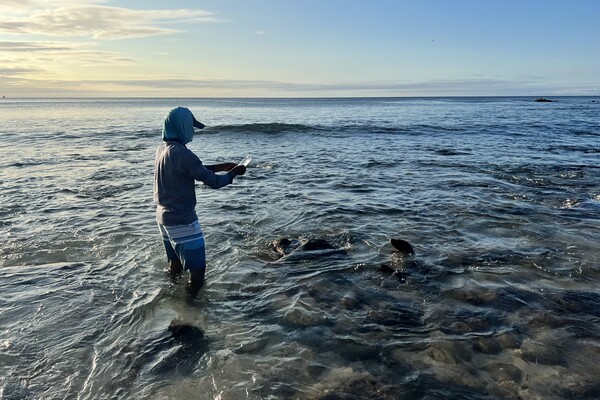
Penn researchers have developed a mobile field laboratory allowing them to test water quality and track antimicrobial resistance in and around San Cristóbal in the Galápagos.
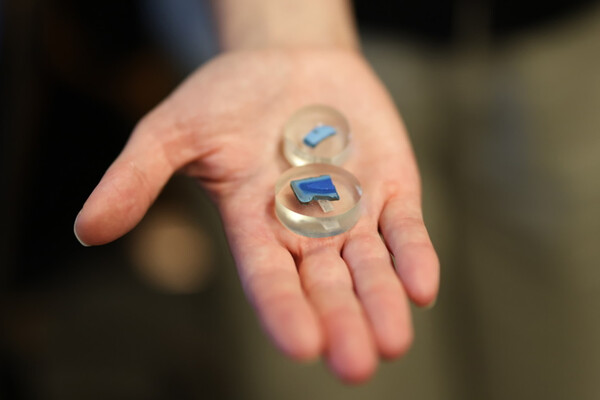
Penn researchers Vanessa and Alexis North are studying one of the largest collections of Egyptian blue objects ever found in the ancient Near East, shedding new light on how the world’s first synthetic pigment may have traveled far beyond Egypt.
A new role for dental providers? Rethinking where vaccines are given
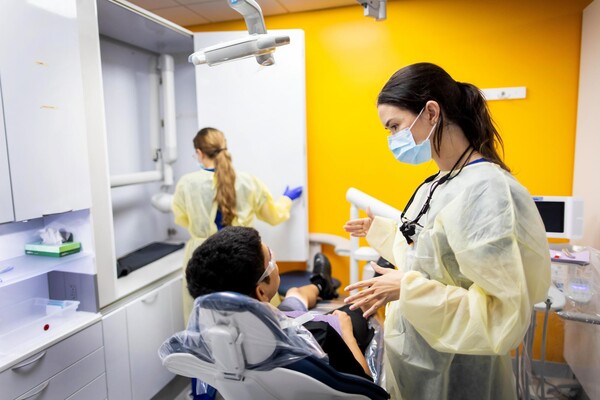
Vaccinations have traditionally been administered in primary care settings or pharmacies. However, for about a decade, some states have authorized dentists to administer vaccines, and many others did so during the COVID-19 pandemic. The effectiveness of this approach has led some countries and states to expand or consider expanding the role of dental providers in delivering routine vaccines, including those against COVID-19 and the human papillomavirus (HPV), and in providing vaccine education.
Penn student develops a way for computer chips to run more efficiently
Fluid Silicon, a platform from President’s Sustainability Prize winner Nhlanhla Mavuso, allows computer chips to continuously monitor their health and self-tune as their characteristics change. The technology has the potential to reduce energy usage in data centers and improve reliability in mission-critical applications.