Improving patient experiences in cancer clinical trials
Cancer clinical trials (CCTs) provide patients an opportunity to receive experimental drugs, tests, and/or procedures that can lead to remissions. For some, a CCT may seem like their only option. Yet little is known about the experiences of patient participants who withdraw from CCTs.
Now, a first-of-its-kind study from the University of Pennsylvania School of Nursing (Penn Nursing) helps to clarify the post-trial needs of these patients and define what constitutes responsible transitions when patients exit CCTs.
“Understanding the post-trial needs of patients with cancer and their families represents a measure of ethical respect of the many contributions that patients with cancer make to advancing our scientific knowledge and finding treatments that save lives,” says Connie M. Ulrich, the Lillian S. Brunner Chair in Medical and Surgical Nursing, professor of nursing, professor of medical ethics and health policy, and lead investigator.
The study, “Experiences of Patients After Withdrawal from Cancer Clinical Trials,” is set for publication on the JAMA Network.
The study highlights three important points:
Patients exiting CCTs feel intense symptoms, emotions, and awareness that their life spans are short and options seem limited.
Limited discussions with exiting patients about their immediate post-trial care needs leave many feeling that there is no clear path forward.
Good communication that deliberately includes attention to post-trial needs throughout the CCT is needed to help scared and disappointed patients navigate their next steps.
On the move: Water quality and antimicrobial resistance testing goes mobile
Penn researchers have developed a mobile field laboratory allowing them to test water quality and track antimicrobial resistance in and around San Cristóbal in the Galápagos.
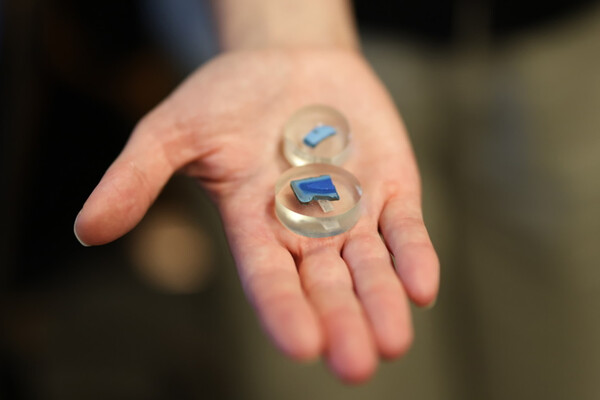
Penn researchers Vanessa and Alexis North are studying one of the largest collections of Egyptian blue objects ever found in the ancient Near East, shedding new light on how the world’s first synthetic pigment may have traveled far beyond Egypt.
A new role for dental providers? Rethinking where vaccines are given
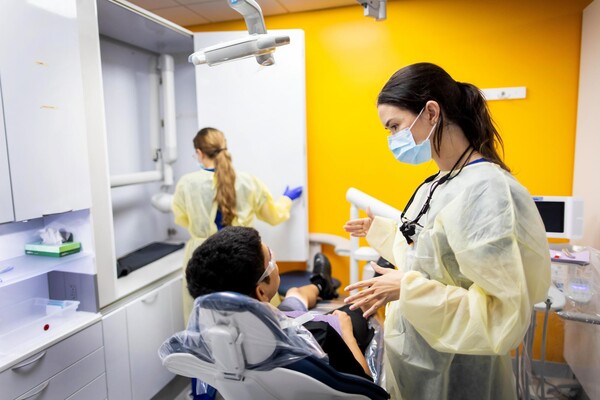
Vaccinations have traditionally been administered in primary care settings or pharmacies. However, for about a decade, some states have authorized dentists to administer vaccines, and many others did so during the COVID-19 pandemic. The effectiveness of this approach has led some countries and states to expand or consider expanding the role of dental providers in delivering routine vaccines, including those against COVID-19 and the human papillomavirus (HPV), and in providing vaccine education.
Penn student develops a way for computer chips to run more efficiently
Fluid Silicon, a platform from President’s Sustainability Prize winner Nhlanhla Mavuso, allows computer chips to continuously monitor their health and self-tune as their characteristics change. The technology has the potential to reduce energy usage in data centers and improve reliability in mission-critical applications.