How tumor mechanics and tiny messengers could shape the future of cancer research
A literature review co-written by Penn Engineering Ph.D. student Kshitiz Parihar and Ravi Radhakrishnan, professor in bioengineering and chemical biomolecular engineering, highlights the hidden connections between tumor mechanics and extracellular vesicles (EVs), tiny packages of proteins and genetic material secreted by cells. EVs carry cargo like proteins and RNA between cells, influencing how tumors grow, how the immune system responds, and even how cancers spread to other parts of the body. The researchers hypothesize that both that the surrounding tissue environment affects the vesicles and that the process is reciprocal. “We’re seeing that vesicles don’t just respond to the environment,” Radhakrishnan says. “They actively reshape it. They can stiffen tissue and prime it for metastasis.”
On the move: Water quality and antimicrobial resistance testing goes mobile
Penn researchers have developed a mobile field laboratory allowing them to test water quality and track antimicrobial resistance in and around San Cristóbal in the Galápagos.
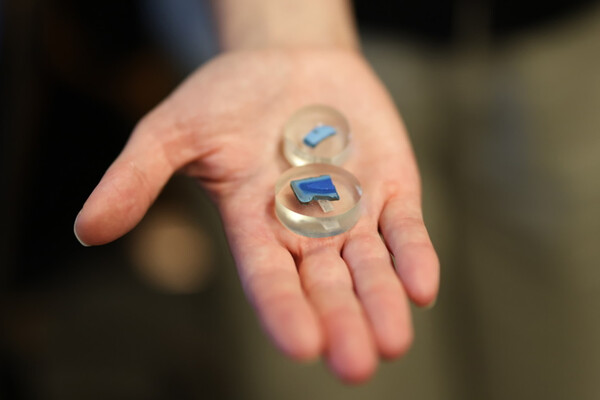
Penn researchers Vanessa and Alexis North are studying one of the largest collections of Egyptian blue objects ever found in the ancient Near East, shedding new light on how the world’s first synthetic pigment may have traveled far beyond Egypt.
A new role for dental providers? Rethinking where vaccines are given
Vaccinations have traditionally been administered in primary care settings or pharmacies. However, for about a decade, some states have authorized dentists to administer vaccines, and many others did so during the COVID-19 pandemic. The effectiveness of this approach has led some countries and states to expand or consider expanding the role of dental providers in delivering routine vaccines, including those against COVID-19 and the human papillomavirus (HPV), and in providing vaccine education.
Penn student develops a way for computer chips to run more efficiently
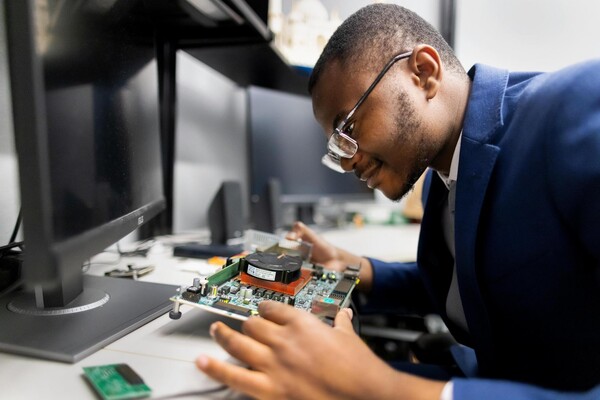
Fluid Silicon, a platform from President’s Sustainability Prize winner Nhlanhla Mavuso, allows computer chips to continuously monitor their health and self-tune as their characteristics change. The technology has the potential to reduce energy usage in data centers and improve reliability in mission-critical applications.