How Penn researchers are advancing knowledge of psychedelics
Adding their expertise in psychiatry, medical ethics, nursing, history, and more, faculty and students are shaping conversations on treatments that show promise for helping people with various mental health conditions.
4 min. read
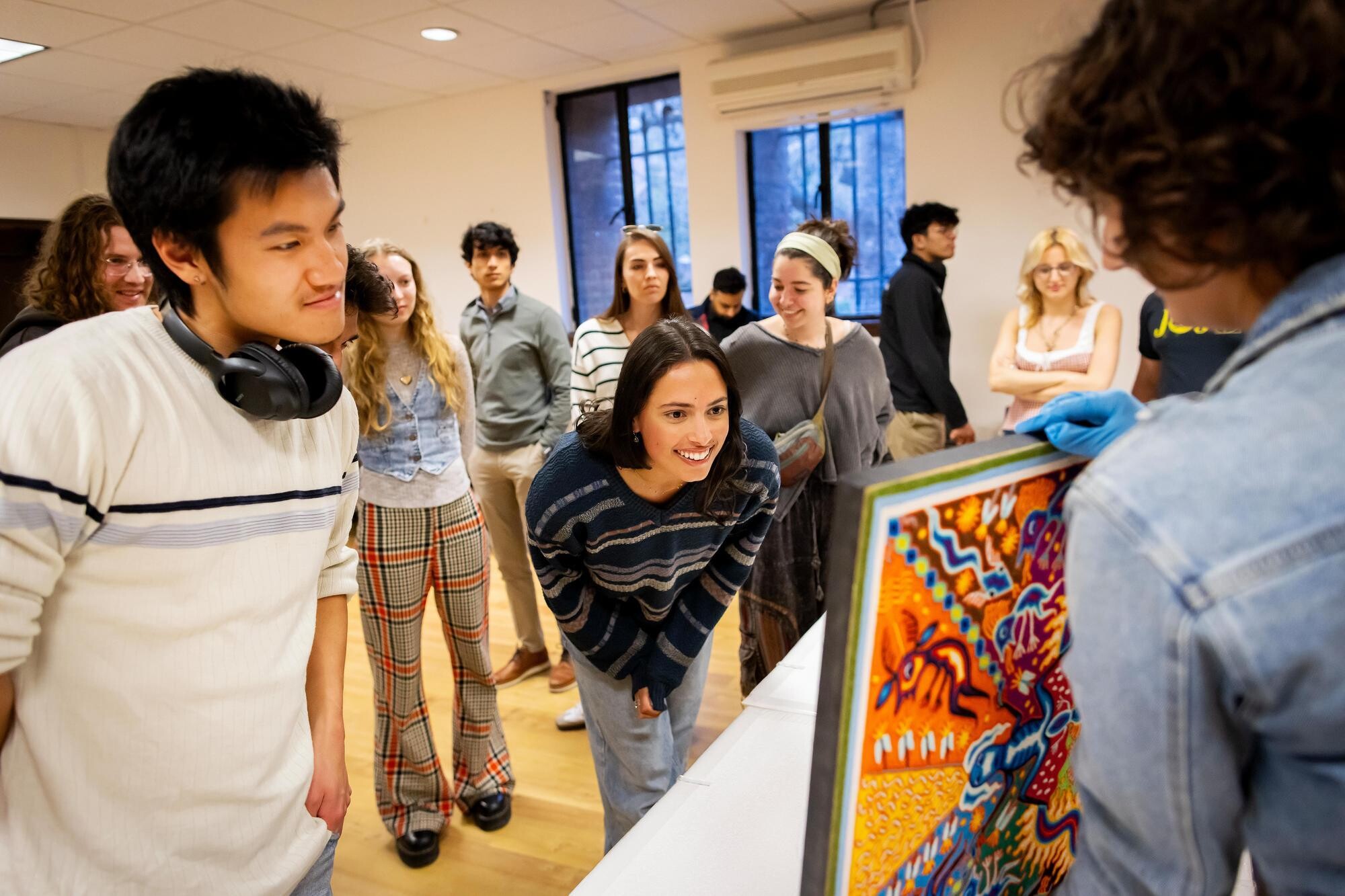
In a visit to the Penn Museum, students in Penn's Psychedelic Paradigms and Practices course viewed the Museum’s collection of Huichol yarn paintings, folk art made by the Indigenous Huichol people of Mexico that depicts visions experienced in peyote ceremonies. The visit also included a lecture from fine art professor Jackie Tileston on psychedelic aesthetics and a sound bath, a way for students to experience nonordinary states of consciousness.
For centuries, psychedelics have been a part of Indigenous cultures, such as tribes in the Amazon who use them for healing and religious ceremonies. Now, they are increasingly getting bipartisan support in Western medicine, where growing evidence suggests their potential to treat various mental health conditions and chronic pain.
A recent federal executive order expedites review of psychedelics, and the U.S. Department of Veterans Affairs earlier this month announced a new trial of psilocybin to treat veterans with major depression, including in people with PTSD. With bipartisan support, Texas lawmakers in 2025 approved $50 million in state funding for research on the psychedelic compound ibogaine, and a survey results released in May found that 63% of American voters "strongly support" making psychedelics easier for scientists to study.
Members of the Penn community are tackling the challenges of the field—such as bioethical issues, policy, funding, and public opinion—with innovative approaches. They are conducting clinical and laboratory research, addressing ethical concerns, providing historical context, educating students, and convening experts. While they are excited about the field, they also emphasize the need for measured expectations.
Studying psychedelics in the clinic and in the lab
The trial includes two studies. In one, Regier and Childress are tracking participants for eight weeks to see if psilocybin can help reduce drug use and prevent relapse. A second study examines how psilocybin impacts cognitive flexibility, or the mental ability to adapt rather than getting stuck in thought patterns around drug cravings.
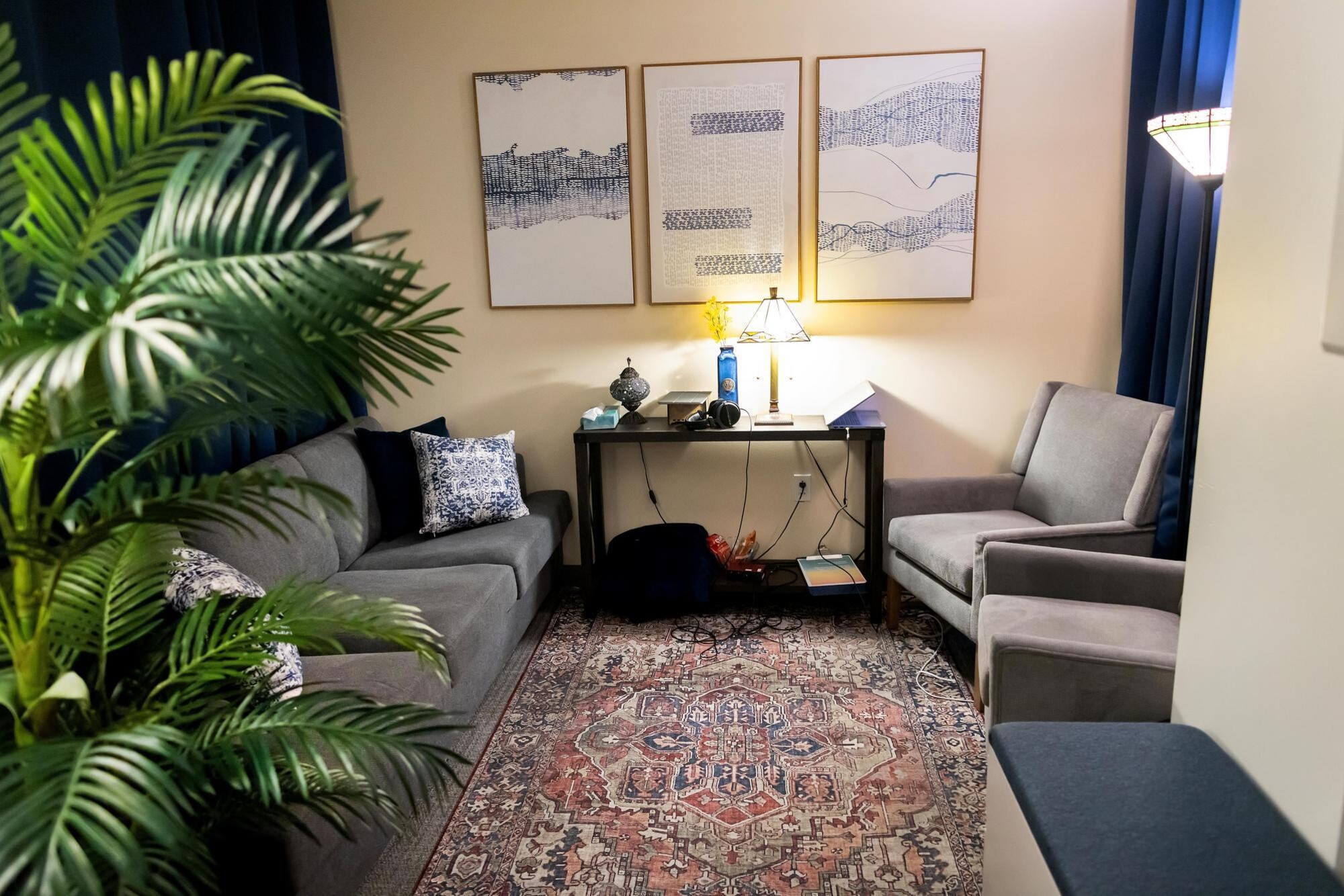
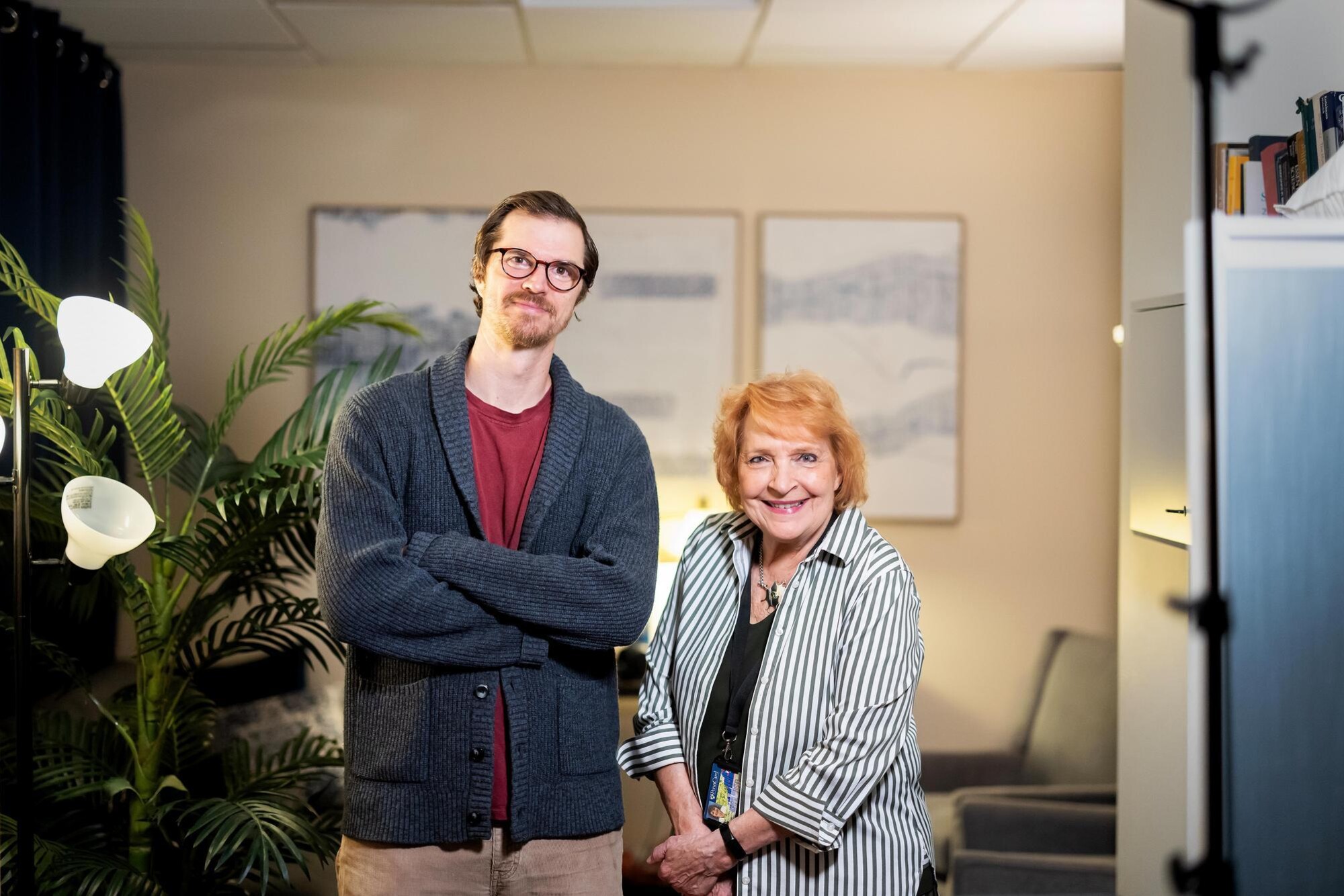
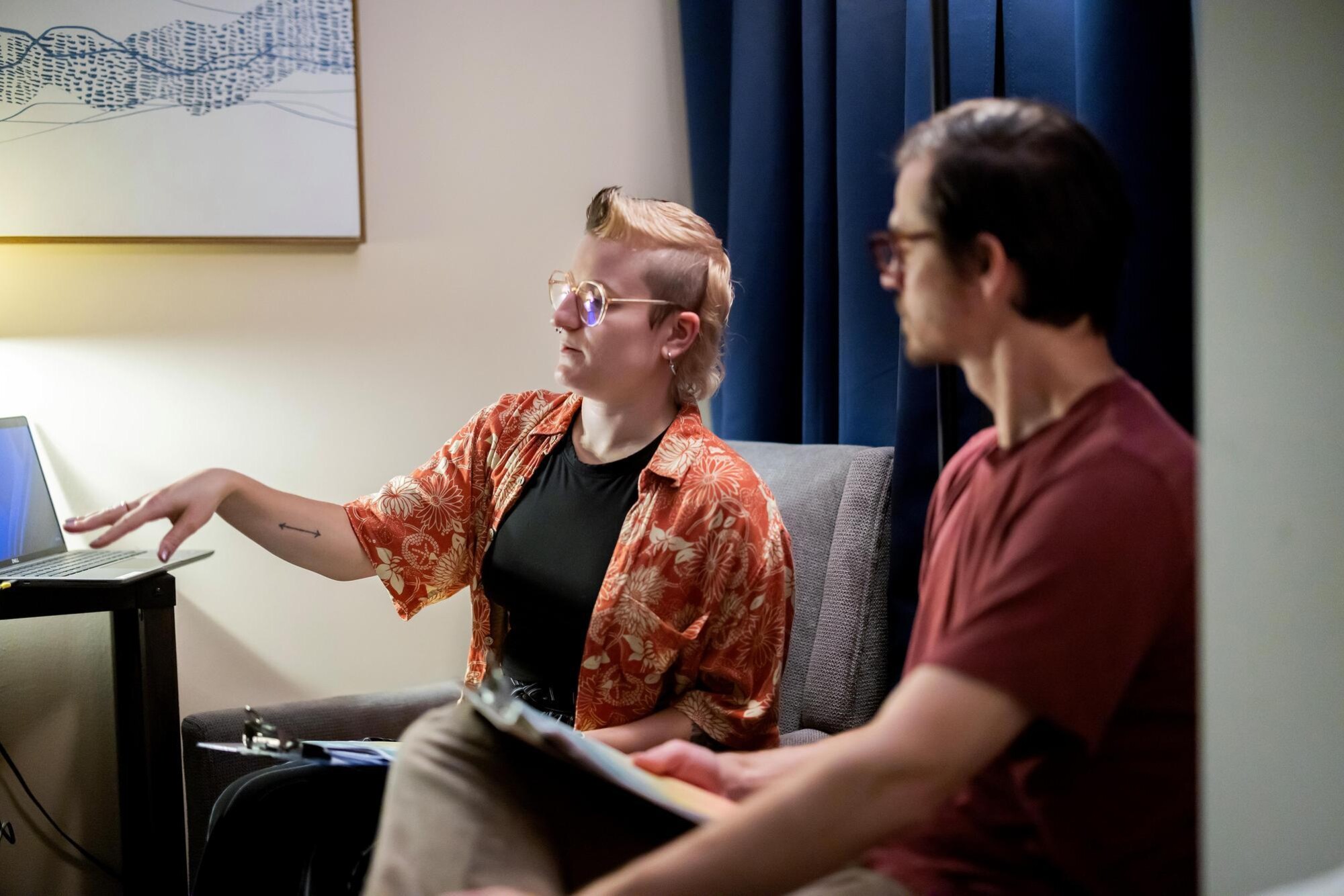
Penn Medicine psychiatry professors (bottom left) Paul Regier and Anna Rose Childress are leading a trial studying the impacts of psilocybin on people with opioid use disorder. Wearing eyeshades and listening to curated music playlists, participants experience a 6-hour psychedelic experience in this room. A clinical psychologist and co-facilitator—such as Klaudia Glogowaska (second from right)—are present for each dosing session.
Participants receive either 25 milligrams or 1 milligram—the control dose—in one six-hour session with two facilitators, including a clinical psychologist. Regier says that participants also go through two preparation sessions beforehand and two integration sessions afterward to help them understand their experience and explore insights. Eight people have participated so far.
Penn Medicine professor Joseph Cichon is studying how psychedelics and unique anesthetics—such as psilocybin, ketamine, and nitrous oxide—induce rapid and durable neuroplastic changes in brain cells or neurons.
In one recent publication, Cichon’s group showed that a single dose of psilocybin reduced pain and depression-like behaviors in preclinical models of chronic pain, and they identified the brain circuits that psilocybin targets. Cichon is also studying the tracking of ketamine within and between neurons to understand its antidepressant mechanisms.
“I think I’m helping in some way with the building blocks of how certain drugs work within brain circuits,” he says. “Maybe by learning how they work, we can build better ones.”
Considering ethical questions for clinical use
Psychedelic-assisted therapy—the use of psychedelics in a therapeutic setting to treat mental disorders—is currently only legal in Oregon, Colorado, and New Mexico. Researchers such as Dominic Sisti, an associate professor of medical ethics and health policy at Penn Medicine, are exploring ethical considerations in psychedelic-assisted therapy.
What if, he questions, a patient says upfront that they don’t want to be touched, but then during the trip they ask for a hug or to have their hand held? And is it possible to fully inform and educate someone about the risks and benefits of the journey they’re about to embark upon when the psychedelic experience is, by definition, indescribable?
“This is a wide-open space for thoughtful humanistic clinicians and students to get into, because there’s a pressing need for really smart people to come up with ways to create an ethics infrastructure to guide psychedelics into the mainstream,” says Sisti.
School of Nursing advanced senior lecturer Anita Iyengar also focused on ethical issues—in addition to legal, safety, and philosophical ones—in a course she taught for nursing students: Human Caring, Therapeutic Relationships, and Psychedelic-Assisted Therapy.
Collaborating to advance understanding
The Penn Psychedelics Collaborative (PPC) includes faculty, staff, and students with backgrounds in psychiatry, nursing, veterinary medicine, fine arts, religious studies, social work, business, and more.
“Psychedelics are uniquely poised to have something to do with almost every discipline, so we didn’t want to continue that pattern of siloing that we’ve seen in the field prior,” says Taylor Andrews Flatt, a former master’s student in Penn Nursing who founded the consortium with Victor Pablo Acero, a former Penn bioengineering and neuroscience Ph.D. student who is now a postdoctoral researcher at Ohio State’s Center for Psychedelic Drug Research and Education.
They launched the consortium in the summer of 2023 with PhilaDelic, a conference on the transdisciplinary frontiers of psychedelic studies. Last year’s PhilaDelic Fall Forum featured experts from around the world discussing basic and translational science, therapeutic applications, legal considerations, patient experiences, and more, touching on psilocybin, ketamine, and ibogaine.
The opening reception of the 2024 PhilaDelic conference, held at the University of Pennsylvania, included video animations and virtual reality experiences.
Jackie Tileston, professor of fine arts at the Weitzman School of Design and co-director of the Penn Psychedelics Collaborative, says that it’s an exciting moment at PPC. “We’re reorganizing and reaching out across schools to advance psychedelic research and education at Penn in a truly integrated way—through reading groups, cross-disciplinary inquiry, and building toward a Program with courses in multiple departments,” she says.
“I’ve never encountered a field that is more fully transdisciplinary than psychedelics,” says Tileston, who also teaches a course on mysticism. She notes that in Psychedelic Paradigms and Practices, students heard from guest scholars—including Penn researchers—from neuroscience, anthropology, visual arts, consciousness studies and spirituality, ecology, public policy, law and ethics, psychology, philosophy, and medicine.
“We’re at the beginning of a tsunami of research,” Tileston says. “The collaborations and dialogues emerging between the sciences and the humanities are profound, provocative, and game changing.”
On the move: Water quality and antimicrobial resistance testing goes mobile
Penn researchers have developed a mobile field laboratory allowing them to test water quality and track antimicrobial resistance in and around San Cristóbal in the Galápagos.
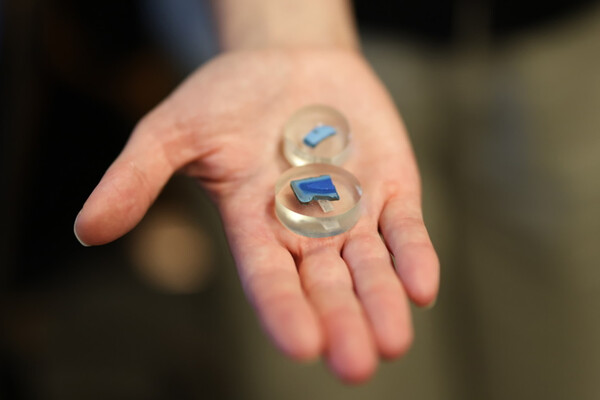
Penn researchers Vanessa and Alexis North are studying one of the largest collections of Egyptian blue objects ever found in the ancient Near East, shedding new light on how the world’s first synthetic pigment may have traveled far beyond Egypt.
A new role for dental providers? Rethinking where vaccines are given
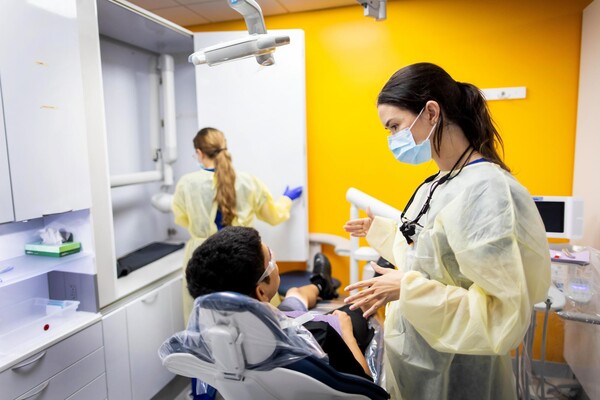
Vaccinations have traditionally been administered in primary care settings or pharmacies. However, for about a decade, some states have authorized dentists to administer vaccines, and many others did so during the COVID-19 pandemic. The effectiveness of this approach has led some countries and states to expand or consider expanding the role of dental providers in delivering routine vaccines, including those against COVID-19 and the human papillomavirus (HPV), and in providing vaccine education.
Penn student develops a way for computer chips to run more efficiently
Fluid Silicon, a platform from President’s Sustainability Prize winner Nhlanhla Mavuso, allows computer chips to continuously monitor their health and self-tune as their characteristics change. The technology has the potential to reduce energy usage in data centers and improve reliability in mission-critical applications.